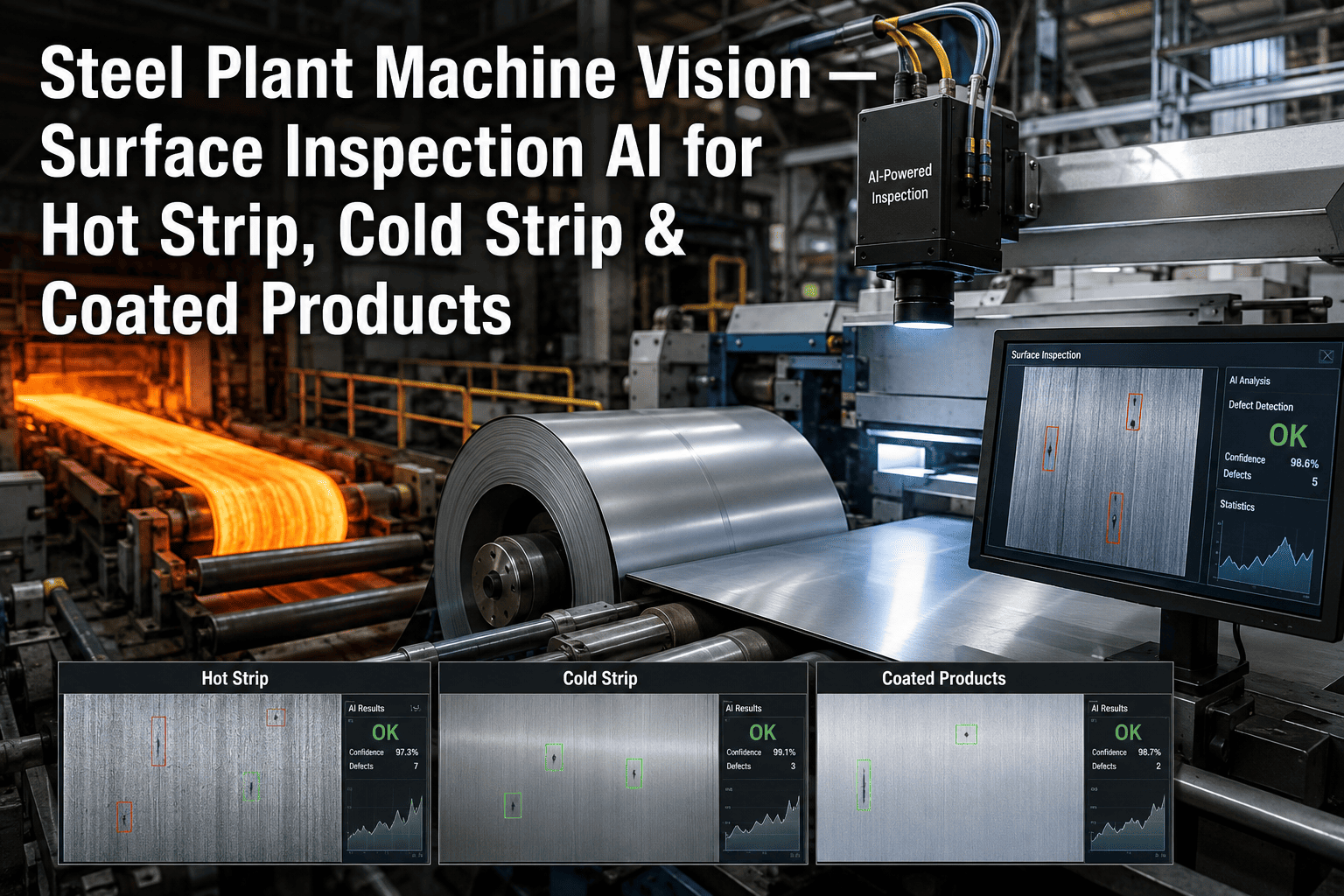
An analysis of 10,000 steel coils revealed that manual inspection missed up to 34% of surface defects. At production speeds exceeding 20 meters per second, human inspectors have fractions of a second to evaluate surfaces—and fatigue causes accuracy to drop by 20-30% during extended shifts. Meanwhile, AI vision systems achieve 95-99% detection rates at full rolling speed, catching micro-cracks, scale, and inclusions invisible to the naked eye.
Manual Inspection
60-70%
Detection Rate
30-40% defects missed
Fatigue drops accuracy 20-30%
2-3 samples/minute max
VS
AI Vision System
95-99%
Detection Rate
Less than 1% false positives
24/7 consistent accuracy
4,000-16,000 frames/second
Why Manual Steel Inspection Falls Short
Steel production moves fast—coils traveling at 1,200 meters per minute, with continuous casting running 24/7. Human inspectors, no matter how skilled, cannot match these speeds while maintaining consistent accuracy. Research shows the average manufacturing company has quality-related costs reaching 15-20% of sales revenue.
Speed Limitation
At 20+ m/s line speed, inspectors have fractions of a second per surface. Sampling catches only a fraction of defects.
Fatigue Factor
Accuracy drops from 85% to below 70% during extended shifts. Night shift performance degrades to 40-50%.
Invisible Defects
Micro-cracks, hairline scratches, and subsurface inclusions as small as 0.1mm are invisible at production speeds.
Cost Multiplier
A $50 surface defect becomes a $50,000 warranty claim when it reaches the customer. 10-50x cost increase.
Experiencing high defect escape rates? Book a demo to see AI vision in action on steel coils.
Detection Accuracy: Defect-by-Defect Comparison
Different defect types challenge human inspectors differently. Subtle inclusions and lamination defects are nearly impossible to catch manually, while AI vision systems maintain 90%+ accuracy across all categories.
How AI Vision Detection Works
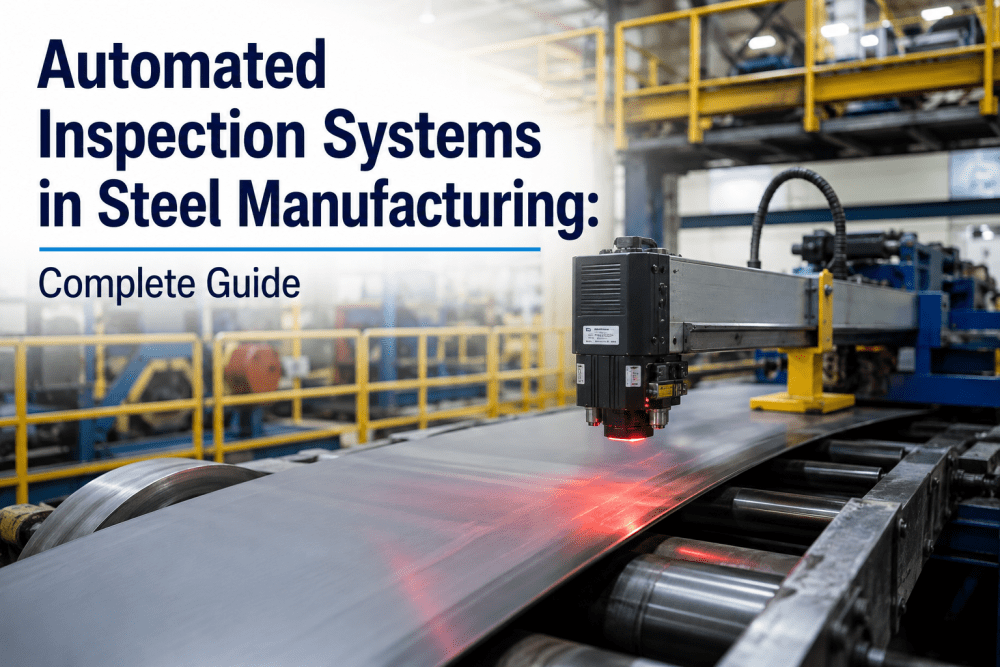
Modern AI vision systems process every square millimeter of steel surface at full production speed. Line-scan cameras operating at 16,000+ pixels capture both top and bottom surfaces, while deep learning models trained on millions of defect images classify anomalies in under 10 milliseconds.
01
Image Capture
Line-scan cameras at 4,000-16,000 frames/second with specialized LED lighting reveal surface anomalies invisible under normal conditions.
02
AI Analysis
Deep learning models (CNNs, YOLO, Vision Transformers) trained on millions of samples process images in real-time.
03
Classification
System identifies defect type, severity, and exact coordinates. Generates bounding boxes and confidence scores.
04
Action & Integration
Instant alerts, automatic grading, and CMMS work orders. Defect patterns trigger maintenance before more defects occur.
Want to see this pipeline in action? Schedule a live demonstration for your steel plant.
See Every Defect. Ship Prime Steel.
iFactory connects AI vision alerts to a complete maintenance and quality platform—every defect pattern triggers a work order, every correction is tracked.
The ROI of AI Vision Inspection
Surface quality defects drive 2-5% of total steel production to secondary or reject status, costing $3M-$12M annually in downgrade losses alone—before accounting for customer complaints, emergency sorts, and reputation damage.
90%+
Fewer defective coils reaching customers
Detection rate improvement from 65% to 98%
7-14 mo
Typical ROI payback period
Some mills report ROI exceeding 1900% in year one
65%
Reduction in customer complaints
Real case study from major steel producer
$50-200
Saved per tonne from false positive reduction
Every false downgrade sells prime at secondary prices
Expert Perspective
"The system catches defects our best inspectors simply couldn't see. With AI-powered inspection, we reduced customer return rates by 31% within 18 months. The most valuable output isn't the defect it catches on the current coil—it's the upstream process correction that prevents the same defect on the next thousand coils."
— Industry Case Study, IEEE Journal on Manufacturing Quality
$89.7B
AI visual inspection market by 2033
19.6%
Annual market growth rate
0.1mm
Minimum detectable defect size
Ready to transform your quality control? Get a personalized ROI assessment for your mill.
Frequently Asked Questions
How accurate is AI vision compared to manual inspection?
AI vision systems achieve 95-99.5% defect detection rates with less than 1% false positives—24 hours a day. Manual inspection typically catches only 60-70% of defects, dropping to 40-50% during night shifts due to fatigue.
Can AI vision systems handle hot steel inspection?
Yes, with specialized hardware. Inspection of hot strip at 600-900°C requires infrared cameras or specially filtered optical cameras. Camera housings are water-cooled and air-purged, rated IP67 or higher to resist steam, water spray, and scale dust.
What types of steel defects can AI detect?
Modern systems classify 40-80+ distinct defect types including scratches, scale residue, roll marks, inclusions, edge cracks, lamination, rust, and coating defects. Detection works on surfaces as small as 0.1mm per pixel resolution.
How long does implementation take?
Initial deployment uses pre-trained models with 90%+ accuracy from day one. Fine-tuning to your specific product mix takes 4-8 weeks. Full optimization to 97%+ detection rates typically takes 3-6 months of iterative learning.
What is the typical ROI timeline?
Most implementations achieve complete ROI within 7-14 months through combined savings in labor, scrap, rework, and warranty costs. High-stakes operations like steel mills sometimes report ROI exceeding 1900% in the first year.
Stop Missing 30% of Your Defects
Join steel manufacturers achieving 98%+ detection accuracy with AI vision. See how iFactory integrates real-time defect detection with maintenance workflows.