Steel plants generate more solid waste and by-product material per ton of output than almost any other heavy industry — and the gap between collecting that waste and managing it with operational precision is where environmental liability, cost overruns, and regulatory exposure accumulate. A mid-size integrated mill produces between 200 and 400 kilograms of slag per ton of hot metal from the blast furnace alone, in addition to basic oxygen furnace slag, electric arc furnace dust, mill scale, sludge, and refractory waste from each campaign. That volume creates a parallel operations challenge that most CMMS and asset management platforms were never built to address: tracking slag crusher availability, monitoring granulation plant throughput, documenting dust disposal chain of custody, managing hazardous waste permits, and proving environmental compliance across every by-product stream — simultaneously, in real time, with an audit trail that satisfies both EPA reporting and internal cost accounting. The facilities doing this well in 2026 are not the ones with the most experienced environmental managers. They are the ones that have connected their waste handling equipment, slag processing assets, and compliance workflows into a single analytics layer. iFactory's Compliance Management and Asset Tracking platform delivers exactly that connection — integrating slag yard equipment health, granulation plant throughput, dust collection system performance, and waste permit status into a unified view that converts fragmented environmental operations into documented, optimized, defensible practice. U.S. steel facilities deploying iFactory's waste management analytics platform report 41% improvement in slag processing equipment uptime, 63% reduction in environmental reporting preparation time, and an average $870,000 annual cost recovery improvement from optimized by-product streams that were previously being underutilized or improperly classified.
The Waste Management Problem That Costs Steel Plants More Than They Realize
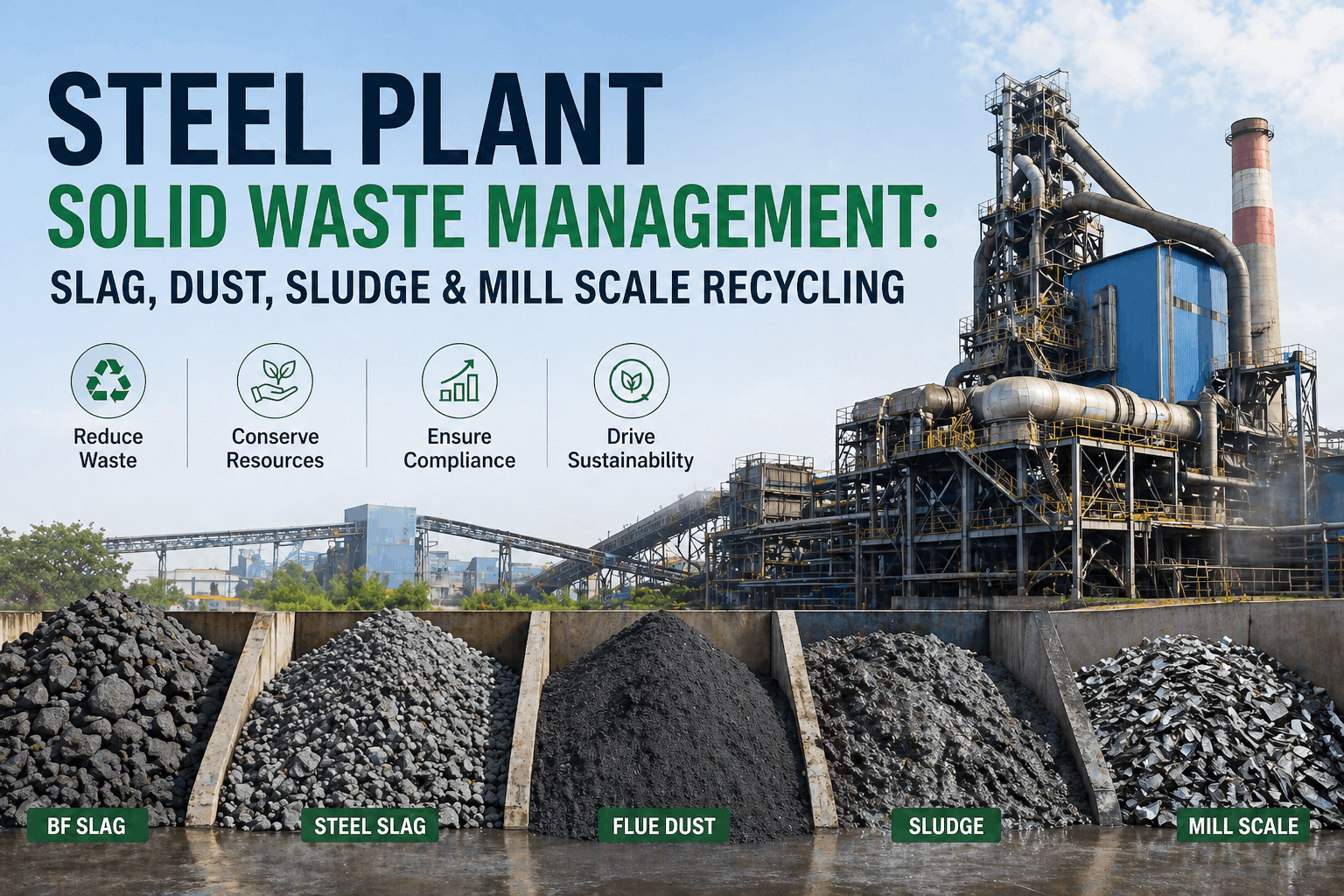
The typical U.S. integrated steel facility has four to seven distinct waste and by-product streams — blast furnace slag, BOF slag, EAF dust (an EPA-classified hazardous waste under RCRA), mill scale, flue dust, sludge from water treatment, and spent refractory. Each stream has a different regulatory classification, a different chain-of-custody requirement, a different set of equipment assets involved in its processing, and a different economic value as a recovered by-product. Managing these streams manually — through spreadsheets, paper logs, and environmental coordinator memory — introduces both compliance risk and significant cost leakage. EAF dust misclassification or documentation gaps trigger RCRA enforcement actions with fines starting at $37,500 per day. Slag processed through underperforming crushers yields lower-value aggregate that sells at a $4–9 per ton discount versus properly graded material. Granulation plant downtime delays blast furnace campaign schedules and creates ladle cycle backup. These are not edge-case scenarios — they are the recurring operational reality at facilities that treat waste management as a reporting task rather than an analytics problem.
iFactory converts waste management from a documentation function into an operational analytics layer. The platform tracks equipment condition on every slag crusher, granulation plant, and dust handling system; monitors throughput and processing quality; flags permit threshold approaches before violations occur; and generates the compliance documentation that currently consumes 8–12 hours of environmental coordinator time per reporting cycle. Book a Demo to see how iFactory applies this framework to your specific by-product stream configuration.
- Slag crusher and granulation plant downtime tracked manually in shift logs — no trend visibility
- EAF dust disposal chain-of-custody documented on paper with no digital audit trail
- By-product quality variability undetected until end-of-period price reconciliation
- Environmental permit thresholds monitored reactively — violations discovered after the fact
- Compliance reports built manually from multiple disconnected data sources each reporting cycle
- Waste handling equipment maintenance scheduled by calendar, not condition — excess downtime
- Slag processing equipment monitored continuously — downtime causes identified and resolved proactively
- Digital chain-of-custody for all hazardous waste streams with auto-generated manifest documentation
- By-product quality tracked against processing parameters — deviations flagged in real time
- Permit threshold monitoring with automated alerts before regulatory limits are approached
- Compliance reports auto-generated from operational data — 63% reduction in preparation time
- Condition-based maintenance on all waste handling assets — 41% improvement in equipment uptime
Steel Plant By-Product Streams: iFactory Coverage by Waste Type and Analytics Layer
Each major by-product stream in a steel plant carries its own regulatory classification, equipment dependencies, and analytics requirements. The matrix below maps each stream to its applicable regulations, key equipment assets, primary failure modes, and the iFactory analytics layer that addresses it. The platform covers the full by-product landscape without requiring separate point solutions for each waste type. Book a Demo to see this coverage applied to your facility's specific by-product configuration.
| By-Product Stream | Regulatory Class | Key Equipment Assets | Primary Risk | iFactory Analytics Layer | Recovery Value Potential |
|---|---|---|---|---|---|
| Blast Furnace Slag | Non-hazardous by-product | Slag pots, granulation plant, crushers, conveyors | Granulation plant downtime delays BF campaign | Equipment condition tracking, throughput analytics | $18–35/ton as GGBS or aggregate |
| BOF / EAF Slag | Non-hazardous (state variance) | Slag pots, tipping floors, slag crusher, screeners | Quality variability reduces aggregate sale price | Processing parameter tracking, quality analytics | $8–22/ton as road base or fill |
| EAF Dust (K061) | RCRA Hazardous — K061 | Baghouse, dust collection system, storage containers | Chain-of-custody gaps trigger RCRA enforcement | Digital manifest, permit compliance monitoring | $120–210/ton Zn recovery via TCLP |
| Mill Scale | Non-hazardous by-product | Scale pits, conveyors, dewatering equipment | Pit overflow creates environmental incident | Volume tracking, equipment availability monitoring | $40–90/ton as sinter feed or foundry |
| Flue Dust / Sludge | RCRA conditional / state-classified | Scrubbers, thickeners, filter presses, storage | Storage capacity breach, leachate risk | Volume thresholds, permit limit monitoring | Variable — sintering re-use or disposal |
| Spent Refractory | Non-hazardous (chromite-free) | Campaign tracking, relining schedule assets | Improper classification of chrome refractory | Campaign lifecycle tracking, material classification | $0–15/ton recycled aggregate |
Slag Processing Equipment Analytics: Tracking the Assets That Drive By-Product Value
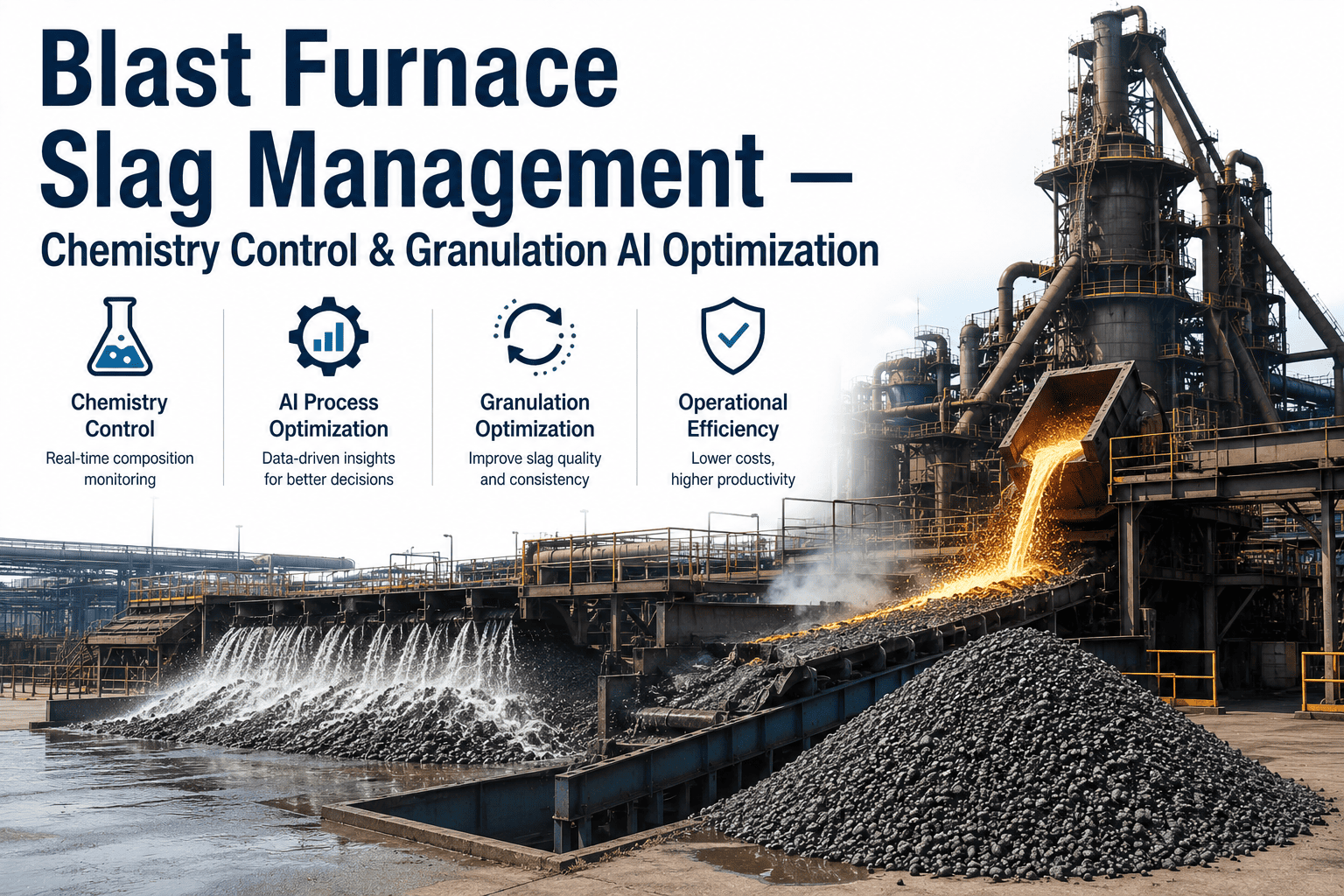
Slag processing equipment — granulation plants, slag crushers, screening systems, and conveyors — represents a category of assets that most steel plant CMMS implementations underserve. These assets are treated as secondary infrastructure rather than production-critical equipment, even though granulation plant downtime during a tap directly affects blast furnace campaign scheduling, and crusher underperformance produces oversized aggregate that sells at a significant discount or requires reprocessing. iFactory's asset tracking layer closes this gap by applying condition-based monitoring and throughput analytics to slag processing equipment with the same rigor applied to primary process equipment.
Environmental Compliance Automation: From Manual Reporting to Real-Time Documentation
Environmental compliance for steel plant waste operations is not a quarterly task — it is a continuous operational requirement that generates documentation obligations across EPA Title V air permits, RCRA hazardous waste manifests, state solid waste permits, and stormwater compliance programs. At most facilities, meeting these obligations requires environmental coordinators to manually collect data from shift logs, equipment readings, and lab results, then compile reports against permit limits in processes that consume 8–12 hours per reporting cycle and introduce significant manual transcription error risk. iFactory replaces this process with automated compliance documentation built directly from operational data the platform is already collecting.
By-Product Recovery Optimization: Turning Waste Management Into a Revenue Function
The most operationally mature steel facilities in the U.S. have reframed waste management as by-product revenue management. Blast furnace slag sold as ground granulated blast-furnace slag (GGBS) for cement replacement generates $28–35 per ton. Mill scale sold as sinter feed or foundry supplement commands $40–90 per ton. EAF K061 dust processed through a zinc recovery facility returns $120–210 per ton in zinc credit. These are not theoretical values — they are contract prices that U.S. steel producers have been capturing at facilities where by-product quality is controlled and processing equipment is maintained to specification. The same facility that generates $870,000 in additional annual cost recovery from optimized by-product streams is typically not processing more waste — it is processing the same waste better, because equipment condition and processing parameters are being managed analytically rather than reactively.
Expert Perspective: What Environmental Operations Leaders Learn From Integrated Waste Analytics
I spent eleven years managing environmental compliance at two integrated steel mills in the Ohio Valley before moving into an operations technology consulting role, and the single most consistent problem I saw at both facilities was the complete disconnect between waste handling operations and the analytics that should have been governing them. We had EAF dust generation rates that nobody was tracking in real time — we found out we had crossed the Large Quantity Generator threshold in month four of a year when the annual report came due. That is not a small compliance problem; at the time that was a potential enforcement action and a retroactive corrective measures obligation. We had a granulation plant where the operations team was tracking downtime in a paper log that nobody correlated with blast furnace campaign impacts until a quarterly review meeting. We had slag crusher liner wear that was visible in throughput data three weeks before the crush ratio degraded enough to affect product quality — and nobody had built the analytics to see it. When I look at what iFactory's platform does — real-time permit threshold monitoring, equipment condition tracking on slag processing assets, automated RCRA documentation — what I see is the solution to problems I spent a decade managing manually. The environmental compliance exposure at a steel plant is not primarily about the regulations being complex. It is about the operational data being fragmented. Connect the data, and the compliance becomes manageable. Leave it fragmented, and you are always one missed threshold away from an enforcement action that costs more than several years of the analytics platform would have."
Conclusion
Steel plant waste management and slag handling are not peripheral environmental functions — they are operational and financial processes that carry real revenue upside when managed analytically and real regulatory exposure when managed manually. The 200–400 kilograms of slag per ton of hot metal, the K061-classified EAF dust with RCRA chain-of-custody requirements, the mill scale and sludge streams with their own permit obligations — these by-products represent both cost and value that depend entirely on whether the equipment processing them is maintained to specification and the documentation governing them is accurate and current.
iFactory's Compliance Management and Asset Tracking platform delivers the analytics layer that connects slag processing equipment condition, waste stream documentation, permit threshold monitoring, and by-product quality classification into a unified operational view. The 41% improvement in processing equipment uptime, 63% reduction in compliance reporting time, and $870,000 average annual cost recovery improvement are the documented results of treating waste management as an analytics problem rather than a documentation task. Book a Demo to see how iFactory's platform applies to your specific by-product streams, equipment landscape, and compliance obligations.
Frequently Asked Questions
Yes. iFactory generates digital chain-of-custody documentation, automates manifest records, and monitors Large Quantity Generator thresholds in real time — covering the complete RCRA documentation requirement for K061 EAF dust from generation through licensed disposal confirmation.
Yes. iFactory applies the same condition-based monitoring used on primary process equipment to slag crushers, granulation plants, screening systems, and dust collection equipment — tracking vibration, throughput, and process parameters with automated work order generation on developing conditions.
The platform loads all active permit limits and calculates real-time status against each threshold, generating tiered alerts at 75%, 90%, and 95% of limits — giving operations teams advance notice to adjust before a violation is triggered rather than discovering exceedances in post-period audits.
Yes. iFactory tracks slag yard stockpile inventory by material type and quality grade, records dispatch tonnage against customer contracts, and integrates by-product sales data with the platform's inventory module for revenue reconciliation across all by-product streams.
Initial deployment covering compliance monitoring, waste stream documentation, and slag equipment tracking runs 6–10 weeks at $75,000 to $160,000 depending on facility size and by-product stream count. Payback typically occurs in 4–6 months from combined cost recovery improvement and compliance risk reduction.