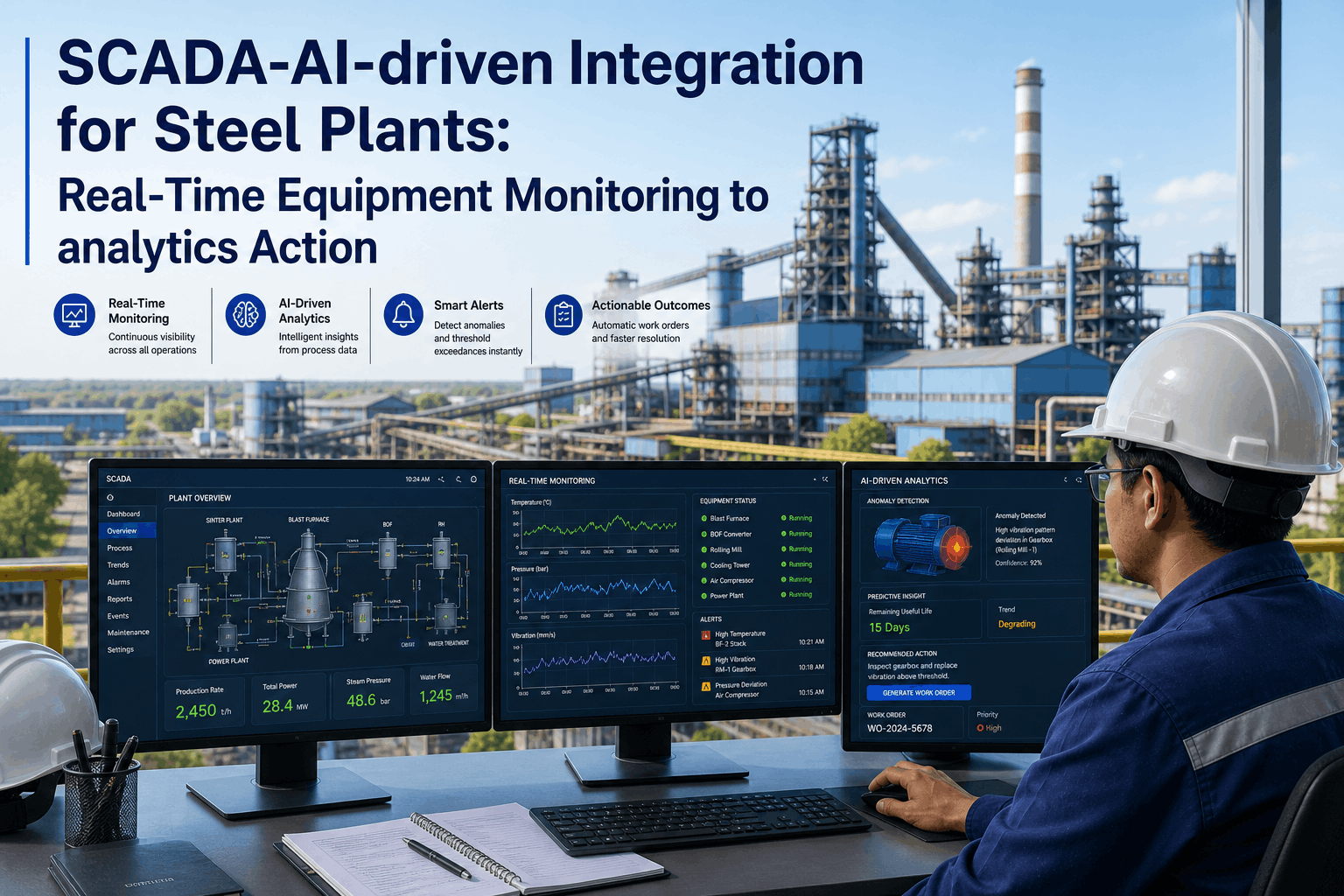
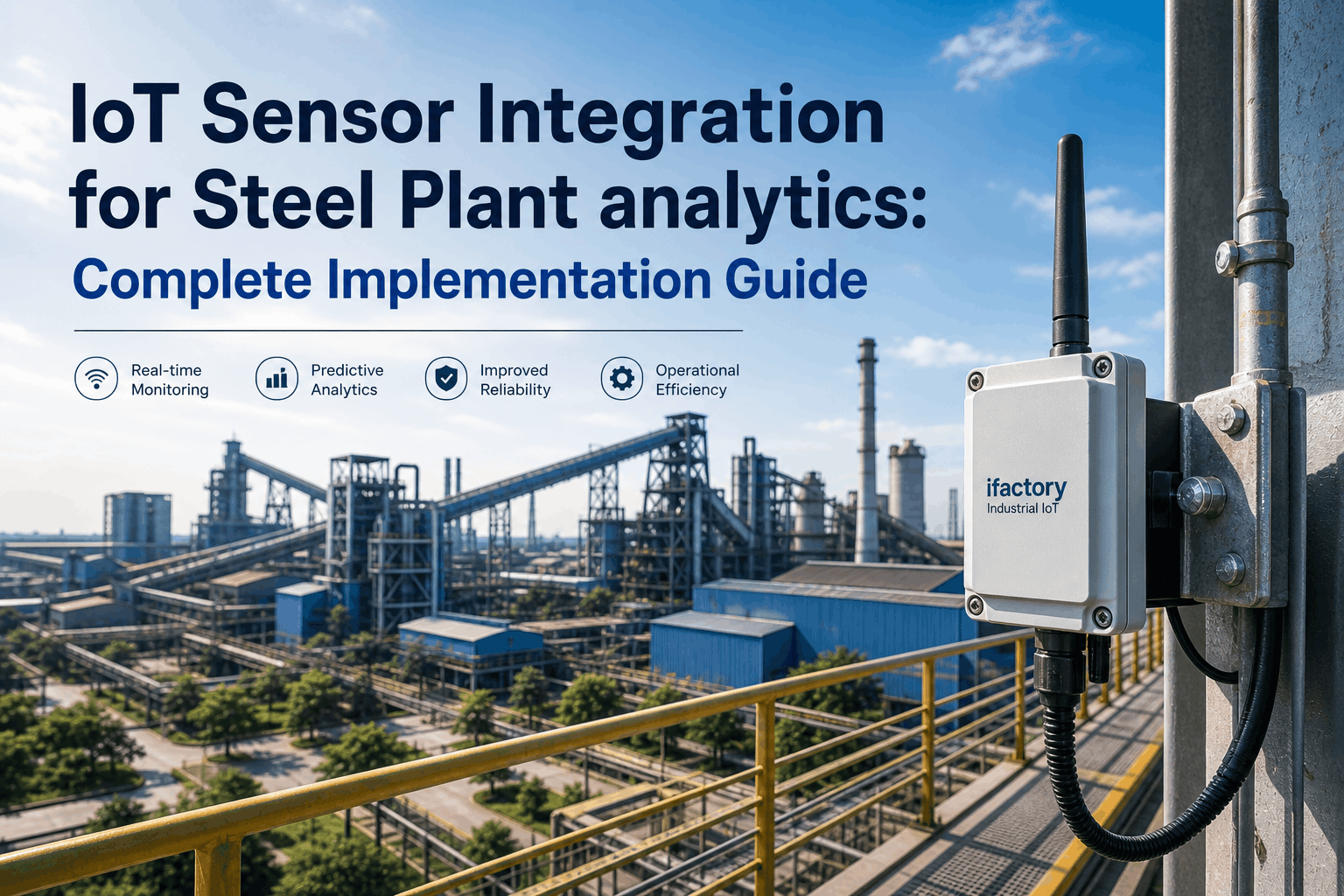
Industrial IoT sensor networks are the nervous system of a modern steel plant — connecting blast furnaces, rolling mills, compressors, pumps, cranes, and electrical systems to a unified data layer that feeds real-time analytics, AI digital twins, and predictive maintenance engines. A typical 3–5 MTPA integrated steel plant requires 2,000–8,000 sensors across vibration, temperature, pressure, flow, gas, and electrical parameters. Yet most plants today operate with fragmented sensor islands — vibration data in one system, temperature in SCADA, electrical in a separate energy monitor — with no unified layer. iFactory's IoT Integration and Sensor Management platform unifies every sensor type across every protocol into a single real-time data fabric, feeding AI analytics, SAP PM work orders, and digital twin simulations from one source of truth.
Industrial IoT Sensor Network for Steel Plants: Deployment, Integration & Analytics
Sensor selection, wireless mesh networking, edge computing, OPC-UA integration & AI analytics — the complete IIoT deployment guide for steel operations.
Right Sensor for Every Steel Plant Zone — The Selection Matrix
Choosing the wrong sensor type for a steel plant environment causes premature failure, data gaps, and false alarms. Temperature extremes, vibration, electromagnetic interference, and corrosive atmospheres make sensor selection a critical engineering decision — not a procurement default. Schedule a sensor audit to map your plant's coverage gaps.
| Sensor Type | BF / Ironmaking | Steelmaking | Rolling Mill | Utilities |
|---|---|---|---|---|
| Vibration (MEMS/Piezo) | Critical | Critical | Critical | Critical |
| Temperature (IR/TC/RTD) | Critical | Critical | High | High |
| Pressure (Piezo/Capacitive) | Critical | High | Medium | Critical |
| Gas Detection (CO/H₂S/O₂) | Critical | Critical | Medium | Medium |
| Power Quality (CT/PT) | High | High | Critical | Critical |
| Flow (Ultrasonic/Coriolis) | High | Medium | Medium | Critical |
Three-Layer IIoT Network Architecture for Steel Plants
Steel plant IIoT networks cannot use standard enterprise Wi-Fi — EMI from EAF and induction furnaces, thick steel structures, and extreme temperatures demand an industrial-grade mesh network design. iFactory deploys a three-layer architecture proven in heavy industrial environments. Schedule a network design review for your specific plant layout.
What iFactory Does With Your Sensor Data — Five AI Analytics Streams
Raw sensor data alone is not intelligence. iFactory's AI processes every sensor stream through five analytics pipelines — converting voltage readings and frequency spectra into maintenance recommendations, energy savings, and production decisions.
How iFactory Connects Your Sensor Network to SAP, PLC & SCADA
A sensor network that doesn't connect to your existing systems creates another data silo. iFactory uses OPC-UA as the universal protocol bridge — connecting field sensors through SCADA and PLC layers directly into SAP PM work orders, digital twin feeds, and maintenance dashboards without middleware.
What a Plant Instrumentation Head Said
We had 1,400 sensors across the plant and none of them talked to each other. iFactory's OPC-UA integration connected everything into one dashboard in 8 weeks. The first month we detected a compressor bearing failure that our weekly inspection had completely missed — 19 days before it would have failed.
Frequently Asked Questions
Which wireless protocol works best in a steel plant's high-EMI environment?
WirelessHART and ISA100.11a are the proven choices — both use frequency hopping DSSS to resist EMI from EAFs and induction furnaces. Wi-Fi 6 (6 GHz band) works in lower-EMI zones like pump stations and substations.
How does iFactory handle sensor data during internet or WAN outages?
Edge servers buffer up to 72 hours of full-resolution sensor data locally — AI analytics continue running on-premise, alerts still fire, and data syncs automatically when connectivity restores.
Can iFactory connect to existing Siemens S7 or ABB PLC systems?
Yes — via OPC-UA, Modbus TCP, and Profibus adapters. No PLC replacement required; iFactory reads existing tag databases and maps them to its sensor management layer.
How long does a full plant IIoT deployment take?
Network design and first sensor zone go live in 6–8 weeks. Full plant coverage across all sensor types typically completes in 16–24 weeks depending on plant size and existing infrastructure.
See Your Plant's Sensor Network Unified in iFactory
Demo built around your sensor types, PLC systems, and plant layout.