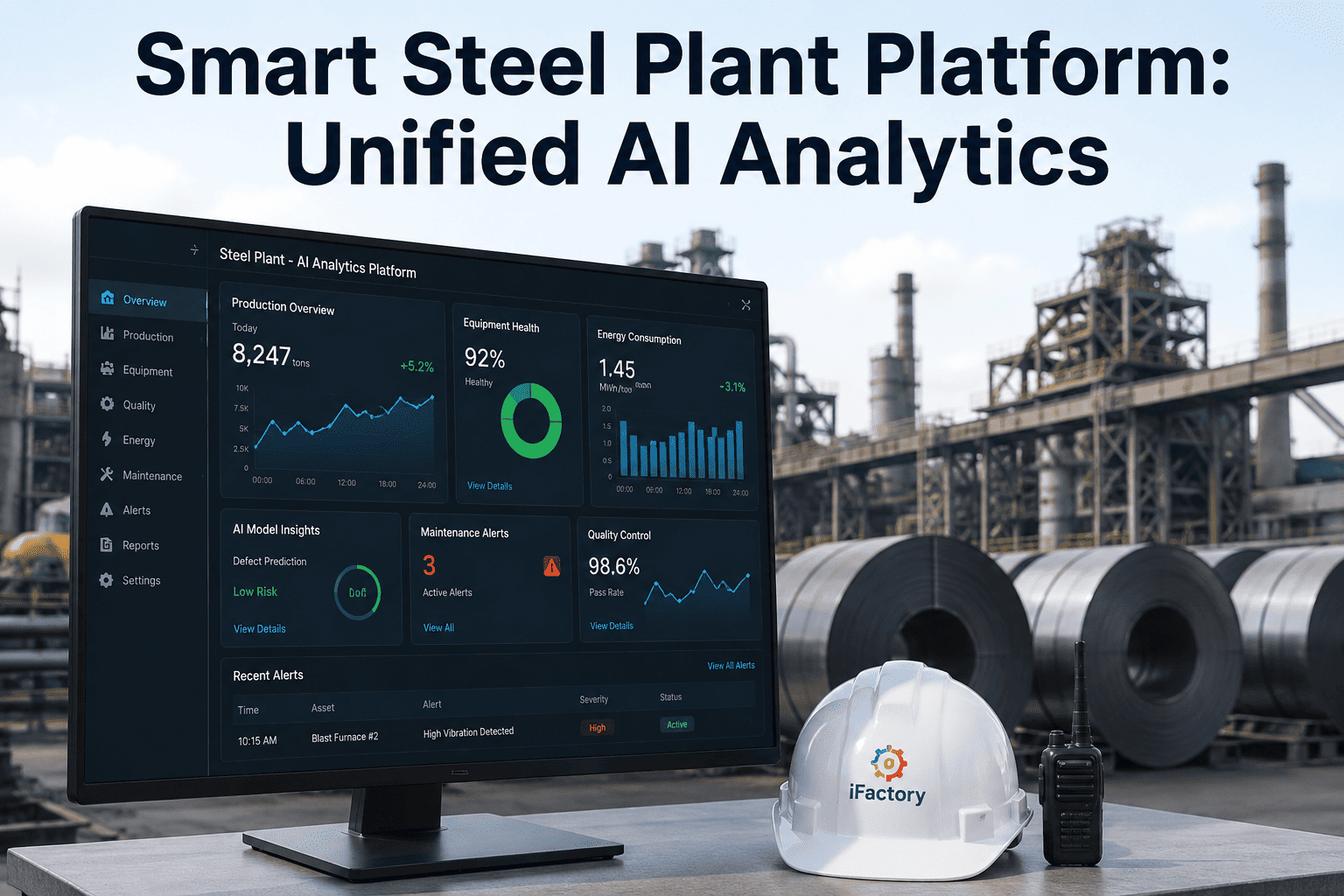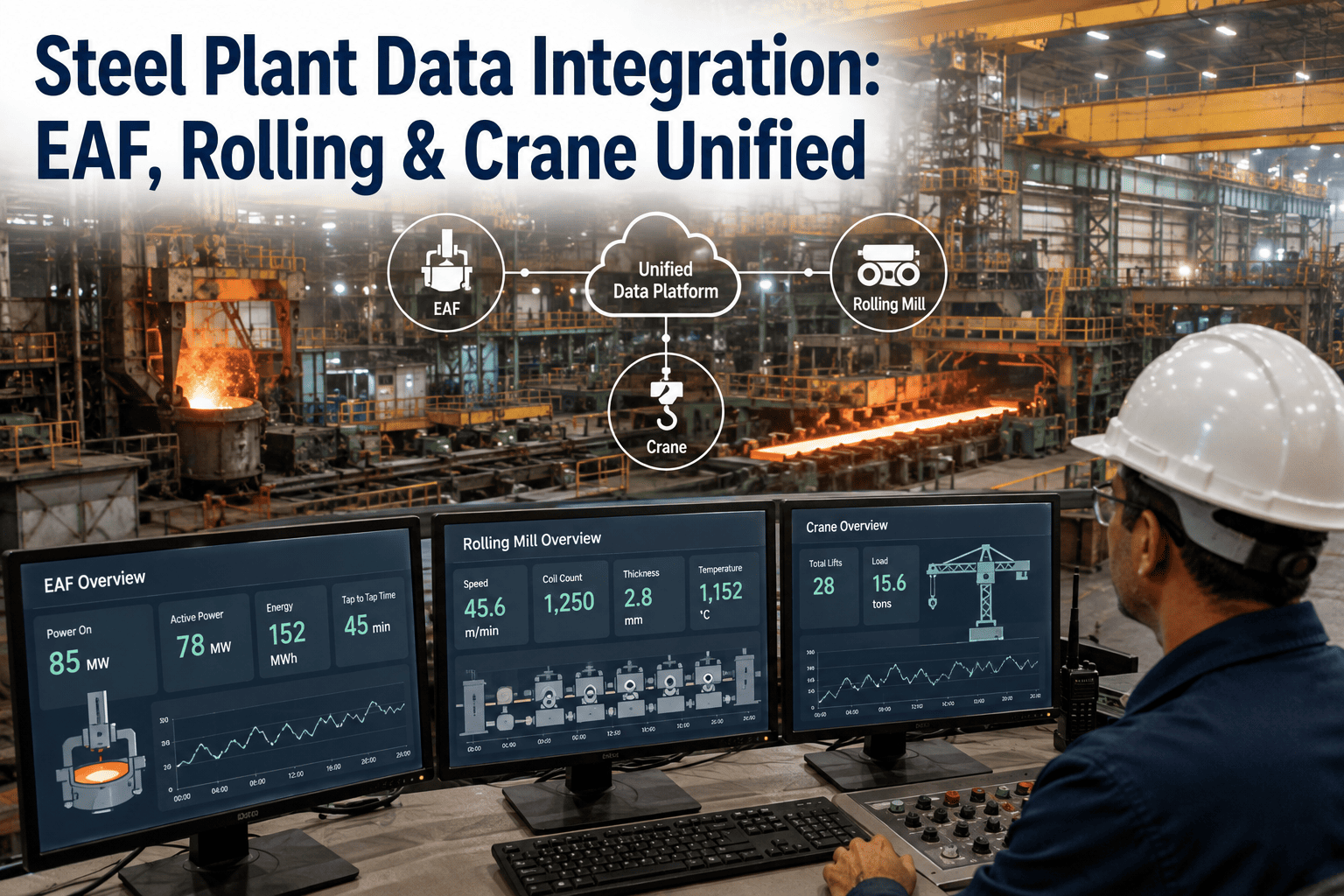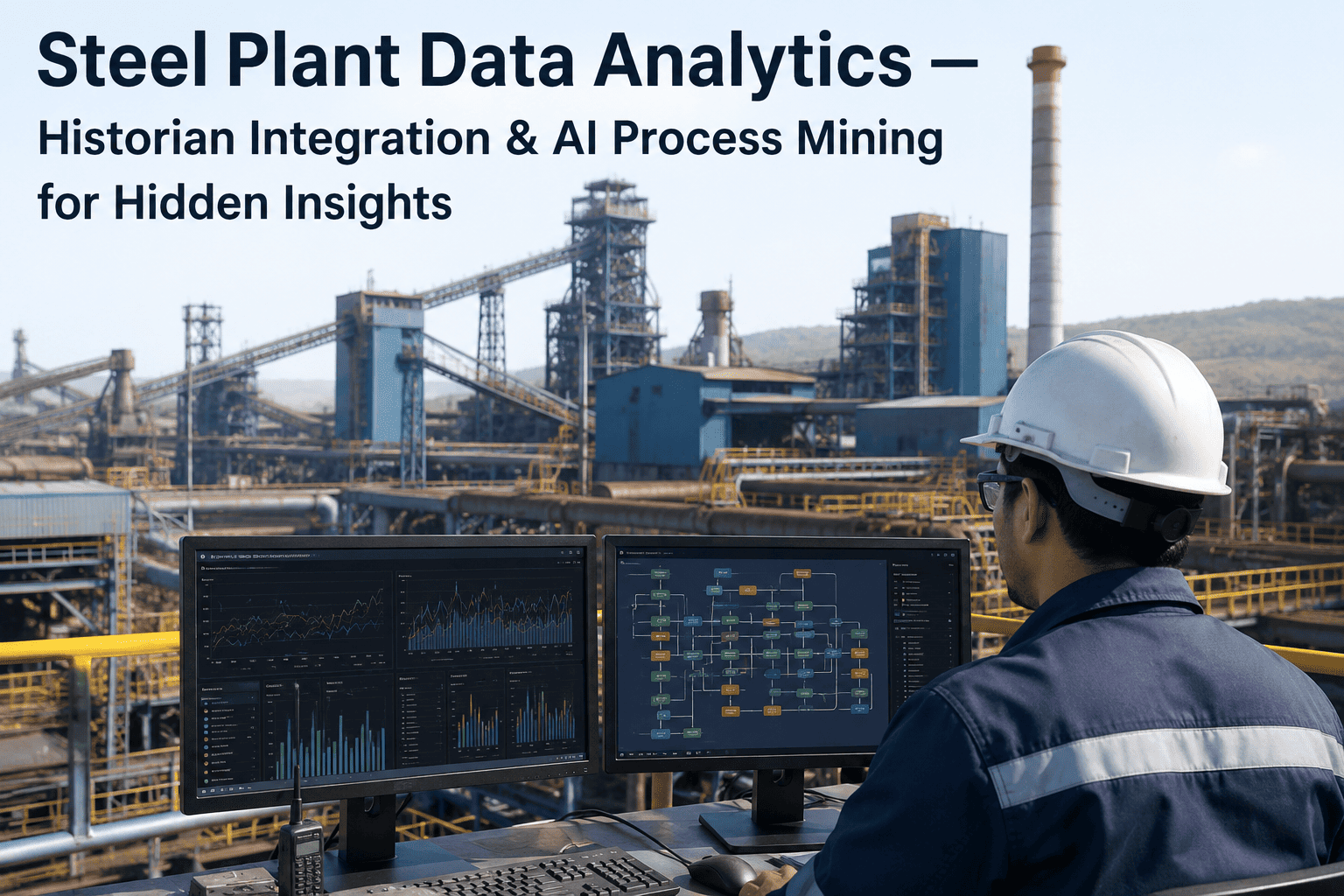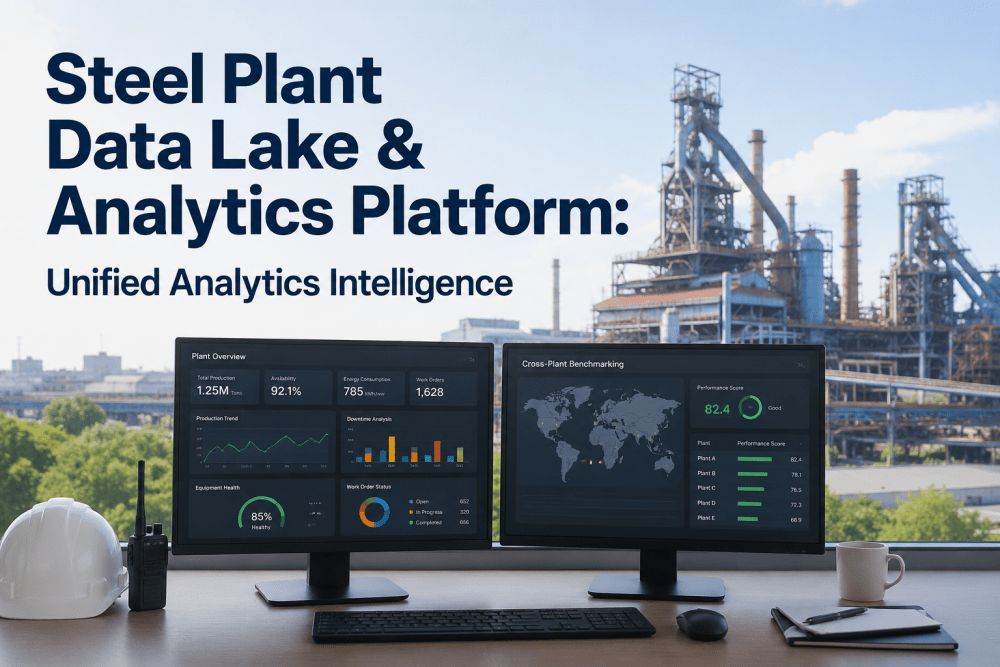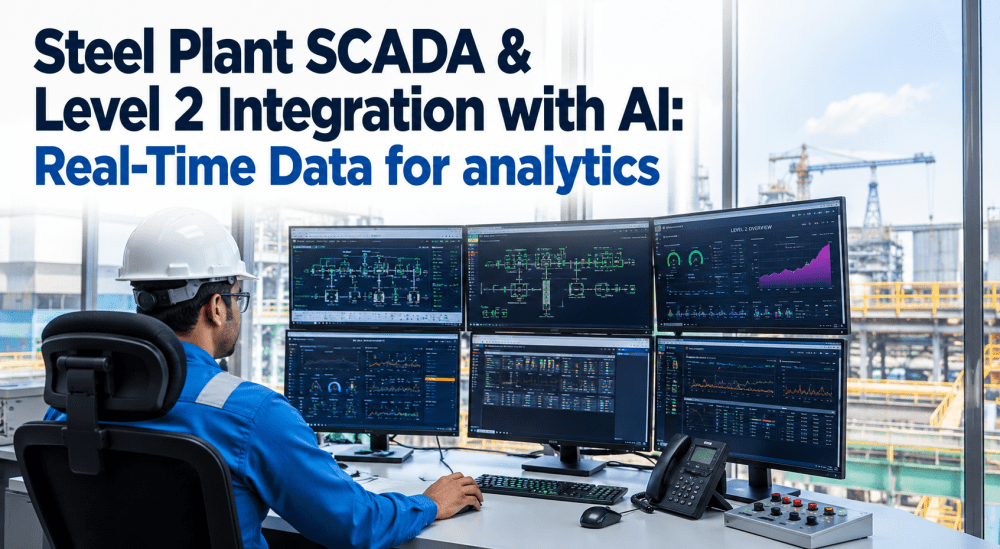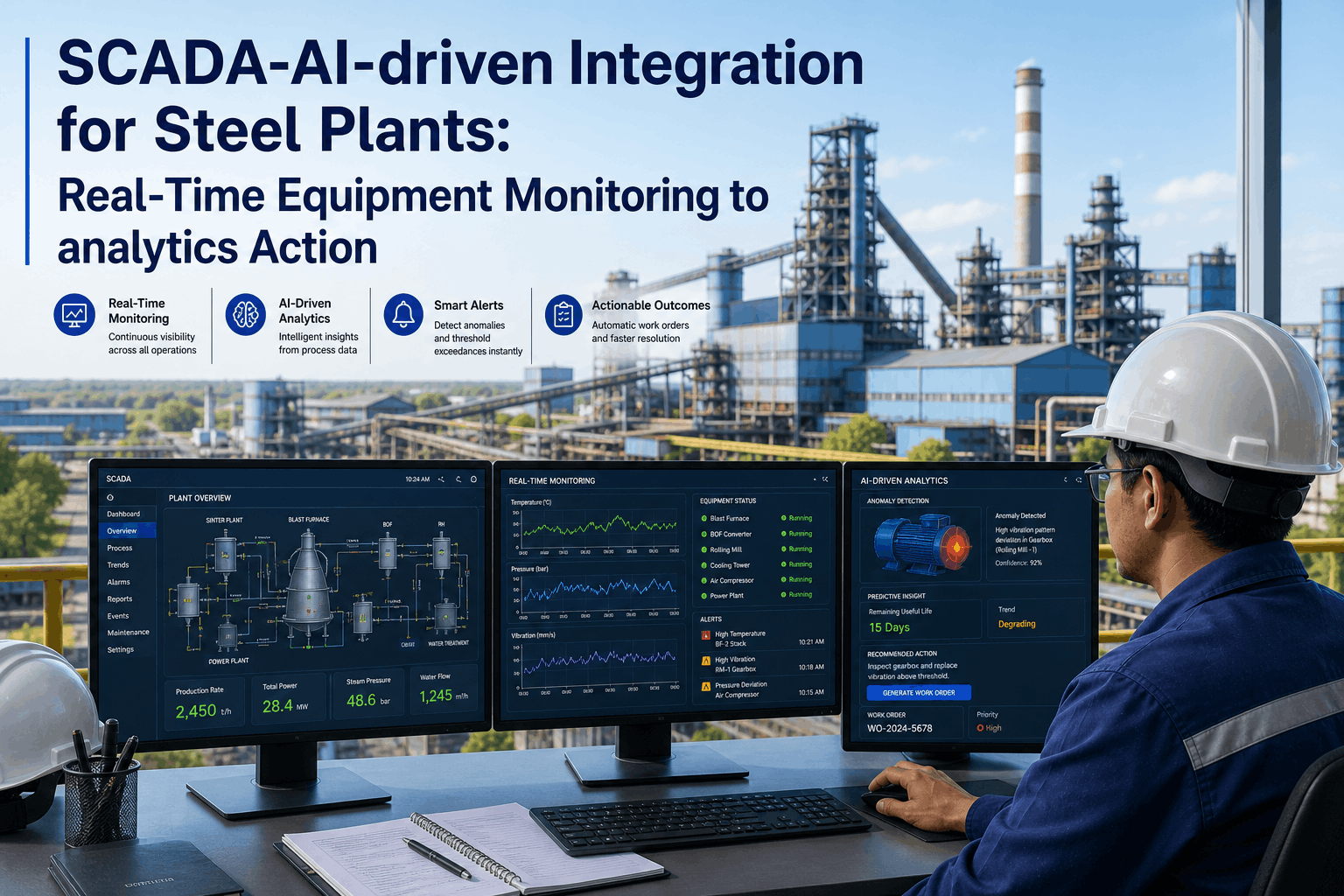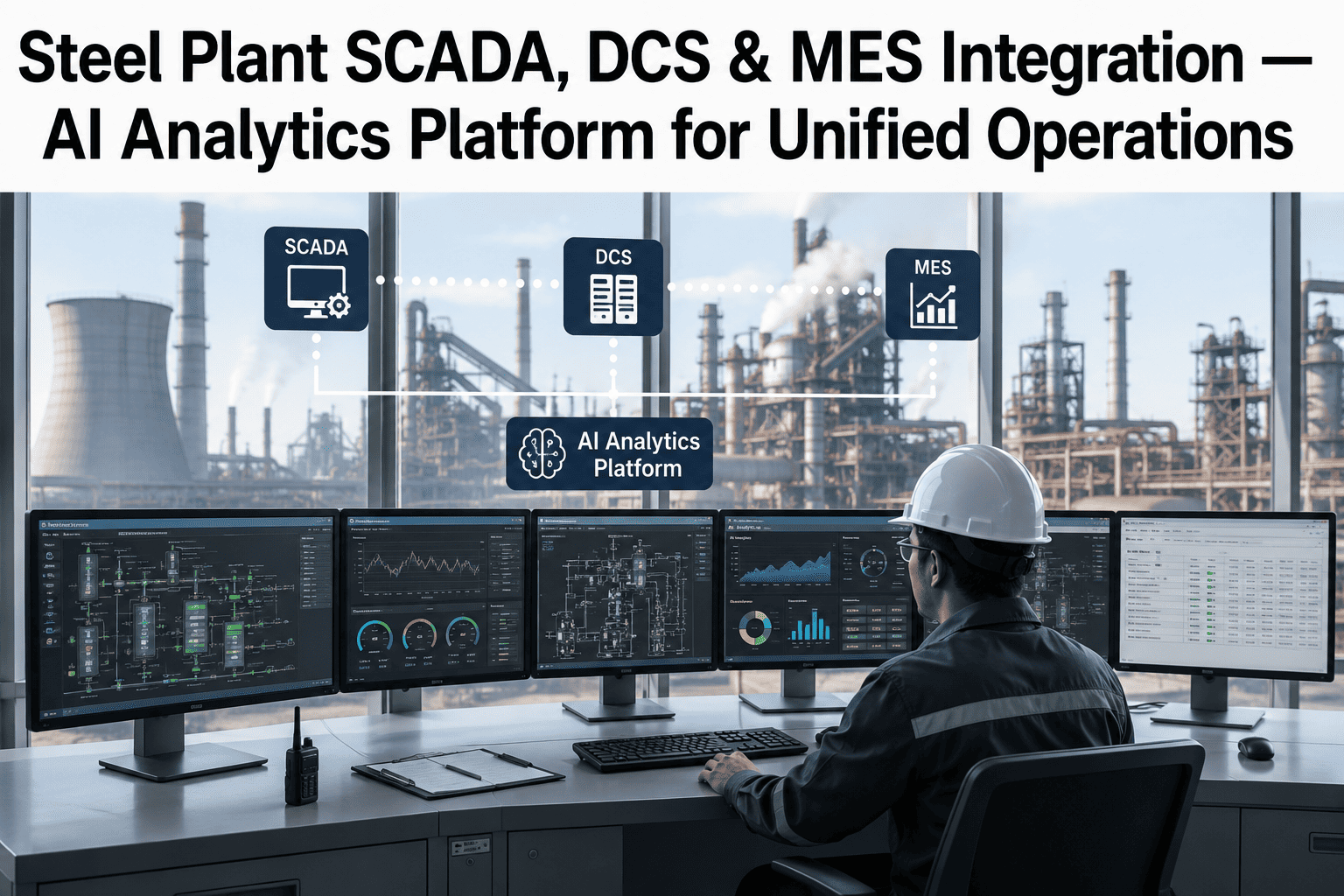
In the modern steel manufacturing landscape, data is the new iron ore. Yet, most steel plants operate with fragmented automation systems — SCADA for real-time process control, DCS for distributed regulatory control, and MES for production tracking — each generating valuable but isolated data streams. A typical integrated steel plant produces over 500,000 data points per minute across ironmaking, steelmaking, casting, and rolling mills. Without a unified analytics platform, this data remains trapped in silos, preventing process engineers from achieving true operational intelligence. This article explores how breaking down these silos through AI-driven integration of SCADA, DCS, and MES can unlock unprecedented levels of quality traceability, predictive maintenance, and energy optimization. By unifying these systems into a single analytics platform, steelmakers can reduce unplanned downtime by up to 30%, improve first-pass yield by 15%, and lower energy consumption by 10%. The journey begins with understanding the current state of automation in steel plants and ends with a practical roadmap for enterprise-wide data unification. Book a Demo to see how iFactory can transform your plant data into actionable intelligence.
Unified Operations for Steel Excellence
Integrate SCADA, DCS, and MES into a single AI-powered analytics platform for real-time operational intelligence and quality traceability across the entire steel value chain.
SCADA Integration for Real-Time Visibility
SCADA systems in steel plants monitor thousands of sensors across blast furnaces, basic oxygen furnaces, continuous casters, and rolling mills. By integrating SCADA data into a unified AI analytics platform, process engineers gain real-time visibility into critical parameters like temperature, pressure, flow rates, and vibration. This enables immediate detection of anomalies and prevents costly production disruptions. For example, a leading steelmaker reduced tap-to-tap time by 8% by analyzing SCADA data from their BOF process. The platform uses machine learning models to predict refractory wear and optimize lance positioning, extending campaign life by 20%.
DCS Integration for Advanced Process Control
Distributed Control Systems (DCS) manage complex regulatory loops in steelmaking, from combustion control in reheat furnaces to speed control in continuous casters. Integrating DCS data into the analytics platform enables advanced process control (APC) strategies that optimize setpoints in real-time. By applying AI models to DCS historical data, plants can reduce variability in slab thickness by 12% and lower fuel consumption in reheat furnaces by 7%. The platform also provides a unified view of all control loops, allowing engineers to identify underperforming loops and implement corrective actions quickly.
MES Integration for Quality Traceability
Manufacturing Execution Systems (MES) track production orders, material lots, and quality tests through the entire steelmaking process. By integrating MES data with SCADA and DCS, the platform creates a complete digital thread from raw materials to finished coils. This enables end-to-end quality traceability, allowing engineers to pinpoint the root cause of defects and implement corrective actions in real-time. For instance, a steel plant reduced customer complaints by 40% by linking MES quality data with SCADA process parameters to identify optimal casting conditions for each steel grade.
Transform Your Plant Data into Operational Intelligence
Unify your SCADA, DCS, and MES systems with iFactory's AI analytics platform. Achieve real-time visibility, predictive insights, and end-to-end quality traceability.
Key Benefits of Unified Data Integration
Predictive Maintenance
By analyzing SCADA and DCS data, AI models predict equipment failures before they occur. This reduces unplanned downtime by 30% and extends asset life by 25%.
Energy Optimization
Unified data enables real-time energy monitoring and optimization. Steel plants can reduce energy consumption by 10% by optimizing furnace schedules and power demand.
Quality Improvement
End-to-end traceability from raw materials to finished product improves first-pass yield by 15% and reduces rework costs by 20%.
Operational Efficiency
Real-time dashboards and alerts empower operators to make data-driven decisions, increasing overall equipment effectiveness (OEE) by 12%.
Implementation Roadmap for Unified Analytics
Data Audit and Mapping
Identify all SCADA, DCS, and MES data sources. Map data points to a common ontology for seamless integration. This phase typically takes 4-6 weeks.
Platform Deployment
Deploy iFactory's AI analytics platform on-premise or in the cloud. Configure data connectors for each system. Validate data flow and quality.
Model Training and Validation
Train AI models for predictive maintenance, quality prediction, and energy optimization using historical data. Validate models with plant engineers.
Go-Live and Continuous Improvement
Roll out dashboards and alerts to operators and engineers. Monitor performance and refine models continuously for ongoing improvement.
Comparison of Integration Approaches
| Integration Approach | Data Latency | Scalability | Cost | Maintenance |
|---|---|---|---|---|
| Point-to-Point | Seconds | Low | High | High |
| ESB (Enterprise Service Bus) | Sub-second | Medium | Medium | Medium |
| Data Lake with AI Platform | Real-time | High | Low | Low |
Frequently Asked Questions
How does SCADA integration improve steel plant operations?
SCADA integration into a unified AI analytics platform provides real-time visibility into thousands of process parameters across the plant. This enables immediate detection of anomalies, predictive maintenance, and optimized process control. For example, by analyzing SCADA data from blast furnaces, engineers can predict refractory wear and schedule maintenance proactively, reducing unplanned downtime. The platform also correlates SCADA data with quality metrics to identify optimal operating conditions for each steel grade. Book a Demo to see how iFactory integrates SCADA data for real-time operational intelligence.
What are the key benefits of DCS integration for steel plants?
DCS integration allows advanced process control (APC) strategies that optimize regulatory loops in real-time. By feeding DCS data into AI models, plants can reduce variability in critical parameters like slab thickness and temperature, improving product quality. Additionally, integrated DCS data enables energy optimization in reheat furnaces and continuous casters, reducing fuel consumption by up to 7%. The unified platform provides a single pane of glass for all control loops, simplifying monitoring and troubleshooting. Contact Support for more details on DCS integration.
How does MES integration enable quality traceability?
MES integration creates a digital thread linking raw material lots, production orders, and quality tests to real-time process data from SCADA and DCS. This enables end-to-end traceability, allowing engineers to trace any quality issue back to its root cause, whether it be a specific batch of raw materials, a process parameter deviation, or an equipment malfunction. The platform automatically generates traceability reports for customers, reducing audit time by 50%. Book a Demo to see quality traceability in action.
What is the typical timeline for implementing a unified analytics platform?
The implementation timeline depends on the number of data sources and the complexity of existing systems. Typically, Phase 1 (data audit and mapping) takes 4-6 weeks. Phase 2 (platform deployment and data connector configuration) takes 2-4 weeks. Phase 3 (model training and validation) takes 4-8 weeks. Phase 4 (go-live and continuous improvement) is an ongoing process. Most plants achieve initial value within 3-4 months of project start. Book a Demo to discuss your specific timeline.
How does iFactory ensure data security and compliance?
iFactory's platform is built with enterprise-grade security, including role-based access control, data encryption at rest and in transit, and audit logging. The platform can be deployed on-premise to keep data within the plant network, or in a private cloud with strict access controls. iFactory complies with industry standards like ISO 27001 and SOC 2. All data integration is done through secure APIs and connectors, ensuring no data leakage. Contact Support for detailed security documentation.
Ready to Unify Your Steel Plant Operations?
Break down data silos between SCADA, DCS, and MES with iFactory's AI analytics platform. Achieve real-time operational intelligence, predictive insights, and end-to-end quality traceability.