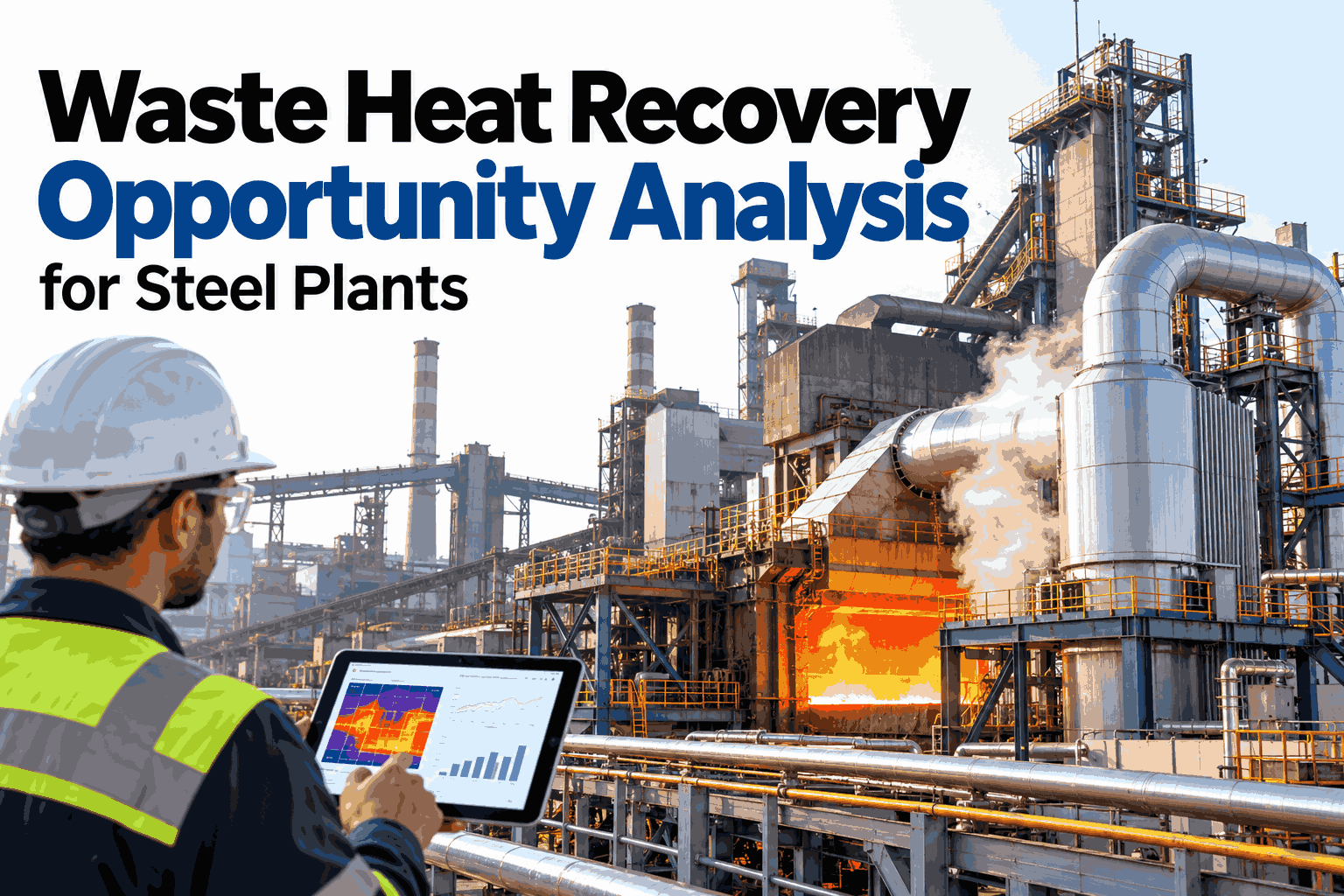
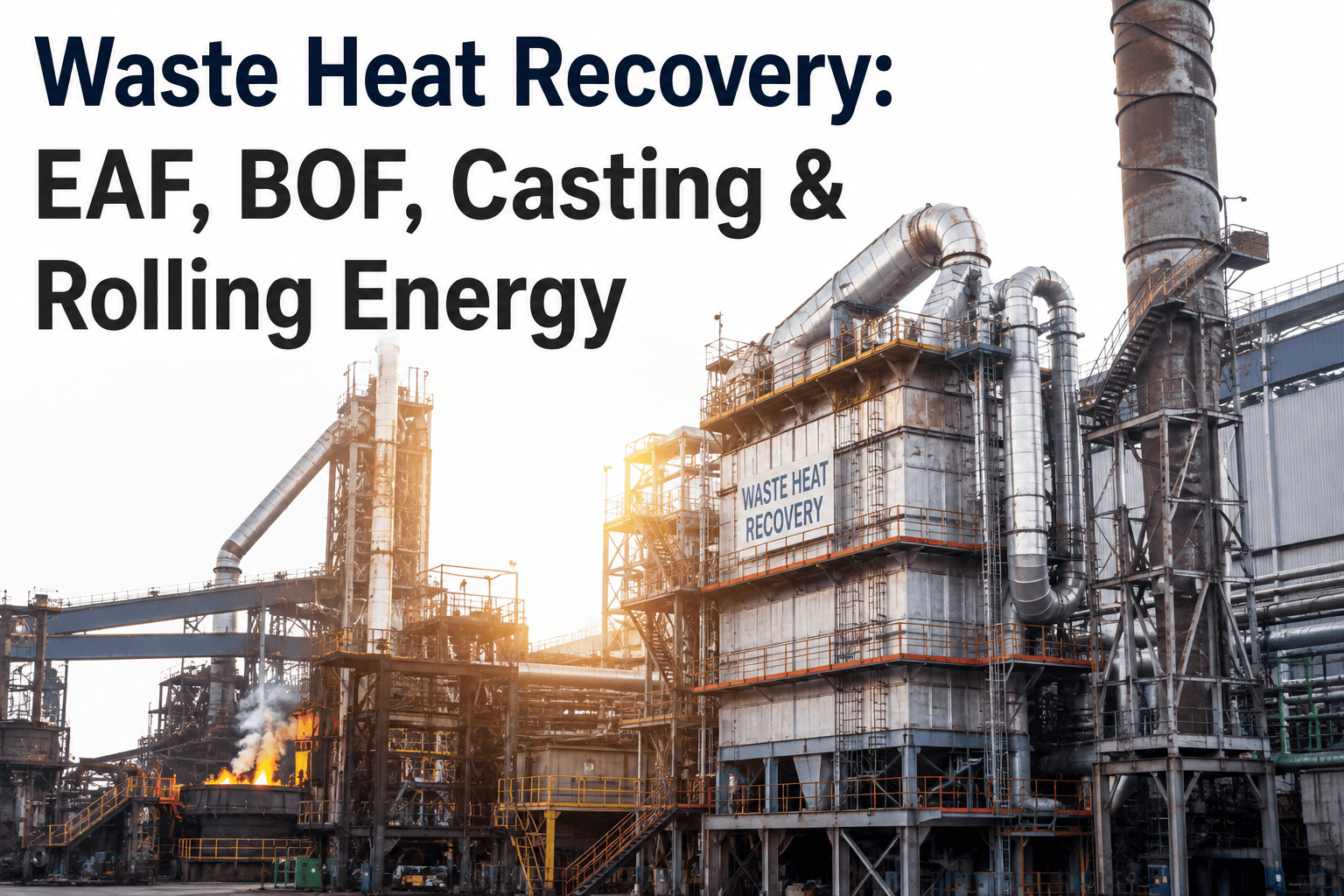
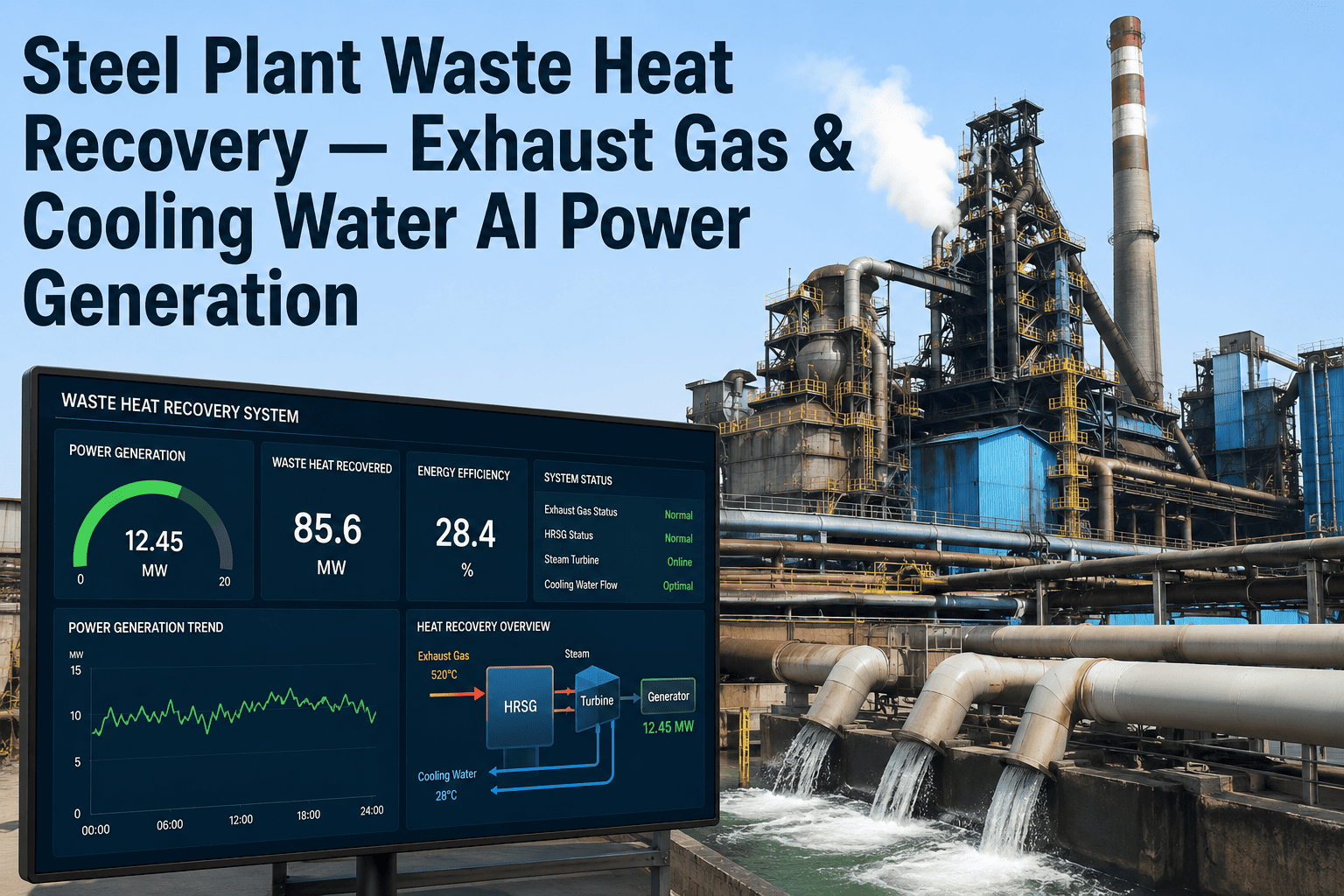
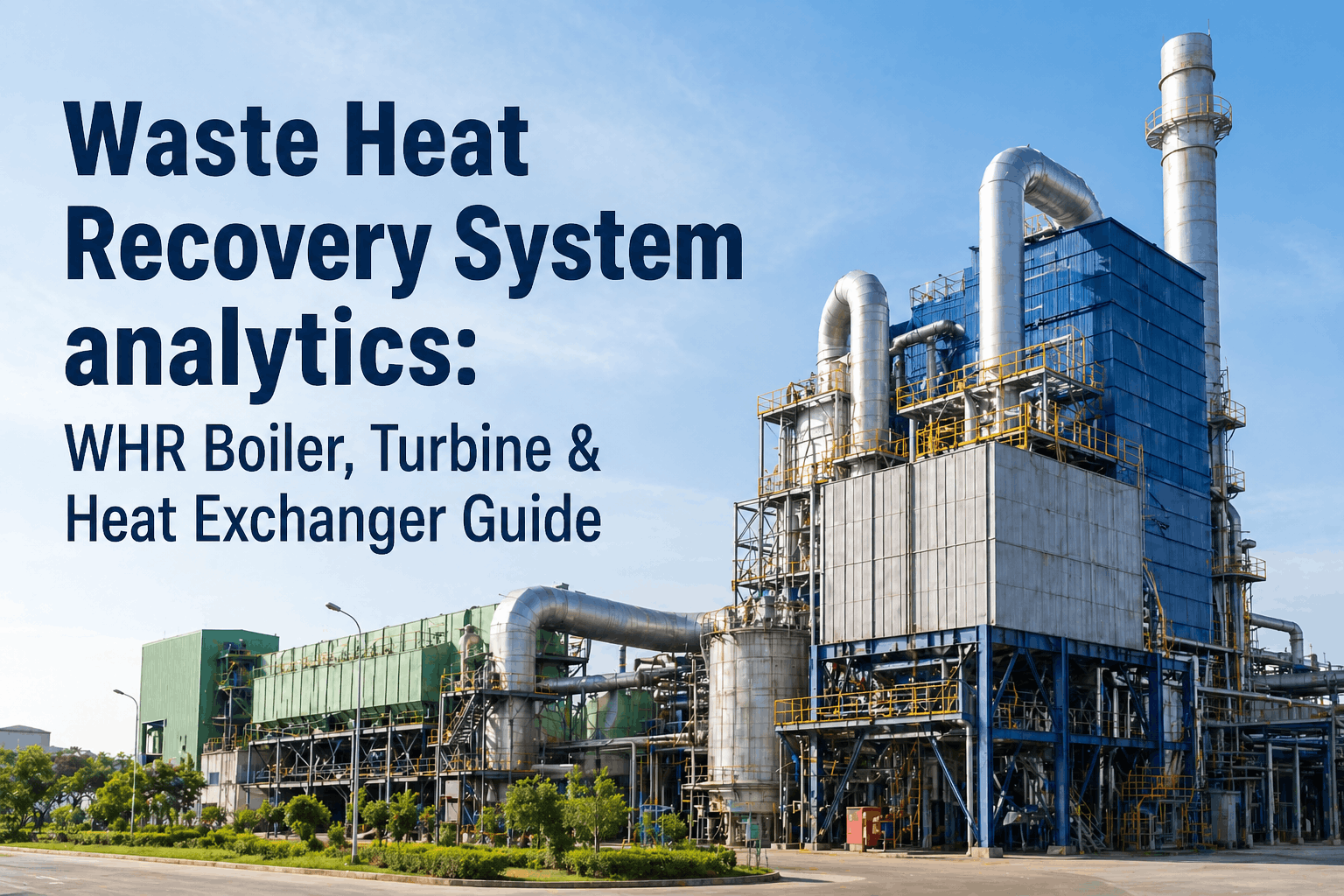
In the ultra-competitive landscape of global steelmaking, energy efficiency is no longer just a sustainability goal—it is a critical determinant of operational survival. Steel plants consume massive quantities of thermal energy, yet up to 50% of this heat is traditionally lost through flue gases, slag cooling, and furnace exhaust. This loss is compounded by "Thermal Inertia"— the operational lag where recovery systems fail to react fast enough to the rapid temperature spikes and drops characteristic of tap-to-tap steel production cycles. Waste heat recovery system analytics have emerged as the primary mechanism for capturing this "Invisible Asset," converting thermal waste into high-pressure steam, electricity, or process heat. By deploying iFactory’s purpose-built AI and energy monitoring suite, steel manufacturers can bridge the "Recovery Gap" where fouling in heat exchangers, pressure drops in boilers, and sub-optimal steam turbine cycles currently erode 15-20% of theoretical recovery capacity. If your WHR platform does not provide real-time, physics-informed visibility into exchanger efficiency and tube scaling precursors, you are not just losing heat—you are losing millions in avoidable utility spend and carbon credits. By creating a "Digital Thermal Twin" of your entire recovery chain, iFactory ensures that no BTU is left uncaptured, even during extreme process transients. To see how iFactory’s energy efficiency analytics can maximize your thermal recovery, Schedule Your Free Demo with our industrial energy team today.
The Three Critical Points of WHR Failure in Steel Plants
Why Standard Energy Dashboards Miss 15% of Recovery Potential
Most steel plants suffer from "Invisible Recovery Loss." Standard dashboards show the total steam produced, but they fail to calculate the "Yield Gap"—the difference between what *could* be recovered based on current flue gas temperatures and what is *actually* being captured. This gap is often hidden by "Averaging Latency," where sensors report 5-minute averages that mask the micro-transients where 30% of energy recovery is actually lost. iFactory’s WHR system analytics focus on three critical failure points where thermal intelligence is lost: Exchanger Fouling, Steam Cycle Inefficiency, and Cogeneration Mismatch. By using causal AI to correlate furnace exit temperatures with HRSG (Heat Recovery Steam Generator) performance, we identify precursors to tube scaling and leakages months before they trigger a maintenance shutdown. Furthermore, our platform identifies "Thermal Short-Circuiting," where bypass dampers or valve leakages allow high-grade heat to escape directly to the stack without touching a recovery surface. Schedule Your Free Demo to see live energy yield mapping.
The Causal Physics of Waste Heat: Why Simple Dashboards Fail in Steelmaking
Moving Beyond Simple Correlation to Deterministic Energy Recovery
The primary reason WHR systems underperform is that they are managed using "Statistical Correlation" rather than "Causal Physics." A standard monitoring tool might tell you that steam pressure is low when flue gas temperature is low—this is correlation. iFactory’s AI understands the *causality*: it knows that the steam pressure drop is actually due to 0.4mm of calcium scaling in the secondary heat exchanger bank, which has been exacerbated by a specific chemical imbalance in the feed-water during the last 48 hours of high-load production. This "Physics-First" approach allows for deterministic interventions. Instead of "Wait and See," your energy engineers move to "Predict and Prevent." This level of granularity is what enables the 15-22% yield improvement reported by our customers. Schedule Your Free Demo for a custom thermal gap analysis.
Waste Heat Sources vs. Recovery Potential Matrix
Mapping Thermal Assets Across the Steel Production Chain
Not all waste heat is created equal. The thermal energy recovery business case depends on the quality (temperature) and quantity (mass flow) of the source. iFactory’s analytics suite categorizes these sources and prioritizes recovery based on current energy market prices and carbon tax exposure.
| Thermal Source | Temperature Range | Recovery Potential (AI-Optimized) | Financial Impact (Annualized) |
|---|---|---|---|
| Blast Furnace Flue Gas | 250°C – 450°C | 35% Recovery Yield | High ($800k+) |
| Sinter Cooler Exhaust | 300°C – 600°C | 45% Recovery Yield | Max ($1.2M+) |
| EAF Exhaust Gas | 800°C – 1200°C | 60% Recovery Yield | Ultra-High (Variable) |
| BOF (Converter) Gas | 900°C – 1400°C | 50% Recovery Yield | High (Cyclic) |
| Slag Heat (Low-Grade) | 100°C – 200°C | 15% ORC Potential | Medium ($150k+) |
De-Carbonization Economics: Mapping WHR Yield to Carbon Credit Portfolios
How Thermal Circularity Directly Drives Steel Plant Profitability
In the era of carbon taxes and 'Green Steel' premiums, every recovered BTU has a secondary financial value beyond energy cost offset. iFactory’s energy efficiency analytics integrate directly with your carbon accounting systems to provide a verified, real-time record of CO2 avoidance. By maximizing WHR yield, a steel plant producing 1.5M TPA can effectively eliminate 15,000 to 22,000 tonnes of annual Scope 1 emissions. This "Avoidance Certificate" is a bankable asset for regulatory compliance and premium product positioning. The integration of "Emission-to-Efficiency" mapping is what separates Level 4 mature organizations from those simply tracking meter readings. Book a Demo to see our carbon credit validation models.
The "Decision Velocity" Framework for WHR Reliability
Why Sub-Second Monitoring is Required for Heavy Industrial Recovery
In a steel plant, thermal shocks can destroy a waste heat boiler in minutes. A tube leak identified at second 10 is a minor repair; at minute 5, it is a catastrophic asset loss. iFactory’s platform delivers WHR system reliability through sub-second edge ingestion and autonomous anomaly detection. By correlating acoustic signatures with pressure drop profiles, we identify "Micro-Leaks" before they propagate. This speed is the difference between an "Energy Profit" and a "Maintenance Liability." Furthermore, the ability to automate "Emergency Heat Dumping" during furnace surges prevents over-pressurization events that account for 40% of WHR boiler failures. Authorities who want to measure their current thermal latency can Book a Demo for a structured thermal gap assessment.
"Our WHR system was essentially a 'black box' until we deployed iFactory. We were producing steam, but we had no idea that heat exchanger fouling was costing us 18% of our potential recovery every day. By using their predictive analytics, we've increased our electrical cogeneration yield by 2.4 MW—effectively recovering $1.1M in electricity costs annually while reducing our carbon footprint by 14,000 tonnes."
VP Operations, Integrated Steel Plant
"The 'Thermal Inertia' in our previous recovery model was costing us millions. iFactory's causal AI identified that our boiler pressure set-points were lagging furnace transients by 4 minutes, leading to massive superheat losses. By closing that loop, we've stabilized our steam quality and added 15% to our annualized recovery yield. It is the most impactful energy project we've executed in a decade."
Lead Energy Engineer, Multi-Site Steel Authority
Frequently Asked Questions
How does AI maximize energy recovery in steel plants?
AI maximizes recovery by identifying the "Yield Gap"—the difference between theoretical and actual heat capture. It optimizes heat exchanger cleaning cycles, predicts boiler pressure transients, and balances cogeneration loads in real-time, ensuring the system always operates at peak thermal efficiency.
What is "Economic Fouling" in heat exchangers?
Economic Fouling is the point where the financial loss from reduced heat transfer efficiency exceeds the operational cost of a cleaning cycle. iFactory’s AI identifies this exact intersection, ensuring you only perform maintenance when it delivers a net positive ROI.
Can WHR analytics help reduce carbon emissions in steelmaking?
Yes. Every MWh of thermal energy recovered from waste heat directly offsets a MWh of energy that would otherwise be generated from fossil fuels. Maximizing WHR yield is a primary lever for reducing Scope 1 emissions and achieving 'Green Steel' targets.
What are the primary data sources for WHR system analytics?
The platform ingests flue gas temperatures/flow, heat exchanger inlet/outlet temperatures, steam pressure/flow, feed-water temperature, and boiler drum levels. By correlating these with furnace tapping cycles, we create a high-fidelity thermal model of the entire recovery chain.
How does iFactory improve WHR boiler reliability?
We provide "Early Warning" signals for tube leaks, scaling, and thermal stress. By detecting sub-second pressure drops and temperature anomalies, we allow for planned maintenance before a tube burst triggers an emergency furnace shutdown.
What is Organic Rankine Cycle (ORC) and how do you optimize it?
ORC is a technology used to recover low-grade heat (100°C – 200°C) into electricity using an organic working fluid. We optimize ORC systems by monitoring condenser approach temperatures and fluid expansion ratios to ensure maximum power output from low-temperature sources.
What is the typical ROI for a WHR analytics deployment in a steel plant?
Most steel plants achieve full payback in under 6 months. This is driven by a 15-20% improvement in steam generation yield and the prevention of even a single emergency maintenance outage through predictive failure detection.
How do I get a thermal recovery audit for my steel plant?
iFactory offers a structured 14-day energy recovery audit. Our team will map your thermal sources, evaluate your current exchanger efficiencies, and deliver a structured ROI roadmap for maximizing your waste heat capture. Schedule Your Free Demo to begin.