Every ton of steel produced generates far more heat than the final product actually needs, and most of that surplus leaves the plant through an exhaust stack, a cooling water system, or radiant loss from red-hot material sitting in the open air. A modern EAF, BOF, casting line, or reheat furnace throws off enough recoverable thermal energy to preheat scrap, generate steam, or produce a meaningful share of a plant's own electricity, yet many operations still treat that heat as an unavoidable byproduct rather than a resource with a value attached to it. iFactory tracks temperature, flow, and available thermal energy at each waste heat source across your process, so a recovery project can be sized and justified against real plant data instead of a generic industry estimate. You can book a demo to see recoverable heat mapped across your own furnace and casting operations.
WASTE HEAT RECOVERY · THERMAL ENERGY · EAF · BOF · CASTING · ROLLING
The Heat Is Already There. The Question Is What You Do With It.
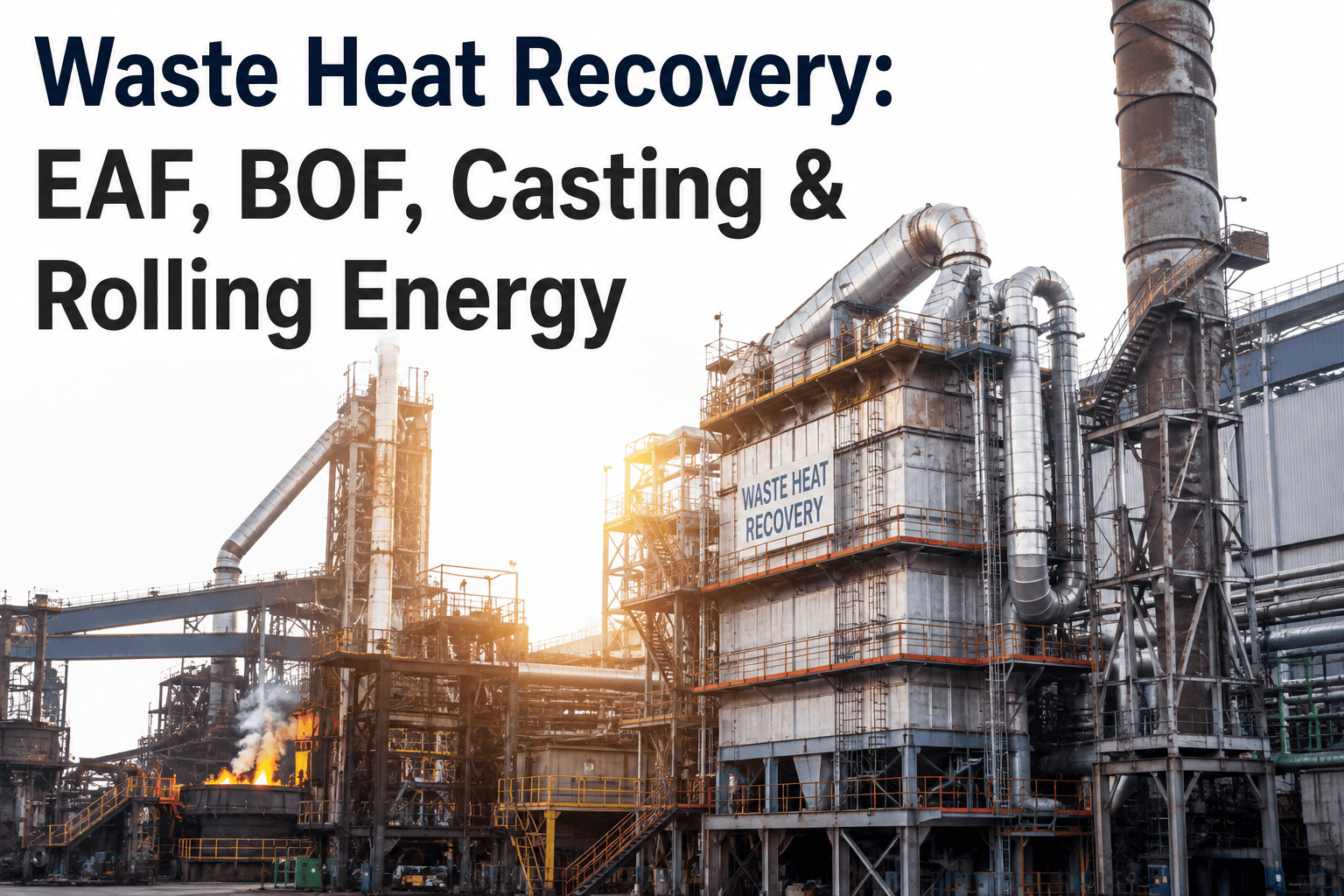
iFactory maps recoverable thermal energy across EAF off-gas, BOF converter gas, continuous casting radiation, and rolling mill reheat exhaust, then quantifies what a recovery project would actually be worth on your own production data.
1,000-1,600°C
EAF Off-Gas
1,400-1,700°C
BOF Converter Gas
800-1,000°C
Casting Radiation
400-700°C
Rolling Reheat Exhaust
THE VALUE LEAVING THROUGH THE STACK
Recoverable Heat Is a Line Item Most Plants Never Actually Quantify
Waste heat recovery projects are frequently discussed at a conceptual level and then shelved, largely because the potential value is estimated from generic industry benchmarks rather than measured against a specific plant's actual temperature, flow, and duty cycle data. Without that measured baseline, it is difficult to build a capital case that survives scrutiny, so the project competes poorly against investments with more obviously quantified returns.
20-40%
Share of total furnace energy input that typically leaves as recoverable waste heat across steel processes
3-7 yrs
Typical payback range for a well-sized waste heat recovery project once accurately quantified
10-15%
Potential reduction in purchased energy achievable through recovered heat reused on site
RECOVERY OPPORTUNITIES BY SOURCE
Every Major Heat Source Has a Different Best Use
Not all waste heat is equally easy to capture or equally valuable once captured, since temperature, flow consistency, and location relative to a potential use all affect which recovery pathway actually makes sense for a given source.
EAF Off-Gas
High temperature but intermittent, well suited to scrap preheating systems that use the gas stream directly before it reaches the baghouse.
BOF Converter Gas
Very high temperature and rich in combustible content, commonly captured through suppressed combustion systems for steam generation.
Continuous Casting Radiation
Steady, lower-grade radiant heat from slabs and billets, often captured through enclosure hoods feeding low-pressure steam or preheat air systems.
Rolling Mill Reheat Exhaust
Consistent flow well suited to recuperators that preheat combustion air, directly cutting fuel consumption at the same furnace.
Quantify Your Own Recoverable Heat Before You Size a Project
iFactory measures temperature and flow at your actual heat sources to build a data-backed case for recovery investment. Book a demo and review it against your own furnace and casting data.
WHAT THE RECOVERED HEAT CAN POWER
Recovered Thermal Energy Rarely Goes to Waste Twice
Once heat is captured, it typically feeds one of a small number of on-site uses, each with different infrastructure requirements and payback characteristics depending on what the plant already has in place.
Scrap and Feedstock Preheating
Reduces the energy required to melt scrap by raising its starting temperature before it enters the furnace.
Steam Generation
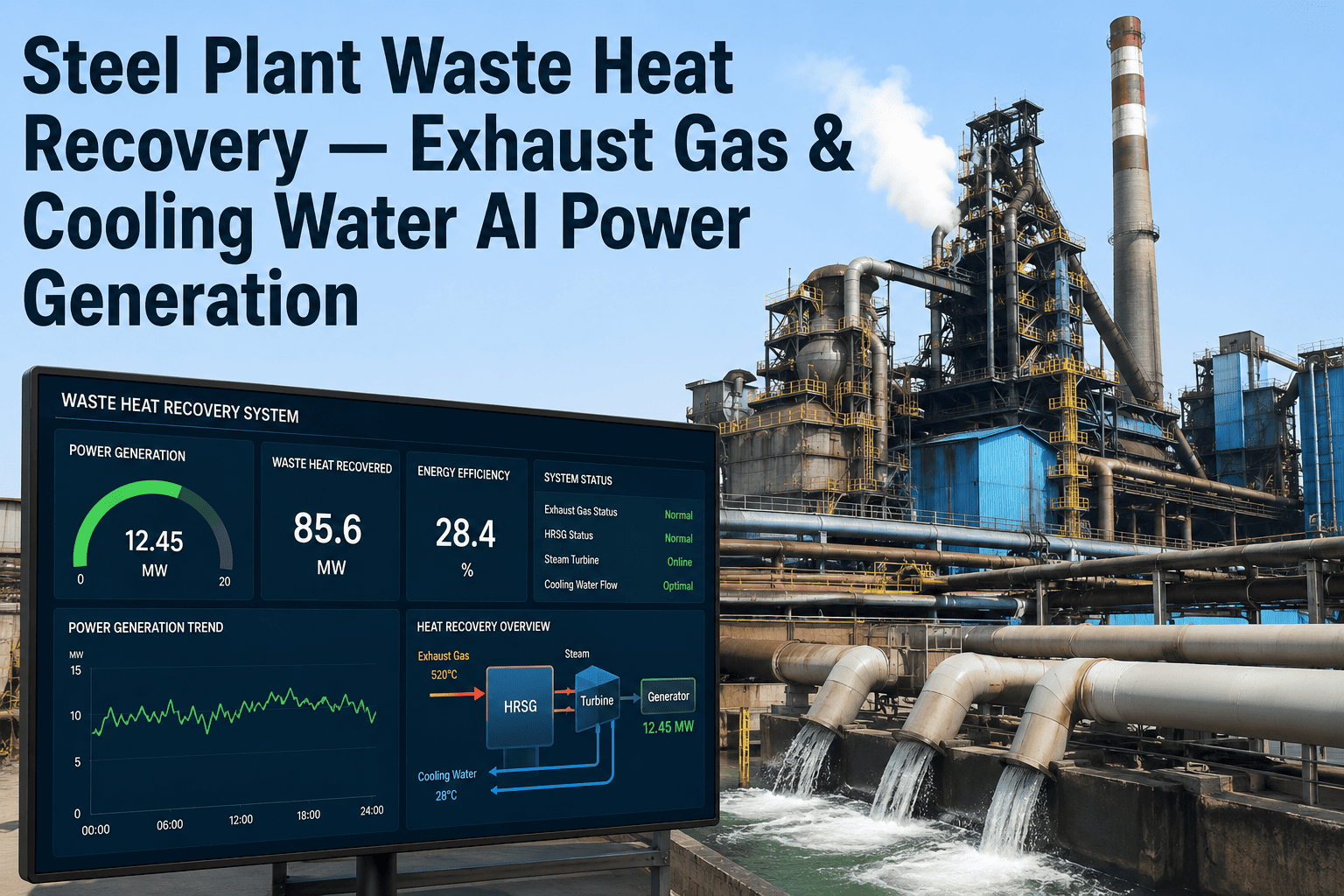
Produces process steam for other plant uses or drives a steam turbine to generate a portion of on-site electricity.
Combustion Air Preheating
Recuperators return heat directly to the same furnace's combustion air, cutting fuel use at the source.
Building and Process Heating
Lower-grade recovered heat can offset space heating or other low-temperature process needs elsewhere on site.
MEASURED VS ESTIMATED PROJECTS
What Changes When a Project Is Sized on Real Plant Data
A recovery project sized on industry-average estimates carries more uncertainty than one built from a plant's own measured temperature and flow history, and that uncertainty is exactly what tends to stall capital approval.
| Factor |
Estimate-Based Project Case |
iFactory Measured Project Case |
| Data Source |
Industry benchmark figures applied to your furnace type |
Actual temperature and flow measured at your sources |
| Duty Cycle Accuracy |
Assumes typical operating patterns |
Reflects your real intermittency and production schedule |
| Payback Confidence |
Wide range, hard to defend to capital committees |
Narrower range grounded in measured plant behavior |
| Post-Install Verification |
Rarely tracked against original projection |
Actual recovered energy tracked against forecast |
WHO THIS APPLIES TO
Any Operation With High-Temperature Process Heat
Waste heat recovery is most attractive wherever a process routinely reaches high temperatures and runs consistently enough to justify the capital investment in recovery equipment.
Electric Arc Furnace Mills
Capture off-gas heat for scrap preheating to reduce melting energy per ton.
Integrated Steelmaking Operations
Recover BOF converter gas heat for steam generation and on-site power.
Continuous Casting Operations
Capture radiant heat from slab and billet cooling for low-pressure steam or preheat use.
Hot Rolling and Reheat Operations
Add or upgrade recuperators to preheat combustion air and cut furnace fuel consumption directly.
FREQUENTLY ASKED QUESTIONS
Questions Energy and Engineering Teams Ask First
How do we know if our furnace off-gas actually has enough recoverable energy to justify a project?
The only reliable way to answer that is measuring actual temperature, flow rate, and duty cycle at the source over a representative production period, since generic industry figures can significantly overstate or understate what a specific furnace configuration actually produces. iFactory builds that measured profile so the recoverable energy estimate reflects your equipment and schedule rather than an assumption.
Book a demo to review what measured data would look like for your furnace.
Does intermittent operation, like batch EAF melting, make waste heat recovery impractical?
Intermittency changes which recovery technology fits best, but it does not rule out recovery altogether, since systems can be designed around buffering or matched to a downstream use that tolerates variable input, such as scrap preheating timed to the melt cycle. Understanding the actual duty cycle pattern is what allows the right technology choice rather than defaulting to steady-state assumptions.
Contact our support team to discuss recovery options suited to batch operations.
What is the typical payback period once a project is properly sized?
Payback varies significantly by source temperature, flow consistency, and what the recovered heat displaces, but well-sized projects in steel operations commonly fall in a multi-year range that becomes far more defensible once based on measured data rather than an industry average. A recuperator preheating combustion air at the same furnace often has a shorter payback than a larger steam generation project requiring new infrastructure.
Book a demo to model payback against your own measured heat sources.
Can recovered heat be sold or credited under energy efficiency incentive programs?
Many regions offer incentive programs for verified energy efficiency improvements, including waste heat recovery, and having a measured before-and-after energy profile is typically a requirement for qualifying rather than an estimate alone. Continuous tracking of recovered energy against baseline supports that documentation requirement well after the project is commissioned.
Contact our support team to discuss documentation for incentive program applications.
How do we verify a recovery project delivers what it was projected to deliver after installation?
Verification requires continuing to measure the same temperature, flow, and energy parameters after installation that were used to size the project originally, then comparing actual recovered energy against the forecast. This step is frequently skipped once a project is commissioned, which means underperformance can go unnoticed for years.
Book a demo to see post-installation tracking against original projections.
Turn Waste Heat Into a Measured, Defensible Project
iFactory quantifies recoverable thermal energy across your furnace, casting, and rolling operations, so your next recovery investment is backed by real data. Book a demo and see it mapped against your own plant.