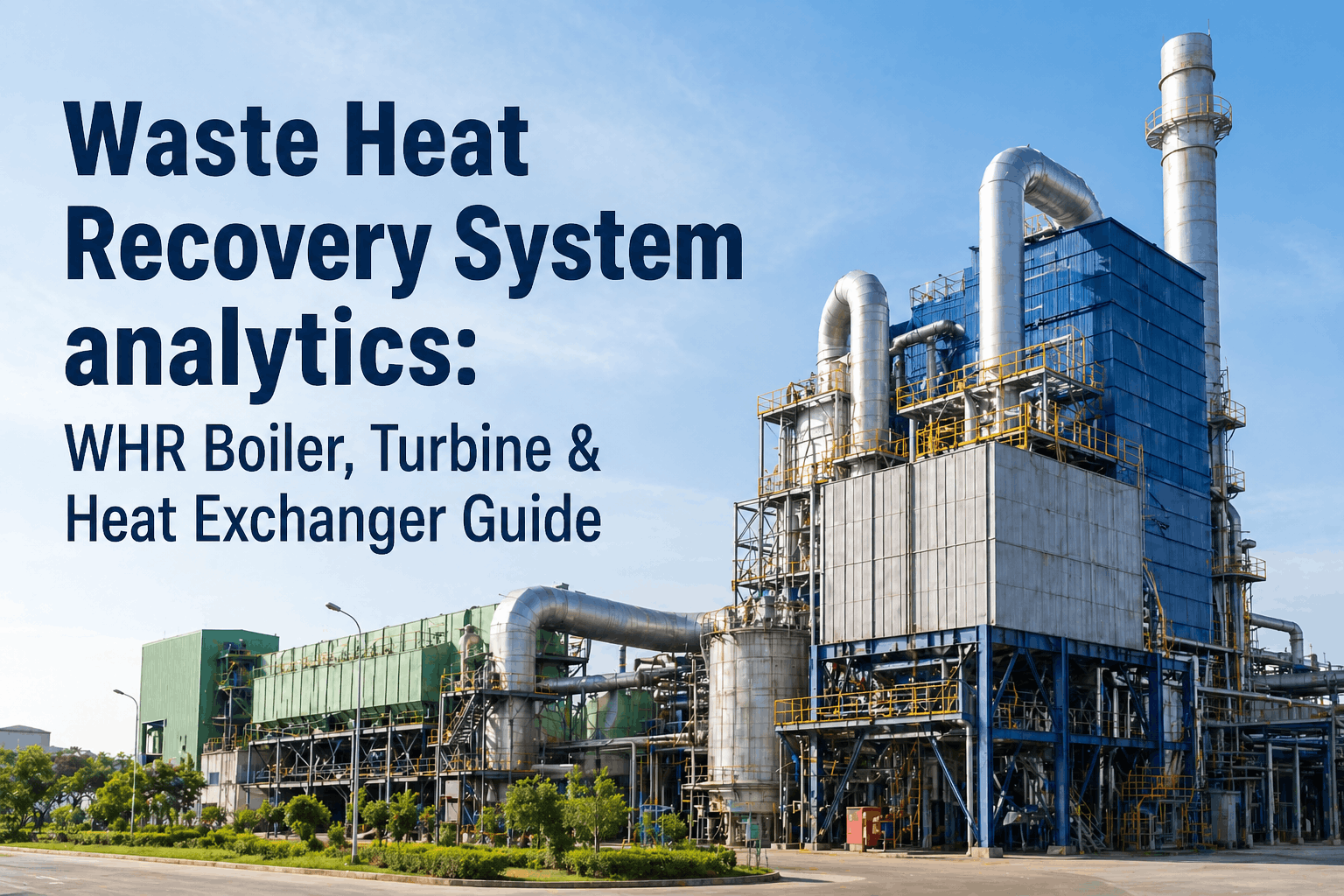
The night shift supervisor at a 3-million-tonne-per-year integrated steel mill watches the HRSG exit temperature climb past 185°C — 12 degrees above the morning baseline. That's 4.2 MW of recoverable heat bleeding into the atmosphere per hour, roughly $1.3 million a year in wasted energy if the trend holds. The DCS shows no alarms. The boiler logbook has no entry for the last six hours. Nobody knows because nobody is watching the waste heat recovery system continuously — and the plant's carbon intensity score just took another silent hit.
Stop Wasting 4–8% of Your Energy to Unmonitored Steam & HRSG Drift
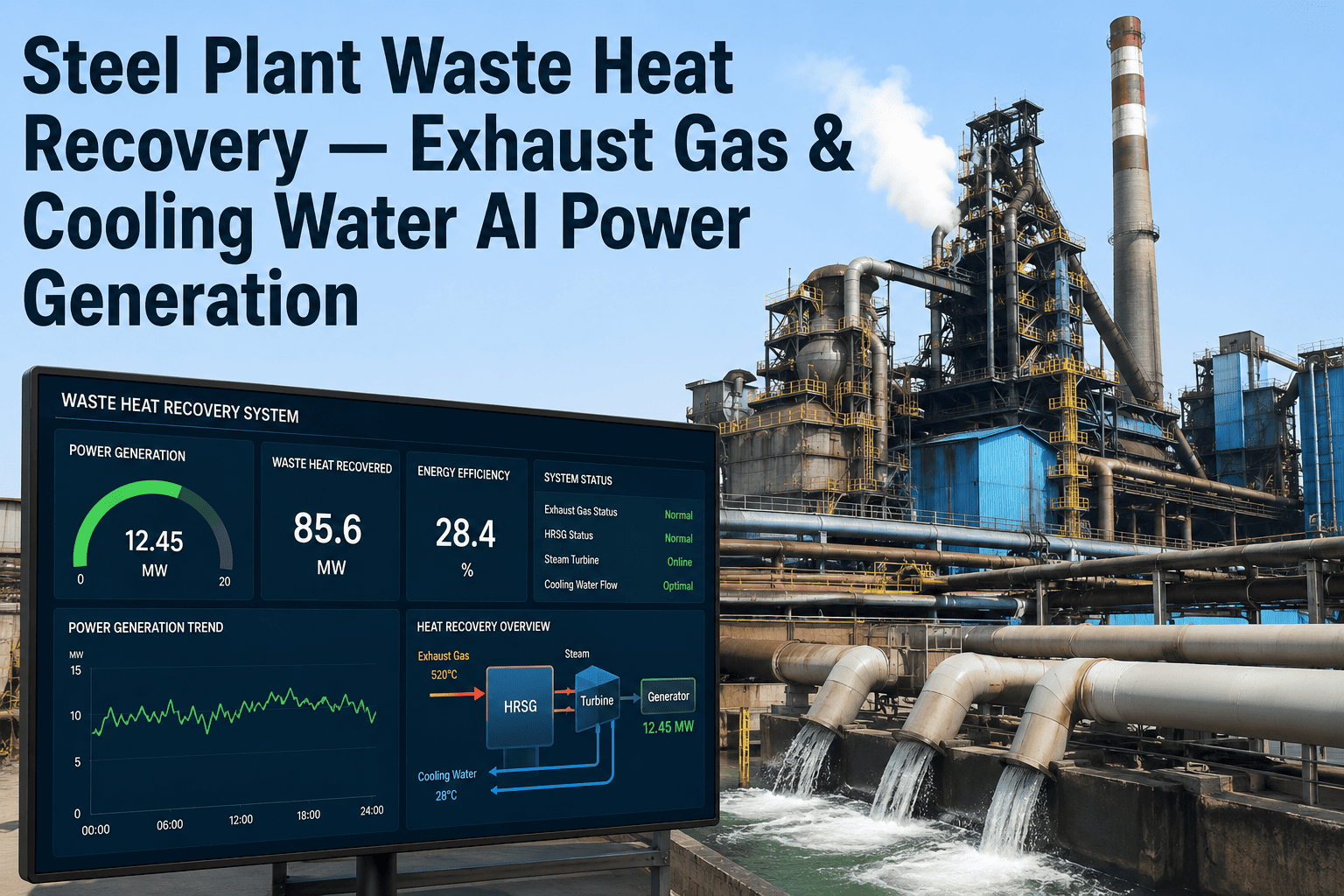
iFactory tracks every boiler, HRSG, and waste heat recovery asset in real time — on your network, no cloud — and delivers the analytics to recover lost BTUs, reduce purchased fuel, and cut Scope 1 emissions without a single capital project.
Without iFactory vs With iFactory
Most steel plants monitor waste heat recovery with occasional logbook readings and DCS alarms that fire only after a trip. By then, the energy loss has already happened. Here is what continuous analytics changes.
Without iFactory
- HRSG exit temperature logged once per shift — drift goes undetected for 8+ hours
- Steam drum level controlled manually, causing ±15% swings in recovery efficiency
- Condensate return ratio unknown — 20–30% of latent heat dumped to drain
- Soot-blowing done on a fixed schedule, not by actual fouling condition
- Carbon intensity reports are calculated from monthly fuel bills, not real heat recovery data
With iFactory
- HRSG exit temperature sampled every second — alarms fire on rate-of-change, not absolute limit
- Steam drum level auto-optimized for maximum enthalpy extraction
- Condensate return tracked per train — recovery efficiency >92% sustained
- Soot-blowing triggered by differential pressure crossing a dynamic fouling threshold
- Carbon intensity reported hourly from actual heat recovery, not monthly estimates
What Unmonitored Waste Heat Costs Your Steel Mill Every Year
These are not theoretical losses. They are the documented cost of running a waste heat recovery system blind — measured across integrated and EAF mills.
HRSG Fouling Drift
Unmonitored tube fouling reduces heat transfer by 8–12% over a campaign. Every 1% loss costs approximately $85,000 per year in purchased fuel for a 100 MW WHR train.
Condensate Loss
Undetected condensate dumping wastes both the water and the sensible heat. A 10% drop in return ratio adds $120,000 in water treatment and $210,000 in fuel makeup annually.
Steam Drum Level Hunting
Manual level control causes ±15% swings in steam quality, reducing turbine extraction efficiency by 3–5%. That lost power must be bought from the grid at peak rates.
Unplanned Boiler Trip
Every unplanned HRSG trip costs $250,000 in lost production and restart fuel. Plants without predictive analytics average 1.5 trips per year from minor issues that escalate.
Four Steps to Continuous Waste Heat Recovery Analytics
iFactory deploys on your plant network and connects to existing sensors, DCS historians, and boiler controls. No new field devices required. The pilot runs in 6–12 weeks.
Connect the Heat Recovery Assets
We tap into your HRSG, boiler, and condensate system data sources — OPC-UA, Modbus, DCS historian APIs — on your network, never touching the cloud.
Build the Thermal Baseline
iFactory ingests 90 days of historical data to model the expected heat recovery profile for each asset at every load condition, season, and product mix.
Deploy Real-Time Analytics
Our AI-native engine detects drift in HRSG exit temperature, steam drum level, condensate return, and fouling rate — alerting operators before energy is lost.
Deliver Actionable Reports
Hourly, daily, and shift-level reports show exactly which train is underperforming, by how much, and what to adjust — carbon intensity data included for Scope 1 reporting.
What You Get with iFactory Waste Heat Recovery Analytics
Every capability is designed for one purpose: maximize the BTUs you recover from your steel-making process and minimize the fuel you burn to make up the difference.
HRSG Performance Monitoring
Track exit temperature, approach temperature, and heat transfer coefficient every second. iFactory calculates the fouling rate and predicts when cleaning is needed — not on a calendar schedule, but when the data says so.
Steam Drum Level Optimization
Our model analyzes drum level, feedwater flow, and steam demand to predict level instability 15 minutes before it happens. Operators get a recommended setpoint adjustment that stabilizes recovery efficiency.
Condensate Return & Makeup Water
Monitor condensate return ratio per train, per shift. iFactory flags a drop below 88% return and quantifies the cost in fuel and water treatment — so maintenance can find the leak before the next shift.
Carbon Intensity Reporting
iFactory calculates hourly Scope 1 emissions from actual heat recovery data, not estimated fuel consumption. Your sustainability team gets auditable, real-time carbon intensity numbers for every product campaign.
Your waste heat recovery system is already generating data. iFactory turns it into $500,000–$2.5 million in annual recovered energy. Book a 30-min walkthrough and we'll show you the ROI model for your plant.
What iFactory Delivers — End to End
No integration consultants. No multi-year deployment. No cloud dependency. Here is exactly what comes with your iFactory waste heat recovery analytics deployment.
Turnkey Pilot in 6–12 Weeks
We connect to your existing data sources, configure the analytics, and deliver working dashboards — no customization fees, no scope creep.
On-Premise NVIDIA Appliance
Zero cloud dependency. All data stays on your plant network. No data egress, no latency, no cybersecurity risk from external connections.
24×7 Managed Service
iFactory operations team monitors your analytics, updates models, and escalates anomalies — you don't need to hire data scientists.
Pilot-to-ROI in One Quarter
We target $500K–$2.5M in first-year energy recovery. If the pilot doesn't show measurable improvement within 12 weeks, we help you redeploy.
No New Sensors Required
We work with your existing DCS, PLC, and historian data. No field wiring, no capital expenditure on instrumentation.
Carbon-Ready Reporting
Hourly Scope 1 carbon intensity data, ready for sustainability audits and compliance submissions — derived from actual heat recovery, not estimates.
Questions Steel Operations Leaders Ask About Waste Heat Recovery Analytics
Your Waste Heat Is Already There. The Analytics Are Ready.
Stop monitoring your HRSG with shiftly logbooks and DCS alarms that fire too late. iFactory gives you continuous, real-time waste heat recovery analytics — on your network, in 6–12 weeks, with a measurable ROI in the first quarter. Book a 30-minute walkthrough and we'll build your plant's recovery potential on the call.