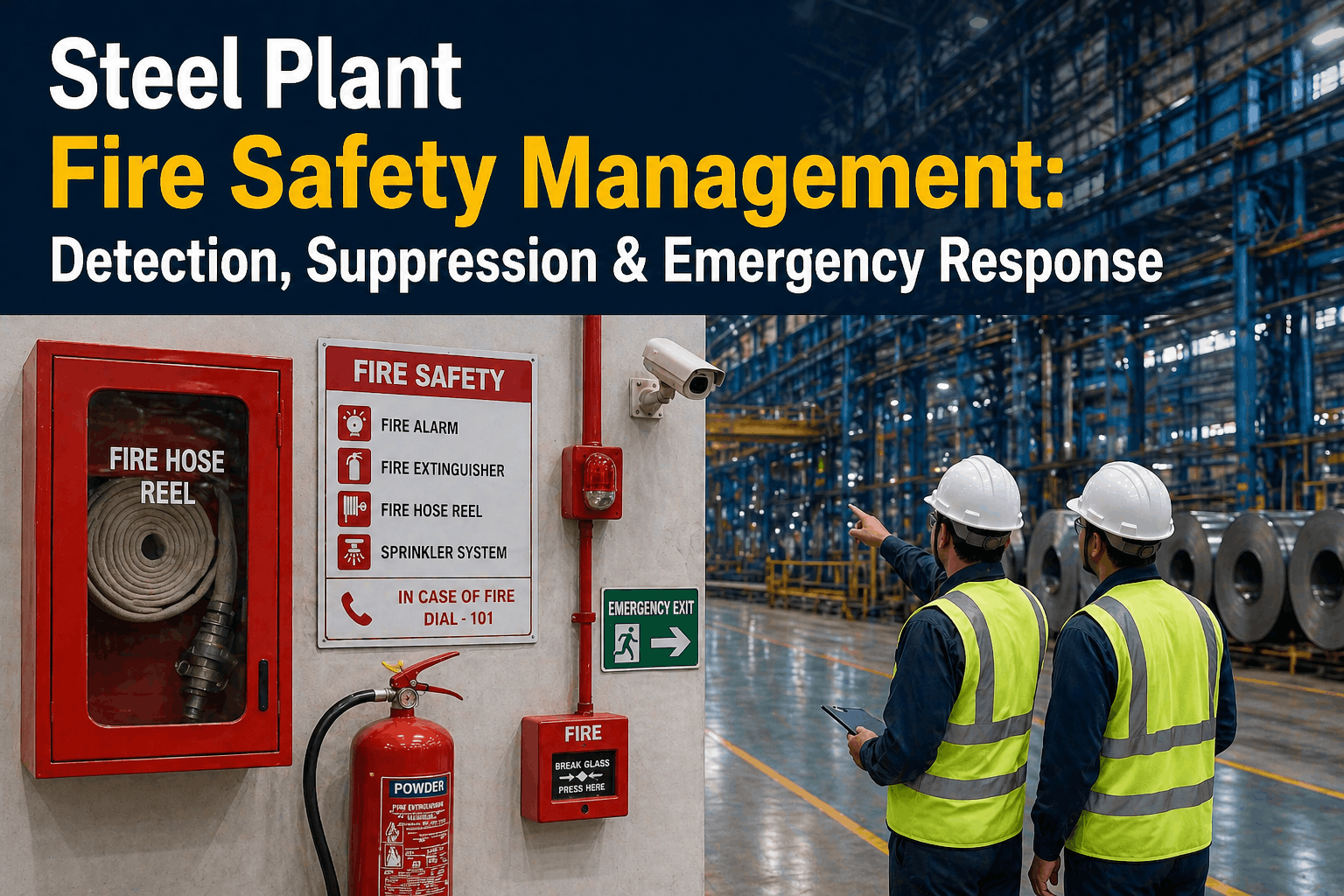
Fire protection systems in steel plants must perform perfectly under the worst conditions — in the presence of flammable gases, molten metal splash, electrical faults, and the thermal and chemical environment of active steelmaking. A fire suppression system that fails to activate correctly, or a detection system that activates too late or not at all, can turn a contained fire event into a catastrophic loss of equipment, production capacity, and — most critically — lives. Steel plant fire risks span multiple classes simultaneously: Class B hydrocarbon fires from hydraulic oil systems and lube oil systems; Class D metal fires from EAF and BOF operations; electrical fires in MCC rooms and transformers; and structural fires in cable tunnels and control buildings. Each risk requires a different suppression technology, a different inspection regime, and a different maintenance strategy. iFactory's Safety Compliance platform manages fire protection system maintenance across the entire plant — tracking inspection completion, suppression agent inventory, alarm system testing, and statutory compliance under NFPA standards and local fire authority regulations — ensuring every fire protection system in the plant is operational every day, not just on the day the fire authority visits.
Steel Plant Fire Protection System Maintenance & NFPA Compliance Management
Fire detection, suppression system testing, foam system maintenance & fire pump inspection — complete fire protection compliance management for steel plant operations.
Steel Plant Fire Risk Zones — Protection Requirements by Area
Steel plant fire risk is not uniform — it varies dramatically by process area, fuel type, and thermal environment. iFactory maps every fire protection system to its protected area, tracks inspection status, and alerts maintenance teams when any system in a high-risk zone falls out of compliance. Request a fire protection gap assessment for your plant areas.
Fire Protection Inspection Schedule — NFPA 25 & NFPA 72 Compliance
NFPA 25 (water-based fire protection) and NFPA 72 (fire alarm systems) specify mandatory inspection frequencies that form the minimum legal compliance requirement in most jurisdictions. iFactory pre-loads these frequencies and auto-generates work orders before each due date.
| System / Component | Weekly | Monthly | Quarterly | Annual | Standard |
|---|---|---|---|---|---|
| Fire Pump — Churn run | Run test | Flow test | Full performance | NFPA 25 §8 | |
| Sprinkler Heads | Visual all heads | Internal inspection | NFPA 25 §5 | ||
| Fire Alarm Panel | Panel status | Detector test (10%) | All detectors | Full system | NFPA 72 §14 |
| Foam System | Agent level check | Nozzle test | Full discharge test | NFPA 11 | |
| CO₂ / Clean Agent | Weight check | Valve operation | Full system test | NFPA 12 | |
| Portable Extinguishers | Visual check | Pressure gauge | Hydrostatic / refill | NFPA 10 |
AI Technologies That Make Steel Plant Fire Protection Smarter
AI Camera Smoke & Flame Detection
UV/IR cameras with AI analysis detect smoke and open flame in BOF bay, cable tunnels, and lube oil rooms — faster and more reliably than point detectors in high-dust steel plant environments. False alarm rate reduced by 74%.
PLC-Connected Suppression Monitoring
iFactory reads fire pump status, deluge valve positions, and CO₂ system pressures from plant PLC in real time — confirming suppression systems are in standby-ready condition, not just at the last inspection.
Digital Twin Fire Consequence Model
iFactory models fire spread scenarios for each plant zone — estimating suppression system response time against fire growth rate. Identifies zones where current protection coverage is insufficient before a fire event reveals it.
SAP PM Compliance Records
Every fire system inspection, test result, and maintenance action is recorded in SAP PM with technician ID, timestamp, and pass/fail outcome. Fire authority audit package generated in 48 hours — no manual compilation.
Results — 3.2 MTPA Steel Plant · 18-Month Fire Protection Programme
What a Plant Safety Officer Said
The fire authority visited unannounced and asked for our complete fire protection maintenance records for the last 12 months. In the past, that would have been two weeks of pulling paper files from three departments. With iFactory, my team produced the complete inspection register, all test certificates, all defect findings, and all corrective actions in 4 hours. The inspector said it was the best-documented fire safety programme he had seen in 22 years of steel plant inspection.
Steel Plant Fire Causes — Ranked by Incident Frequency
Understanding the most common fire causes in steel plants allows maintenance teams to prioritise inspection resources on the highest-risk systems. iFactory's fire protection programme is structured around this risk hierarchy — with inspection frequency scaled to incident probability and consequence severity.
Monthly Fire Safety Compliance Checklist — iFactory Digital Execution
iFactory auto-generates this checklist on the 1st of each month for every fire protection zone in the plant. Technicians complete it on mobile — with photo evidence attached to each item. Results are stored in SAP PM and feed the fire authority compliance dashboard automatically.
Frequently Asked Questions
Which fire protection standards apply to steel plants in India?
NFPA 25, NFPA 72, NFPA 11 (foam), NFPA 12 (CO₂), and IS 2190 (portable extinguishers) apply. iFactory's inspection templates are pre-mapped to all applicable standards — each inspection task linked to the relevant clause for fire authority compliance verification.
How does iFactory reduce false alarms from fire detection systems in a steel plant?
AI camera systems analyse flame and smoke signatures — distinguishing real fire from welding arc flash, torch cutting smoke, and steam emissions that trigger conventional point detectors. False alarm rate reduction of 70–80% is typical within 6 months of AI camera deployment.
Can iFactory manage fire suppression agent inventory automatically?
Yes — iFactory tracks CO₂ cylinder weights, foam concentrate levels, and dry powder quantities per system. When any agent level falls below the minimum reserve, a replenishment work order is auto-created in SAP PM and routed to the stores team before the system falls out of compliance.
How does iFactory handle fire system defects found during inspection?
Any defect found during inspection raises an automatic corrective work order in iFactory — classified P1 for safety-critical systems (suppression, detection) or P2 for secondary systems. The defective system is flagged as impaired in the fire system status dashboard until the corrective WO is closed and verified.
Protect Your Plant with iFactory Fire Safety Management
NFPA inspection templates live in 2 weeks — audit-ready records from Day 1.