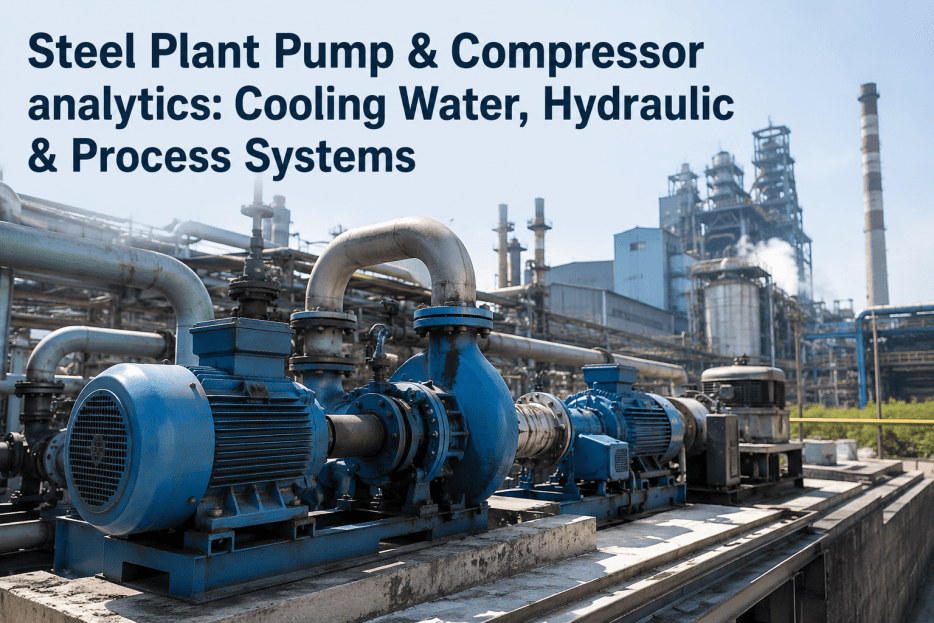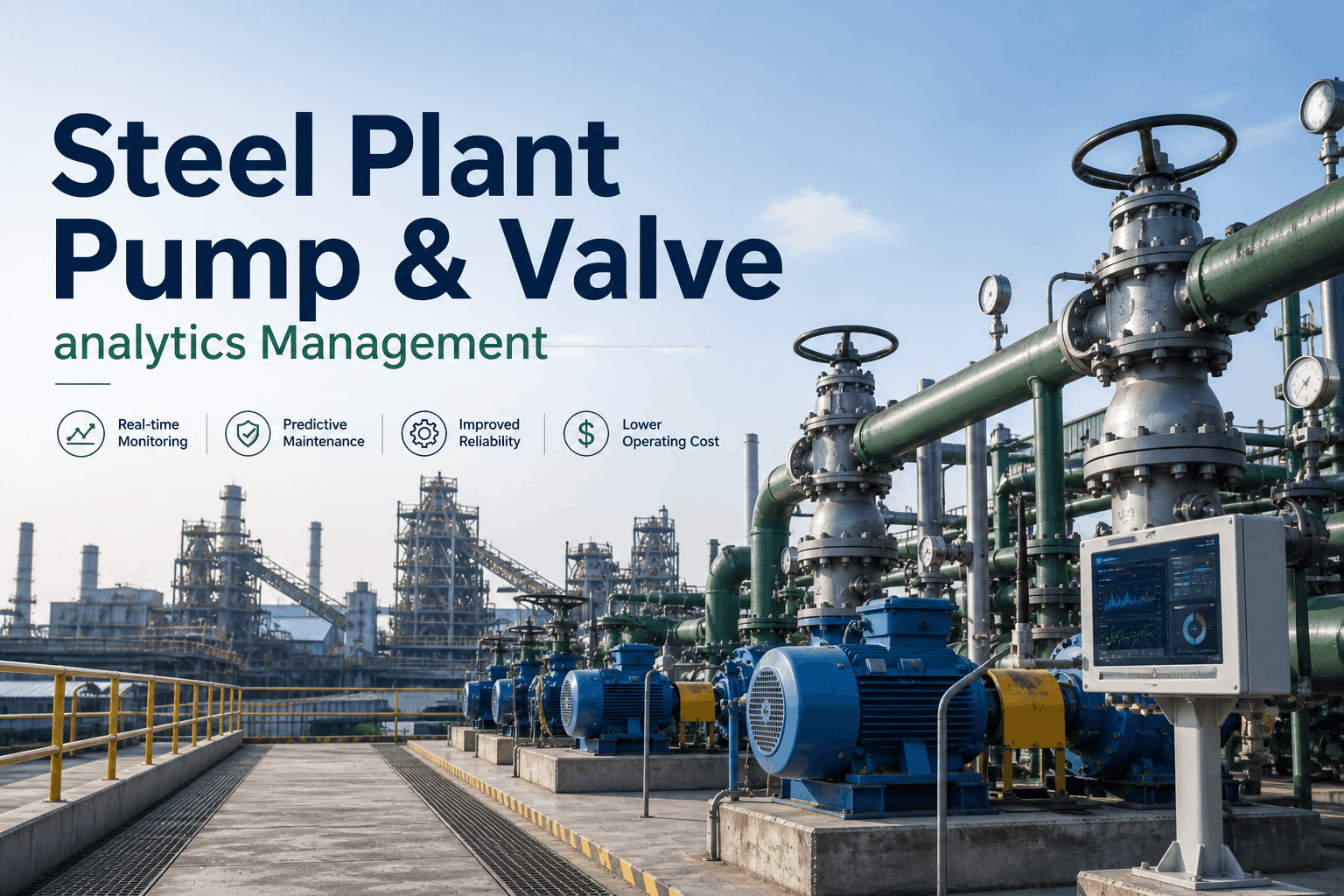
The reliability of industrial pumps and valves is the most significant operational baseline in modern steel manufacturing, serving as the "circulatory system" for critical cooling, descaling, and hydraulic circuits. Effective immediately, the shift from reactive maintenance to AI-driven fluid intelligence is no longer a luxury — it is the mandatory standard for maintaining mill uptime and protecting multi-million dollar cooling assets. For Maintenance and Reliability Directors, the window for manual rounds and "post-mortem" repairs is closed. Understanding your obligations around Diagnostic Data Elements (DDEs), Critical Tracking Events (CTEs) of fluid assets, and real-time seal integrity is the only way to prevent catastrophic mill breakouts and environmental spills.
What Is AI-Driven Pump & Valve Management?
AI-driven fluid management, codified within the iFactory reliability framework, establishes a new digital recordkeeping standard for high-risk pumping assets. Unlike prior SCADA-based monitoring, this is not merely a "High-Alarm" system. It defines a mandatory, standardized approach to tracking fluid asset health through the entire lifecycle — from initial commissioning through to predictive overhaul. The system introduces a structured vocabulary of reliability built around two foundational concepts: Diagnostic Tracking Events (DTEs) and Key Data Elements (KDEs). Every Maintenance Director must understand these two constructs in operational, not just mechanical, terms.
The Fluid Asset List — the scope document for mill-wide reliability — covers categories including centrifugal pumps, slurry transfer units, descaling valves, caster cooling actuators, and high-pressure hydraulic manifolds. If your facility handles abrasive particulate, high-temperature cooling water, or high-pressure descaling, iFactory's predictive logic applies to your operations.
Understanding DTEs: Diagnostic Tracking Events in Fluid Systems
Diagnostic Tracking Events are the defined moments in the pump or valve lifecycle where reliability data must be created and analyzed. The iFactory platform has identified a structured set of DTEs that apply across different fluid system roles. For steel plant maintenance teams, the most operationally significant DTEs are:
Cavitation Onset (for Centrifugal & Slurry Pumps)
The point at which suction-side pressure drops below NPSH requirements. Required data includes high-frequency vibration, suction pressure, and discharge flow. iFactory identifies the 'pitting' signature before mechanical damage occurs.
Actuator Drift (for Control & Descaling Valves)
The initial expansion of the valve "Dead-Band" due to seal friction or positioner wear. AI identifies response lag in under 60 seconds, preventing "sticky" valves from disrupting caster cooling or descaling pressure.
Seal Thermal Decay
The moment a mechanical seal pot temperature exceeds the baseline differential. This CTE is the primary indicator for imminent seal blowout, preventing hazardous spills and bearing contamination in transfer stations.
Impeller Unbalance Identification
The first detection of non-synchronous vibration peaks. Applies to high-pressure descaling pumps where particulate ingress causes uneven impeller wear, leading to rapid bearing degradation if not corrected.
Operational Overhaul & Spares Prediction
The final DTE where actual "Work-Performed" (total strokes/revolutions) triggers an automated overhaul schedule. Book a demo to see how iFactory unifies your spares inventory with real-time asset health.
Key Data Elements (KDEs): What Your Asset Twins Must Capture
Key Data Elements are the specific data points that must be recorded at each Diagnostic Tracking Event. iFactory has defined both required KDEs — which must always be captured — and reference document KDEs, which link asset health to maintenance work orders. The practical reliability challenge is not knowing what data points are required; it is building operational systems that capture them at high frequency (up to 20kHz). Book a demo to see how iFactory maps KDE capture to your existing pump stations and valve manifolds.
| Event (DTE) | Required KDEs (Diagnostic Data) | AI Inference Required? | Who Must Act |
|---|---|---|---|
| Cavitation Detect | Suction Pressure, Flow Rate, High-Freq Vibration, Motor Current Harmonics | Yes — FFT Analysis | Process Operator / VFD AI |
| Actuator Drift | Control Signal, Actual Position, Air Consumption, Response Time (ms) | Yes — Hysteresis Model | Instrumentation Tech |
| Seal Health | Pot Pressure, Temperature Differential, Vibration, Leak Rate | Yes — Pressure Decay | Mechanical Maintenance |
| Liner Wear | Slurry Particulate Size, Total Volume, Vibration Spectrum, Power Draw | Yes — Erosion Predictive | Planning Department |
| Overhaul Trigger | Total Revolutions, Peak Load, Bearing Temp, MTBF History | Yes — RUL Prediction | Spares Management |
Fluid Asset Data Retention & Audit Requirements
Modern reliability standards require that fluid asset records be maintained for a minimum of the full asset lifecycle. Records must be maintained in a format that is retrievable and producible within minutes for root-cause analysis (RCA) after a process excursion. This "Incident Production Standard" is the benchmark that exposes the most significant operational gaps in mills relying on manual logs or siloed historian data.
The mill environment does not mandate specific sensors — but the cost of unplanned downtime makes paper-only or disconnected digital systems extremely high-risk. A mill with 10 years of "post-mortem" pump logs across multiple stations cannot realistically identify a systemic failure pattern in under 24 hours without a unified digital infrastructure. Book a demo to see how iFactory's reliability system structures record retention for instant RCA audits.
If a cooling-water shortage occurs at the caster, your facility must produce all relevant pump and valve health records across every station within minutes. This means your system must be able to: (1) identify all assets in the affected circuit, (2) retrieve all DTEs and KDEs linked to those assets for the preceding 72 hours, (3) trace backward to the root-cause signature (e.g., a descaling valve stick), and (4) compile and transmit this for an immediate executive review. Manual compilation during a crisis is not operationally viable without a purpose-built reliability system.
The "Cavitation Transformation": The Most Complex Reliability Challenge
For steel plants handling high-pressure cooling water or abrasive slurry, the "Cavitation Transformation" introduces the most complex reliability requirement. Cavitation is any process that changes a fluid's state to vapor within the pump, causing catastrophic pitting. At the point of onset, the system must record all suction-side pressure KDEs, correlate with discharge flow, and document the linkage between process setpoints and mechanical stress.
This linkage requirement — connecting process variables to mechanical wear through the cavitation event — is what makes AI-driven fluid management fundamentally different from simple vibration alerts. It requires that your maintenance system captures process data at the point of the pump impeller, not just motor current. Book a demo to see how iFactory handles cavitation linkage across multi-pump cooling circuits.
AI-Driven Reliability: How Technology Closes the Fluid Intelligence Gap
Manual and SCADA-based systems fail fluid reliability on three fronts: they cannot capture KDEs at high enough frequency, they cannot reliably link process drift to mechanical wear, and they cannot produce complete RCA chains within the required window. AI-driven platforms address each of these points through automated edge capture and intelligent diagnostic linkage. Book a demo to see iFactory's AI-driven pump module in action across a live mill scenario.
Automated Edge Capture
Integrated with high-frequency vibration sensors and pressure transducers, iFactory captures KDEs automatically at the edge — eliminating the "SCADA Polling Lag" that misses cavitation bursts and actuator spikes.
Diagnostic Event Linkage
Intelligent diagnostic engines automatically link process pressure drops to impeller wear signatures — maintaining the "Traceability Chain" of mechanical failure back to the original operational root cause.
Instant RCA Compilation
On-demand reliability reports compile complete KDE histories for any asset — in seconds, not days. Records are formatted for Maintenance Directors and can be accessed on mobile devices during a furnace shutdown.
Predictive Spares Integration
Built-in RUL (Remaining Useful Life) tools allow Spares Managers to run mock overhaul exercises, identifying "Stock-Out" risks before a critical descaling valve or pump seal reaches its predicted failure date.
Fluid Reliability Gaps: Where Steel Mills Are Most at Risk
Based on industry analysis of steel mill pump and valve readiness assessments, the following reliability gaps appear most frequently in facilities approaching their digitalization deadline.
Frequently Asked Questions: Pump & Valve Analytics
What is the "Fluid Intelligence Gap" and who does it apply to?
It is the delay between a fluid system deviation (like a valve stick) and the moment maintenance can act. It applies to every mill area — from the Blast Furnace cooling tower to the Rolling Mill descaling pump station.
What is a Key Data Element (KDE) for a pump?
A KDE is a unique identifier (like a vibration frequency peak or a suction pressure value) assigned to a pump at a defined CTE (like Cavitation Onset). It must be tracked to maintain an unbroken "Reliability Chain."
How long does it take to implement an AI-driven fluid reliability system?
Most mills achieve full deployment on critical assets in 8–12 weeks, covering sensor installation, edge gateway configuration, and predictive model validation for cavitation and seal health.
What happens if a mill cannot identify a valve stick in under 60 seconds?
Delayed actuator response in descaling or caster cooling leads to surface quality rejects and potential breakout hazards, exposing the mill to millions in revenue loss and safety violations.
Does iFactory require replacing all legacy valves and pumps?
No. iFactory is designed to "wrap" existing legacy assets with low-cost edge sensors and transducers, bringing 20-year-old pumps into a modern predictive environment without a complete asset overhaul.
Which pumps are prioritized in the reliability scope?
The scope primarily covers high-pressure descaling pumps, slurry transfer units, caster secondary cooling pumps, and Blast Furnace shell cooling circuits — assets where a 10-minute failure causes a 10-hour shutdown.
Can iFactory detect pump seal leakage before a blowout?
Yes. By monitoring seal pot pressure decay and temperature differentials, the AI identifies micro-leakage signatures that precede a catastrophic mechanical seal failure.
Does the system provide energy optimization for high-power pumps?
Absolutely. iFactory optimizes VFD setpoints based on real-time process demand, reducing pumping energy costs by up to 22% while extending motor winding life.


.png)