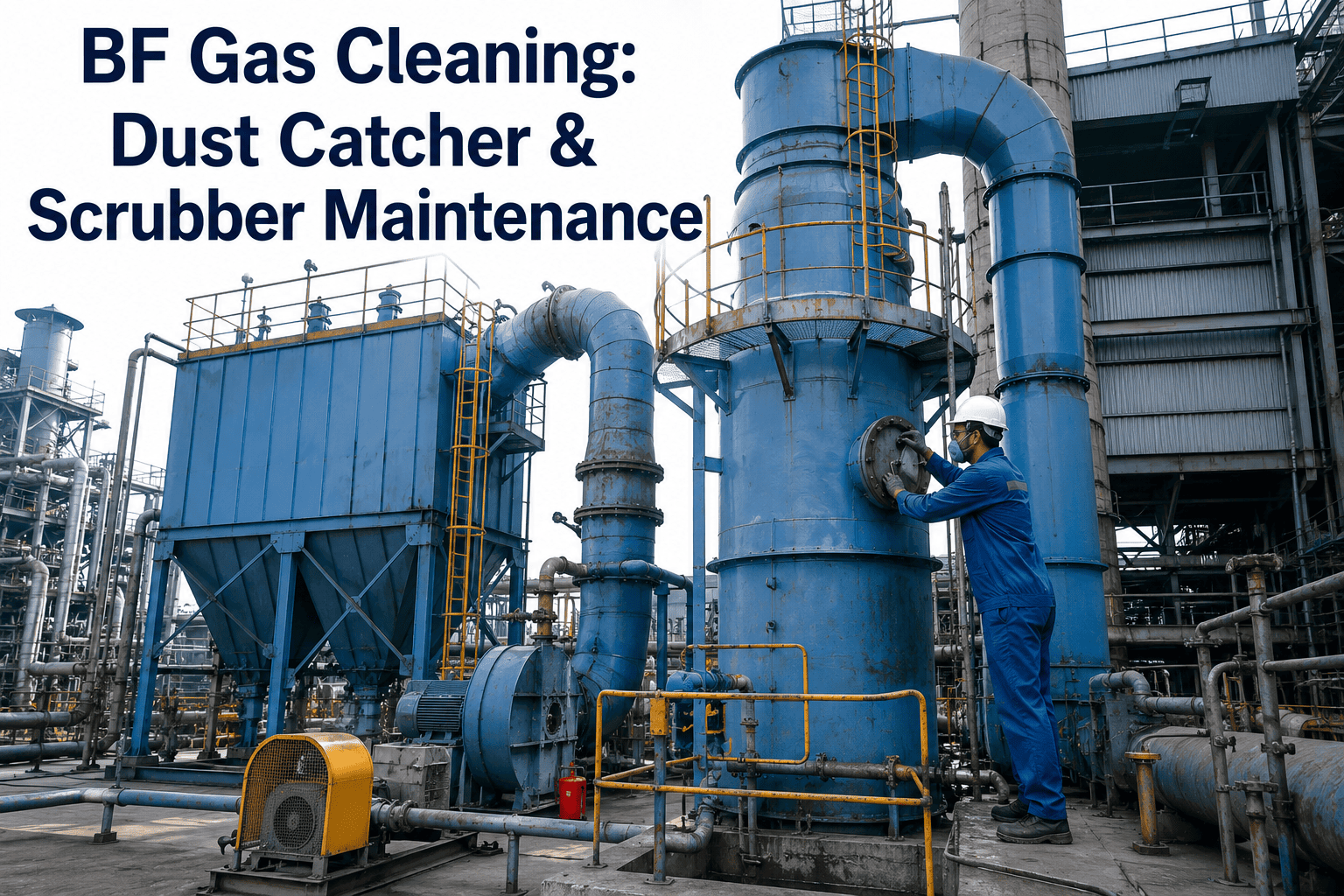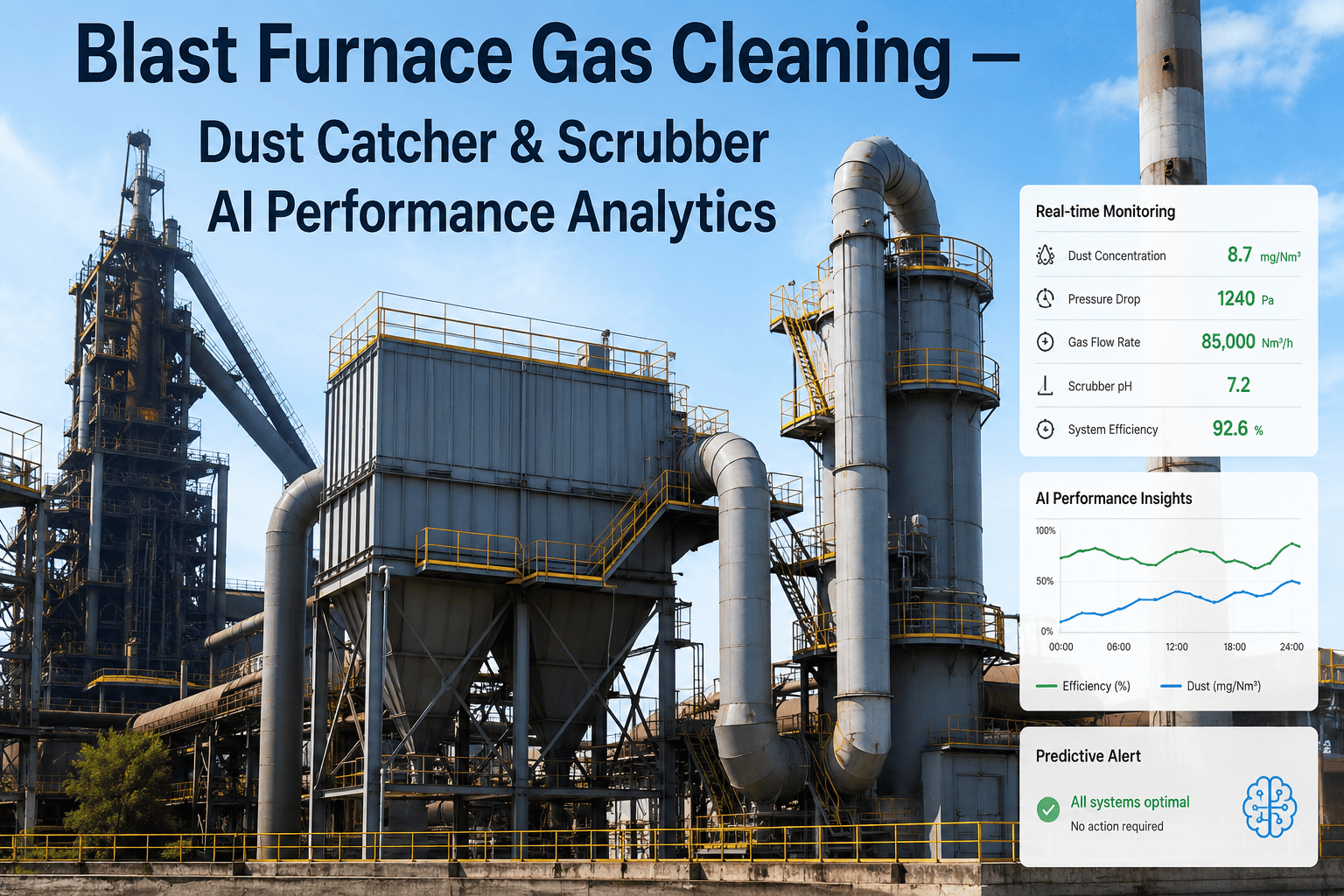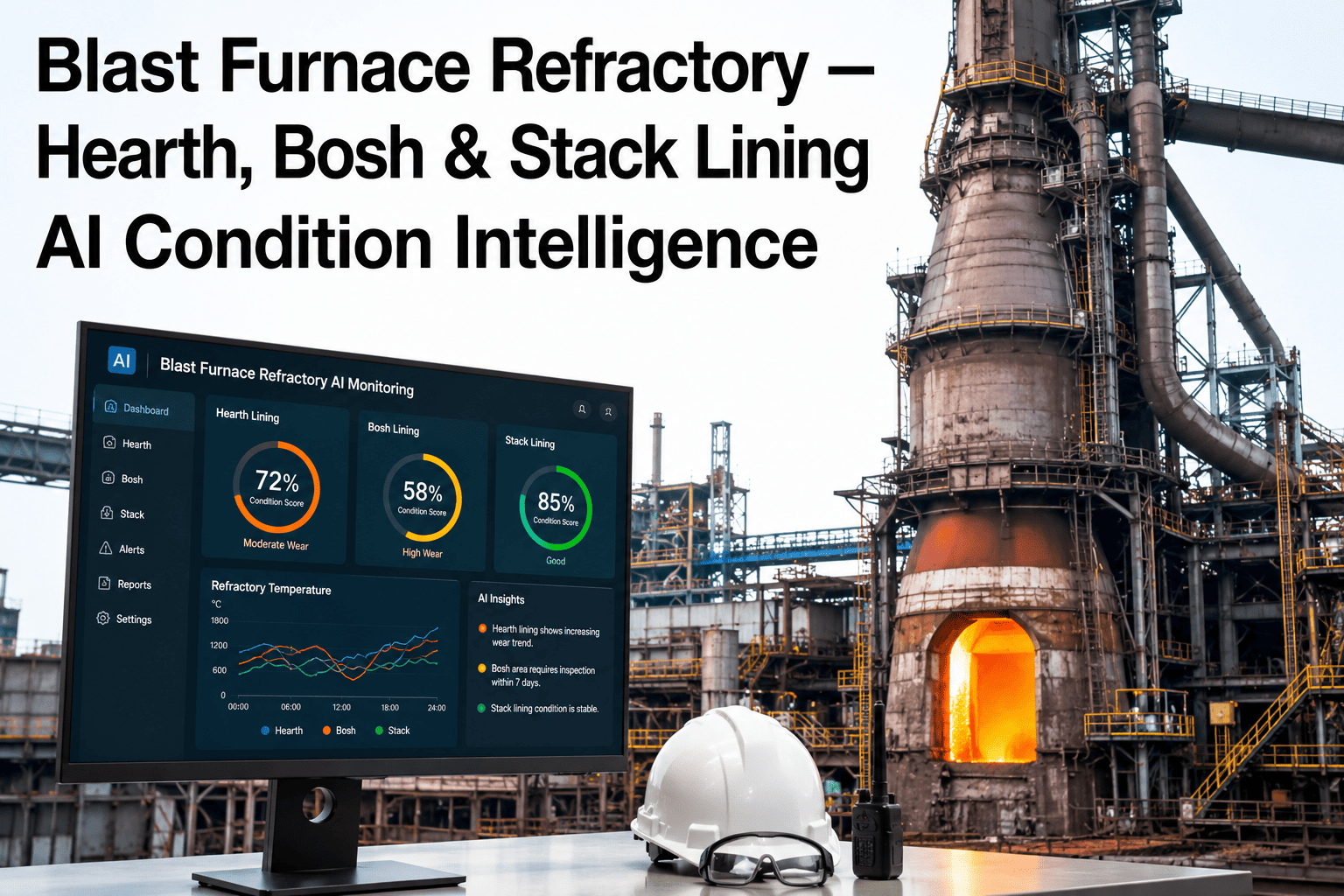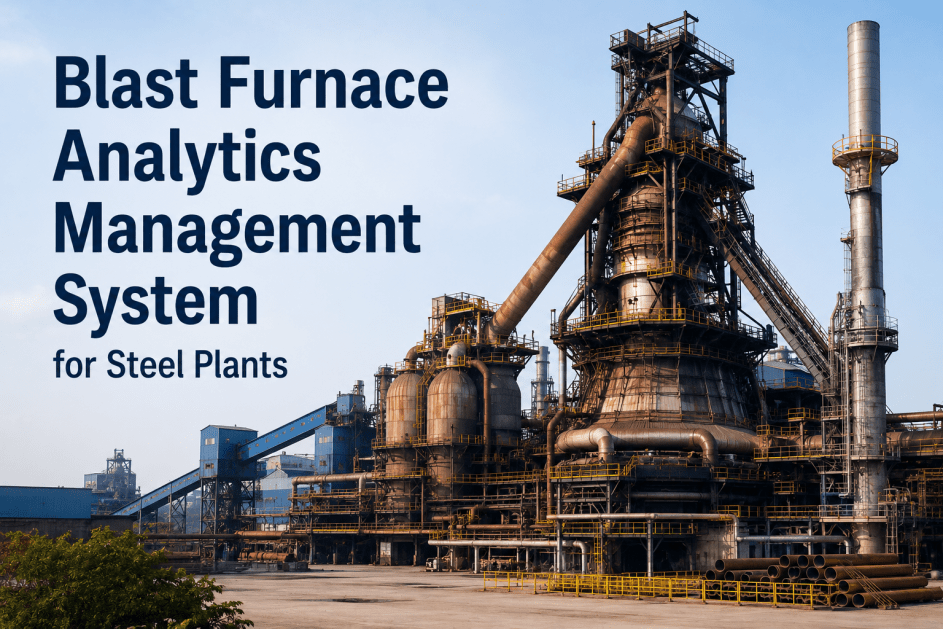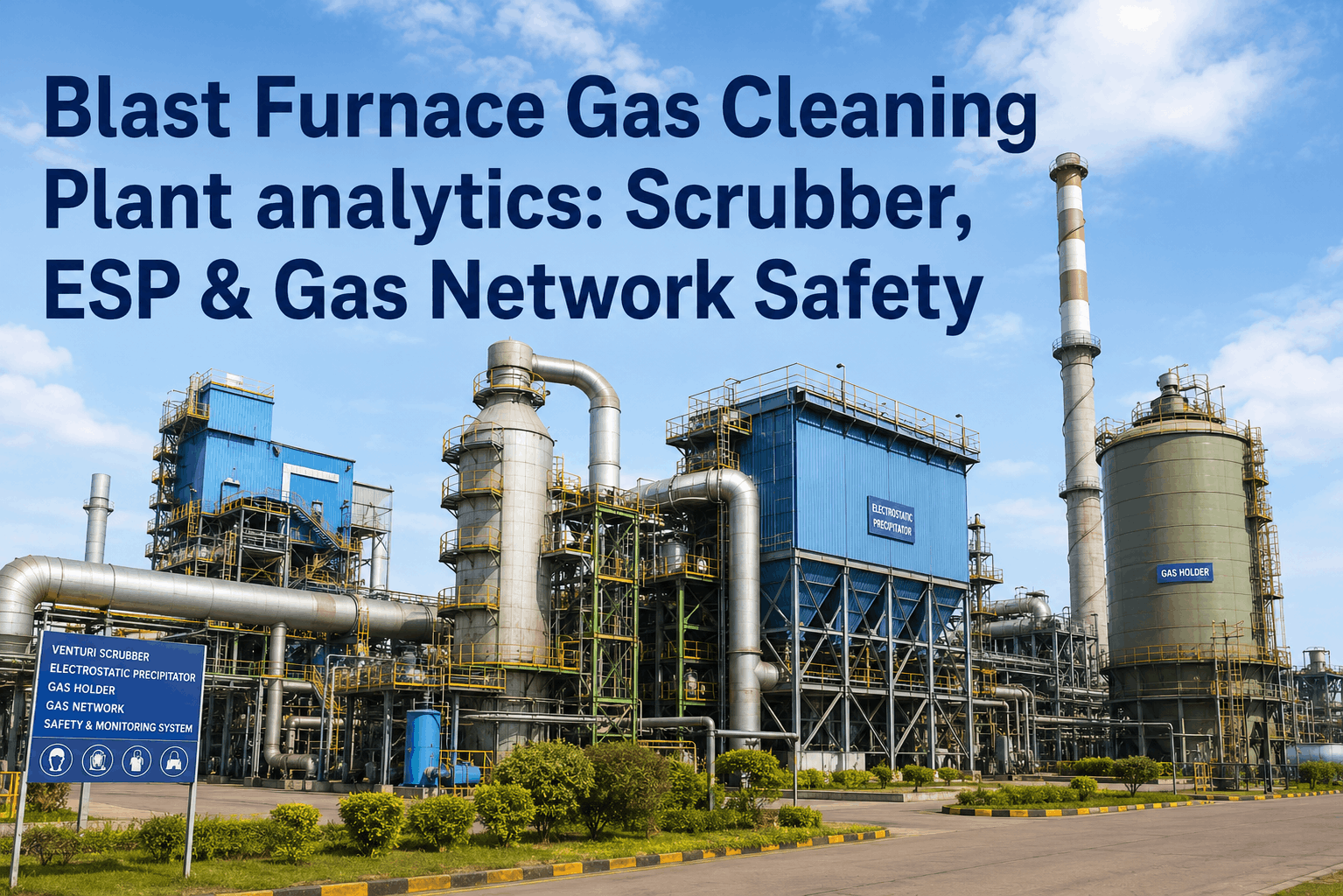
Blast Furnace Gas (BFG) is a critical energy asset that fuels stoves, boilers, and power plants, but it is also one of the most dangerous substances in a steel mill. The Gas Cleaning Plant (GCP) is the primary barrier between the furnace's volatile, dust-laden raw gas and the plant’s clean gas distribution network. Relying on legacy manual inspections and simple pressure alarms for scrubbers, ESPs, and gas holders creates a massive "Safety Gap" that exposes the facility to CO poisoning risks, explosion hazards, and downstream equipment damage from particulate carryover. Organizations that book a demo with iFactory are discovering how AI-driven GCP analytics, real-time CO safety monitoring, and digital inspection workflows can transform their gas network from a high-risk liability into a stable, efficient energy resource.
Protect Your Workforce and Gas Network with Predictive GCP Analytics
iFactory's AI-driven platform delivers real-time CO safety audits, gas scrubber efficiency tracking, and ESP health monitoring—ensuring 100% compliance and zero gas-related incidents.
Why Blast Furnace Gas Cleaning Requires AI-Integrated Safety & Analytics
Blast furnace gas is high in Carbon Monoxide (CO), an odorless, colorless, and lethal gas. Any failure in the gas cleaning plant—whether it’s a localized leak in the gas holder seal, a drop in scrubber water pressure, or a spark rate anomaly in the Electrostatic Precipitator (ESP)—can lead to catastrophic safety events. Furthermore, if the GCP fails to remove fine particulates (dust) to below 5mg/Nm³, the downstream hot blast stoves will suffer from checker brick clogging, permanently reducing thermal efficiency. In an era of increasing environmental and safety regulations, managing the GCP through reactive maintenance is no longer a viable option.
The complexity of a gas network spanning miles of pipelines, gas holders, and flare stacks requires a "Digital Safety Guard." By correlating scrubber pressure drops, water flow rates, ESP voltages, and real-time gas analyzer data, iFactory identifies the precursors to gas network instability. This allows safety teams to execute targeted "Digital Safety Audits" and predictive maintenance on critical valves and seals before a leak develops. Environmental managers looking to eliminate dust carryover often begin by scheduling a demo to see how our platform maps their entire BFG distribution network.
CO Leak Detection Lag
Odorless BFG leaks often go undetected until personal CO monitors alarm. AI detects flow/pressure imbalances in the network to pinpoint potential leak zones in real-time.
Scrubber Efficiency Loss
Venturi nozzle clogging or pressure drop (DP) instability leads to high dust carryover. Analytics track DP-to-Flow ratios to identify cleaning degradation instantly.
ESP Insulator Failure
Moisture or dust accumulation on ESP insulators leads to tracking and failure. AI monitors spark rates and current-voltage (I-V) curves to predict insulator breakdown.
Gas Holder Seal Integrity
Wet or dry gas holder seals must operate flawlessly. Digital inspections track seal water levels and piston drift to prevent massive BFG releases during pressure surges.
What a Comprehensive Gas Cleaning Plant Analytics Program Must Cover
Designing an effective GCP analytics program requires a structured approach that bridges environmental compliance with mechanical asset health. The most successful programs focus on four interconnected modules: wet scrubber optimization, ESP health tracking, gas holder integrity, and network-wide safety audits. Each module reinforces the other—creating a gas network that is both safe for the workforce and optimized for energy recovery. Safety leads building these programs for the first time often book a demo to see how platform safety modules are integrated directly into shift handover workflows.
Module 1 — Scrubber and Venturi Performance Analytics
The primary removal of coarse and medium dust occurs in the wet scrubber and venturi stages. iFactory monitors the critical "Pressure Drop vs. Water Flow" correlation. By analyzing the scrubbed gas moisture content and temperature, the AI identifies when venturi nozzles are becoming fouled or when the water-to-gas ratio is insufficient for optimal particulate removal. This ensures that the primary cleaning stage is always operating at peak efficiency, protecting the secondary ESP stages from overloading.
Module 2 — ESP Health and Spark Rate Monitoring
The Electrostatic Precipitator (ESP) handles the fine particulate removal that is critical for gas safety in stoves. iFactory tracks spark rates, transformer-rectifier (TR) set voltages, and secondary currents. By analyzing the current-voltage (I-V) curve shift over time, the system can identify dust buildup on discharge electrodes or insulator tracking. Predictive alerts allow for scheduled rapping cycle adjustments or insulator cleaning before a total field trip occurs, maintaining continuous fine-dust compliance.
Module 3 — Gas Holder and Pipeline Network Integrity
The BFG distribution network, including miles of pipelines and the gas holder, is the most vulnerable part of the plant for CO leaks. iFactory’s "Network Guard" uses AI to perform continuous mass-balance calculations across the network. By correlating generation at the GCP with consumption at the stoves and power plant, the system identifies subtle flow imbalances that indicate a potential pipeline crack or a failing gas holder seal. This module includes digital inspection workflows for flare stack health and water seal integrity.
Integrating CO Safety Monitoring Into Digital GCP Inspection Programs
Safety is the most critical KPI in a blast furnace gas network. Modern safety standards require more than just personal CO monitors; they require an integrated digital safety system that can identify "Invisible Hazard Zones." iFactory’s platform provides the data infrastructure needed to quantify safety indicators in real-time. Safety managers building these programs for the first time often find it valuable to book a demo to explore how platform analytics can be integrated into their existing emergency response frameworks.
Safety Metrics That Gas Network Managers Must Track
Effective gas safety analytics training equips managers to track and interpret data streams that reflect network integrity—including pipeline flow imbalances, gas holder piston drift, water seal levels, and flare stack ignition success rates. These indicators, when aggregated and analyzed within iFactory’s AI platform, create a continuous "Gas Safety Dashboard" that gives quality managers actionable intelligence for targeted inspections and gas network isolation before a safety finding occurs.
| Analytics Module | Core Competency Area | Traditional Approach | iFactory AI Approach | Compliance Outcome |
|---|---|---|---|---|
| Scrubber Efficiency | Particulate & moisture removal | Periodic outlet sampling & DP alarms | Real-time DP-to-Flow ratio & moisture AI | Verified low-dust gas supply |
| ESP Health | Fine dust removal & insulator safety | Manual voltage checks & trip reaction | Predictive I-V curve analysis & spark rate tracking | Zero unplanned ESP outages |
| CO Safety Monitoring | Leak detection & atmosphere safety | Personal monitors & fixed point alarms | AI-driven network mass balance & zone risk mapping | 100% CO safety audit compliance |
| Gas Holder Integrity | Storage safety & pressure stability | Visual seal checks & piston height logs | Digital seal monitoring & piston drift analytics | Safe gas network pressure control |
| Flare Stack Health | Emergency gas disposal safety | Visual check of pilot flame | Continuous ignition verification & emission logging | Clean & safe gas flaring |
| Network Integrity | Pipeline health & bypass monitoring | Manual valve checks & pressure drops | Digital valve tracking & network balance analytics | Zero undetected BFG releases |
Designing a Scalable Gas Cleaning Plant Analytics Implementation Framework
A structured GCP implementation framework addresses three levels of safety and efficiency—from foundational digital safety literacy for all GCP staff, to applied analytics proficiency for operators, to advanced network integrity lead capability for safety managers. Each tier maps directly to job role requirements, ensuring safety is precisely calibrated to operational responsibilities. Organizations building these tiers often book a demo first to align platform onboarding content with role-specific safety certification paths.
Gas Safety Awareness
For: All plant staff near BFG lines
- Core CO hazard & BFG network awareness
- Real-time zone risk maps — what they measure
- Basic mobile app navigation & emergency alerts
- How digital records support safety compliance
GCP Analytics Technician Certification
For: GCP operators & inspectors
- Scrubber & ESP health curve interpretation
- Gas holder seal and piston drift analysis
- AI leak alert triage and response documentation
- Data quality management for BFG compliance records
Gas Network Integrity Lead
For: Safety managers & team leads
- Facility-specific GCP safety design methodology
- CO risk assessment framework development
- Network-wide integrity management strategies
- Regulatory safety compliance & audit lead
How GCP Analytics Strengthens Safety Compliance Standing and Audit Readiness
OSHA and international safety standards define specific requirements for personnel working in hazardous gas environments. As steel plants adopt AI-driven compliance platforms, the work performed by GCP technicians increasingly involves interpreting automated monitoring outputs, managing digital safety audits, and maintaining the data integrity of gas network records—activities for which traditional safety training provides no explicit preparation. GCP analytics certification directly addresses this safety gap, creating documented evidence of qualified individual status that withstands regulatory and safety audit scrutiny.
Documentation of GCP Training for Safety Regulatory Requirements
Meeting safety regulatory requirements for personnel operating BFG cleaning and distribution systems requires that facilities maintain documented training records. Certification programs that generate digital training completion records, competency assessment scores, and role-specific proficiency verifications create exactly the type of documented evidence that safety investigators expect to review during site inspections. These records, when maintained within iFactory’s platform, become part of the continuous verified safety record that reduces regulatory risk across personnel training categories.
Blast Furnace Gas Cleaning Plant — Frequently Asked Questions
Why is BFG dust removal so critical for hot blast stoves?
Any dust carryover above 5mg/Nm³ will accumulate in the small checker brick openings of the stoves. Over time, this clogs the flow, increases pressure drop, and permanently reduces the stove's heat transfer efficiency. GCP analytics ensure the scrubber and ESP are always meeting these fine particulate targets.
How does the platform detect BFG leaks without gas sensors everywhere?
We use "Network Balance AI." By correlating the gas generated at the GCP with the gas consumed at the stoves, boilers, and flare stack, the AI identifies subtle flow imbalances that indicate a localized pipeline leak or a failing gas holder seal before personal monitors are even triggered.
What are the main failure modes for Electrostatic Precipitators (ESP)?
The most common failures are insulator tracking (due to moisture/dust), electrode breakage, and hopper clogging. iFactory tracks spark rates and I-V curves to identify these issues 4-6 weeks before they cause a field trip, allowing for scheduled maintenance during furnace stops.
How does digital inspection improve gas holder safety?
Standard gas holder inspections are often subjective logs. Our mobile app forces standardized checks of piston levels, seal water pressures, and guide rail condition. By correlating this data with piston drift analytics, the system can identify early signs of seal failure or structural instability.
Can iFactory integrate with existing GCP control systems?
Absolutely. We sit atop your existing Level-1 PLC/DCS systems (like Honeywell or Siemens) and ingest data via OPC-UA. We provide the "Intelligence Layer" needed to perform cross-network balancing and predictive asset health monitoring that legacy systems lack.
What is "CO Safety Zone Mapping"?
It is a dynamic risk map of the GCP and gas network. By correlating real-time leak probability data from the network balance with current wind direction and atmospheric conditions, the system identifies high-risk areas for CO accumulation during maintenance activities.
Does the system help with flare stack compliance?
Yes. iFactory tracks flare stack ignition success, pilot flame health, and flaring volumes. This provides an automated environmental compliance record of gas flaring events, ensuring that no raw BFG is released unburned during furnace surges.
How long does it take to see ROI in GCP safety?
Safety ROI is immediate—preventing a single CO incident or gas network fire is invaluable. Efficiency ROI is achieved within 6-12 months through stabilized gas pressure for the power plant and reduced stove maintenance costs due to better dust control.
Safeguard Your Gas Network with AI-Driven GCP Analytics
iFactory's Mobile AI-driven App delivers integrated GCP safety audits, ESP health monitoring, and gas network integrity tracking—built for steel plants ready to eliminate gas hazards and optimize energy recovery.