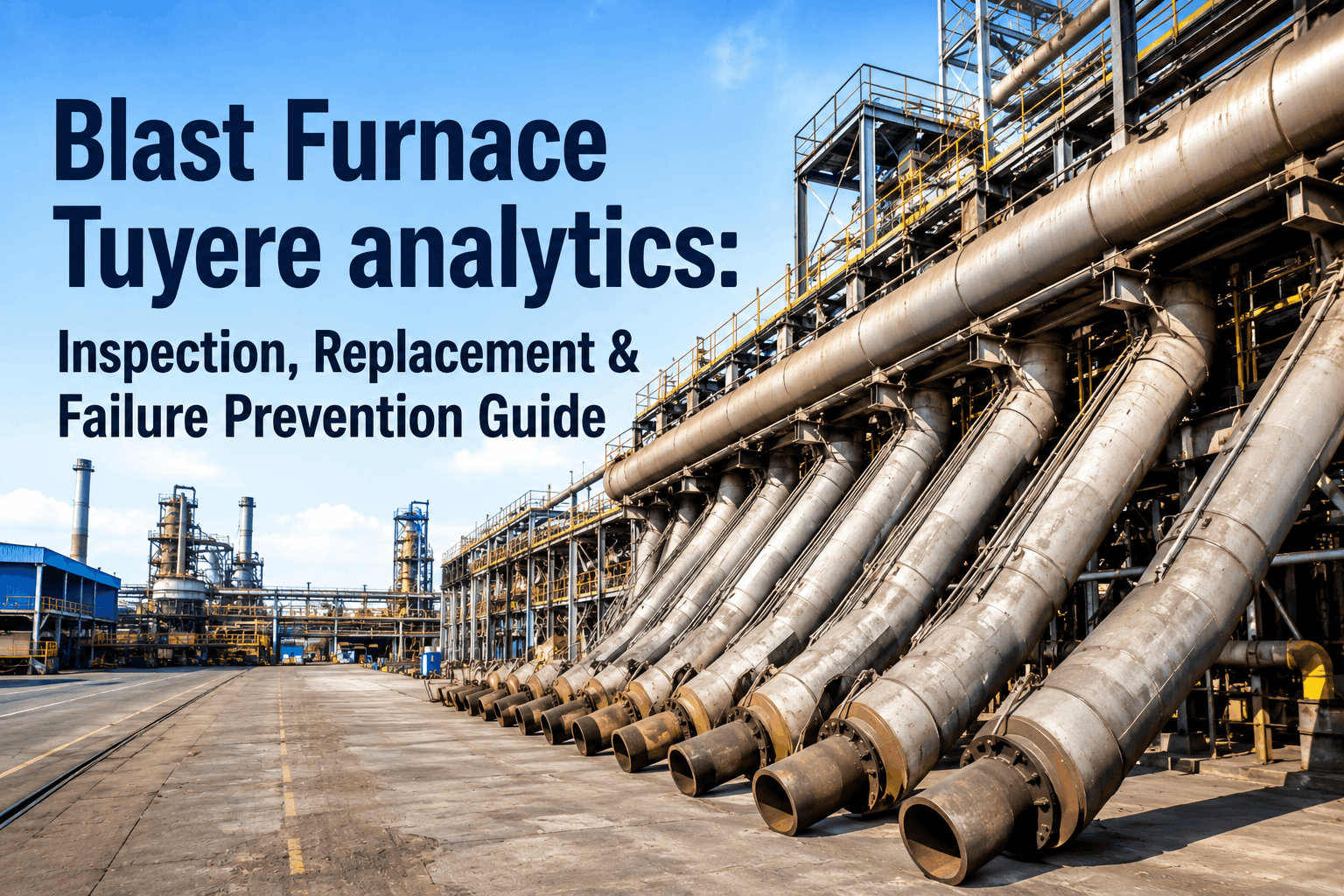
Blast furnace tuyere failures are one of the most unpredictable and costly causes of unplanned stoppages in integrated steel plants. When a water-cooled copper tuyere burns out or develops a leak, it not only forces an immediate furnace shutdown for replacement but also injects water directly into the hearth—causing severe chilling, wasting massive amounts of coke energy, and creating significant explosion risks. Traditional run-to-failure strategies or static time-based replacement schedules are no longer viable in modern, high-intensity blast furnaces utilizing high Pulverized Coal Injection (PCI) rates. Organizations that book a demo with iFactory are discovering how AI-driven analytics, real-time thermal load monitoring, and digital lifecycle tracking can completely eliminate catastrophic tuyere burnouts and optimize their expensive copper spare parts inventory.
Stop Tuyere Burnouts with Predictive Blast Furnace Analytics
iFactory's AI-driven platform delivers real-time cooling water analytics, thermal load tracking, and complete lifecycle management for all 20-40 tuyeres—predicting failures before water enters your hearth.
Why Blast Furnace Tuyere Management Requires Predictive Analytics
A modern blast furnace operates with 20 to 40 tuyeres injecting hot blast air at temperatures exceeding 1200°C, often combined with abrasive pulverized coal or natural gas. These water-cooled copper components endure extreme thermal flux, physical abrasion from descending burden, and the constant threat of molten iron and slag cutting through the nose. Relying on manual visual inspections through the peep sight or reacting to a sudden drop in cooling water pressure means the damage is already done. Water entering the furnace consumes massive thermal energy to evaporate, creating hydrogen gas and chilling the hearth—a condition that can take days and hundreds of tons of extra coke to recover from.
Transitioning from reactive replacements to AI-driven predictive lifecycle management is critical for maintaining stable furnace permeability and maximizing iron production. By correlating cooling water temperature deltas, flow rates, blast pressure fluctuations, and PCI rates, iFactory creates a dynamic "Wear Score" for every individual tuyere on the furnace. This allows operators to schedule targeted replacements during planned maintenance down-days rather than suffering emergency blow-downs. Furnace managers looking to eliminate water leaks often begin by scheduling a session to book a demo and assess how their existing cooling water sensor data can feed our predictive models.
Catastrophic Thermal Burnout
Sudden loss of cooling or extreme burden descent can melt the copper nose. AI detects the micro-fluctuations in thermal load minutes before critical failure.
Micro-Leak Detection Lag
Tiny stress cracks leak water slowly, degrading coke quality and lowering hearth temperatures before traditional flow meters trigger an alarm.
PCI Abrasion & Wear
High pulverized coal injection rates erode the inner diameter of the tuyere over time. Analytics track PCI volume per tuyere to predict abrasive failure limits.
Lifecycle & Inventory Blindspots
Without digital tracking, plants often install incorrect tuyere designs (length/angle) or scrap healthy tuyeres prematurely during blind bulk-replacements.
What a Comprehensive Blast Furnace Tuyere Analytics System Must Cover
A truly effective tuyere analytics program requires more than just high/low water temperature alarms. It requires a holistic architecture that bridges real-time process telemetry with long-term asset lifecycle management. iFactory’s suite processes high-frequency cooling water data to detect leaks, tracks the accumulated thermal stress on each specific tuyere serial number, and manages the copper spare parts inventory to ensure the right design is available for the right tuyere stockline. Maintenance planners looking to optimize their copper inventory turnover frequently book a demo to see how our digital twin maps their entire furnace circumference.
Module 1 — High-Frequency Cooling Water & Thermal Analytics
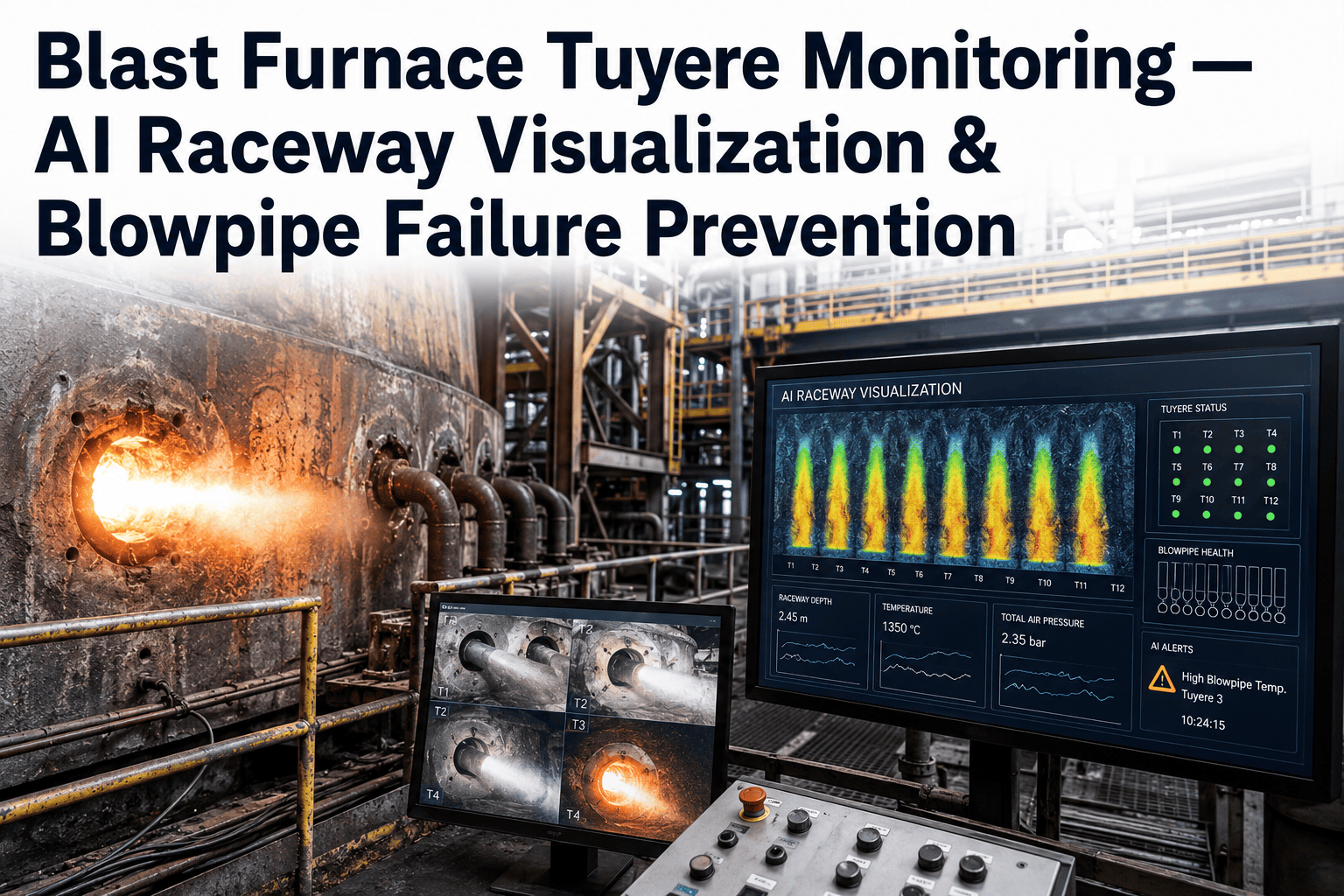
The core of tuyere condition monitoring relies on analyzing the delta between cooling water inlet and outlet temperatures, combined with precise flow rates. iFactory’s AI models establish a dynamic baseline for each tuyere based on its position relative to the taphole and current blast volume. When a tuyere’s thermal load deviates from its expected curve—indicating either a loss of the protective accretion skull or an impending burn-through—the system alerts operators to reduce PCI or blast volume to that specific sector before melting occurs.
Module 2 — Micro-Leak Fingerprinting and Acoustic Integration
Traditional magnetic flow meters often lack the sensitivity to detect micro-leaks (e.g., 2-5 liters per minute) in a system flowing thousands of liters. iFactory integrates with high-precision differential flow systems and acoustic emission sensors mounted on the blowpipe. By cross-correlating acoustic signatures with subtle drops in return water pressure, the AI can pinpoint microscopic stress cracks in the copper casting, allowing for scheduled replacement before the crack propagates into a catastrophic rupture.
Module 3 — Digital Serial Tracking and Inventory Lifecycle
Every tuyere is a high-value asset, often costing thousands of dollars. iFactory replaces manual spreadsheets with a "Digital Tuyere Passport." From the moment a tuyere arrives from the foundry, its serial number, design specifications (length, angle, coating), and installation history are tracked. The system records exactly how many days it operated, its average thermal load, and its specific failure mode upon removal. This data allows metallurgists to evaluate different foundry suppliers and optimize tuyere design based on empirical wear data.
Integrating Asset Lifecycle Tracking into Blast Furnace Operations
A common failure in blast furnace maintenance is treating all tuyeres identically. In reality, a tuyere located directly above the taphole experiences vastly different thermal cycling and liquid iron flow than a tuyere on the opposite side of the hearth. Furthermore, modern furnaces use various tuyere designs (e.g., dual-chamber, spiral cooling, ceramic-coated) simultaneously to balance wear. iFactory’s platform provides a 360-degree digital map of the furnace, tracking the specific lifecycle and degradation rate of each position independently. Ironmaking teams looking to upgrade their maintenance strategy frequently book a demo to explore how our visual mapping interface simplifies shutdown planning.
Transitioning from Time-Based to Condition-Based Replacement
Many plants replace tuyeres based purely on operating days (e.g., changing all tuyeres every 120 days). This approach discards perfectly healthy copper and fails to prevent premature burnouts in high-wear zones. iFactory shifts this paradigm to Condition-Based Replacement. By calculating "Accumulated Thermal Stress Hours" and "Total PCI Tons Injected" for each individual nozzle, the AI generates a prioritized replacement list for every scheduled maintenance stop, ensuring maximum asset utilization without compromising furnace safety.
| Management Area | Traditional Approach | iFactory AI-Integrated Approach | Operational Outcome |
|---|---|---|---|
| Leak Detection | Visual inspection (peep sight) & manual float meters | High-frequency delta-T, differential flow & acoustic AI | Micro-leaks detected hours before critical failure |
| Replacement Strategy | Run-to-failure or fixed-time bulk replacements | Condition-based scheduling via accumulated thermal load | Zero emergency stoppages; extended copper life |
| Asset Tracking | Chalk marks on copper and disjointed Excel sheets | Digital serialization & complete installed-location history | Perfect inventory control & vendor quality tracking |
| PCI Optimization | Uniform injection rates across all active tuyeres | Dynamic limits based on individual tuyere thermal health | Prevent internal abrasion; maintain high total coal rates |
| Post-Mortem Analysis | Discarded to scrap with subjective visual notes | Correlated operational data mapped to specific failure modes | Continuous design improvement & optimal coating selection |
Designing a Scalable Tuyere Analytics & Replacement Strategy
Implementing advanced tuyere analytics doesn't require overhauling the entire furnace control system at once. iFactory deploys a tiered approach that scales from leveraging existing SCADA data to implementing full acoustic and lifecycle integrations. This allows plants to achieve immediate ROI by preventing the most catastrophic leaks while systematically building towards total inventory optimization. Plants starting this journey often book a demo to map their current sensor capabilities against our deployment tiers.
Thermal Load & Flow Analytics
Leverages existing instrumentation
- Integration with existing thermocouple and flow data
- Real-time delta-T and heat flux calculations per tuyere
- Basic deviation alerts for sudden cooling loss
- Digital furnace mapping dashboard
Predictive Leak & Condition Modeling
Advanced sensor integration
- Micro-leak detection via differential flow algorithms
- Accumulated thermal stress tracking and wear scoring
- PCI injection volume correlation per nozzle
- Prioritized replacement scheduling for down-days
Asset Management & Acoustic Integration
Total inventory & physics modeling
- Acoustic emission sensor integration for crack detection
- End-to-end digital passport and serial tracking
- Automated spare parts inventory forecasting
- Vendor performance and design efficacy analytics
How Analytics Prevents Furnace Chilling and Enhances Safety
The primary danger of a tuyere failure is water ingress into the high-temperature hearth. Liquid water rapidly expands into steam (causing extreme pressure spikes) and reacts with carbon to form explosive hydrogen gas. Furthermore, the latent heat required to vaporize the leaking water actively chills the hot metal, potentially leading to a "frozen hearth"—the most catastrophic event in blast furnace operations, requiring weeks of downtime and lancing to recover. iFactory’s analytics suite acts as a critical safety barrier, detecting the subtle precursors to copper failure and allowing operators to isolate the cooling circuit or take the furnace off-blast before an incident escalates.
Blast Furnace Tuyere Analytics — Frequently Asked Questions
Why do traditional flow meters fail to detect early tuyere leaks?
A typical tuyere cooling circuit flows hundreds of liters per minute. A micro-crack might leak only 2-5 liters per minute into the furnace. This small delta is often lost in the "noise" and turbulence of standard magnetic flow meters, allowing water to slowly chill the hearth before a major alarm triggers.
How does iFactory predict thermal burnout before it happens?
By continuously calculating the heat flux (using delta-T and mass flow) and comparing it against the tuyere's historical baseline and adjacent tuyeres. A sudden, sustained spike indicates the protective accretion skull has fallen off, warning operators to adjust blast parameters before the copper melts.
Can the system help optimize Pulverized Coal Injection (PCI)?
Yes. High PCI rates cause internal abrasion in the injection lance and tuyere. By tracking the total tonnage of coal injected through each specific nozzle, the system can predict abrasive failure limits and suggest rotation or replacement before efficiency drops.
What is a Digital Tuyere Passport?
It is a digital record for each physical tuyere asset. It tracks the serial number, manufacturer, design specs, installation date, position history, total operating days, accumulated thermal stress, and final failure mode, replacing manual spreadsheets with actionable lifecycle data.
Does this analytics suite require installing new sensors?
iFactory's Tier 1 module operates entirely on your existing SCADA data (thermocouples and flow meters). For advanced micro-leak detection (Tier 2/3), we can integrate with high-precision differential flow systems or acoustic sensors if you choose to upgrade your instrumentation.
How does tuyere analytics prevent hearth chilling?
Hearth chilling occurs when significant water enters the furnace. By detecting leaks at the microscopic stage or predicting burnout before the copper breaches, operators can isolate the tuyere or schedule an immediate stop, preventing the massive thermal drain of water evaporation.
How do we use this data to evaluate foundry suppliers?
Because iFactory tracks the exact operating hours and thermal load endured by every serialized tuyere, metallurgists can objectively compare the durability of different designs (e.g., spiral vs. dual-chamber) or different manufacturers under identical furnace conditions.
What is the typical ROI timeframe for tuyere analytics?
ROI is typically achieved within 4 to 6 months. Preventing just one major unplanned stoppage (which can cost $100K+ in lost production and recovery coke) often pays for the entire annual software subscription, independent of the copper inventory savings.
Eliminate Unplanned Stops with Predictive Tuyere Management
iFactory's AI-driven platform delivers real-time cooling analytics, condition-based replacement scheduling, and complete digital inventory tracking—built for ironmaking teams ready to stop reacting to water leaks and start optimizing their furnace assets.