Steel plant environmental compliance in 2026 is not the same operational challenge it was five years ago. The EPA's updated NESHAP standards for integrated iron and steel manufacturing, tightening state-level NOx and SO₂ permit limits, stricter NPDES discharge thresholds for cooling water and effluent treatment, and the mounting pressure from customer sustainability disclosure requirements have collectively transformed environmental compliance from a quarterly reporting exercise into a continuous, real-time operational discipline. A blast furnace that ran within permit limits last year may be out of compliance with its revised permit today — and if the emission monitoring data is sitting in a separate CEMS historian that nobody reviewed between quarterly compliance submissions, the violation record is already written. iFactory's environmental compliance analytics platform connects pollution control equipment condition monitoring, emission permit tracking, regulatory audit trail management, and automated compliance reporting into a single system — so steel plant environmental and maintenance teams manage compliance posture continuously, not retrospectively. Steel plants deploying iFactory's environmental compliance platform report 100% on-time regulatory submission rates, 67% reduction in audit preparation time, and zero permit exceedances attributed to equipment condition failures at monitored facilities.
Emissions Monitoring · Permit Tracking · Audit Trail · Compliance Reporting · Pollution Control PM
Automate Environmental Compliance Tracking, Emission Monitoring Equipment Analytics, and Regulatory Reporting for Steel Plants — Before the Next Inspection.
iFactory integrates CEMS data, pollution control equipment condition monitoring, permit limit tracking, and audit trail management into one platform — so your environmental compliance record is built continuously, not assembled under deadline pressure the week before a regulatory inspection.
100%
On-time regulatory submission rate at iFactory-deployed steel plants — zero late filings
67%
Reduction in audit preparation time via automated evidence chain and pre-built compliance reports
0
Permit exceedances attributed to pollution control equipment failures at continuously monitored facilities
48×
Faster compliance data retrieval for regulatory requests vs. manual log-based record systems
Why Steel Plant Environmental Compliance Cannot Be Managed Reactively in 2026
The regulatory environment for U.S. steel plant air, water, and waste compliance has shifted from a framework where quarterly or annual reporting was sufficient to one where continuous operational monitoring is effectively required — both because the permits themselves increasingly specify continuous compliance demonstration and because the consequence of a single high-visibility exceedance in the current enforcement climate can trigger enhanced scrutiny, permit modifications, or penalty proceedings that dwarf the cost of the compliance program that would have prevented them. The 2024 EPA finalized revisions to 40 CFR Part 63 Subpart FFFFF for integrated iron and steel facilities imposed more stringent emission limits for hazardous air pollutants including benzene, toluene, and naphthalene from battery stacks, door emissions, and pushing operations — with compliance demonstration requirements that depend on pollution control equipment being in specification continuously, not just during Method 9 opacity readings scheduled at convenient times.
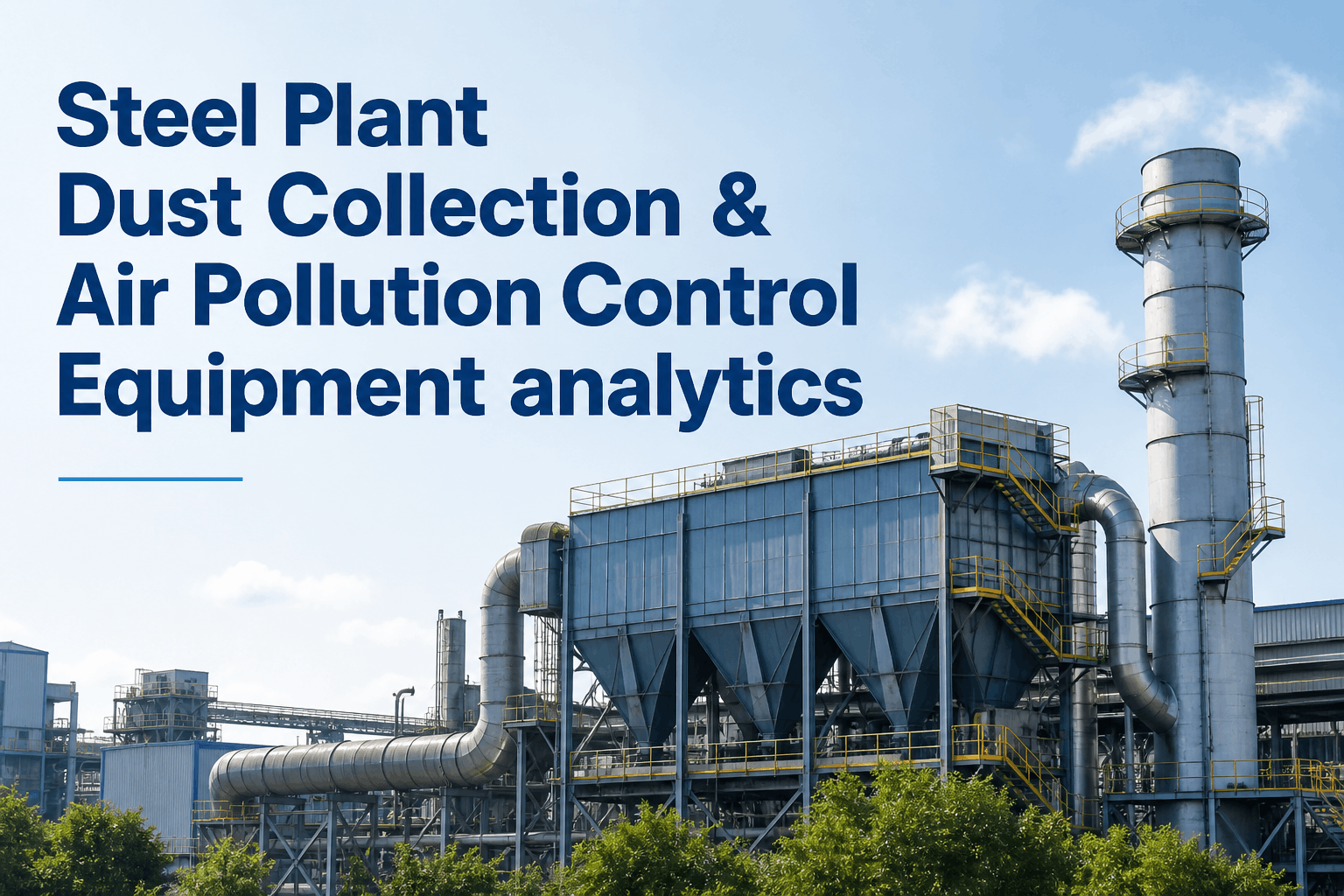
The operational consequence is that environmental compliance is now inseparable from equipment maintenance. A baghouse that is running with five broken bags in a compartment that nobody has inspected since the last annual shutdown is a compliance liability, not just a maintenance deferral. A scrubber whose recirculation pump is cavitating at reduced flow is producing a stack opacity reading that may be trending toward a permit threshold while the CEMS data sits unreviewed in a historian. iFactory's environmental compliance analytics platform eliminates the gap between equipment condition and compliance posture by treating pollution control assets — baghouses, scrubbers, electrostatic precipitators, flare systems, wastewater treatment units — as first-class CMMS assets with condition monitoring, PM scheduling, and compliance-linked work orders. Book a Demo to see iFactory's compliance platform configured for your facility's specific permit structure and pollution control asset inventory.
Reactive Compliance Management
Quarterly reports, manual log assembly, crisis-driven response
Emission exceedances discovered at quarterly report compilation — 60 to 90 days after the event
Pollution control equipment PM on calendar schedule — condition unknown between inspections
Regulatory audit prep requires 2 to 4 weeks of manual record assembly from multiple log sources
Permit limits stored in spreadsheets — no automated alert when operating data approaches threshold
Compliance reporting assembled by environmental staff from raw CEMS exports — error-prone, time-intensive
No cross-link between equipment failure and compliance risk — baghouse integrity and permit status managed separately
Result: Compliance posture unknown until it becomes a violation record
iFactory Continuous Compliance Platform
Real-time monitoring, automated alerts, integrated audit trail
Emission trends monitored continuously — exceedance risk alert issued before permit threshold is crossed
Pollution control equipment PM triggered by condition data — baghouse differential pressure, scrubber flow, ESP spark rate
Audit-ready compliance record built automatically from sensor data and inspection records — retrievable in minutes
All permit limits loaded into the platform — automated threshold alerts with trend context and recommended response
Compliance reports auto-generated from integrated data — formatted to permit reporting requirements, zero manual assembly
Equipment condition and compliance posture unified — pollution control asset failure triggers both a work order and a compliance alert
Result: 100% on-time submissions, zero exceedances from equipment failures
Environmental Compliance Coverage — Every Regulatory Obligation in the Steel Plant Managed in One Platform
iFactory's platform covers the full regulatory compliance portfolio for integrated and EAF steel operations — air quality permit management, NPDES water discharge compliance, solid and hazardous waste tracking, and sustainability reporting obligations — all from a single interface that connects operational sensor data to compliance records without manual transcription. The table below maps each compliance category to the specific iFactory capability, the equipment assets monitored, and the documented improvement at steel plant deployments.
| Compliance Category |
Regulatory Framework |
Equipment / Emissions Monitored |
iFactory Capability |
Outcome at Deployment |
| Air Quality — HAP Emissions |
40 CFR Part 63 Subpart FFFFF (NESHAP) |
Coke oven battery stacks, pushing emissions, door emission controls, charging operations |
CEMS data integration, emission trend analytics, Method 9 inspection scheduling, HAP limit alerts |
Zero missed NESHAP compliance deadlines at monitored facilities |
| Particulate Matter Controls |
EPA NSPS, State SIP permit conditions |
Baghouses, ESPs, fabric filters on EAF, melt shop, raw material handling |
Differential pressure trending, bag failure detection, filter media PM scheduling, opacity correlation |
–58% baghouse-related opacity exceedances post-deployment |
| NOx and SO₂ Emission Limits |
Title V Operating Permit, State Implementation Plans |
Reheat furnaces, annealing furnaces, hot stoves, ladle preheaters, boilers |
Continuous emission rate tracking vs. permit limit, combustion analytics, burner PM triggers |
Real-time permit utilization dashboard — no surprises at annual true-up |
| Water Discharge Compliance |
NPDES Permit, EPA Effluent Guidelines (40 CFR Part 420) |
ETP final effluent, cooling water blowdown, stormwater outfalls, process wastewater |
Parameter trending vs. permit limits, upstream load monitoring, discharge event logging, DMR auto-generation |
100% DMR on-time submission rate, zero discharge permit violations |
| Solid and Hazardous Waste |
RCRA, State hazardous waste permits |
Mill scale, EAF dust (K061), spent refractory, oily scale, laboratory waste streams |
Waste generation tracking, manifest management, storage time alert, annual report auto-generation |
–41% late manifest submissions, full RCRA storage time compliance |
| Pollution Control Equipment PM |
Permit-required control device maintenance, Title V compliance assurance monitoring |
Scrubbers, flares, thermal oxidizers, secondary hooding, capture systems |
Condition-based PM scheduling, inspection record with photo evidence, compliance assurance monitoring logs |
Zero permit exceedances from control device downtime at monitored facilities |
| Sustainability and ESG Reporting |
GHG reporting rule (40 CFR Part 98), customer sustainability requirements, SEC disclosure |
All emission sources: Scope 1 direct, Scope 2 electricity-associated, Scope 3 supply chain |
GHG inventory auto-calculation, Scope 1/2/3 tracking, sustainability report auto-generation |
GHG report preparation time reduced from 6 weeks to 4 days |
Pollution Control Equipment Analytics — The Maintenance-Compliance Connection That Most Steel Plants Are Missing
The most common root cause of unexpected environmental permit exceedances at steel plants is not process upsets or raw material changes — it is pollution control equipment that degraded below specification without detection while the maintenance organization managed it on calendar-based PM intervals that did not reflect actual condition. A baghouse compartment with five broken filter bags produces a particulate emission rate that may be within permit limits with four broken bags and outside it with five — and the only way to know which side of that threshold you are on continuously is to monitor the differential pressure trend that correlates with bag integrity, not to schedule an annual inspection and assume everything is acceptable between visits.
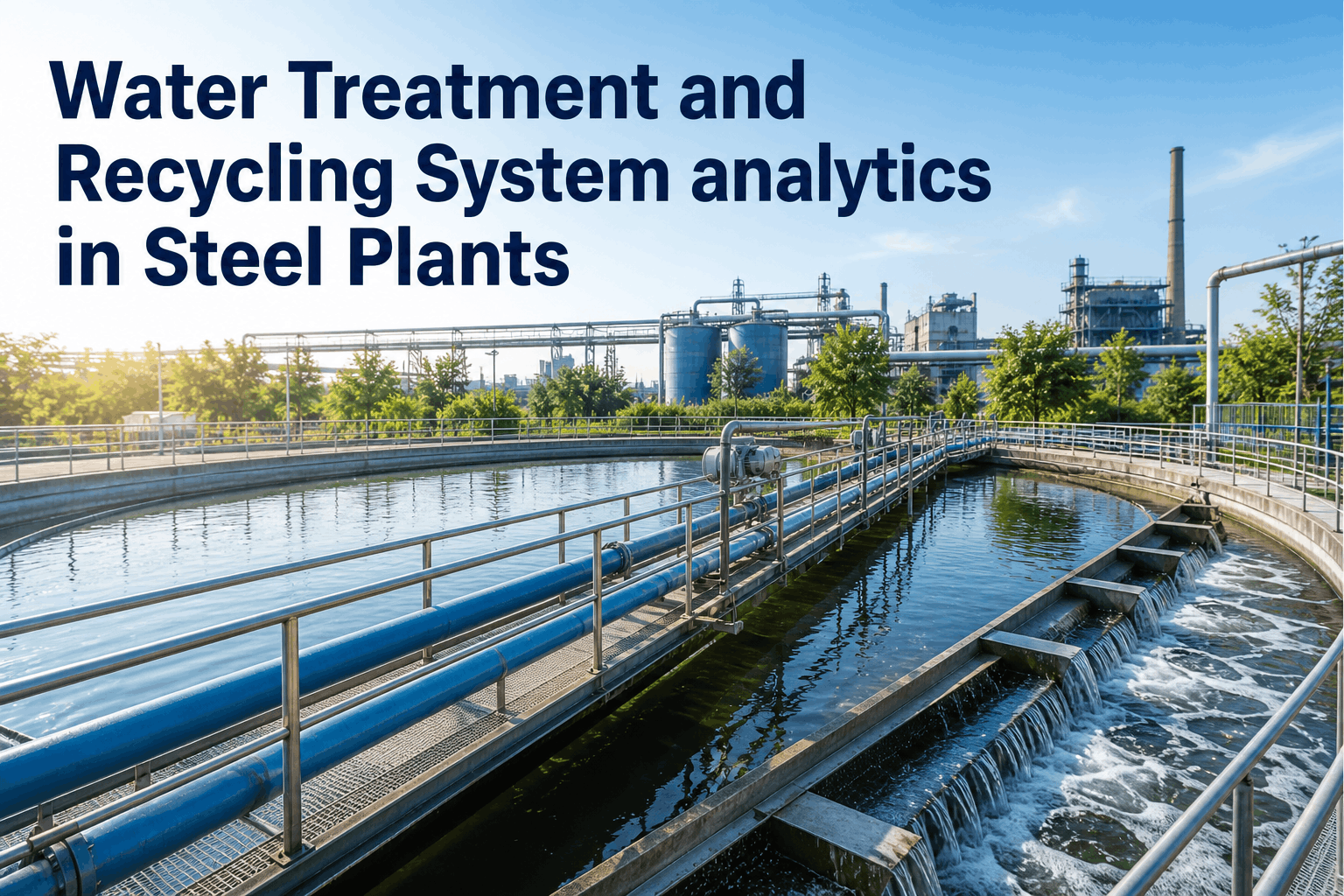
iFactory's platform closes this gap by integrating pollution control equipment condition monitoring into the same CMMS and compliance framework that manages the rest of the steel plant's maintenance program. Baghouse differential pressure trends trigger an inspection work order before the integrity deteriorates to a compliance-risk level. Scrubber recirculation pump discharge pressure trending below specification generates a work order with the permit implication flagged — so the maintenance supervisor knows this is not just an equipment issue, it is an active compliance risk. ESP spark rate analytics detect corona quenching conditions that reduce collection efficiency before stack opacity climbs toward the permit threshold. Book a Demo to see iFactory's pollution control equipment analytics applied to your facility's specific air quality control assets.
Cap 1
CEMS Data Integration and Permit Limit Monitoring
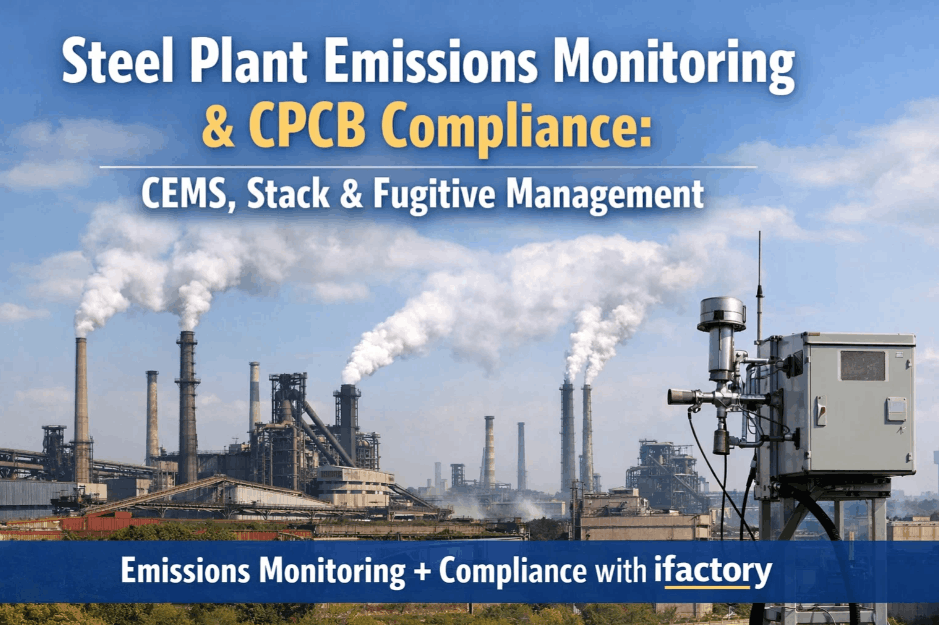
iFactory connects to existing Continuous Emission Monitoring Systems via OPC-UA, Modbus, and historian APIs — pulling SO₂, NOx, CO, opacity, and flow rate data into the compliance platform where it is evaluated against the specific permit limits applicable to each emission point. When an emission parameter approaches the action threshold (configurable, typically 85 to 90% of permit limit), an alert is generated with trend context and projected time to limit. The environmental manager sees a permit utilization dashboard for all monitored emission points in real time — not at the next quarterly submission.
Capability: CEMS integration · Permit limit alerts · Emission trending · Multi-point dashboard
Cap 2
Automated Audit Trail — Every Compliance Record Timestamped and Tamper-Evident
Environmental regulatory audits — EPA, state environmental agency, or third-party customer audits — require a complete evidence chain demonstrating that compliance was maintained continuously, not just at the moment of the last reported reading. iFactory's audit trail captures every sensor reading, inspection record, work order, corrective action, and compliance report with timestamp, user ID, and data provenance metadata that is immutable and audit-ready. When an EPA inspector requests the compliance record for emission point EU-007 for the previous 24 months, the complete record is retrieved and exported in minutes — not assembled over two weeks from paper logs, CEMS historian exports, and maintenance work order printouts.
Capability: Immutable audit trail · Timestamped records · Inspector-ready export · 7-year record retention
Cap 3
Regulatory Report Auto-Generation — DMRs, Title V Annual Reports, GHG Inventory
Preparing a Discharge Monitoring Report, a Title V annual compliance certification, or an EPA GHG inventory report from raw operational data is a time-intensive manual process when the underlying data lives in separate CEMS historians, maintenance work order systems, water lab spreadsheets, and waste manifest files. iFactory auto-generates these reports from integrated data — pulling emission readings, equipment operational hours, control device maintenance records, and water quality data into pre-configured report templates formatted to EPA and state regulatory requirements. The environmental coordinator reviews and submits rather than assembling from scratch. Quarterly reporting cycles that previously required two weeks of data compilation now take two days.
Capability: DMR auto-generation · Title V report automation · GHG inventory · State-format templates
Cap 4
Permit Management — Conditions, Deadlines, and Deviation Tracking in One View
A Title V operating permit for an integrated steel facility may contain 200 to 400 individual conditions — emission limits, monitoring requirements, recordkeeping obligations, testing deadlines, and reporting due dates — spread across dozens of emission units and applicable regulatory citations. iFactory's permit management module stores all permit conditions, maps them to the operational data sources that demonstrate compliance, and tracks the status of every condition continuously. Permit renewal deadlines, stack test due dates, and deviation report submission deadlines appear on a compliance calendar with automated advance notification. When a deviation occurs, the deviation report workflow is triggered automatically — ensuring the required notification reaches the regulatory agency within the permit's specified timeframe.
Capability: Permit condition database · Compliance calendar · Deadline alerts · Deviation report workflow
Cap 5
GHG and Sustainability Tracking — Scope 1, 2, and 3 for Customer and Regulatory Reporting
Steel producers are under increasing pressure from automotive, appliance, and construction customers to provide verified Scope 1 and Scope 2 GHG intensity data for purchased steel as part of supply chain decarbonization programs. iFactory's GHG tracking module calculates Scope 1 direct emissions from all combustion and process sources, Scope 2 electricity-associated emissions from grid intensity factors, and configurable Scope 3 categories from material consumption and logistics data — generating the GHG inventory report required for 40 CFR Part 98 submission and the product-level carbon intensity data that customer sustainability programs increasingly require as a condition of supply qualification.
Capability: Scope 1/2/3 tracking · GHG inventory report · Product carbon intensity · Customer sustainability data
Permit Tracking · CEMS Integration · Audit Trail · Automated Reporting · GHG Compliance
Stop Building Your Compliance Record the Week Before the Regulatory Inspection. iFactory Builds It Continuously, Every Day.
iFactory connects your CEMS data, pollution control equipment condition monitoring, permit limit tracking, and regulatory report generation into one platform — so your compliance posture is documented in real time, not reconstructed under deadline pressure.
The iFactory Compliance Workflow — How a Steel Plant Moves From Reactive Reporting to Continuous Compliance Assurance
The workflow below traces the five operational phases that define continuous compliance assurance in a steel plant environment — from permit data ingestion through real-time monitoring, equipment condition linkage, automated reporting, and audit readiness. Each phase represents a specific process change from the reactive, paper-based compliance model that most steel plants are currently running.
Phase 1 — Permit and Regulatory Obligation Intake
All applicable permits — Title V, state air quality, NPDES, RCRA — are loaded into iFactory's permit management module with every condition, limit, monitoring requirement, and reporting deadline mapped to the corresponding operational data source. The compliance calendar is populated with all regulatory deadlines for the next 24 months, with advance notification periods configured per obligation type. This is completed at deployment and updated when permits are modified or renewed.
Phase 2 — Continuous Emission and Equipment Monitoring
CEMS data feeds connect to the platform. Pollution control equipment — baghouses, scrubbers, ESPs, flares — is tagged in the asset hierarchy with condition monitoring parameters mapped to permit-specific performance thresholds. Every emission reading is evaluated against the applicable permit limit in real time. Equipment condition trends are evaluated against the performance specifications that correspond to compliance-level operation. Alerts are issued at configurable thresholds — typically 10 to 15% below the permit limit — giving the operating team time to respond before a violation record is created.
Phase 3 — Condition-Based PM and Compliance-Linked Work Orders
When a pollution control equipment condition trend approaches the threshold that risks a compliance impact, iFactory generates a PM work order with the compliance implication flagged — the work order carries the applicable permit condition, the current emission trend, and the risk level if the maintenance is deferred. The maintenance supervisor sees not just "baghouse DP trending high" but "baghouse DP trending toward condition that correlates with opacity exceedance at EU-014 — Title V Condition 47b at risk." The compliance consequence is visible in the maintenance decision, not discovered afterward.
Phase 4 — Automated Compliance Report Generation
At each reporting cycle — monthly, quarterly, annually — iFactory auto-generates the applicable compliance reports from integrated operational data. DMRs are pre-populated with effluent monitoring data. Title V annual compliance certifications are drafted from the permit condition database cross-referenced with the continuous monitoring record. GHG inventory reports are calculated from emission factor data applied to operational records. The environmental coordinator reviews the auto-generated draft, makes any required editorial adjustments, and submits — eliminating the 2 to 4 week manual assembly process that previously consumed the environmental team at each reporting deadline.
Phase 5 — Audit Readiness and Continuous Evidence Chain
Every sensor reading, inspection record, maintenance work order, deviation notification, and submitted compliance report is archived in iFactory's tamper-evident audit trail with timestamp, user attribution, and data provenance metadata. When a regulatory inspector requests the compliance record for any emission unit or discharge point, the complete evidence chain is exported from the platform in minutes — formatted to the inspector's requirements, with no gaps, no missing log entries, and no need to explain why a CEMS historian export shows different values than a paper log. The audit posture at an iFactory-deployed steel plant is not reactive — it is continuously ready.
Expert Review: What Steel Plant Environmental Managers Say About Continuous Compliance Platforms
"I have managed environmental compliance at steel plants for eighteen years. The permit complexity has increased every cycle — more emission units covered, more monitoring requirements, more reporting obligations, more stringent limits on the sources that are covered. For the first sixteen years of my career, I managed that increasing complexity with the same basic workflow: CEMS historian, spreadsheets, paper inspection logs, and a two-week sprint at every reporting deadline to pull it all together. That workflow was already straining our team capacity when I started at this facility. By 2023, when our Title V permit renewal added monitoring requirements for six additional emission units and our NPDES permit was revised to require monthly DMRs instead of quarterly, it broke. We were routinely submitting reports late, and twice in eighteen months we submitted reports with data discrepancies between what the CEMS historian showed and what the paper log had recorded — discrepancies we did not catch until the state agency pointed them out. The consequence was an enhanced inspection program that added 40 hours of environmental staff time per quarter just in agency coordination. Deploying iFactory's compliance platform was the operational decision that stopped that cycle. The permit conditions are in the system. The CEMS data feeds directly into the compliance record. The reports are auto-generated. The last time the state agency requested records for a compliance evaluation, my team pulled and exported the complete 18-month evidence package in 35 minutes. Before iFactory, that same request would have required three days of manual record assembly. The permit exceedance that triggered the enhanced inspection program was caused by a baghouse compartment failure that nobody connected to a compliance risk until the opacity reading showed up in the quarterly report. iFactory's equipment condition monitoring would have flagged the differential pressure trend two weeks before the compartment failed and generated a work order with the compliance implication visible to the maintenance supervisor. That is the change that matters most — the connection between equipment condition and compliance posture, managed proactively rather than discovered retrospectively."
Director of Environmental Health and Safety
U.S. Integrated Steel Operations — 18 Years EHS Management — CIH Certified — Title V Permit Coordinator
Conclusion: Environmental Compliance Is Now a Continuous Operational Discipline, Not a Periodic Reporting Exercise
The regulatory and commercial pressures reshaping steel plant environmental compliance requirements are not temporary. The trend in EPA rulemaking over the past decade has consistently moved toward more stringent emission limits, expanded monitoring requirements, and shorter deviation notification windows — and the trajectory of customer sustainability disclosure requirements is adding a second compliance obligation layer that runs parallel to the regulatory framework and is equally demanding of continuous operational data. Managing this dual compliance obligation with reactive, periodic reporting workflows built for a simpler regulatory environment is an unsustainable operational posture.
iFactory's environmental compliance analytics platform provides the operational infrastructure that continuous compliance management requires — CEMS data integration, pollution control equipment condition monitoring, permit limit tracking, automated report generation, and a tamper-evident audit trail that documents compliance posture continuously rather than reconstructing it under deadline pressure. The 100% on-time regulatory submission rate, 67% reduction in audit preparation time, and zero permit exceedances from equipment condition failures at iFactory-deployed facilities are the documented outcomes of replacing periodic, manual compliance management with continuous, sensor-connected compliance assurance. Book a Demo to see iFactory's environmental compliance platform configured for your facility's specific permit structure and regulatory obligations.
Emissions · Water Discharge · Waste Compliance · GHG Reporting · Audit Trail
Put Every Permit Condition, Every Emission Reading, and Every Compliance Record Into One Platform That Is Always Audit-Ready.
iFactory's environmental compliance analytics platform manages your full regulatory portfolio — air quality, water discharge, waste tracking, and GHG reporting — with automated report generation, continuous permit limit monitoring, and an immutable audit trail that turns a two-week audit prep into a 35-minute record export.
Frequently Asked Questions
Does iFactory integrate with existing CEMS and air quality monitoring systems already installed at our steel plant?
Yes — iFactory connects to existing CEMS via OPC-UA, Modbus, historian APIs, and direct data feeds. Most steel plants have installed CEMS infrastructure that integrates without hardware replacement, with data flowing into the compliance platform within days of connection configuration.
Can iFactory auto-generate EPA and state regulatory reports including DMRs and Title V annual compliance certifications?
Yes — iFactory auto-generates DMRs, Title V annual compliance certifications, GHG inventory reports, and state-specific air quality reports from integrated operational data. Reports are formatted to the applicable regulatory template and reviewed by environmental staff before submission — eliminating 2 to 4 weeks of manual data assembly per reporting cycle.
How does iFactory's audit trail work for EPA or state environmental agency inspections and records requests?
Every sensor reading, inspection record, work order, deviation notification, and compliance report is archived with timestamp, user ID, and data provenance metadata in an immutable audit trail. Compliance records for any emission unit or time period are exported in minutes — formatted to inspector requirements with no gaps or data discrepancies between operational systems.
Does iFactory track GHG emissions for both EPA 40 CFR Part 98 reporting and customer sustainability disclosure requirements?
Yes — iFactory calculates Scope 1 direct emissions, Scope 2 electricity-associated emissions, and configurable Scope 3 categories from operational data. The platform generates both the EPA GHG inventory report and the product-level carbon intensity data that automotive, construction, and appliance customers require for supply chain sustainability qualification.
What is the deployment timeline for iFactory's environmental compliance platform at a U.S. steel facility?
Deployment typically completes in 6 to 10 weeks — covering permit condition intake, CEMS and sensor integration, pollution control asset tagging, report template configuration, and staff onboarding. Most facilities achieve full compliance platform operation within 90 days. Investment ranges from $42,000 to $110,000 depending on facility complexity and permit scope.