
Steel manufacturing is the most electrically intensive industry on the planet, where Electric Arc Furnaces (EAFs) consume massive megawatt-hours of power in minutes. This energy throughput creates extreme stress on electrical infrastructure, where a single loose busbar connection or a degraded transformer bushing can lead to a catastrophic arc flash event. Electrical system analytics in steel plants are no longer just about tracking consumption—they are the operational baseline for survival, safety, and sub-millisecond reliability. In an environment where fault currents can reach hundreds of kiloamps, traditional "Once-a-Year" manual infrared inspections are no longer acceptable. Understanding your obligations around Incipient Fault Detection, Power Quality KDEs, and digital safety logs is the only way to eliminate the "Lethal Visibility Gap" that currently threatens your team and your production quotas.
What Is Electrical System Analytics for Steel Plants?
Electrical system analytics is the deployment of high-frequency sensing and causal AI to monitor the health, safety, and efficiency of a plant's power grid. Unlike standard monitoring, which only tracks voltage and current, iFactory’s platform defines a mandatory, standardized approach to tracking Key Data Elements (KDEs) across Critical Tracking Events (CTEs) in the power chain—from high-voltage substation entry to the final motor starter in the MCC. This structured vocabulary of electrical reliability ensures that every thermal spike, harmonic surge, and insulation degradation event is captured in operational terms that drive immediate maintenance action.
The Scope Document for Electrical Reliability covers categories including high-voltage transformers, switchgear cubicles, Motor Control Centers (MCCs), variable frequency drives (VFDs), and the secondary circuits of Electric Arc Furnaces. If your facility handles high-current melting or rolling operations, these analytics are not optional—they are the prerequisite for continued operational stability and insurance compliance.
Understanding CTEs: Critical Tracking Events in Power Reliability
Critical Tracking Events are the defined moments in the electrical chain where safety and performance records must be created. For steel mill electrical directors, the most operationally significant CTEs are:
Substation Transformation (Primary HV Entry)
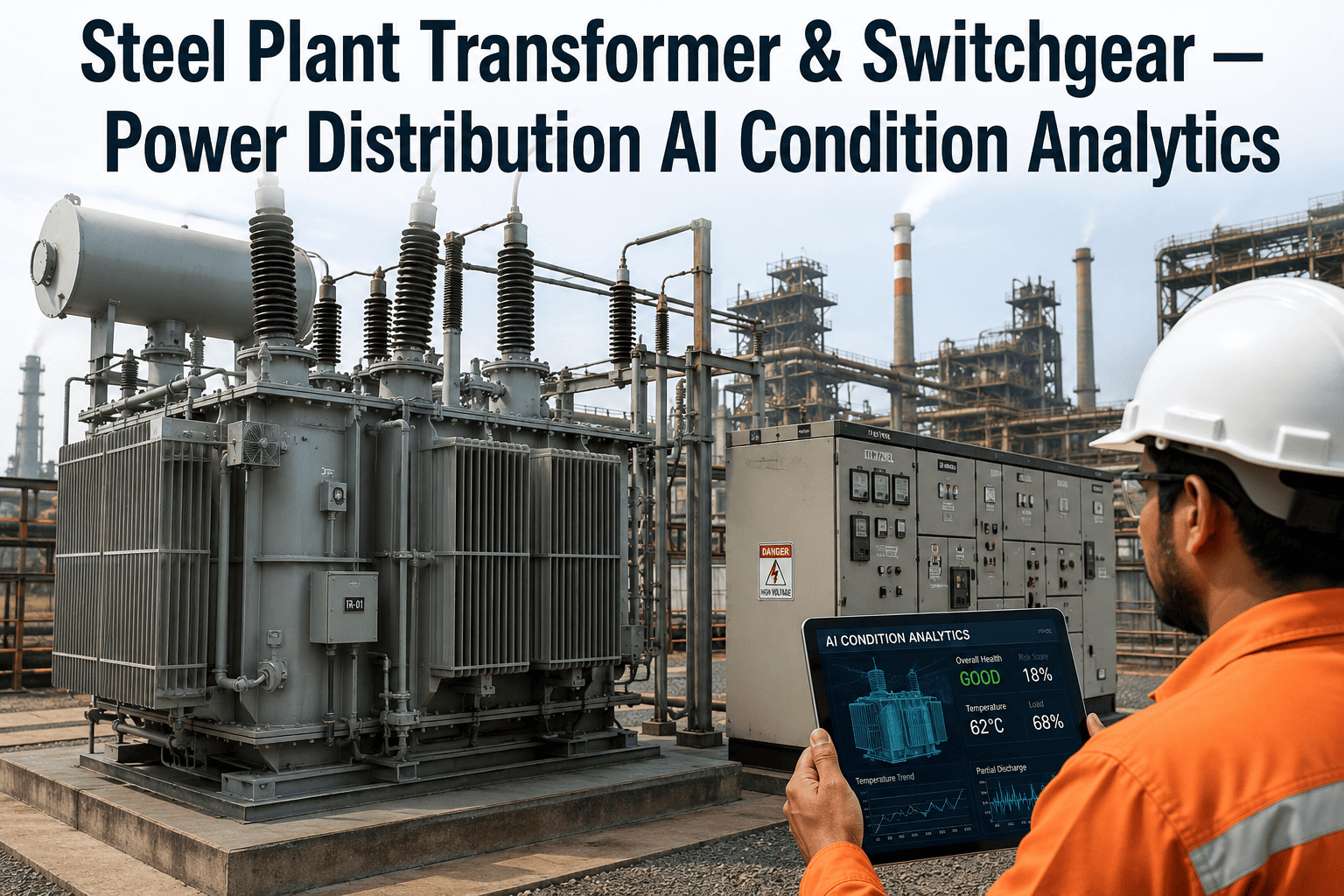
The point where utility power is stepped down for plant use. Required KDEs include transformer oil gas levels (DGA), winding temperature, bushing capacitance, and primary surge events. Failure here halts the entire plant.
Switchgear Distribution (Arc Flash Hot Zones)
The primary distribution point where high-current circuits are switched. A critical CTE where continuous thermal mapping identifies loose busbar connections that lead to arc flash disasters. Key KDEs: Delta-T anomalies and breaker trip counts.
Motor Control Center (MCC) Operation
The point where power is delivered to specific asset drives. This CTE is the most common compliance trigger for motor failures. The KDEs must include contact bounce time, motor current signature (MCSA), and starter temperature.
EAF Melt Cycle (Secondary Power Loading)
The point of extreme load fluctuation. Applies specifically to furnaces where non-linear loads inject harmonics. Required KDEs include Total Harmonic Distortion (THD), voltage sags, and electrode current symmetry.
Safety Isolation & LOTO Verification
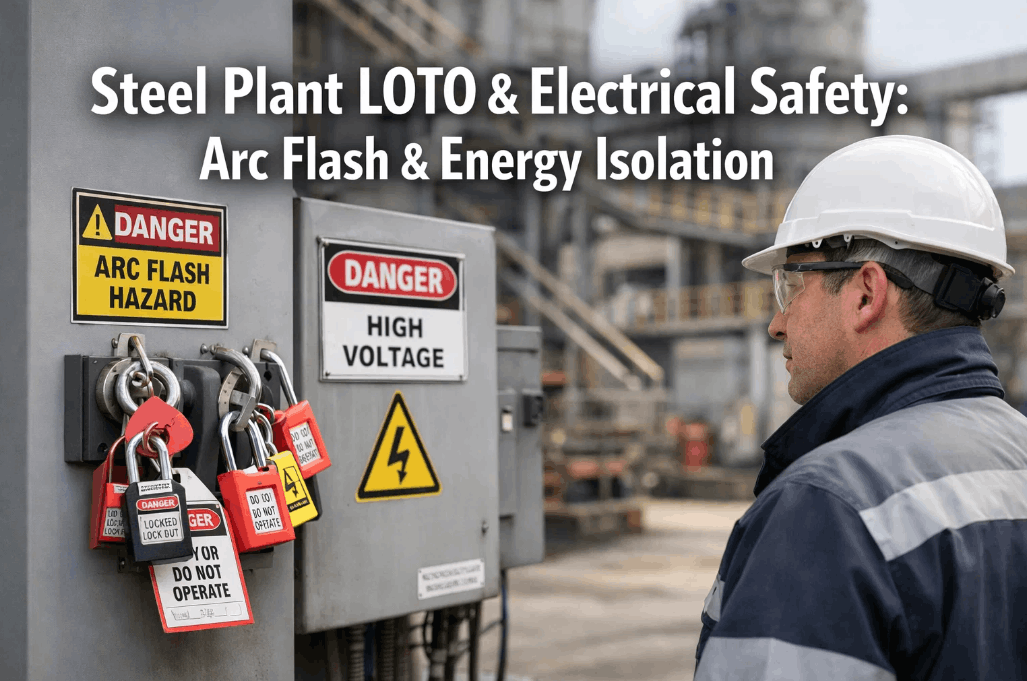
Every isolation event must be documented with time-stamped verification of zero-energy state. iFactory automates the digital safety log, ensuring 100% compliance with OSHA standards during every intervention. Book a demo to see automated safety logs.
Key Data Elements (KDEs): What Your Electrical Records Must Capture
Key Data Elements are the specific data points that must be recorded at each Critical Tracking Event. The practical compliance challenge for most electrical directors is not knowing what KDEs are required; it is building operational systems that capture them consistently in a format that can be produced to auditors in minutes. Book a demo to see how iFactory maps KDE capture to your existing substation and MCC infrastructure.
| CTE | Required KDEs | Incipient Fault Trigger? | Who Must Monitor |
|---|---|---|---|
| Transformation | Dissolved Gas (DGA), Oil Temp, Bushing Capacitance, Load Factor | Yes — Notify on Gas Trend | HV Engineers |
| Switchgear Dist. | Busbar Delta-T, Trip Velocity, Fault Current, Insulation Res. | Yes — Notify on Thermal Spike | Substation Managers |
| MCC Operation | Contact Bounce, Motor Current (MCSA), Starter Temp, Voltage Balance | Yes — Notify on Imbalance | Maintenance Teams |
| EAF Loading | THD %, K-Factor, Voltage Sags, Electrode Current Symmetry | Yes — Notify on Harmonics | Plant Power Engineers |
| Safety Isolation | LOTO Stamp, Zero-Energy Verification, Personnel ID, Re-Energize Log | Yes — Notify on Safety Breach | EHS & Maintenance |
Electrical System Record Retention & Audit Readiness
Modern industrial safety standards require covered entities to retain electrical health and safety records for the life of the asset. Records must be maintained in a format that is retrievable on demand. This "Minute-Level" production requirement is the compliance standard that exposes the most significant operational gaps in plants relying on paper-based thermal reports or siloed scada systems.
The rule does not mandate electronic records—paper IR reports are technically permissible—but the need for instantaneous correlation during an investigation makes paper-only systems extremely high-risk. A director with 24 months of paper logs cannot realistically produce a complete and accurate fault chain for a specific breaker trip within the 2-minute window required during an active audit. Book a demo to see how iFactory's safety system structures record retention to meet the highest international standards.
In an active electrical investigation, your facility must produce all relevant KDE records across every applicable CTE. This means your system must be able to: (1) identify all assets associated with the fault, (2) retrieve all thermal and power transients linked to those assets, (3) trace backward to substation entry and forward to MCC distribution, and (4) compile these into a readable root-cause report. For facilities handling 100+ MW loads, manual compilation is not operationally viable without a purpose-built analytics system.
AI-Driven Analytics for Power Reliability: How Technology Closes the Gap
Manual and spreadsheet-based electrical systems fail on three fronts: they cannot capture thermal transients in real-time, they cannot reliably link harmonic stress to asset degradation, and they cannot produce complete safety chains during a regulatory audit. AI-driven platforms address each of these failure points through automated data capture and incipient fault modeling. Book a demo to see iFactory's AI-driven electrical module in action.
Automated KDE Capture at Substations
Integrated with high-frequency transducers, AI-driven platforms capture Power Quality KDEs automatically at every substation—eliminating manual data entry delays and capturing transients that standard meters miss.
Continuous Thermal Precursor Modeling
Intelligent thermal engines automatically link temperature trends in switchgear to load current KDEs—identifying loose connections based on resistance profiles rather than absolute temperature thresholds.
Instant Audit-Ready Reporting
On-demand safety reports compile complete thermal and LOTO histories for any asset cubicle—in minutes, not days. Records are formatted to international standards, ensuring 100% compliance during any safety inspection.
Incipient Fault Simulation
Built-in simulation tools allow Electrical Directors to run mock fault exercises, identifying coordination gaps in protective relays before an actual flash event, reducing total risk by 65%.
Electrical Reliability Gaps: Where Steel Mills Are Most at Risk
Based on industry analysis of steel mill electrical infrastructure readiness assessments, the following compliance and reliability gaps appear most frequently.
Building an Electrical Reliability Roadmap: A Step-by-Step Approach
For Electrical and Reliability Directors, the roadmap from reactive firefighting to autonomous safety has five operational phases.
CTE Scoping: Map Your Critical Power Path
Audit every primary substation, switchgear, and MCC against your reliability targets. Document which assets trigger safety obligations and at which point (transformation, distribution, consumption) each CTE applies. Output: a facility-specific power path map.
KDE Gap Analysis: Assess Current Visibility
For each in-scope CTE, compare the data your current SCADA captures against the KDEs required for predictive safety. Identify fields that are missing, like sub-second harmonics or thermal transients. Output: a KDE gap register for electrical reliability.
Incipient Fault Threshold Design
Design a fault schema that meets safety requirements: unique asset identification, linkage to thermal trends, and autonomous cutoff triggers. Integrate this into your existing PLC/SCADA logic. Output: a documented incipient fault response procedure.
Technology Integration & Edge Deployment
Select and deploy a technology platform capable of automated KDE capture and 2-minute record production. Integrate with existing protective relays and MCC breakers. Output: a deployed electrical analytics system with validated data flows.
Mock Safety Audit & Fault Validation
Conduct a minimum of two mock fault exercises—one forward trace from a substation surge to all impacted MCCs, and one backward trace from a motor failure to the primary harmonics. Output: validated audit-readiness certification with mock results on file.
Frequently Asked Questions: Electrical System Analytics
How does AI prevent arc flash events in steel plants?
AI identifies the 'precursors'—loose connections (thermal spikes), harmonic overheating, or insulation degradation—weeks before they lead to a fault. By providing continuous visibility, it allows for planned maintenance in a safe, de-energized state.
What are KDEs and CTEs in electrical reliability?
Critical Tracking Events (CTEs) are key points in the power chain (e.g., transformation, distribution). Key Data Elements (KDEs) are the specific data points recorded at these events, such as DGA levels, THD percentage, or busbar Delta-T.
How long does it take to implement a continuous thermal monitoring system?
Most mid-size steel mills achieve full deployment in 6–10 weeks, covering sensor installation, AI baseline training, and integration with existing safety protocols and digital audit trails.
Can iFactory detect incipient faults in high-voltage transformers?
Yes. By tracking Dissolved Gas Analysis (DGA) trends and correlating them with thermal and load KDEs, the AI identifies insulation breakdown and internal arcing precursors months before a catastrophic failure.
Does the platform eliminate the need for manual IR scans?
It eliminates the *reliance* on manual scans for safety and reliability. While manual audits may still be part of some regulatory regimes, continuous monitoring provides the real-time visibility required to prevent events between inspections.
What is the "Decision Velocity" requirement for electrical safety?
It is the standard for producing complete root-cause and safety records on demand. iFactory allows directors to produce full KDE/CTE histories for any asset in minutes, ensuring 100% compliance during active audits or investigations.




-for-steel-manufacturing.png)