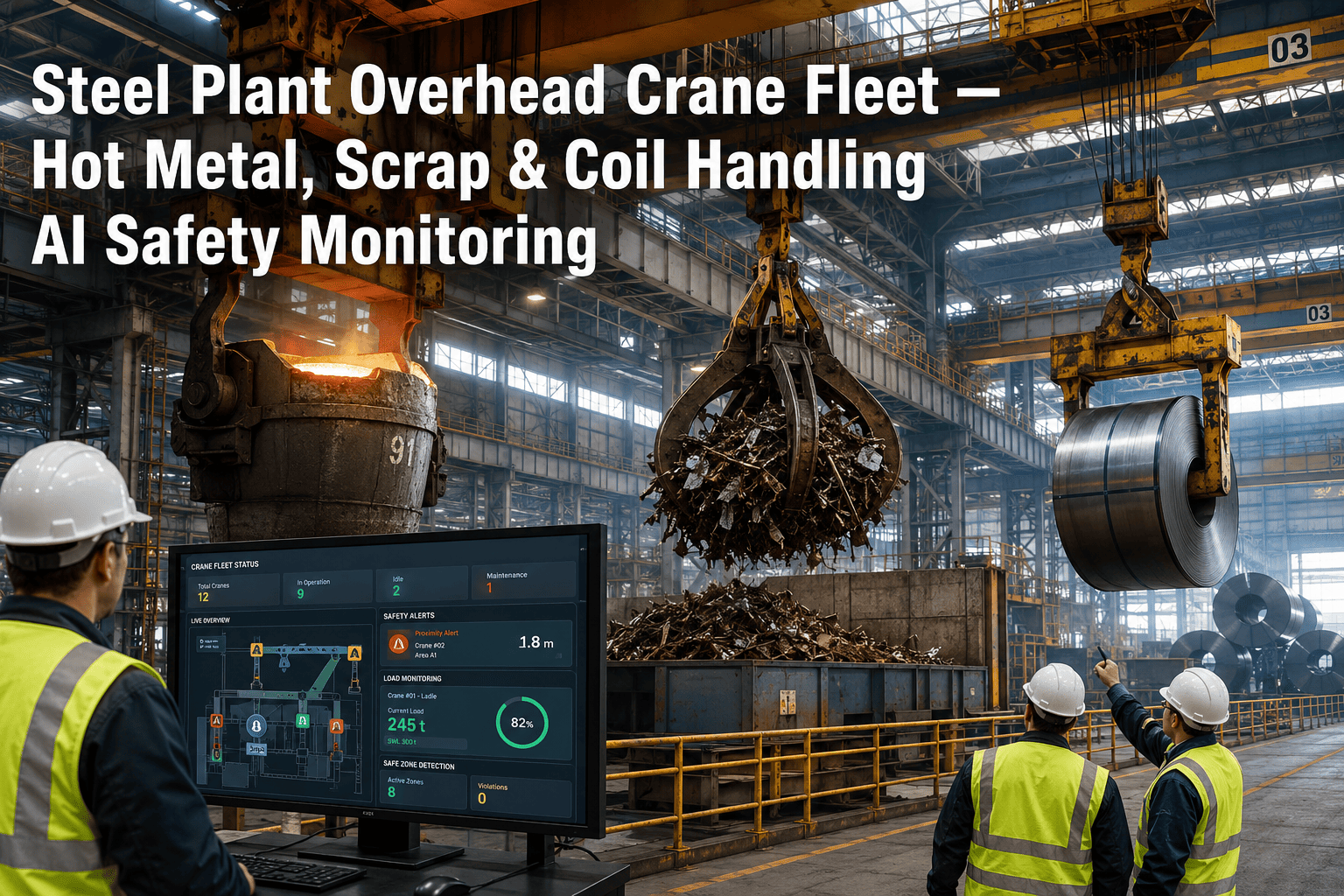
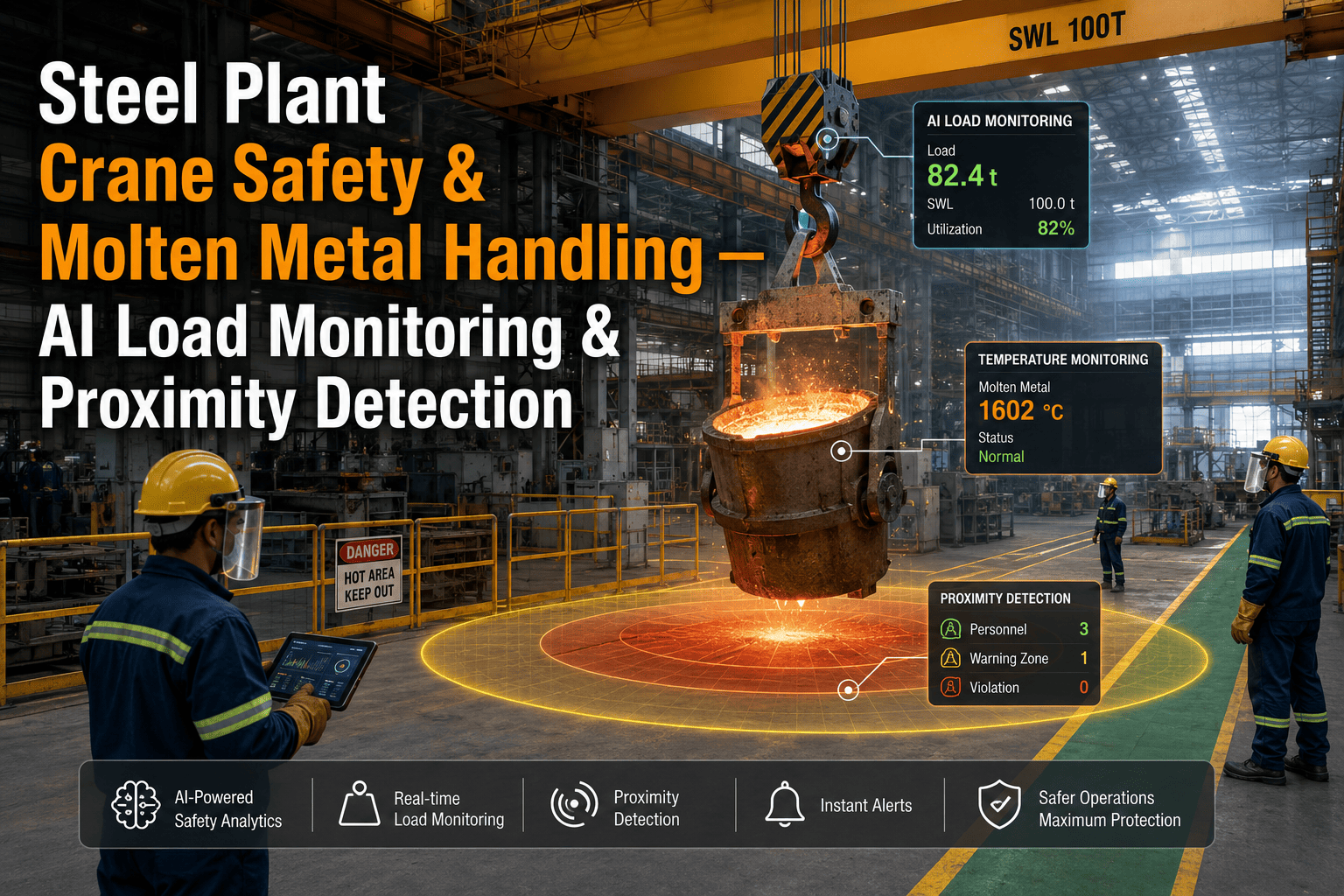
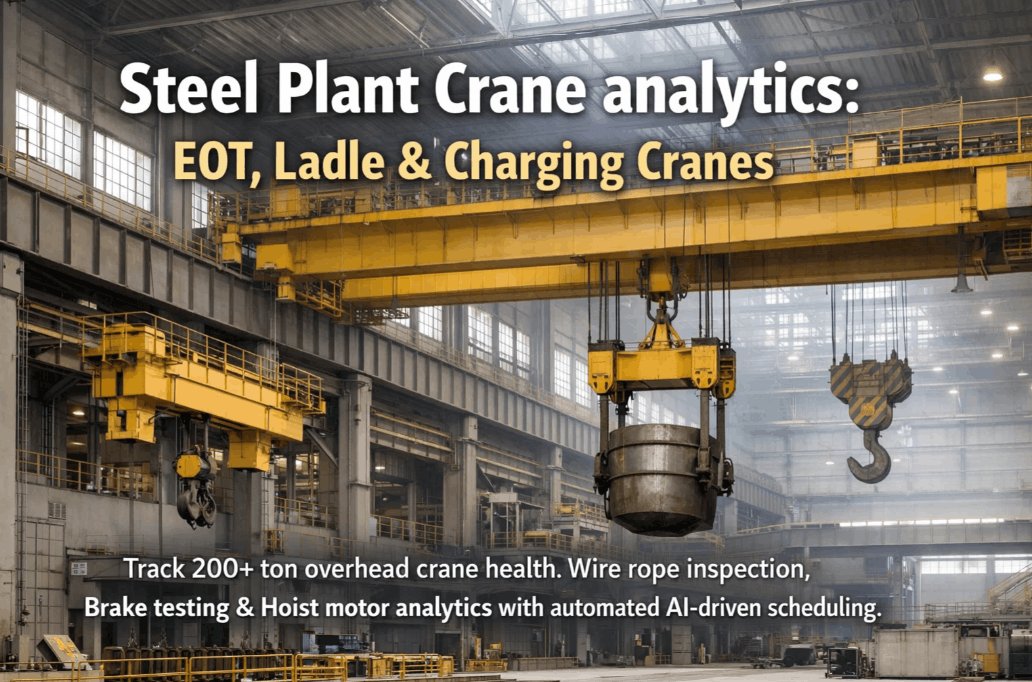
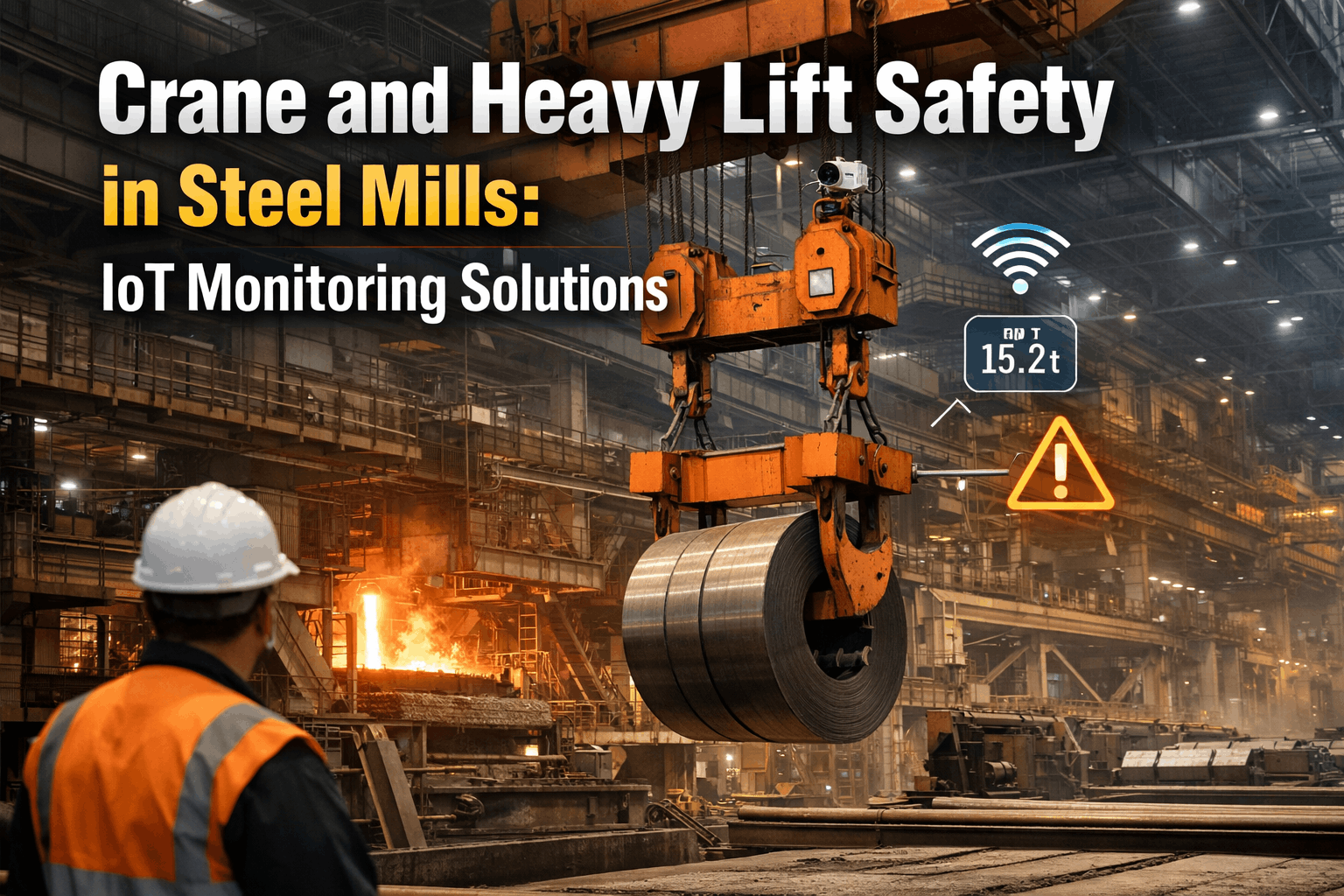
Overhead cranes in steel plant operations represent one of the highest-consequence maintenance domains in any industrial facility. A ladle crane carrying 300 tonnes of liquid steel at 1,650°C is not a material handling asset — it is a critical safety system where a single mechanical failure can cause a catastrophic molten metal spill, resulting in fatalities, asset destruction valued at ₹15–80 crore, and production stoppages measured in weeks. Charging cranes, casting cranes, scrap bay cranes, and product handling cranes each have distinct inspection requirements, wear patterns, and regulatory compliance obligations under IS 3177, IS 15811, ASME B30.2, and applicable factory laws. Yet in most steel plants, crane maintenance is managed on paper route cards, periodic statutory inspections, and the memory of experienced riggers — without systematic wear trending, load history tracking, or predictive maintenance. iFactory's Safety Compliance and Inspection Checklists platform brings digital rigour to overhead crane maintenance — tracking every inspection, every measurement, every load test, and every defect finding in one system connected to SAP PM and statutory compliance records.
Steel Plant Crane Maintenance & Overhead Crane Safety — AI-Driven Inspection Management
Digital inspection checklists, wire rope wear tracking, brake condition monitoring & statutory compliance management for ladle cranes, charging cranes, and casting cranes.
Steel Plant Crane Fleet — Inspection Requirements by Crane Type
Each crane type in a steel plant carries different loads, operates in different thermal environments, and poses different failure consequences. iFactory's inspection templates are pre-configured per crane type — matching IS 3177, IS 15811, and ASME B30 requirements to the specific risks of each crane category. Request a crane fleet inspection audit — free with iFactory assessment.
Crane Component Health Scorecard — What iFactory Tracks Per Crane
iFactory maintains a real-time health score for every monitored component on every crane — updated after each inspection, measurement, or AI camera observation. Supervisors see at a glance which cranes are safe to operate and which require immediate attention before the next lift.
AI Technologies That Make Steel Plant Crane Inspection Smarter
Traditional crane inspection relies entirely on inspector presence and judgment. iFactory adds four AI technology layers that make crane condition visible between inspections — detecting degradation that no periodic inspection can catch.
AI Camera Wire Rope Inspection
Fixed cameras scan wire rope on every lift cycle — AI detects broken wire clusters, kinking, corrosion, and lubricant loss automatically. Findings logged per lift count, not per inspection visit.
Digital Twin Load History
iFactory's crane digital twin accumulates full load history — every lift, weight, and cycle count. Remaining useful life of rope, hooks, and bearings calculated from actual load spectrum, not calendar time.
PLC-Connected Brake Monitoring
iFactory reads stopping distance and brake torque from crane PLC on every stop cycle. Degrading brake performance is detected weeks before it reaches the test-failure threshold — preventing in-service brake failure.
SAP PM Statutory Compliance
iFactory auto-generates SAP PM maintenance notifications 60 days before statutory inspection due dates. Inspection reports, load test certificates, and defect records stored in SAP DMS — audit-ready in 48 hours.
What a Steel Plant Achieved After 18 Months with iFactory Crane Management
What a Safety & Maintenance Manager Said
Our ladle crane wire rope failed the monthly inspection — 4 broken wires in one lay, just above the ASME B30 replacement threshold. The iFactory AI camera had flagged increasing wire break density 6 weeks earlier, and a replacement WO was already in the system. We replaced the rope during a planned stop instead of after a drop incident. That rope was carrying 280 tonnes of liquid steel every shift.
Crane Inspection Frequency Guide — Daily to Annual
ASME B30 and IS 3177 classify crane inspections into frequent (daily/weekly) and periodic (monthly/annual) categories. iFactory pre-loads the right frequency for every crane component — auto-generating inspection work orders before each due date so nothing is missed between statutory visits.
Top 5 Overhead Crane Failure Modes — and How iFactory Catches Them Early
Steel plant crane failures follow predictable patterns. Understanding the most common failure modes — and which monitoring method detects each earliest — allows iFactory to build an inspection programme that catches every failure type before it becomes an incident.
Frequently Asked Questions
Which Indian standards govern overhead crane inspection in steel plants?
IS 3177 (electric overhead travelling cranes), IS 15811 (safety requirements for cranes), and IS 13367 (load ratings) are the primary standards. iFactory's inspection checklists are pre-mapped to IS 3177 and IS 15811 requirements — with each checkpoint linked to the relevant clause for statutory audit purposes.
How does iFactory prevent a crane from being operated when it has a failed inspection item?
iFactory integrates with the crane's PLC where available — a failed safety-critical inspection item (brake, rope, overload limiter) raises a hold flag in the system and generates an automatic notification to the crane operator, shift supervisor, and safety officer simultaneously. Manual override requires dual-authorization.
Can iFactory track crane wire rope condition between physical inspections?
Yes — through AI camera systems mounted at the rope drum exit point, which scan every metre of rope on every lift cycle. The AI tracks broken wire progression, records cumulative lift cycles, and compares actual wire consumption rate against the rope's rated fatigue life to predict replacement date.
How does iFactory manage statutory inspection certificates and regulatory records?
Every statutory inspection — annual load test, six-monthly examination, quarterly survey — is recorded in iFactory with inspector ID, date, findings, and the signed inspection certificate stored in SAP DMS. iFactory generates the statutory register automatically, satisfying Factory Act inspection record requirements.
Bring Digital Safety to Your Crane Fleet
Demo on your crane fleet — statutory checklist templates live in 2 weeks.