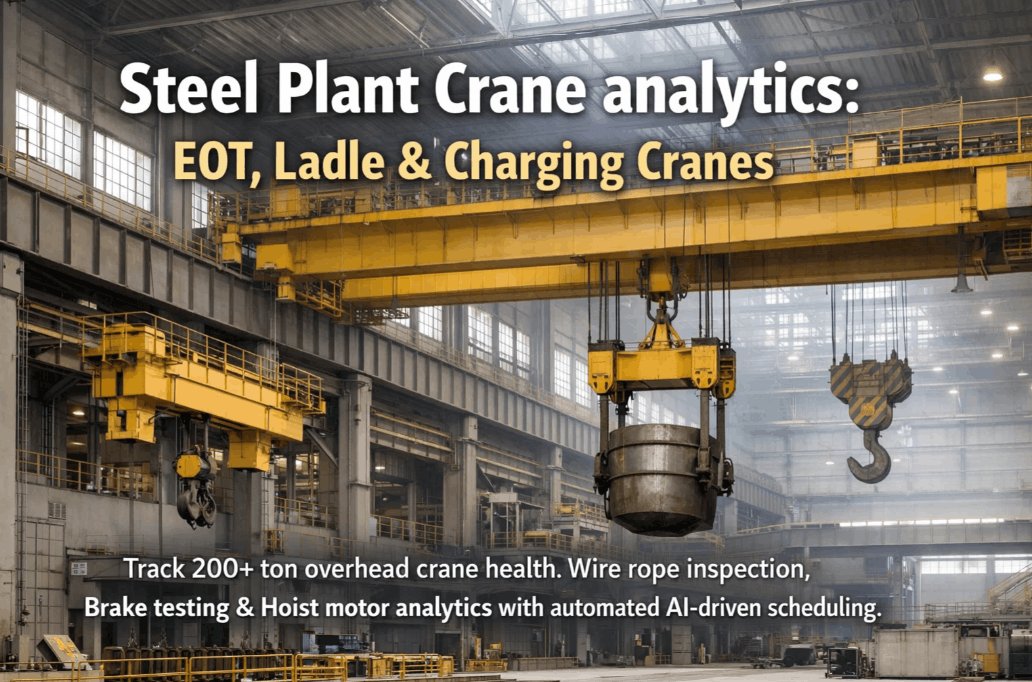
In the high-stakes environment of a modern steel mill, the overhead crane is not just a tool—it is the lifeblood of production. Handling 300+ ton ladles of molten steel in ambient temperatures exceeding 60°C, these assets are the most safety-critical components in your facility. Traditional crane maintenance depends on manual inspections and reactive schedules—systems that often miss the microscopic cable fatigue or thermal drift that leads to catastrophic failure. iFactory’s 2026 Crane & Hoist Analytics Governance platform replaces guesswork with Autonomous Structural Intelligence. Facilities utilizing iFactory report a 55% reduction in crane-related near-misses and a 45% boost in material handling OEE. Schedule a Crane Safety Audit.
The "Zero-Fail" Mandate: Why Traditional Crane Maintenance Is No Longer Enough
A single failure in a ladle crane doesn't just stop production—it creates a catastrophic safety hazard. Traditional maintenance programs rely on monthly visual inspections of wire ropes and annual brake testing. However, in the extreme EMI and heat of a melt shop, components can degrade in days. iFactory closes this Visibility Gap by providing continuous, sensor-fused monitoring of every critical crane component. Book a Technical Walkthrough.
Manual inspections miss internal strand breaks caused by dynamic shock loads. iFactory’s AI models predict rope life based on actual duty cycles and load-weight history.
Ambient heat near furnaces can cause crane brakes to lose torque silently. Only continuous digital monitoring can detect the sub-millimeter slippage that precedes a runaway load.
Fragmented checks miss the gradual skewing of the crane bridge. iFactory’s Digital Twin AI detects vibration signatures of rail wear 3 months before physical damage occurs.
Paper binders of crane inspections are rarely cross-referenced with maintenance logs. iFactory creates an integrated, audit-ready digital ledger for every hoist on your floor.
The iFactory Exclusive: NVIDIA-Accelerated Crane Vision & Digital Twins
Generic asset management tools cannot handle the sub-50ms latency requirements of heavy-lift safety. iFactory is the only platform in 2026 that leverages NVIDIA-Accelerated Edge Analytics to monitor ladle sway, hook positioning, and structural vibration in real-time. By processing data at the source, we prevent collisions and spills that cloud-based systems simply aren't fast enough to stop. Explore NVIDIA Edge Features.
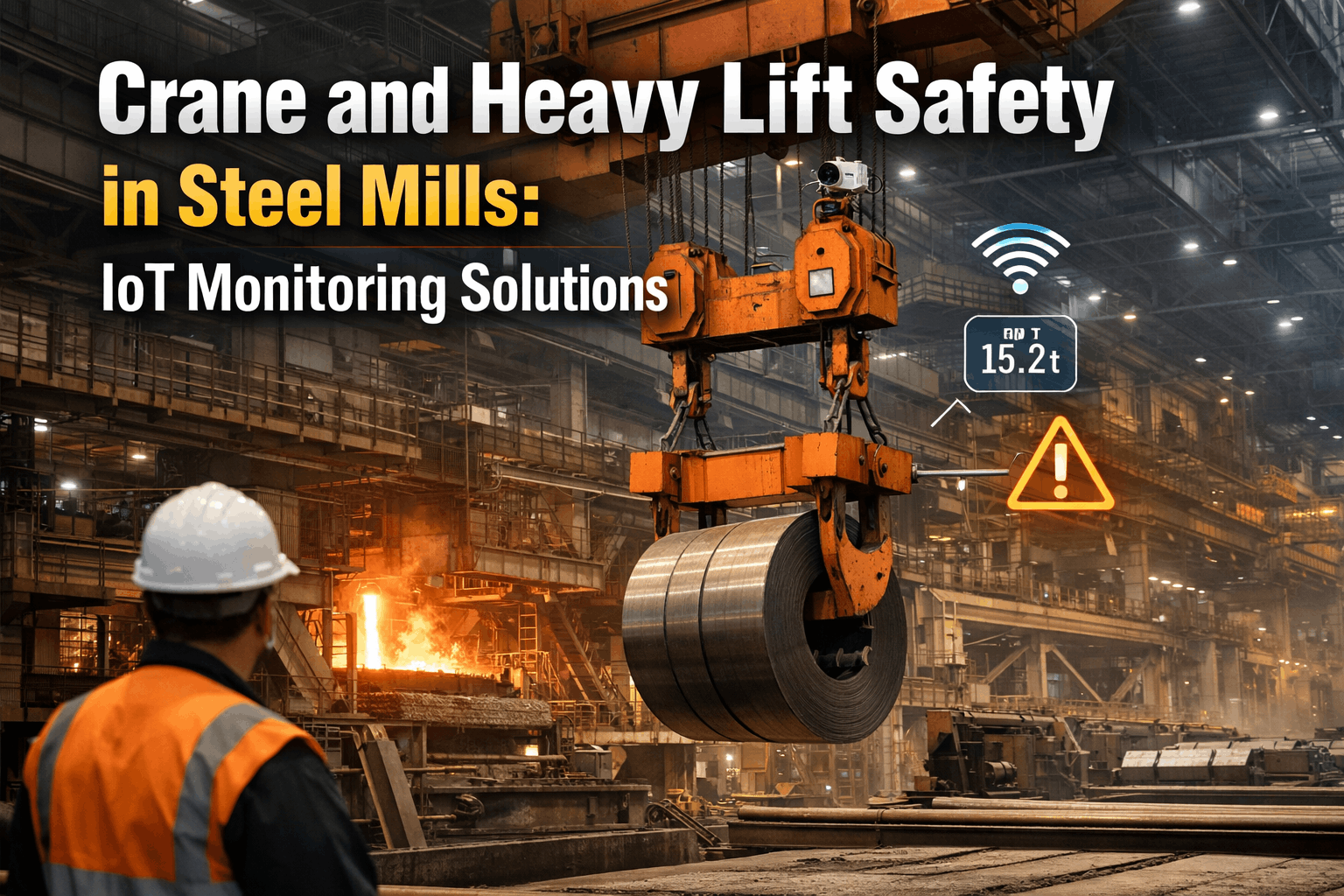
Only iFactory integrates crane scale data with AI Vision to verify the load against the production schedule, preventing "Over-Weight" pulls before the hoist even moves.
We track the cumulative "Stress Units" of every wire rope from installation to retirement, providing a data-driven replacement schedule that satisfies both safety and cost audits.
Using high-frequency motor current analysis, we detect the signature of brake wear months before a manual inspection, auto-triggering corrective work orders in SAP/Maximo.
Our on-premise GenAI provides crane operators with instant troubleshooting for error codes, protecting your proprietary safety protocols from external cloud exposure.
How iFactory Integrates Digital Analytics with Your Legacy Crane Fleet
Linking digital analytics to your overhead cranes requires mapping each asset's physical movements to a specific "Digital Twin"—then feeding that asset's real-time performance data into an iFactory platform capable of recognizing fault signatures before they produce downtime. Book a demo with iFactory to see how this mapping works across your existing crane inventory.
Crane Asset Mapping & Digital Twinning
Every EOT crane, charging hoist, and finished goods lifter is digitized into the system. This creates a direct, auditable connection between your operational safety protocols and the physical equipment responsible for maintaining the melt shop's flow.
Sensor Fusion & Real-Time Performance Baselining
IoT-connected sensors on hoists, trolleys, and bridges continuously stream performance data—vibration, motor current, and thermal drift—to the iFactory platform. Baseline models are established for each crane under peak ladle weight, enabling the system to detect statistical drift that precedes mechanical failure.
NVIDIA-Accelerated Vision & Fault Detection
Using NVIDIA-powered edge analytics, iFactory monitors wire rope strand integrity and brake torque slippage at the sub-millimeter level. The system distinguishes between normal operating heat and a gearbox showing early thermal fatigue signatures.
Automated Calibration & Safety Work Orders
When AI flags a potential fault, the platform auto-generates a safety-prioritized work order in SAP/Maximo. Every corrective step is documented in real-time, producing the unbroken chain of records that OSHA and CMAA audits require.
Continuous Compliance Ledger
The platform maintains a continuously updated digital record for every crane—inspection history, load events, maintenance interventions, and verification records—accessible as a single exportable audit trail at any time.
Steel Mill Crane Failures and the Risks They Create
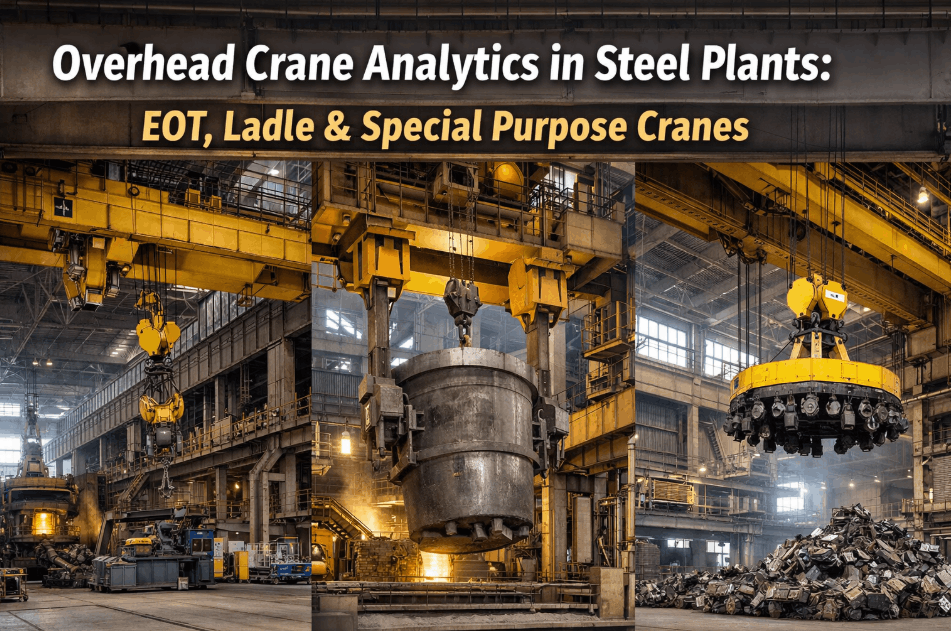
The table below maps the most common crane types in a steel mill to their specific monitoring requirements, the AI-detectable failure modes that threaten production, and the regulatory/safety consequence of an undetected failure. Request a custom failure analysis.
| Crane Type | Critical Monitoring Point | AI-Detectable Failure Mode | Safety Metric at Risk | Regulatory Consequence |
|---|---|---|---|---|
| Ladle Crane | Main Hoist Gearbox & Ropes | Thermal drift, strand fatigue | Zero-Fail Ladle Integrity | Catastrophic spill, OSHA Level 4 |
| Charging Crane | Trolley Motor & Brakes | Current surge, slippage | Precise Furnace Positioning | Furnace collision, production stop |
| Scrap Yard Crane | Magnet Controller & Cables | Electrical arching, insulation wear | Magnet Holding Strength | Dropped load, equipment damage |
| Finished Goods | Hook Vision & VFD Logic | Misalignment, jerky movement | Zero-Damage Handling | Product rejection, customer claim |
| Billet/Slab Crane | Slab Tong Pressure/Vibration | Tong wear, pressure drop | Gripping Force Stability | Slab drop, safety incident |
Crane & Hoist Analytics Across the Mill Segments
The highest-consequence assets in the mill. iFactory monitors hoist gearboxes and cable drums for thermal anomalies and vibration drift during every 300-ton pull.
High-duty cycle assets prone to electrical fatigue. We monitor magnet controller health and boom stress to prevent unplanned downtime during critical charging windows.
Precision lifting for high-value coils. iFactory’s AI Vision ensures zero damage to finished product by monitoring hook-to-coil alignment during high-speed loading.
The "Forgotton Assets." iFactory digitizes the inspection logs of hundreds of auxiliary hoists, ensuring 100% OSHA compliance across the entire facility.
Implementing Crane Analytics Integration: A 5-Phase Roadmap
Integrating digital analytics with your crane fleet is a structured deployment that starts with your highest-risk assets. iFactory provides the definitive framework for this transition. Schedule your roadmap session.
Fleet Audit & Legacy Digital Import
Import existing paper-based maintenance records and map every crane asset into the iFactory digital ecosystem. Establish baseline safety thresholds for every hoist based on OEM specifications.
Edge Sensor Deployment & NVIDIA Vision Sync
Install non-invasive vibration, current, and thermal sensors on critical crane subsystems. Synchronize NVIDIA-accelerated vision cameras to monitor wire rope and ladle positions.
AI Fault Model Baselining
Collect 4–6 weeks of high-frequency data to establish the "Healthy Signature" of your cranes. Calibrate AI thresholds to distinguish between normal heavy-lift strain and genuine degradation.
Compliance Workflow Automation
Activate automated work-order triggers for all safety-critical alerts. Connect the digital ledger to your existing ERP to ensure that "Safety Work" is never deprioritized.
Autonomous Safety Governance
Enable real-time load verification and collision prevention. The system now acts as an "Autonomous Governor," preventing unsafe pulls before they occur.
Material Handling Performance: The 45% OEE Difference
Frequently Asked Questions: Steel Mill Crane Analytics
We use a combination of Magnetic Flux Leakage (MFL) sensor integration and AI-driven "Stress-Weight" tracking. By correlating the exact weight of every lift with the drum rotation and acceleration profile, our models predict internal strand fatigue that visual checks simply cannot see.
Yes. We use specialized, shielded industrial Edge nodes and fiber-optic backbones to ensure 100% data integrity in high-EMI environments. Our NVIDIA Edge nodes are housed in MIL-SPEC heat-shielded enclosures designed for steel mill conditions.
Yes. iFactory supports all major industrial protocols (Modbus, OPC-UA, Profinet) to pull data directly from existing hoist controllers, load cells, and variable frequency drives (VFDs) without requiring a hardware overhaul.
Our NVIDIA-Accelerated Vision system monitors the "Sway Angle" and "Ladle Level" in real-time. If the sway exceeds a safety threshold or if the ladle tilt is abnormal, the system sends an immediate override signal or audible alert to the operator.
The ROI is driven by "Catastrophic Risk Mitigation." A single ladle incident can cost $5M+ in equipment damage and lost production. However, from a maintenance perspective, most mills achieve payback in 12 months through 25% longer cable life and 30% fewer unplanned stops.
Yes. We offer a full Sovereign On-Premise deployment. Your crane telemetry and safety records never leave your facility, protecting your operational data from any external cloud vulnerabilities.
We use long-range laser sensors and bridge-mounted accelerometers. The system analyzes the "Crabbing Signature" of the crane as it travels. If the bridge starts to skew due to rail wear or settlement, the system flags a "Rail Integrity" work order automatically.
Yes. Every inspection task, whether automated or manual, is logged in a tamper-evident digital ledger. At audit time, you can export a complete, asset-attributed compliance package with a single click.