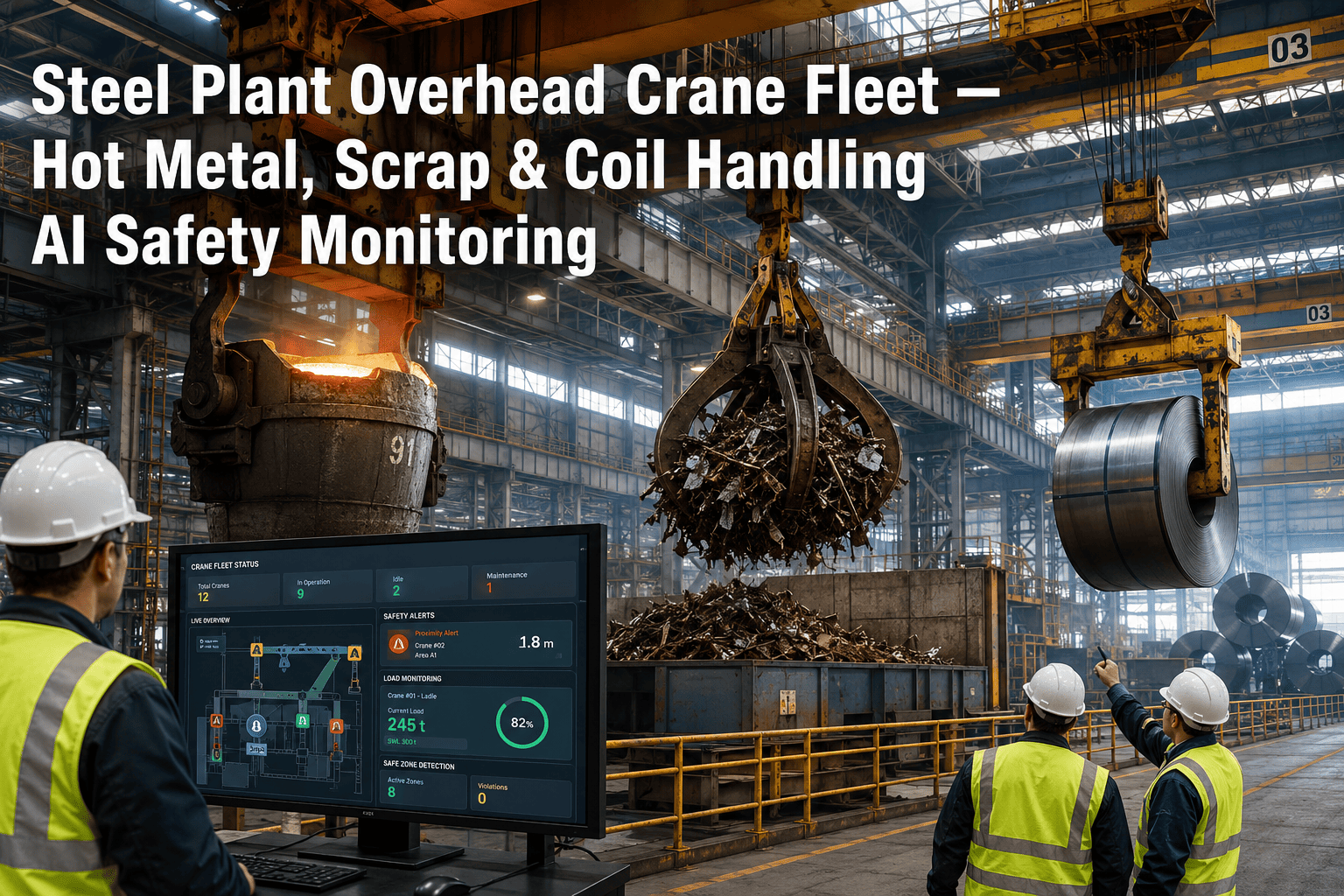
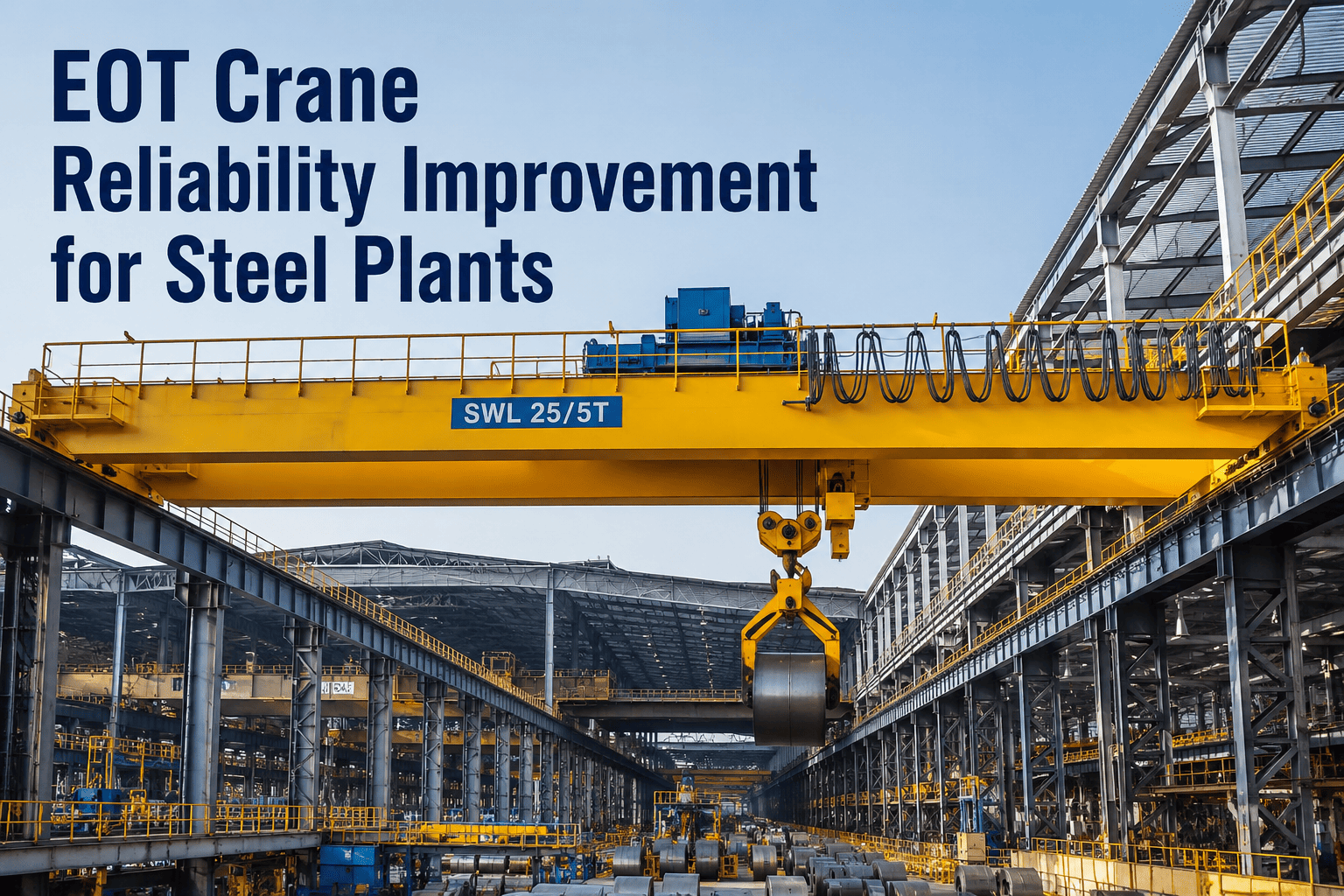
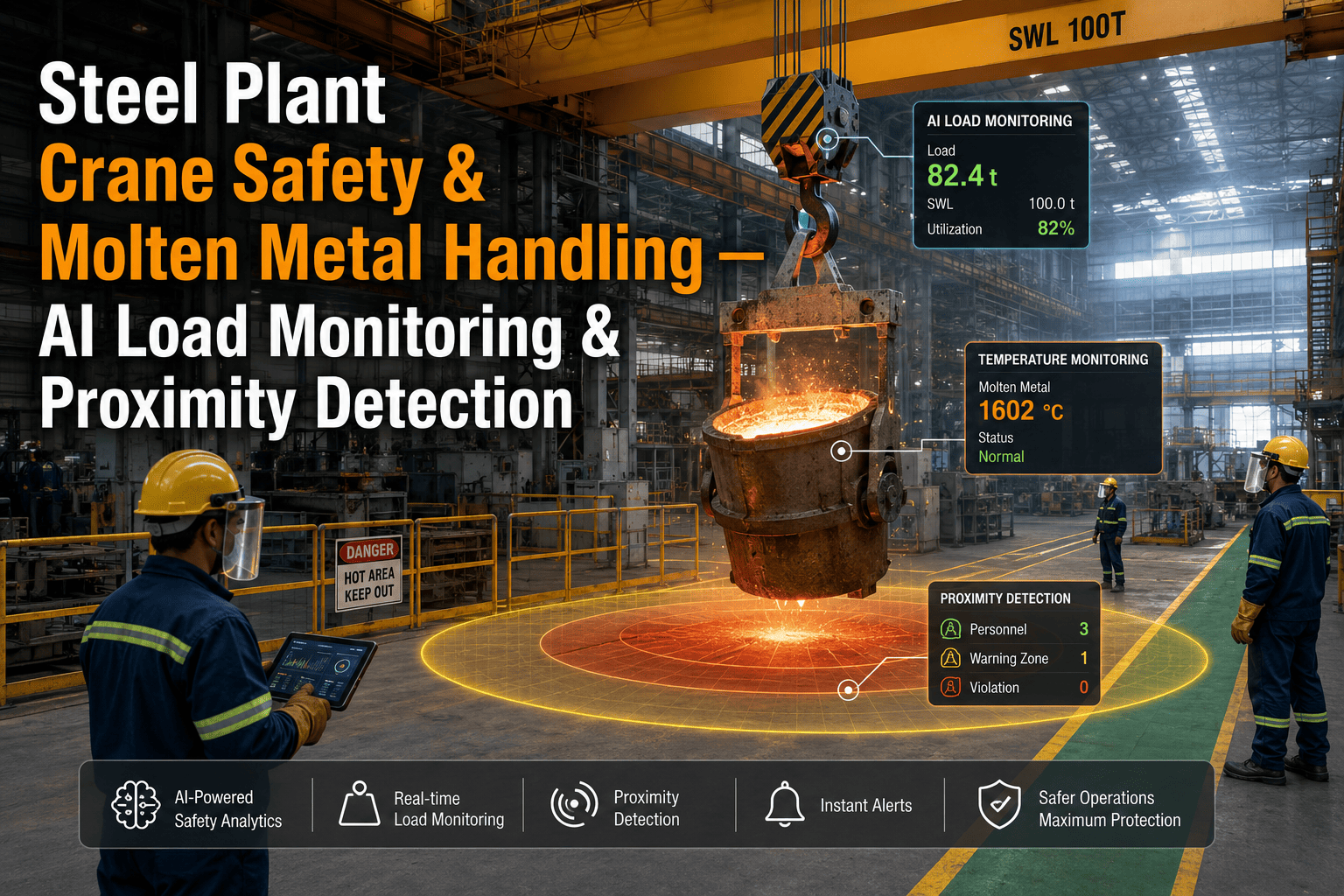
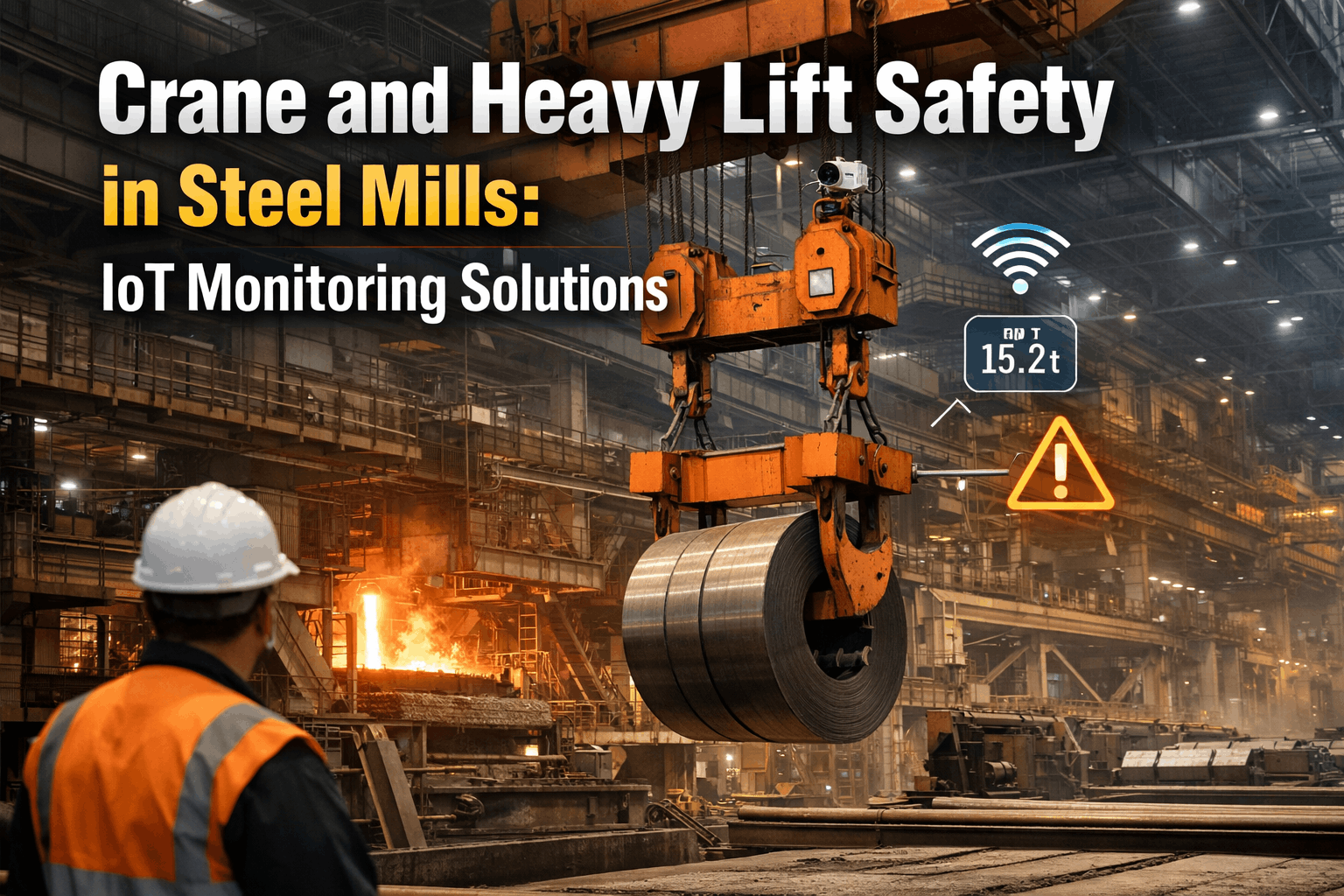
Steel plant overhead cranes represent the most expensive and technically demanding assets in the maintenance manager's portfolio — a single ladle crane overhaul can cost $2 million and take a crane out of rotation for 8 to 12 weeks during peak production. The challenge is that most steel plants manage these critical assets through calendar-based overhaul schedules that either over-maintain healthy components or miss the degradation signals that lead to catastrophic wire rope failures and structural fatigue cracks that were invisible at the last inspection. AI-powered fleet monitoring changes this by tracking actual component condition — hoist brake torque trends, wire rope diameter wear rates, gearbox vibration signatures, and structural stress cycles — to determine exactly when each crane needs service and which components actually require replacement versus continued monitoring. If your overhead crane fleet is managed through fixed overhaul intervals without condition data driving the decisions, book a demo to see AI fleet maintenance monitoring for your crane fleet, or contact support for a crane fleet maintenance assessment.
Crane Fleet Maintenance · Hot Metal & Coil Handling
Steel Plant Overhead Crane Fleet Maintenance: AI Component Health Monitoring
Track hoist brakes, wire rope wear, gearboxes, and structural fatigue across your entire overhead crane fleet with condition-based maintenance that replaces guesswork with data.
8–12 wks
Average crane overhaul duration removing a critical ladle crane from production during peak season
$2M+
Average total cost of a single ladle crane overhaul including planning, execution, and production loss during downtime
62%
Of crane structural cracks discovered during overhaul that showed no external signs at the previous inspection
Crane Fleet Composition: Maintenance Profile by Crane Type
Each crane type in a steel plant carries a distinct maintenance profile based on load frequency, operating environment, and failure modes. The fleet cards below show the key maintenance metrics and health indicators for the four primary crane types found in an integrated steel plant.
Ladle Crane
Avg. Overhaul Cycle
18–24 months
Wire Rope Replacement
Every 12–18 months
Structural Inspection Interval
Every 6–12 months
Critical Component Status
Scrap Crane
Avg. Overhaul Cycle
12–18 months
Bucket teeth replacement
Every 6–10 months
Structural Inspection Interval
Every 4–8 months
High Wear Environment
Coil Handling Crane
Avg. Overhaul Cycle
24–36 months
Spreader mechanism service
Every 8–14 months
Cable drum reeving
Every 6–12 months
Lower Cycle Frequency
Maintenance & Auxiliary Cranes
Avg. Overhaul Cycle
36–48 months
Hoist brake pad replacement
Every 12–18 months
Structural Inspection Interval
Every 12 months
Low Frequency / Long Cycle
Crane Component Health: What AI Fleet Monitoring Actually Tracks
The value of AI fleet monitoring lies in tracking individual component degradation patterns rather than replacing calendar schedules. The horizontal bars below show the typical health percentage remaining at the point where AI recommends intervention for each critical crane component.
Hoist Brakes
Health at AI intervention
35%
Brake torque trending down, pad wear approaching minimum grip threshold. Intervention before brake slip risk.
Typical calendar replacement interval
12 months
Wire Rope
Health at AI intervention
40%
Diameter measured below discard diameter at multiple points. Rope still within spec but degradation rate accelerating.
Typical calendar replacement interval
12–18 months
Gearbox
Health at AI intervention
55%
Vibration signature shifting from baseline. Bearing wear detected in spectrum analysis. Scheduled for inspection before failure.
Typical calendar inspection interval
24 months
Structural Welds
Health at AI intervention
70%
Non-destructive testing reveals micro-cracks at weld toes and gusset connections. Calendar inspections miss subsurface defects.
Typical calendar inspection interval
6–12 months
Electrical Systems
Health at AI intervention
60%
Insulation resistance trending down, contactor pitting detected. Scheduled for thermographic inspection before insulation failure.
Typical calendar inspection interval
12 months
Wire Rope Inspection: The Decision Matrix
Wire rope replacement decisions in steel plants are often based on a fixed calendar or cycle count regardless of actual rope condition. AI monitoring enables condition-based replacement that extends rope life while maintaining safety margins. The matrix below maps inspection findings to the correct replacement decision.
| Inspection Finding |
Severity |
AI Recommendation |
Calendar-Based Decision |
AI-Based Decision |
Diameter at any point below minimum discard diameter
Critical
Immediate rope replacement
May replace at fixed interval regardless of condition
Replace at actual discard point — extends average rope life by 30–40%
Local external wear at 10% below nominal
High
Increase inspection frequency, monitor degradation rate
Replace at fixed interval or when degradation rate accelerates
Continue monitoring with increased frequency until discard diameter approaches
Reduced cross-sectional area below 5%
Moderate
Schedule replacement within next planned outage
Replace at fixed interval
Continue monitoring — cross-section loss rate within acceptable limits
Broken wires visible externally
Critical
Immediate rope replacement
Replace at fixed interval or when discovered
Replace immediately — condition beyond any acceptable threshold
All measurements within normal range
Normal
Continue on current inspection cycle
Extend inspection interval based on degradation trend data
Structural Fatigue: The Invisible Threat to Overhead Cranes
Structural fatigue is the most dangerous failure mode in overhead cranes because it develops internally and is invisible to standard visual inspection until a crack propagates to a critical size. AI structural monitoring uses continuous strain gauge data, swing cycle counting, and historical crack growth rates to predict when structural inspection should replace visual inspection as the primary assessment method.
62%
Of structural cracks found during overhaul showed no external signs at previous inspection per AISC guidelines for crane structures
18x
Average multiplier by which AI monitoring extends the useful life of crane structural components by catching degradation before it becomes visible
3
div class="fatigue-info">
Non-destructive testing methods AI recommends replacing visual inspection for — strain gauges, magnetic particle testing, and ultrasonic thickness measurement
Expert Review
"Most steel plants I audit treat crane maintenance as a calendar event — the crane goes into the shop every 12 months, gets inspected, and goes back to work regardless of what the inspection actually found. This approach fails completely for structural fatigue, which is the one failure mode that kills people. The plants that get crane fleet maintenance right share two characteristics. First, they track component condition data from day one of installation, so when the AI says the wire rope has 40% life remaining, they can confidently extend the replacement interval instead of replacing at a fixed cycle count. Second, they use the savings from condition-based replacement to fund the more sophisticated monitoring systems that catch the invisible failures. The ROI calculation is straightforward: if condition-based wire rope replacement extends average rope life by 30% and each replacement costs $80K including production loss, the savings on a fleet of 30 cranes typically covers the entire monitoring system cost in the first year."
James Whitford — Senior Crane Engineering Consultant, 25+ years in overhead crane structural assessment and maintenance program design for steel plants
Stop replacing components on a calendar when condition data tells a different story. AI fleet monitoring tracks every crane component's actual degradation rate and recommends intervention at the optimal point — maximizing component life while eliminating the risk of unexpected failure during hot metal operations.
Frequently Asked Questions
Does the system require installing sensors on every crane in the fleet simultaneously?
No, most plants deploy in phases starting with the highest-risk cranes handling molten metal. Existing sensor data from crane controllers, brake monitors, and electrical systems can often be integrated without new hardware. The priority is getting data flowing from critical assets first, then expanding to the full fleet over 6 to 12 months as budget permits.
Book a demo to see which sensors integrate with your existing crane control systems.
How does AI predict wire rope degradation without cutting the rope to measure diameter at every point?
The system uses a combination of diameter measurements at key inspection points combined with load cycle counting and electrical signature analysis from the hoist motor to estimate degradation rate without destructive testing. When the degradation rate accelerates or the predicted remaining life drops below a configurable threshold, the system flags the rope for measurement and potential replacement during the next planned outage.
Contact support for sensor integration options for your crane types.
Can this integrate with our existing crane management software?
Yes. OxMaint integrates with major crane management platforms to pull in run hours, load cycles, and existing inspection records. The AI layer adds predictive analytics on top of your current data without replacing your existing crane management system. Historical inspection data from your crane logs also feeds the AI models to improve prediction accuracy over time.
Book a demo to see the integration architecture.
What is the minimum viable sensor set needed to start fleet monitoring?
For the initial deployment, the minimum effective sensor set includes hoist motor current and vibration for each crane, plus wire rope diameter readings at accessible measurement points on the rope run. These capture the highest-impact degradation patterns without requiring a full sensor suite on every structural member. Structural fatigue monitoring with strain gauges and swing cycle counters can be added in a second phase as budget allows.
Contact support for a minimum sensor recommendation for your crane types.
Replace Calendar Schedules with Condition Data Across Your Crane Fleet
Track every crane component from installation to replacement — hoist brakes, wire rope, gearboxes, structural welds, and electrical systems — with AI-driven health monitoring that extends component life and eliminates unexpected failures during hot metal operations.