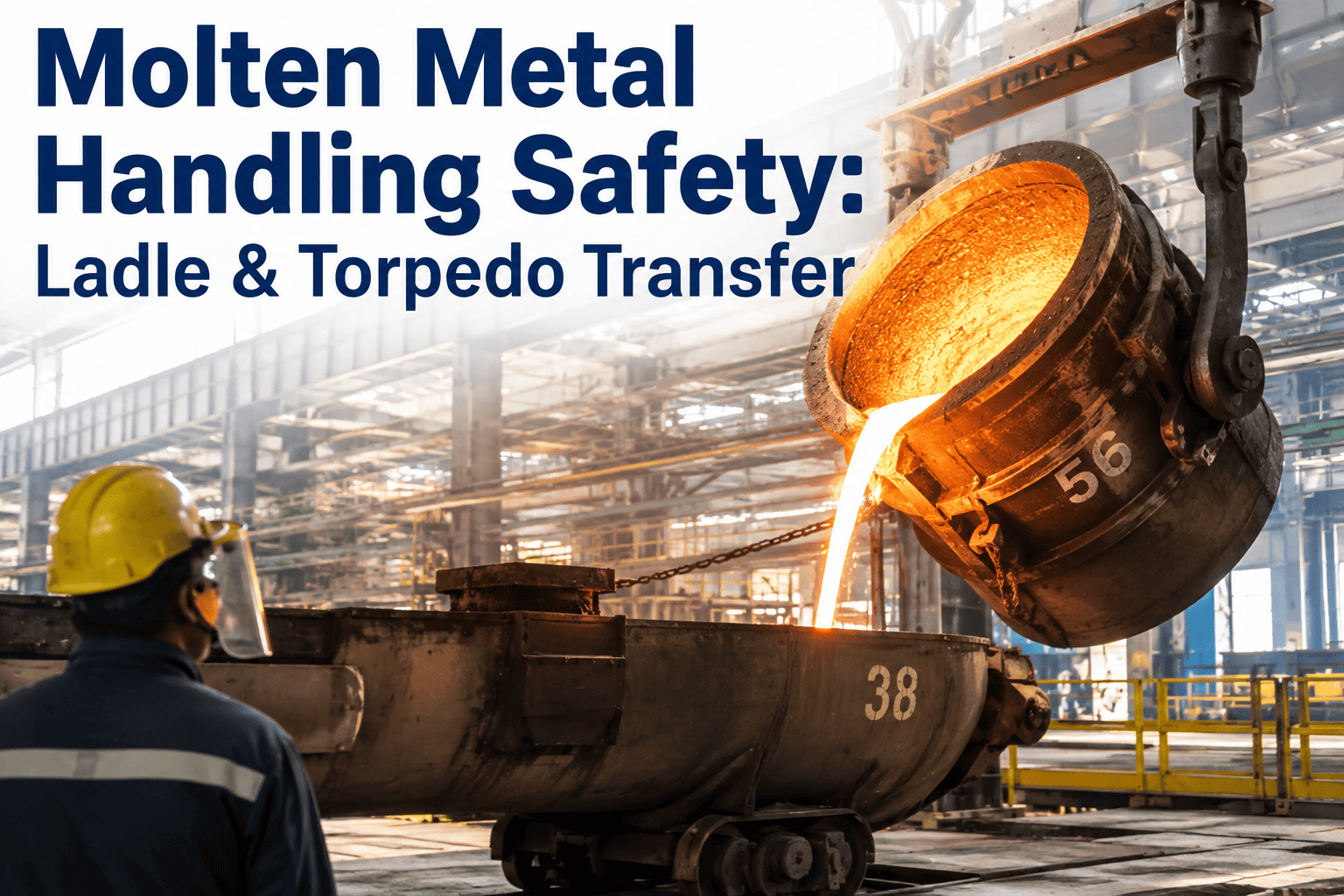
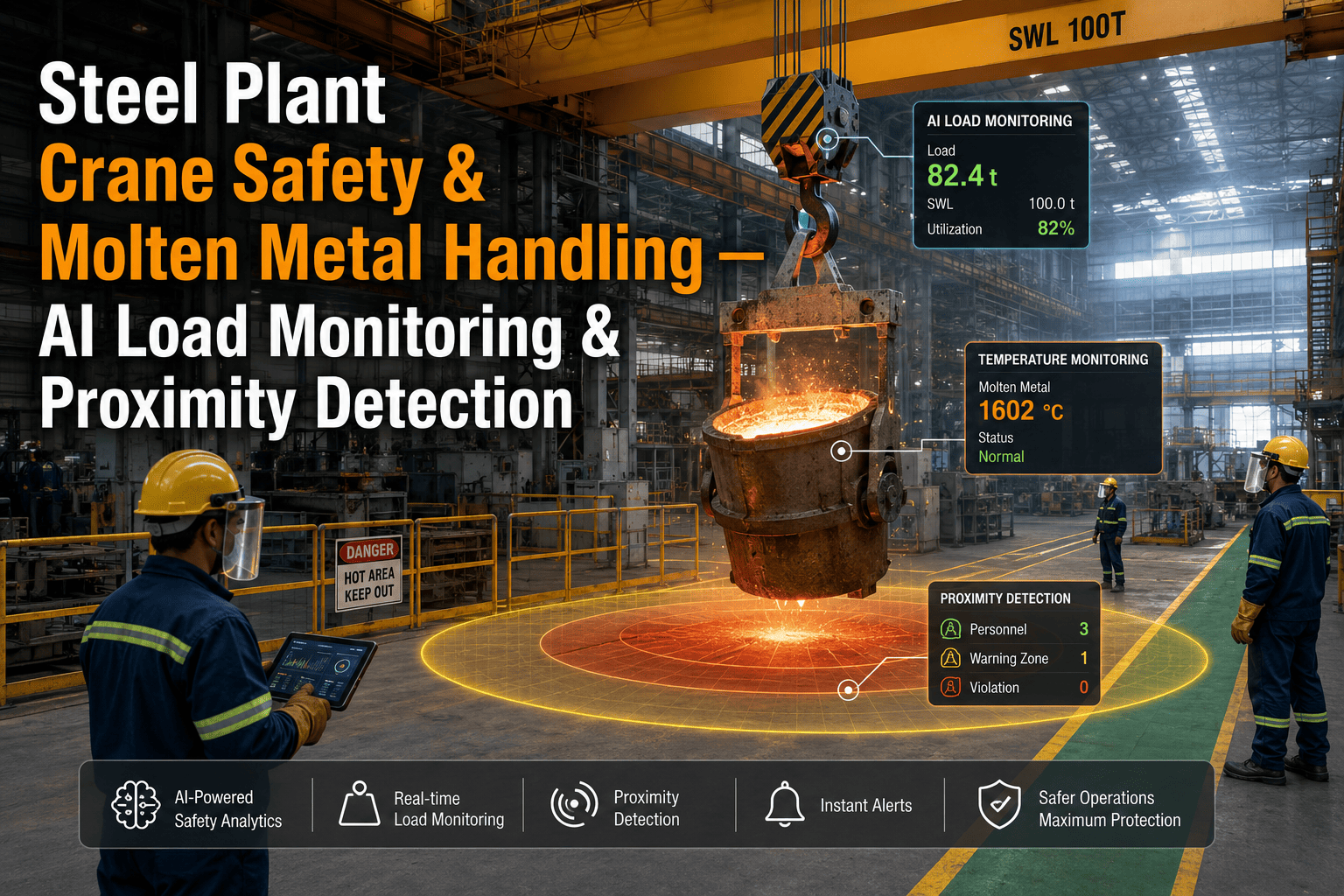
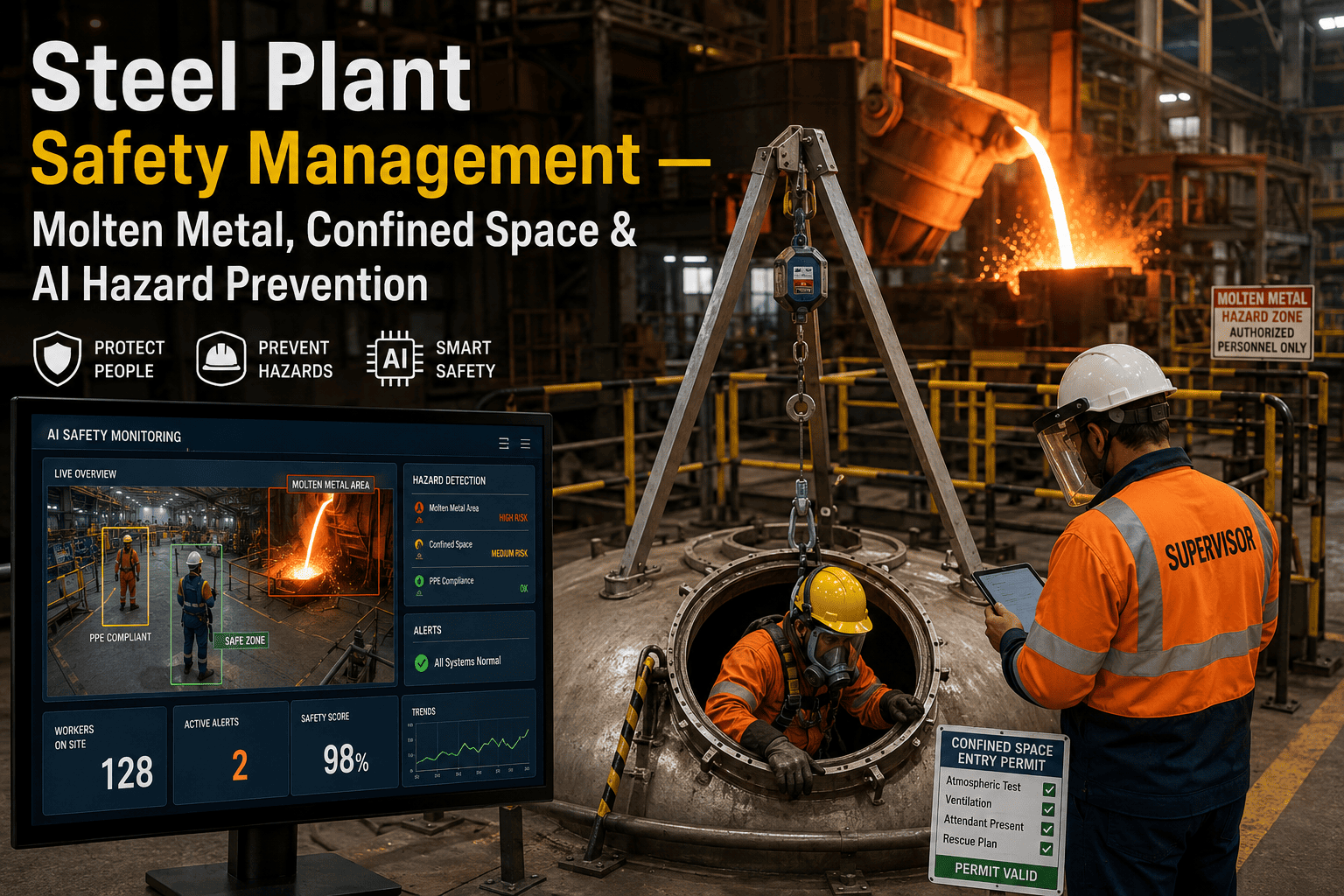
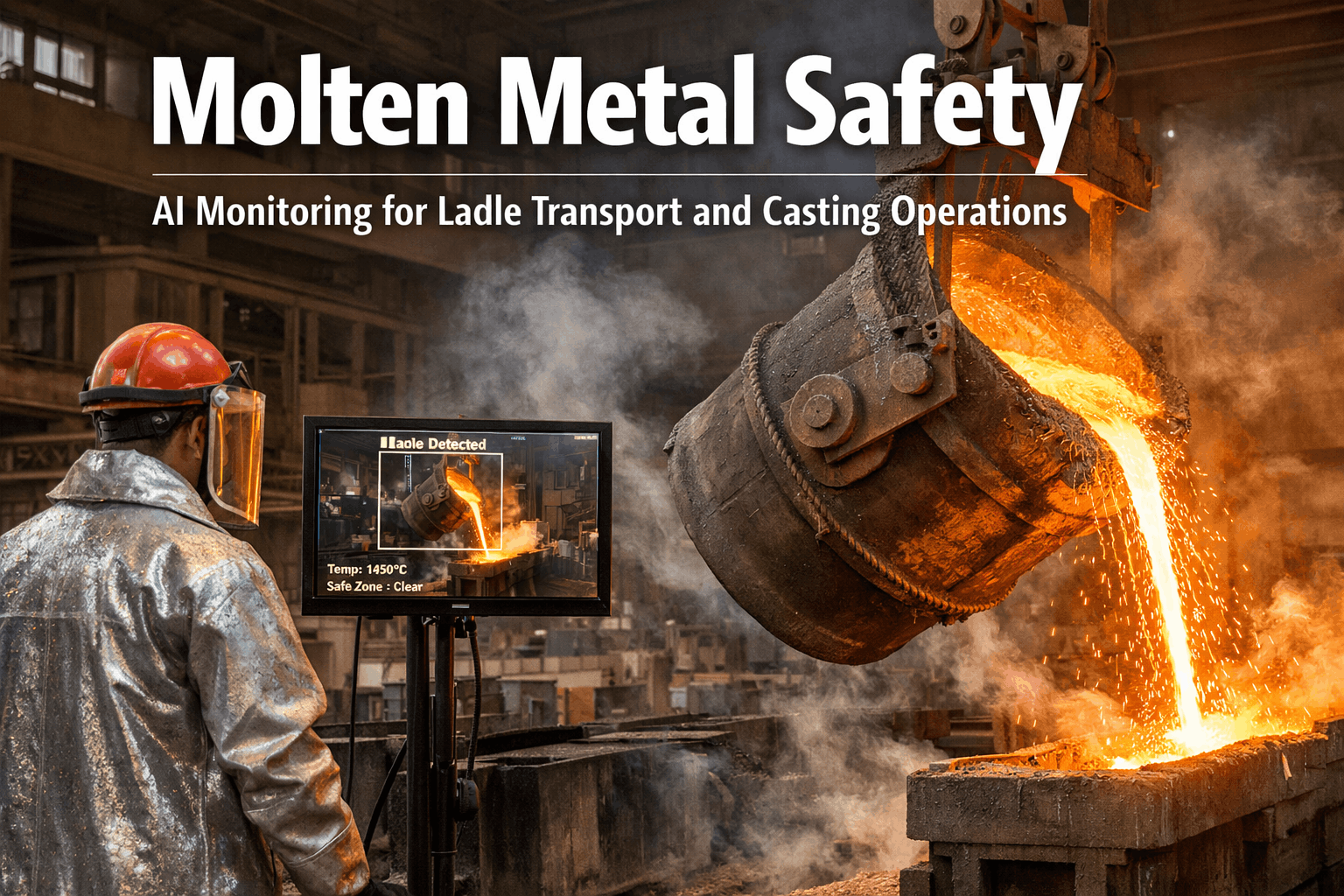
Molten metal incidents are among the most catastrophic events in steel plant operations — a single water-molten metal contact explosion, ladle failure, or torpedo ladle derailment can cause multiple fatalities, destroy infrastructure worth hundreds of crores, and shut a plant for months. Steel plants handle liquid steel at 1,550–1,600°C, blast furnace hot metal at 1,450–1,500°C, and slag at temperatures exceeding 1,400°C — across hundreds of transfers, tapping, teeming, and disposal operations every day. Unlike most industrial hazards, molten metal failures leave no time for correction: when liquid steel contacts water, the resulting steam explosion is instantaneous and devastating. iFactory's Safety Procedures and Training platform gives steel plants the digital infrastructure to enforce pre-task safety checks, track hazard conditions in real time, and ensure every worker handling molten metal has been trained, certified, and cleared before the operation begins.
Molten Metal Safety in Steel Plants: Hot Metal, Slag & Liquid Steel Handling Procedures
Complete safety protocols for hot metal transfer, slag handling, ladle safety, tundish procedures, and water-molten metal contact prevention — tracked digitally by iFactory.
The Five Molten Metal Hazard Categories — Ranked by Fatality Risk
Every molten metal operation in a steel plant carries a specific combination of hazard types. Understanding the hierarchy — from catastrophic to severe — is the foundation of effective risk control. Schedule a molten metal safety assessment to evaluate your plant's current controls against each category.
Critical Safety Requirements — Per Molten Metal Operation
Every molten metal operation has distinct pre-task checks, exclusion zones, PPE requirements, and emergency procedures. iFactory's digital permit system enforces each requirement before the operation is authorised to proceed — with supervisor sign-off, worker verification, and real-time tracking. Schedule a safety procedures review to map your current controls against best practice.
Torpedo Ladle Transfer
- Track clear — no personnel within 10m exclusion zone
- Ladle liner inspection — no cracks, minimum 150mm remaining
- Full aluminized PPE + face shield for all exposed workers
- No wet surfaces on transfer route — verified by supervisor
- Emergency spill sand deployed at all ladle stations
BOF Tapping
- Ladle pre-heated — minimum 900°C confirmed before tapping
- Ladle integrity check — no cracks, shell temperature normal
- Tap hole condition verified — no blockage or erosion
- Exclusion zone enforced — crane path clear during tapping
- Slag detection system active — no slag carryover permitted
Continuous Casting Tundish
- Tundish pre-heated — 1,100°C minimum, no cold spots
- Water leak check on all cooling equipment before open casting
- Shroud and submerged entry nozzle condition verified
- Emergency cut-off valve function tested before cast start
- Breakout detection system calibrated and active
Slag Pit & Disposal
- Pit dry — no visible water or steam before slag poured
- Wind direction assessed — personnel upwind of pour point
- Exclusion zone 30m — enforced by physical barriers
- No personnel on foot in slag pit during active pouring
- Cooling sprinkler system operability confirmed
Molten Metal PPE Matrix — What is Required and When
Molten metal PPE is non-negotiable — and iFactory tracks PPE compliance through AI camera monitoring at every access point to molten metal operating zones. Every worker's PPE status is verified before zone entry is permitted.
| PPE Item | Torpedo / Ladle Transfer | BOF Tapping | Casting / Tundish | Slag Handling |
|---|---|---|---|---|
| Aluminized proximity suit | Mandatory | Mandatory | Proximity only | Mandatory |
| Full face shield (IR filter) | Mandatory | Mandatory | Mandatory | Mandatory |
| Aluminized gloves | Mandatory | Mandatory | Mandatory | Mandatory |
| Metatarsal safety boots | Mandatory | Mandatory | Mandatory | Mandatory |
| CO / gas detector (personal) | Recommended | Mandatory | Recommended | Recommended |
| Respiratory protection (dust/fume) | Recommended | Mandatory | Recommended | Mandatory |
Molten Metal Safety Checklist — All Tracked Digitally by iFactory
Every item below is enforced through iFactory's digital pre-task permit — operation cannot be authorized until all checks are confirmed, photo-evidenced, and supervisor-signed. A missed check blocks the operation.
- All water lines isolated from molten metal zones
- No visible moisture in slag pit before pouring
- Ladle pre-heat temperature confirmed logged
- Cooling water flow on casting — confirmed active
- Rain / weather check before outdoor ladle transfer
- Exclusion zone barriers in position and signed
- Unauthorized personnel cleared from zone
- All exposed workers in correct PPE — AI camera verified
- Crane operator certified for molten metal lifts
- Emergency evacuation route clear and signposted
- Ladle shell temperature within safe limits
- Ladle refractory lining — within inspection cycle
- Crane SWL and sling condition confirmed
- Torpedo ladle track and bogey inspected
- Spill sand and dry extinguisher confirmed in place
What a Steelmaking Safety Manager Said
Before iFactory, our pre-tap ladle inspection was a paper form that operators sometimes filled in after the event. After a near-miss during tapping, we found three of the last seven forms had been backdated. iFactory makes that impossible — the check is geo-stamped at the ladle, time-locked, and the supervisor receives a mobile alert if any item fails. We have not had a single molten metal near-miss in 22 months.
Frequently Asked Questions
How does iFactory prevent backdating of pre-tap safety checks?
Digital checks are geo-stamped at the equipment location and time-locked — the system records actual check time against operation start time. Backdating is technically impossible and any time anomaly triggers an automatic supervisor alert.
Can iFactory integrate with ladle shell temperature monitoring systems?
Yes. iFactory ingests real-time ladle shell temperature from pyrometers and IR scanning systems — automatically blocking ladle use if any zone exceeds the safety threshold and generating a maintenance work order.
How does AI camera monitoring enforce PPE compliance at molten metal zones?
AI cameras at zone entry points detect missing aluminised suits, face shields, and metatarsal boots — alerting supervisors within seconds and logging every violation with photo evidence for training and audit use.
Does iFactory track ladle refractory lining life and inspection cycles?
Yes. Each ladle has a digital refractory record — heat count, lining thickness measurements, inspection dates, and remaining safe heats — with automatic block when the ladle exceeds its inspection interval.
How quickly can molten metal digital safety procedures go live?
Digital pre-task checklists for all molten metal operations are typically live within 3–4 weeks. AI camera integration and ladle health tracking go live by Week 8 of the deployment programme.
See Digital Molten Metal Safety Live
Demo built around your tapping, transfer, and casting operations.