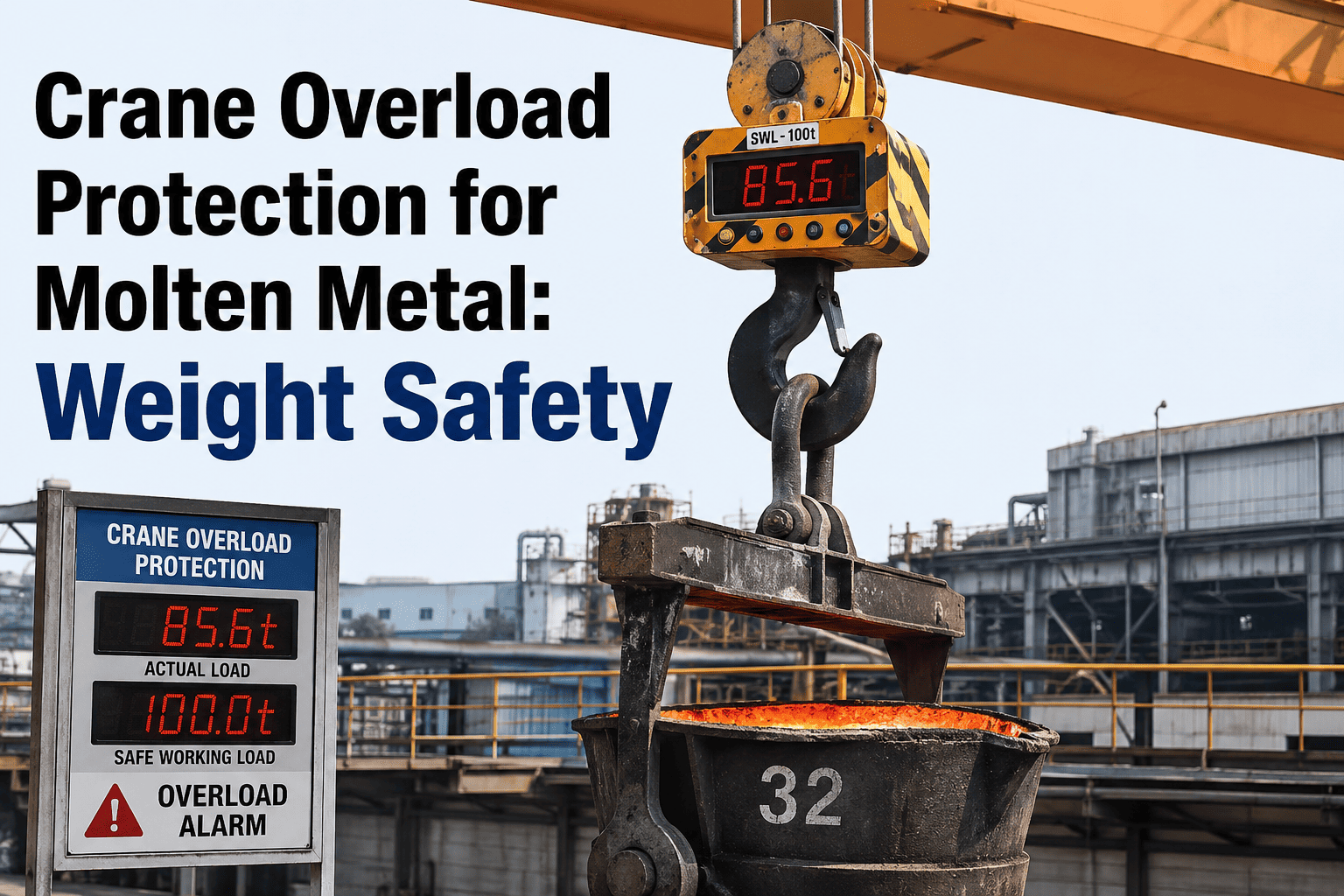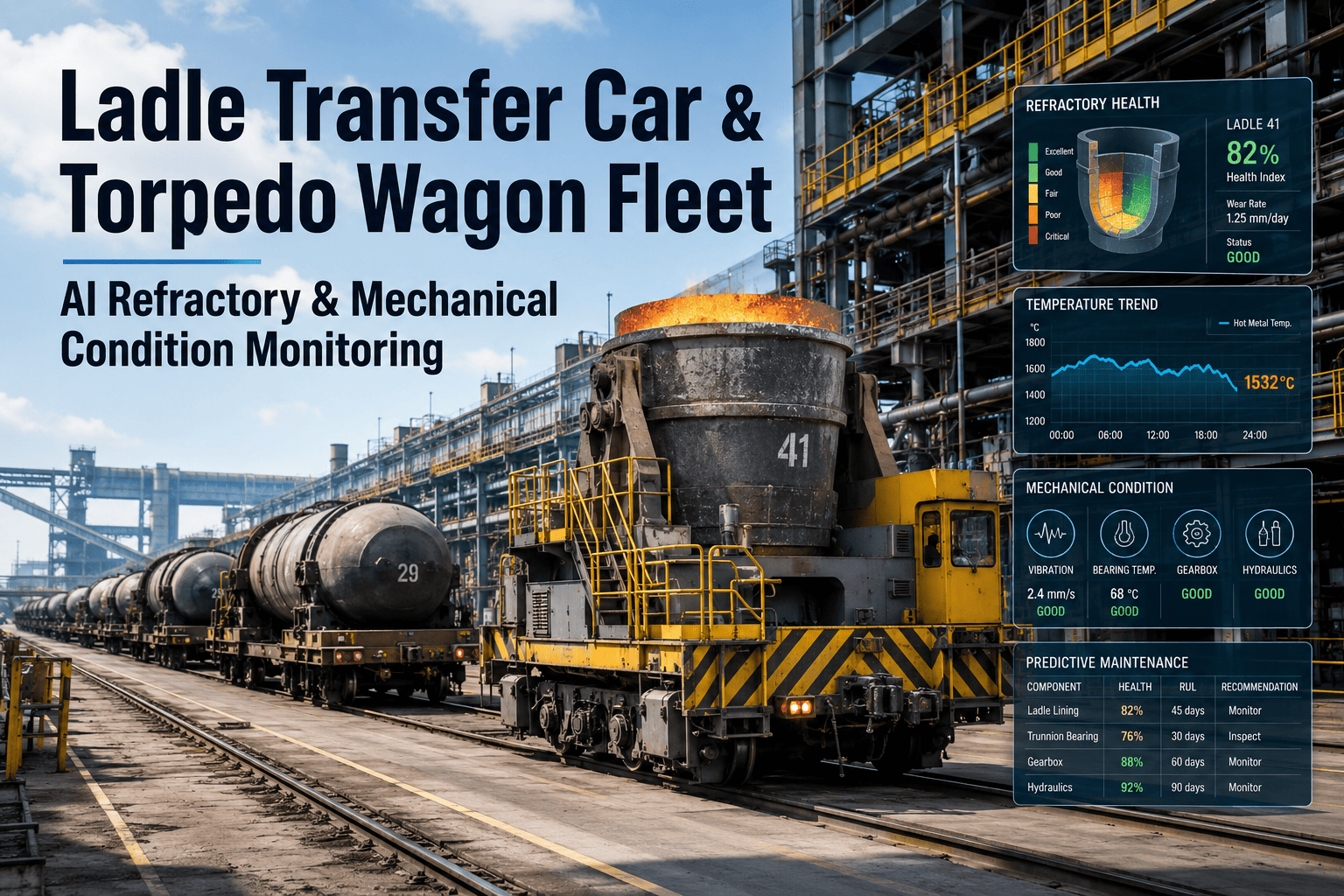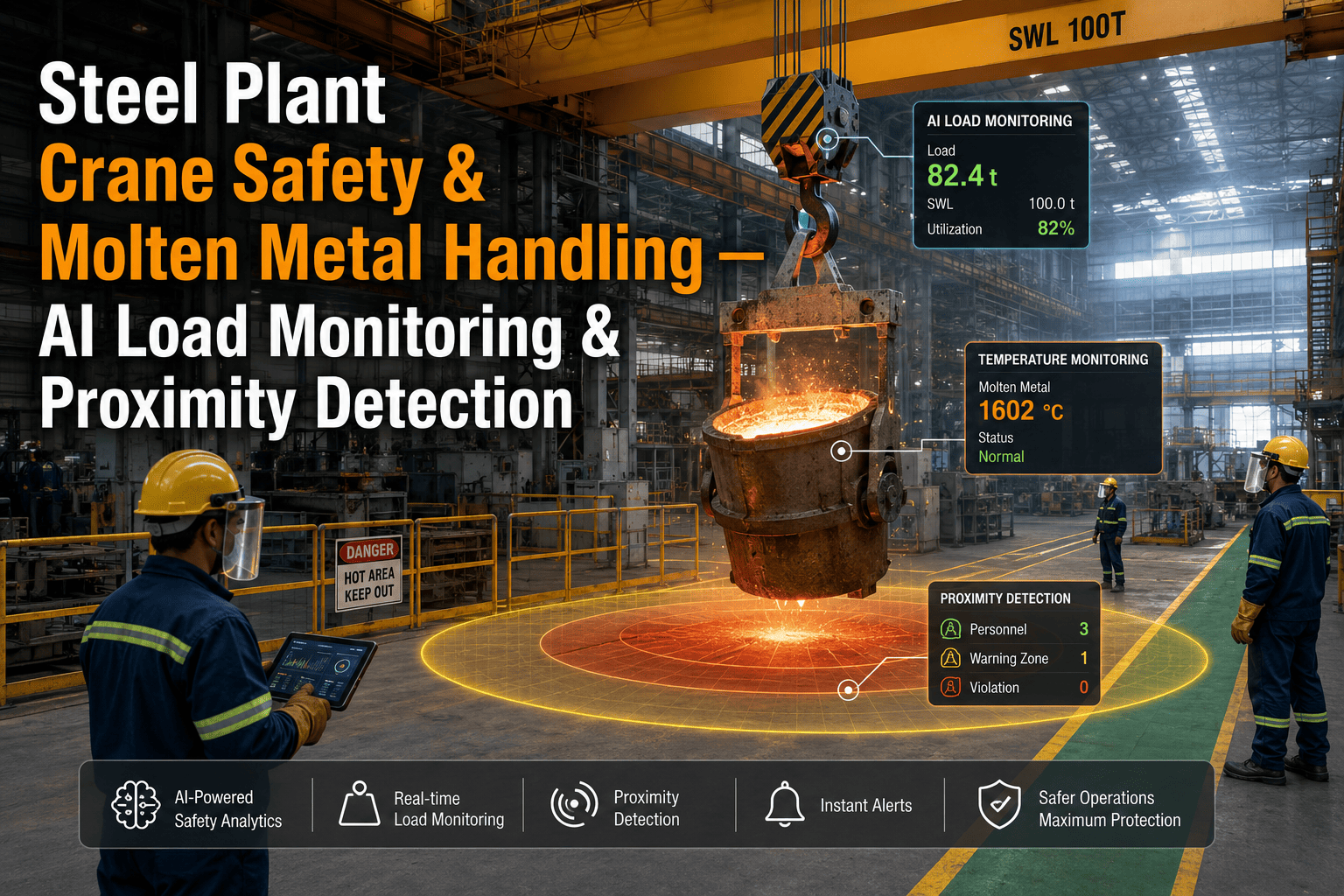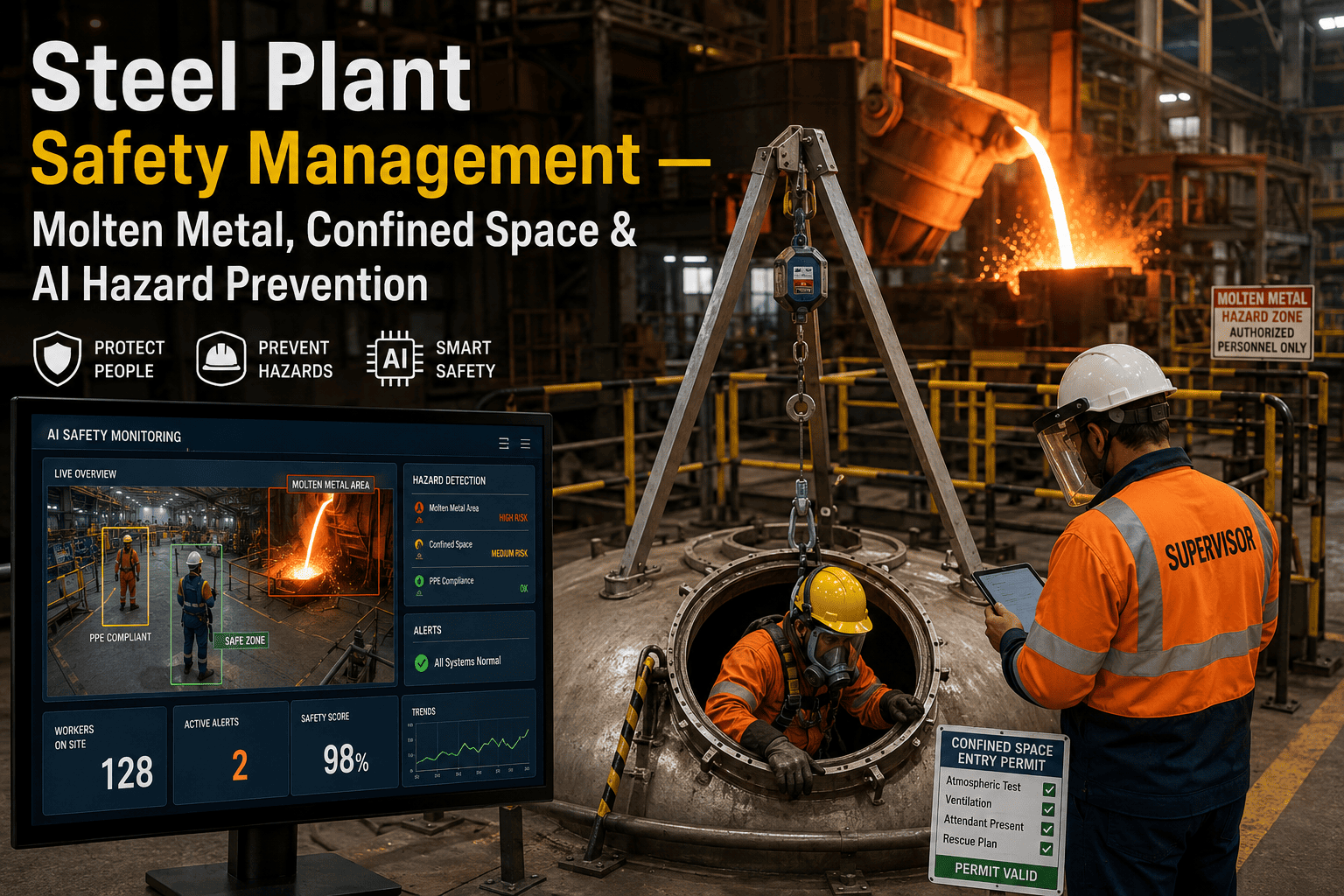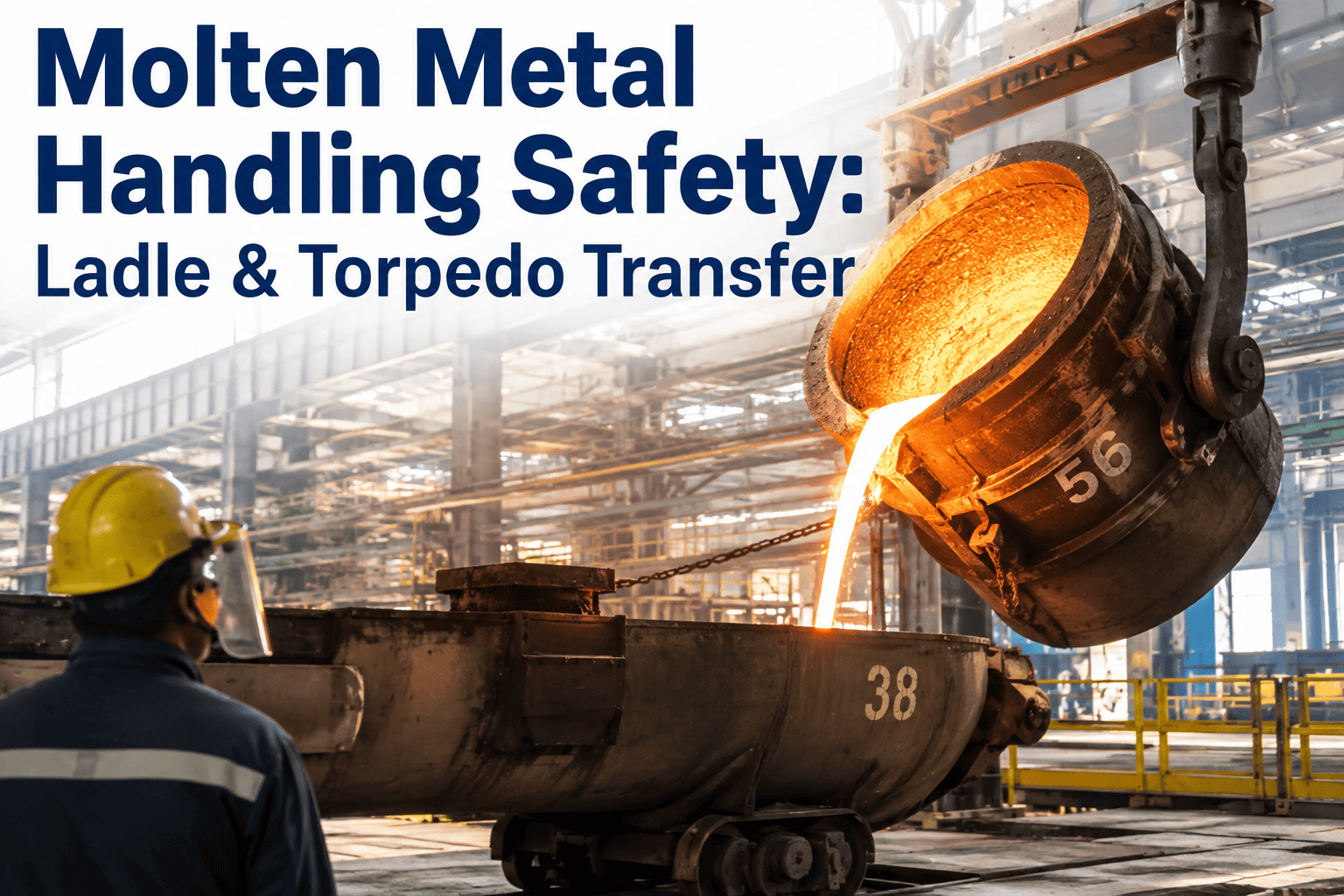
Every ladle and torpedo car transfer in a steel plant carries the same unforgiving math — a small communication gap, an ambiguous exclusion zone boundary, or a rushed transfer procedure can turn routine hot metal movement into the plant's worst day. Molten metal handling safety has always relied on strict procedure and disciplined crews, but procedure alone cannot catch the moment a worker steps just inside a boundary that was never clearly marked, or the second a transfer proceeds before every party has actually confirmed readiness. The plants with the strongest molten metal safety records are the ones that pair procedure with verification — confirming exclusion zones are clear, communication protocols are followed, and transfer conditions are met, every single time, and our team can walk through how that verification layer works in practice.
Procedure Discipline You Can Verify, Not Just Assume
Transfer procedures, communication protocols, and exclusion zone enforcement for ladle and torpedo car operations, backed by verification rather than relying on procedure alone.
Why Molten Metal Transfers Carry Zero Margin for Error
A ladle or torpedo car transfer moves tons of material at extreme temperature through a shared work area, and the consequence of a single procedural gap is categorically different from almost any other plant operation.
typical molten steel temperature during ladle and torpedo transfer
the window in which a breakout or spill escalates beyond initial response
coordinating simultaneously across crane, transfer, and casting operations
acceptable tolerance for an exclusion zone breach during active transfer
The Transfer Sequence, Stage by Stage
A safe molten metal transfer follows a strict sequence where each stage must be confirmed before the next begins, regardless of schedule pressure.
Pre-transfer readiness check
Ladle or torpedo car condition, crane availability, and receiving vessel status confirmed before movement begins.
Exclusion zone clearance
All personnel and equipment confirmed clear of the defined exclusion zone along the full transfer path.
Communication confirmation
Crane operator, transfer crew, and receiving station confirm readiness verbally before any movement starts.
Controlled transfer movement
Movement proceeds at controlled speed with continuous visual and radio contact maintained throughout.
Post-transfer sign-off
Completion confirmed by all parties and the exclusion zone reopened only after final verification.
Add Verification to Your Transfer Procedure
See how exclusion zone status, communication confirmation, and transfer readiness can be verified automatically rather than relying on procedure alone.
Defining and Enforcing Exclusion Zones
An exclusion zone is only as effective as its enforcement. A boundary marked on a floor plan but not actively monitored during transfer is a boundary that eventually gets crossed under time pressure.
- Relies on painted floor lines and posted signage alone
- Depends on individual worker awareness in the moment
- No record of whether the zone was actually clear at transfer start
- Breach only discovered after the fact, if at all
- Zone status actively confirmed clear before transfer is authorized
- Real-time alert if personnel or equipment enter during active transfer
- Timestamped record of zone clearance for every transfer event
- Transfer sequence pauses automatically if a breach is detected
Where Transfer Safety Procedures Commonly Break Down
Incident investigations across the industry point to a consistent set of failure points, almost none of which involve a lack of written procedure.
Rushed pre-transfer checks
Schedule pressure compresses the readiness check into a shortcut, skipping a step the procedure requires.
Ambiguous zone boundaries
Faded floor marking or a zone that shifts with equipment position leaves workers uncertain where the line actually is.
Assumed rather than confirmed readiness
One party assumes another is ready without an explicit verbal confirmation, and the transfer proceeds on that assumption.
What Changes With Verified Transfer Safety
Plants adding active verification to their existing molten metal transfer procedures report the following shift within the first year of adoption.
Frequently Asked Questions
How is an exclusion zone verified as clear without slowing down the transfer schedule?
Zone verification is designed to run in parallel with the existing pre-transfer readiness check rather than as an additional separate step, so it adds seconds rather than minutes to the sequence. Detection typically covers the defined zone boundary and confirms clearance automatically, surfacing a simple go or no-go status to the crew rather than requiring a manual walk-through inspection every time. Book a demo to see the verification step in an actual transfer sequence.
Does adding verification change our existing transfer procedure documentation?
No, verification is layered onto the existing documented procedure rather than replacing it. The written procedure your crews already follow stays the same; verification simply confirms that the steps described in that procedure — zone clearance, communication confirmation, readiness — actually happened, rather than trusting that they did. This makes the existing procedure auditable rather than requiring a new one.
What happens if a breach is detected mid-transfer?
The system raises an immediate alert to the crane operator and transfer crew, and the transfer sequence is designed to pause at the next safe point rather than continuing blind. The specific response protocol — full stop versus controlled continuation to a safe state — is configured to match your plant's existing emergency procedure, since the right response depends on exactly where in the transfer sequence the breach occurs. Talk to our team about integrating this with your current emergency response protocol.
Can this be applied to both ladle crane transfers and torpedo car movements?
Yes, the same verification approach applies to both, though the specific zone geometry and communication checkpoints differ between a crane-based ladle transfer and a rail-based torpedo car movement. Each transfer type is mapped individually during setup so the exclusion zone and readiness checks reflect the actual physical layout and equipment involved in that specific operation.
Strengthen Your Molten Metal Transfer Safety Program
Book a 30-minute call. Bring your current transfer procedure documentation, and we will show you where active verification would add the most protection.