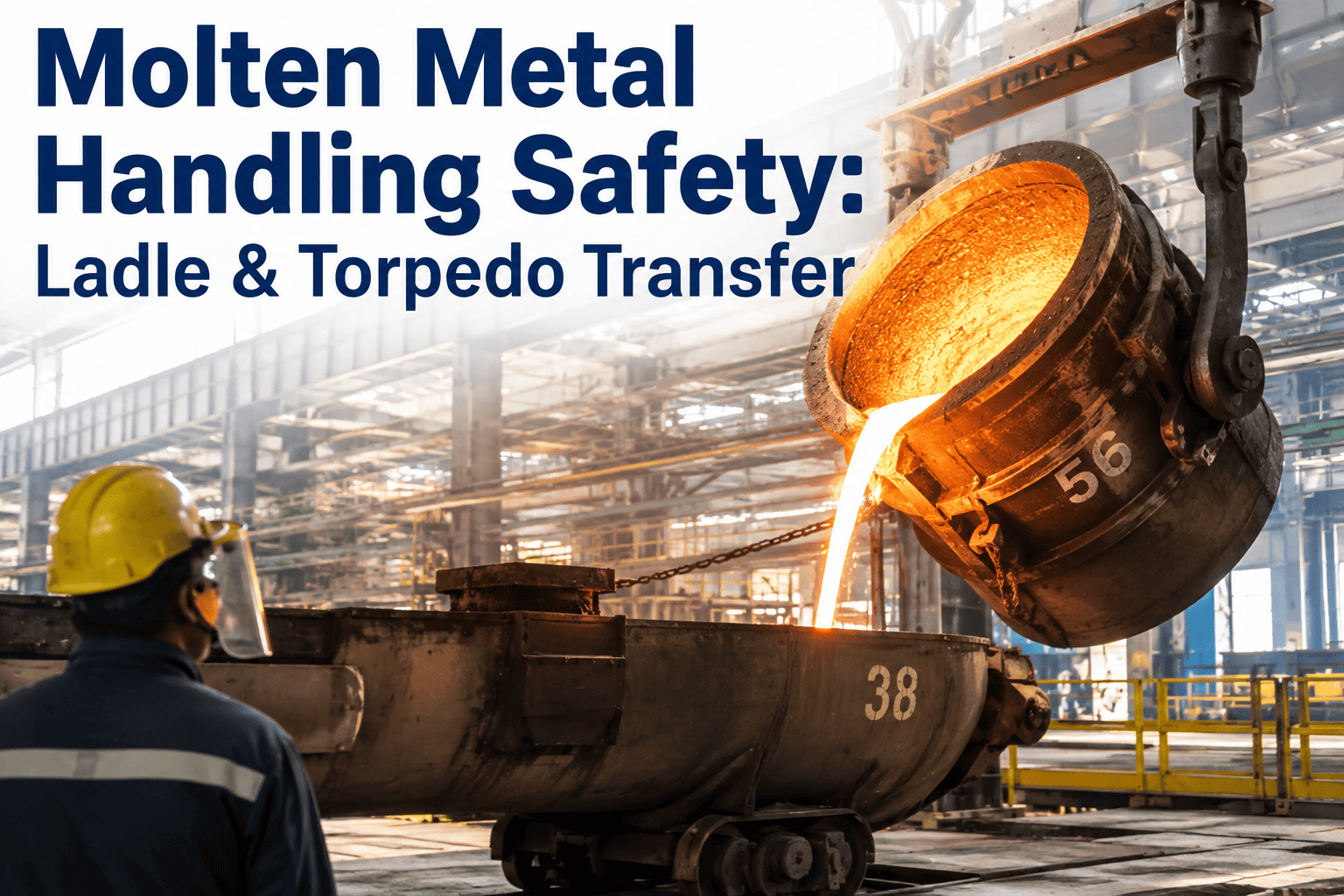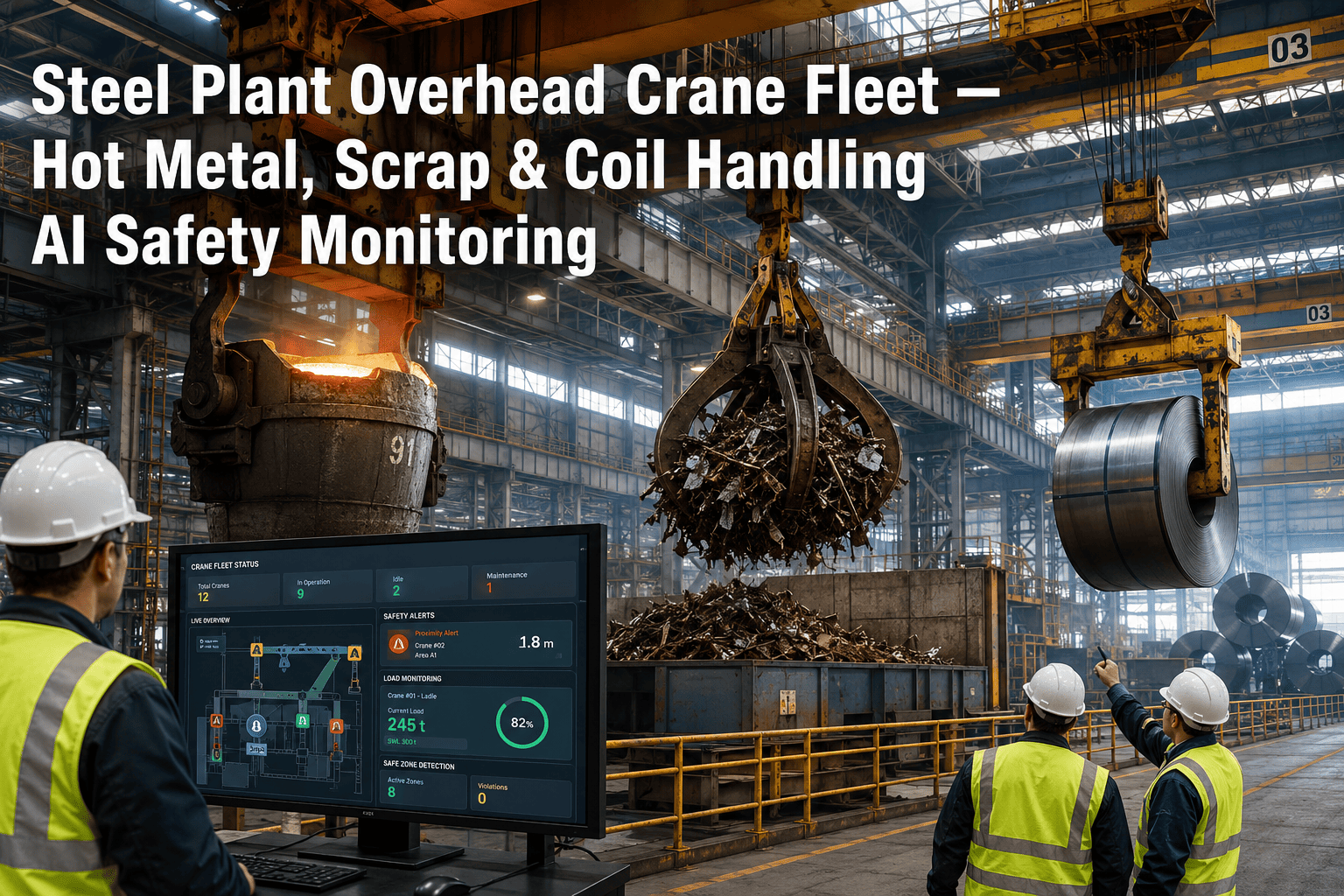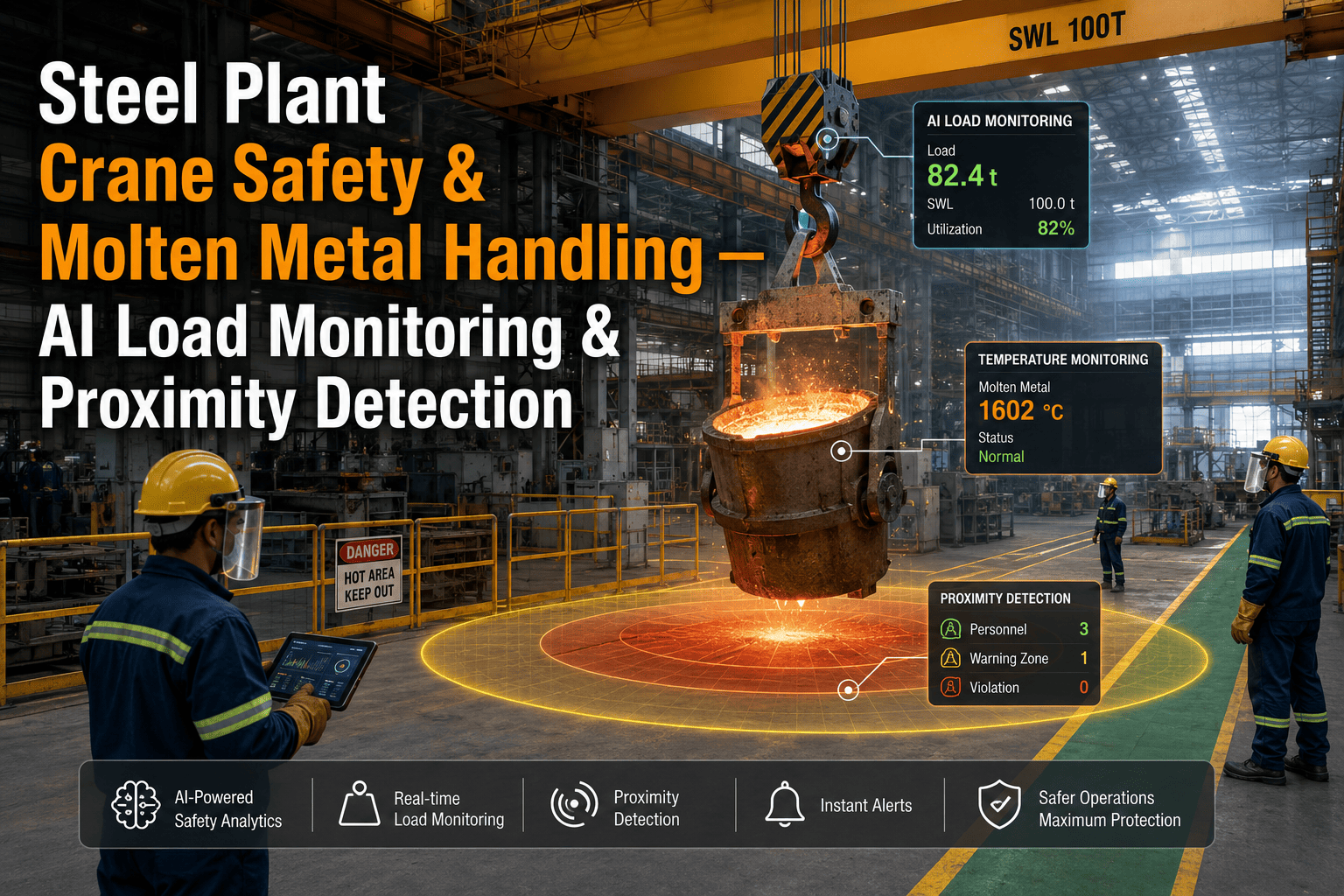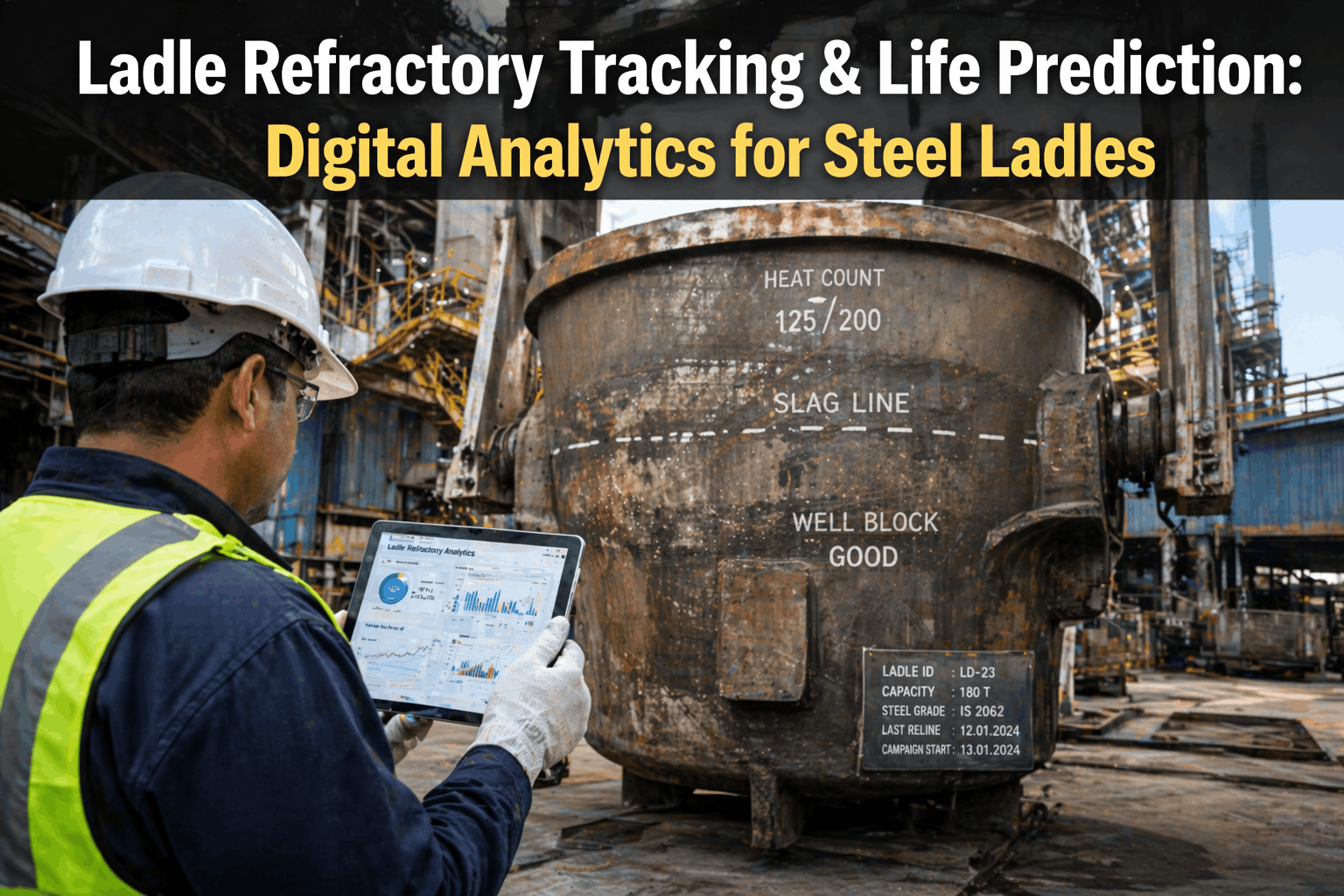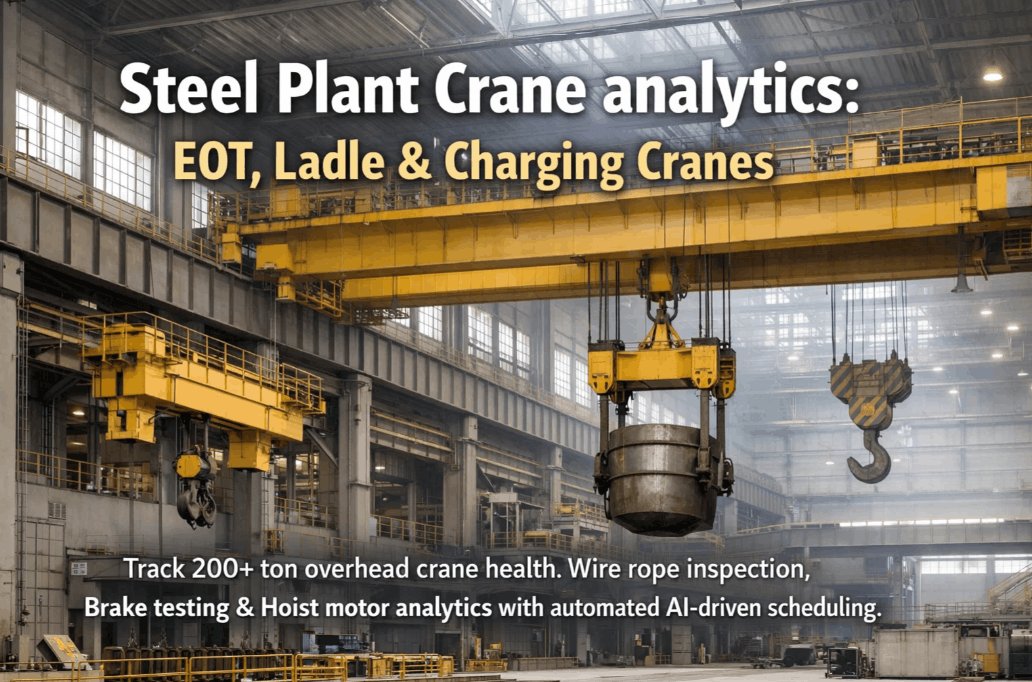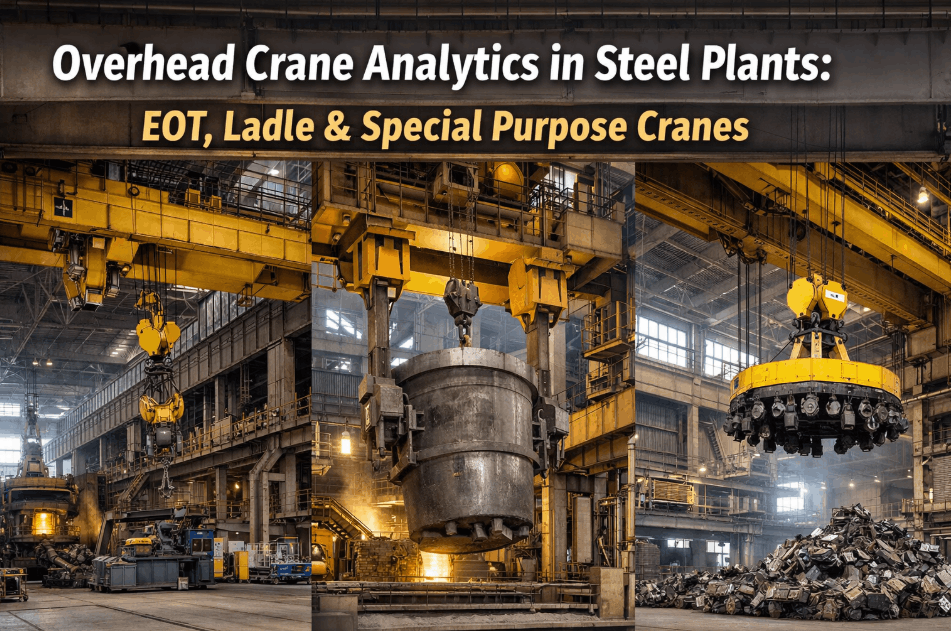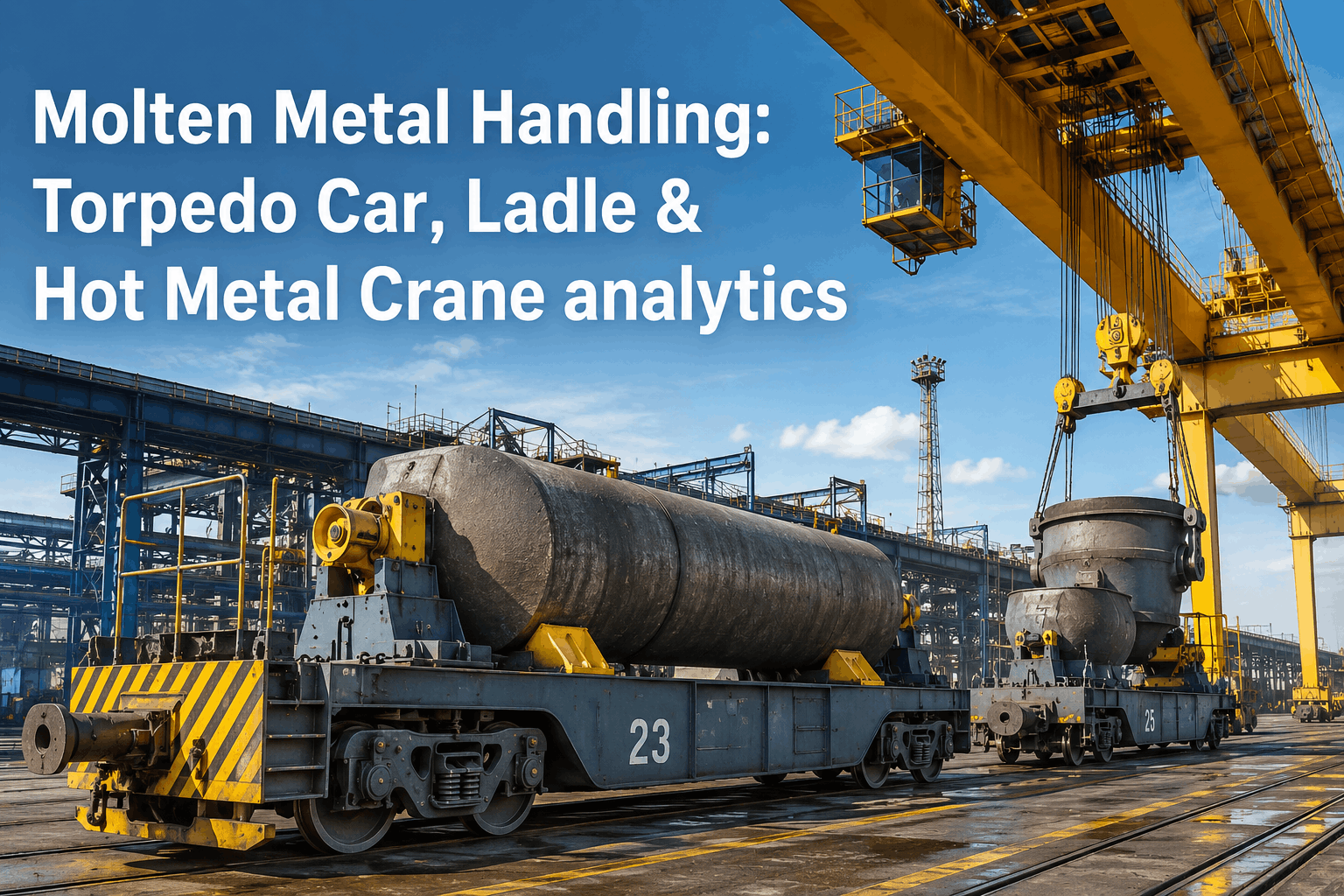
In the high-stakes environment of an integrated steel mill, the transport of molten iron—often at temperatures exceeding 1,500°C—represents the most significant thermal energy and safety challenge in the production chain. From the blast furnace runner to the BOF charging bay, **molten metal handling analytics** for torpedo cars, ladles, and cranes is the invisible safety net that prevents catastrophic breakouts and optimizes "Heat Conservation." Legacy systems rely on manual ladle cards and visual crane inspections that struggle to keep pace with high-tonnage throughput. iFactory's predictive suite transforms these heavy assets into intelligent nodes: tracking refractory erosion in real-time predicting wire rope fatigue in overhead cranes using Miner's Rule, and optimizing torpedo car rotation to minimize temperature loss. Steelmakers who book a molten metal logistics audit are discovering that every minute saved in ladle transit translates to thousands in reduced pre-heating energy costs and increased refractory life.
Is Your Molten Metal Handling Ready for the Future of Steel?
Deploy AI-driven refractory tracking, crane wire rope fatigue modeling, and torpedo car logistics optimization. Seamlessly integrated with your BOF charging and EAF tapping workflows.
The Strategic Value of Data-Driven Molten Metal Logistics
Molten metal handling is more than a transport problem; it is an energy management and safety problem. A single torpedo car "Hot Spot" can lead to a shell breakout that halts production for weeks, while an unpredicted crane hoist failure is a life-safety catastrophe. **Ladle and crane analytics** replaces "Fixed-Interval Maintenance" with "Condition-Based Deployment." By integrating thermal imaging with AI, iFactory monitors the refractory health of every ladle and torpedo car in the fleet. This allows operators to run ladles closer to their true mechanical limit without risking a breach. Furthermore, the platform optimizes the "Hot Metal Cycle"—calculating the ideal torpedo car rotation to ensure the shortest possible transit times between the Blast Furnace and Steel Shop. Organizations that schedule a technical demo can see how iFactory's "Thermal Decay" models have helped mills recover up to 15°C of hot metal temperature, significantly reducing BOF/EAF energy consumption.
Refractory Erosion AI
Digital twin modeling for ladle linings. AI correlates secondary metallurgy data from the EAF or BOF to predict residual lining thickness.
Crane Wire Rope Fatigue
Continuous tracking of hot metal crane hoist cycles. AI models calculate cumulative fatigue life based on load weight and temperature exposure to prevent rope failure.
Torpedo Car Wheel Health
Vibration and acoustic sensors monitor bogie bearings and wheel condition. Detect early-stage flaking or bearing failure caused by extreme radiant heat.
Ladle Lip Skull Detection
Vision AI cameras identify excessive skull buildup on ladle lips. Automate the cleaning schedule to prevent splashing and ensure clean pouring streams.
Crane Brake Thermal AI
Monitor brake disc temperatures on ladle cranes. Prevent "Brake Fade" in high-ambient heat by ensuring cooling systems and disc wear are within safe limits.
Hot Metal Transit GPS
Real-time GPS/RFID tracking of the ladle fleet. Minimize "Dead Time" at preheaters and optimize the buffer between ironmaking and steelmaking.
"Before iFactory, our ladle refractory management was largely guesswork—we were retiring ladles early just to stay safe. By implementing their thermal erosion AI and crane wire rope tracking, we've increased our ladle campaign life by 18% and, more importantly, removed the manual risk of inspecting ropes over hot metal. The platform has become our single point of truth for molten metal safety."
Solving the "Blind Spots" in High-Heat Logistics
Molten metal handling is notoriously difficult to digitize because traditional electronics fail in the radiant heat of a 300-ton ladle. iFactory solves this through **non-contact sensing and physics-informed AI**. We don't just "monitor" the car; we model the car's thermal and mechanical state using remote sensors and digital twins. If you are struggling with ladle availability or crane downtime, you can book a site-specific assessment to see our specialized hardware and software in action.
Problem 1 — The Ladle Breakout Risk
Standard thermal cameras often trigger false alarms due to surface slag or reflections. iFactory's AI filters this "noise," identifying the specific thermal signatures of refractory thinning. By correlating these signatures with tap-history, the platform provides a 48-hour warning of a potential shell hotspot.
Problem 2 — Unpredictable Crane Hoist Failure
Crane wire ropes in steel mills face extreme radiant heat and corrosive gases. Traditional visual inspection cannot see internal wire fatigue. iFactory's "Hoisting Intelligence" module tracks every inch of rope travel under every load, calculating cumulative stress cycles (Miner's Rule) and predicting the optimal replacement window.
Problem 3 — Logistics Bottlenecks & Temperature Loss
When torpedo cars sit idle on the tracks, the hot metal loses energy. iFactory's "Liquid Logistics" dashboard visualizes the entire fleet, predicting when the next blast furnace cast will be ready and ensuring the right torpedo car is in the right position at the right time.
Increase lining life by 15-20% through precise erosion tracking and optimized pre-heating cycles.
Achieve 100% predictive reliability for hot metal hoist ropes, eliminating unplanned crane downtime.
Recover 10-15°C of hot metal temperature by minimizing transit bottlenecks and optimizing ladle preheating.
Reduce bogie and wheel maintenance costs by 22% through early bearing failure detection.
The ROI of Intelligence: KPI Gains from iFactory Logistics AI
Optimizing molten metal handling is a direct booster for your plant's bottom line. The benchmark chart below shows the average gains achieved by integrated steelmakers within 12 months of adopting iFactory's logistics intelligence platform. These are the results of "Physics-Based AI." Logistics managers who book a demo today are securing these stability gains for the next campaign.
Manual Handling vs. iFactory Intelligent Logistics
The transition from manual ladle management to a digital thermal twin is the hallmark of a world-class steel facility. The table below outlines the operational shifts that occur when iFactory's molten metal suite is deployed. To calculate your specific ROI on ladle and crane analytics, book a logistics audit.
| Logistics Metric | Reactive Approach (Manual) | iFactory Intelligent Suite | Operational Gain |
|---|---|---|---|
| Ladle Life Tracking | Manual tap-counts on paper | Digital Refractory Twin AI | +18% Lining life extension |
| Crane Wire Rope | Periodic visual check | Cumulative Stress Modeling | Zero unpredicted rope failures |
| Torpedo Shell Health | Periodic thermal scans | Continuous Spot-Detection AI | 100% breakout prevention record |
| Ladle Transit Time | Dispatcher-dependent | Autonomous Logistics Mapping | -12% Energy loss in transit |
| Crane Brake Health | Post-failure report | Predictive Thermal Monitoring | Eliminates hoist "Slipping" risk |
| Ladle Pre-heating | Time-based burners | Remaining Heat Analytics AI | -15% Burner fuel consumption |
Protect Your People. Optimize Your Hot Metal Yield.
iFactory's molten metal handling analytics is the only purpose-built platform designed to survive and thrive in the extreme radiant environments of the modern steel mill.
Frequently Asked Questions: Molten Metal & Crane Analytics
How does the platform predict ladle refractory wear without physical measurements?
We use a "Physics-Informed Digital Twin." By tracking every heat's temperature profile, chemical composition of slag, and the duration of the cast, iFactory's AI models the cumulative erosion of the brick lining. This is periodically calibrated with non-contact thermal imaging at the ladle-desk, ensuring the predictive model remains accurate to within 5% of actual thickness.
Can iFactory detect internal fatigue in crane wire ropes?
While we don't "see" inside the rope, we track the **Hoisting Stress Spectrum**. By integrating with the crane's load cells and PLC, we record exactly how much weight was lifted at what speed and in what ambient temperature. Our AI then applies the *Miner's Rule* of cumulative fatigue damage, identifying the onset of internal wire breakage before it becomes visible on the surface.
How does "Liquid Logistics" reduce hot metal temperature loss?
Temperature loss is a function of time. iFactory's logistics module acts as a "Molten Air Traffic Control." It synchronizes the Blast Furnace casting schedule with the BOF charging window, ensuring that torpedo cars don't wait in the yard. By cutting just 15 minutes from the transit time, we can save up to 10°C of critical heat.
Is the hardware rugged enough for 24/7 exposure to hot metal?
Yes. iFactory utilizes industrial-grade thermal enclosures and air-cooled sensor housings specifically designed for the charging bay. Our wireless RFID tags for ladles are rated for extreme high-temperature environments, ensuring 100% data availability even during the most intense operations.
Does the platform integrate with our existing ladle tracking (RFID) system?
Absolutely. iFactory is platform-agnostic. We can pull data from your existing RFID readers, crane PLCs (Siemens, ABB, etc.), and Level-2 automation systems to provide a unified analytical layer without needing to replace your foundational hardware.
How does AI-driven brake monitoring improve crane safety?
Hot metal cranes operate in high ambient temperatures that can cause hydraulic fluid to degrade or brake discs to overheat. iFactory monitors the temperature delta and response time of the brake calipers. If it detects a "Slowing Response" or "Heat Accumulation," it triggers a mandatory maintenance check before a "Runaway Ladle" event can occur.
Can the platform detect "Skulls" on ladle lips?
Yes. Using Vision AI at the ladle-rotation or slag-dumping station, the platform automatically measures the profile of the ladle lip. If the "Skull" buildup exceeds the safety threshold, a work order is automatically generated for the cleaning crew, preventing pouring spills and ensuring ladle balance.
What is the typical ROI for a ladle and crane analytics deployment?
Most facilities see a full ROI within **6–9 months**. This is driven by three primary factors: a 15% reduction in ladle refractory cost, a 20% reduction in unplanned crane maintenance, and energy savings from improved hot metal heat retention. Request an ROI calculation for your fleet here.