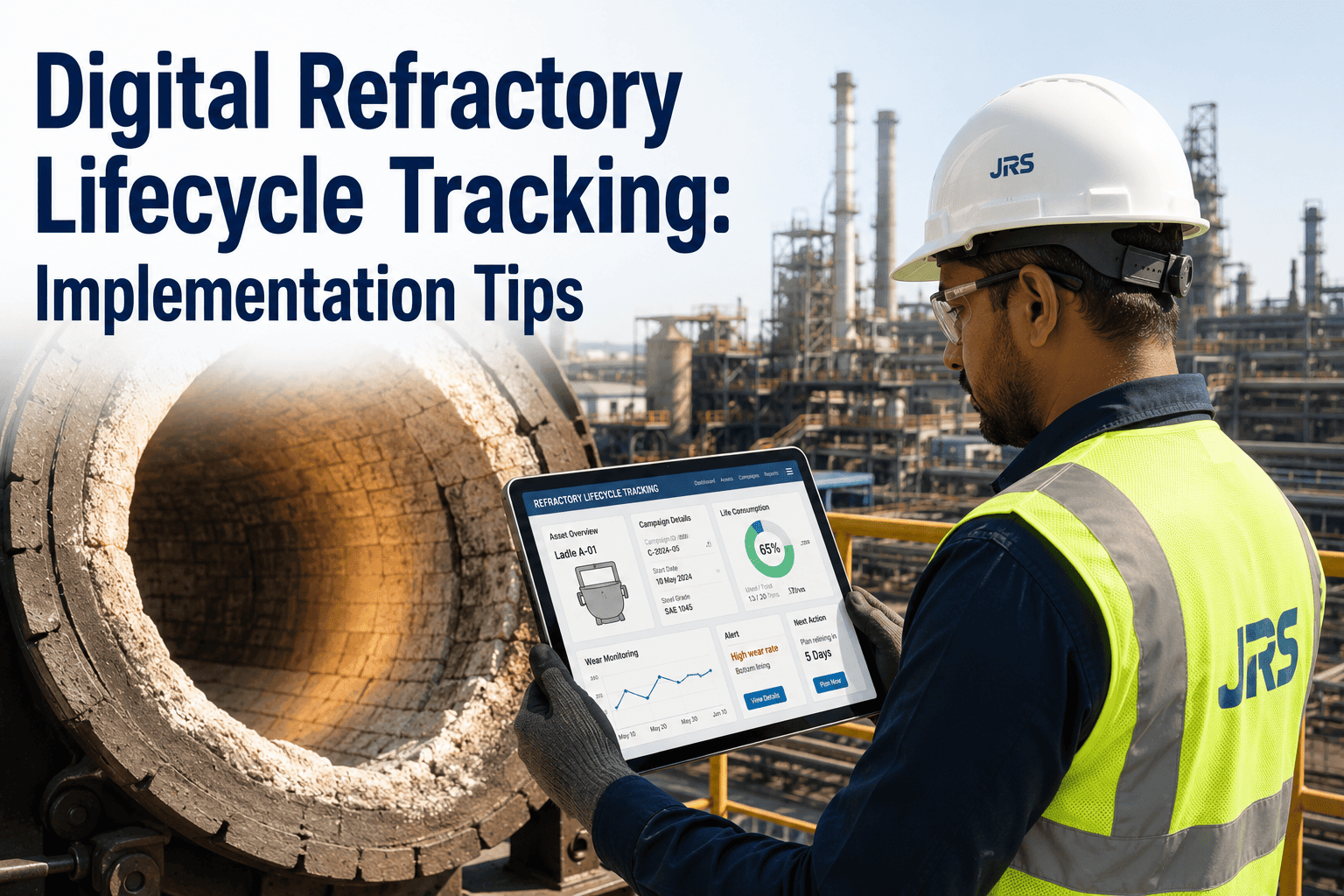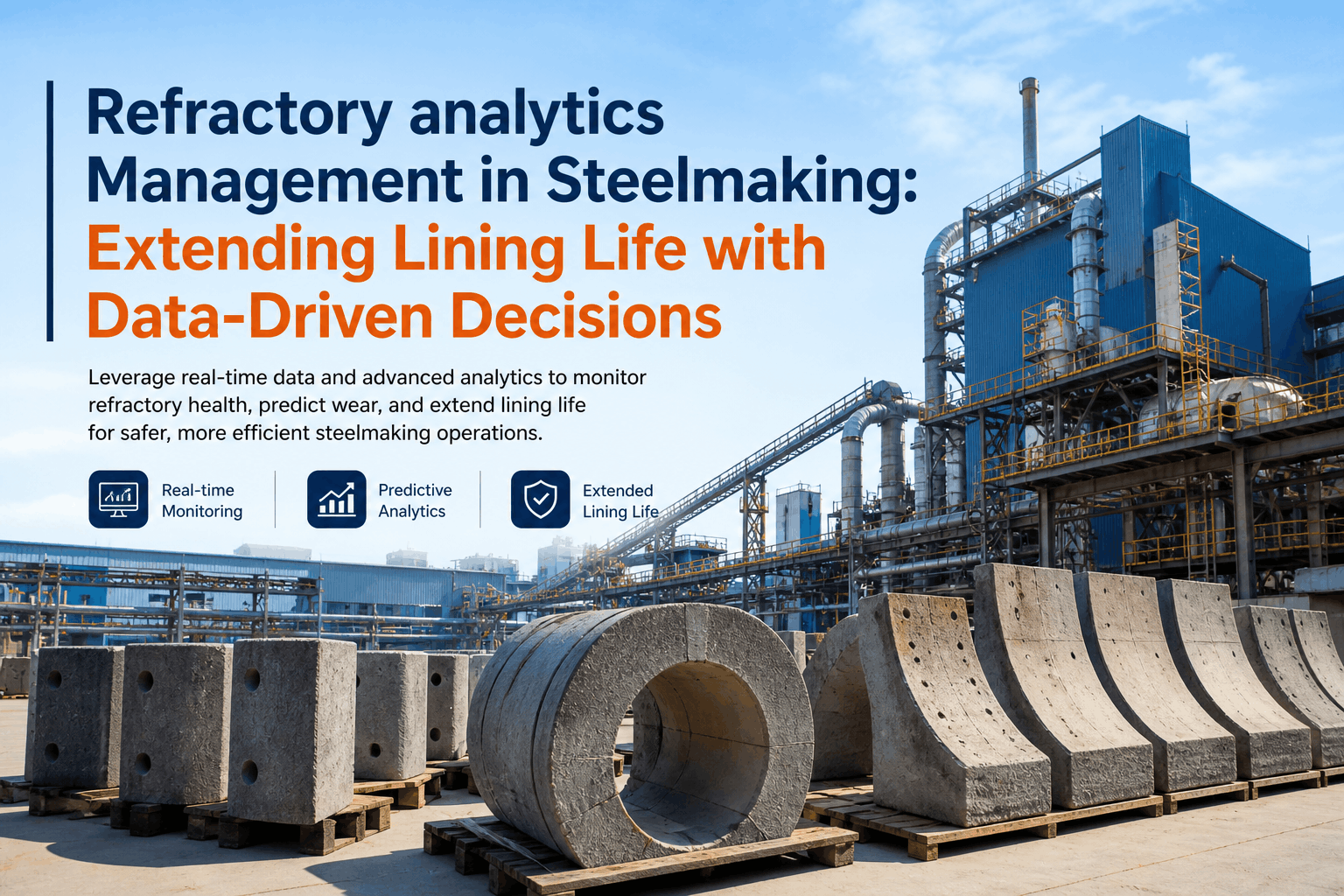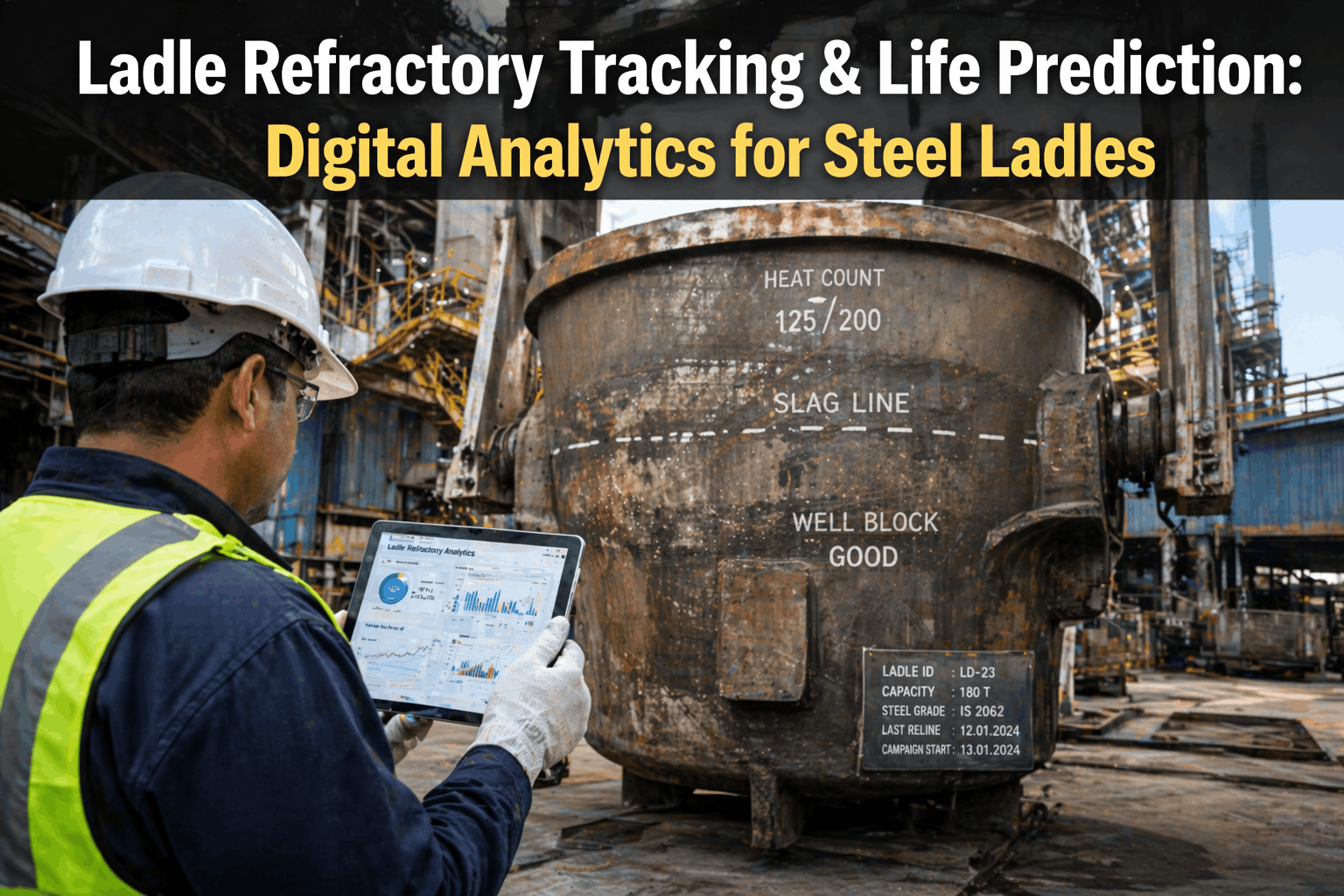
Steel ladle refractory management represents the most critical safety and cost bottleneck in modern integrated steelmaking—a high-stakes operational layer where chemical slag erosion, thermal shock and mechanical impact converge. From the extreme wear patterns of the slag line to the architectural integrity of well blocks and purge plugs, ladle refractory analytics are transforming how melt shops maintain, circulate, and future-proof their most mobile liquid metal assets. Without a data-driven approach to ladle refractory tracking and life prediction, plants face accelerating lining loss, dangerous shell hot spots, and catastrophic steel breakouts that jeopardize the entire refining aisle. This guide delivers actionable technical insight into how modern analytics platforms are converting raw metallurgical telemetry into proactive, evidence-based ladle stewardship for the global steel industry.
Is Your Ladle Life Prediction Based on Averages or Actual Condition?
Unify slag line laser profiling, well block lifecycle tracking, and thermal shell telemetry into one intelligent platform designed for zero-breakout steelmaking.
Why Digital Ladle Refractory Tracking is Redefining Melt Shop ROI
The stewardship of the steel ladle has traditionally been managed through conservative 'heat-count' averages — a reactive strategy that either wastes expensive refractory material or risks catastrophic shell exposure. High-alloy grade changes, Varying residence times, and aggressive slag chemistries all create unique erosion profiles that a simple logbook cannot capture. Modern ladle life prediction platforms bridge this gap by aggregating 3D laser thickness mapping, shell infrared telemetry, and Grade-Specific Heat Count (GSHC) data into a single, unified intelligence layer. When reliability engineers book a demo, they discover that centralizing their thermal imaging and well block logs allows them to safely extend ladle campaigns by 15-20% while simultaneously reducing breakout risks.
Slag Line Erosion Mapping
Integrate laser profiling to monitor chemical erosion in the high-wear slag line zone. Optimize MgO saturation and gunning practices based on real-time thickness mapping rather than visual estimates.
Well Block Integrity Tracking
Monitor the lifecycle of critical flow components including well blocks and purge plugs. Predict well block replacement needs mid-campaign to prevent emergency ladle de-bricking.
Thermal Shell Profiling
Deploy continuous shell infrared (IR) sensors on the ladle turret to detect transient shell temperatures. Automatically flag 'hot spots' that indicate refractory penetration or thinness.
Predictive Reline Scheduling
Apply AI wear forecasting to correlate metallurgical grade aggressiveness with lining consumption. Drive ladle reline scheduling by objective asset health rather than fixed heat-count averages.
Transitioning from Manual Heat Counts to Digital Ladle Intelligence
A purpose-built ladle analytics architecture must address the specific mechanical and thermal stresses of secondary metallurgy. Integrated plants that have successfully booked a demo focus on digitizing the transition from 'ladle on turret' to 'ladle on reline' — ensuring every heat is documented against the lining's actual structural performance.
| Ladle Metric | Traditional Method | Digital Analytics Flow | Performance Gain | Criticality |
|---|---|---|---|---|
| Lining Thickness | Visual or Average logic | High-res 3D Laser Mapping | Optimized Remaining Life | Critical |
| Slag Line Wear | Manual gunning schedule | Area-specific erosion tracking | Precision MgO gunning | High |
| Well Block Life | Scheduled replacement | Predictive flow-integrity logs | Zero mid-campaign failures | Operational |
| Shell Temperature | Periodic manual IR check | Continuous Turret Monitoring | Real-time breakout alerts | Critical |
| Reline Timeline | Fixed heat-count cutoff | Predictive AI Life Modeling | Reduced per-ton ref. cost | Standard |
Building a Resilient Ladle Refractory Management System
Standardizing ladle stewardship requires more than just new sensors — it demands a unified data environment that connects the melt shop floor with the refractory maintenance bay. Most integrated mills find that starting with ladle turret analytics and shell hotspots provides the fastest safety ROI, followed by deep predictive modeling for long-range capital planning. Reliability officers who book a demo often discover a 25% reduction in unplanned ladle breakouts within the first 12 months of implementation.
Ladle Inventory & Architecture Digitization
Map every ladle shell, its unique lining blueprint, and critical component history (well blocks, slide gates, purge plugs) into a unified digital registry.
Integration of Laser & Thermal Stream Telemetry
Connect existing 3D laser profilometry and turret thermal imaging to iFactory. Align thickness scans with metallurgical grade residence times to calculate erosion rates per grade.
Activation of Predictive Breakout Alerts
Launch real-time dashboards for ladle turret operators and refractory crews. Configure automated alerts for shell hot-spots and critical slag line thinning.
AI-Powered Reline Optimization
Enable predictive AI to forecast remaining life based on current wear trends. Move from schedule-based relining to health-based maintenance protocols.
Capital Lifecycle & Yield Analysis
Correlate refractory spending against steel output and breakout prevention metrics. Use data to negotiate vendor performance contracts and optimize refractory material selection.
Critical Risks in Conventional Steel Ladle Management
Most melt shops pursuing ladle refractory tracking improvements struggle with fragmented data silos and manual reporting. Identifying these operational gaps is the first step toward a more predictable and cost-effective ladle campaign cycle.
Failure to correlate specific metallurgical slags with lining erosion patterns, leading to 'surprise' thinning in the slag line zone.
Relying on hand-held thermal checks rather than continuous turret IR, missing critical hot spots during the heat refine cycle.
Well block and purge plug changes are managed in disconnected logs, leading to mid-campaign flow failures or premature nozzle loss.
Applying gunning material based on shift timers rather than physical thickness scans, wasting thousands in refractory material annualy.
Turret logs remain in paper format, preventing safety managers from auditing ladle movements or tracking long-term shell deformation.
Laser thickness scans are disconnected from heat-count data, making it impossible to calculate a true 'remaining life' prediction.
Future-Proof Your Melt Shop Performance Today
Deploy a unified analytics platform that integrates 3D refractory mapping, well block tracking, and thermal shell intelligence — built specifically for integrated steel.
Steel Ladle Refractory Analytics — Technical Questions Answered
How does the platform predict slag line erosion for high-alloy grades?
iFactory uses metallurgical grade weighting. Aggressive slags (high FeO or V-ratio) consume refractory faster than standard grades. By correlating specific heat-chemistry with laser thickness scans, our AI calculates a grade-weighted erosion coefficient for every ladle in circulation.
Can we integrate 100% of our existing manual reline logs into the digital system?
Yes. The platform includes a refractory-bay digitization module that replaces paper logs. Shift crews can log well block replacements, nozzle work, and patch gunning directly into the ladle's digital twin, ensuring a complete history for safety audits.
How does turret-based thermal imaging correlate with actual remaining thickness?
While thermal imaging measures shell temperature, iFactory uses a thermal lag model to estimate the internal refractory thickness. When the shell hits a specific thermal threshold, the system triggers a 'High Priority Laser Scan' to verify the lining condition before the next heat.
What is the ROI on predictive ladle reline scheduling?
The ROI is typically achieved through 'Material Recovery'. By extending ladle life by just 3 heats on average across a 100-ladle fleet, mills save millions in annual refractory material and de-bricking labor. Book a demo to see the calculation for your specific tonnage.