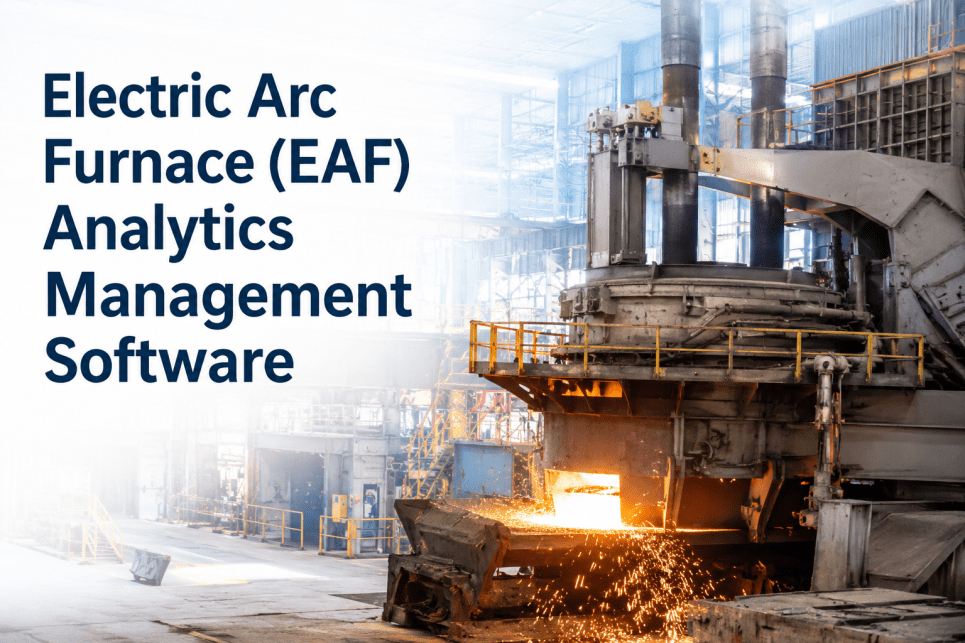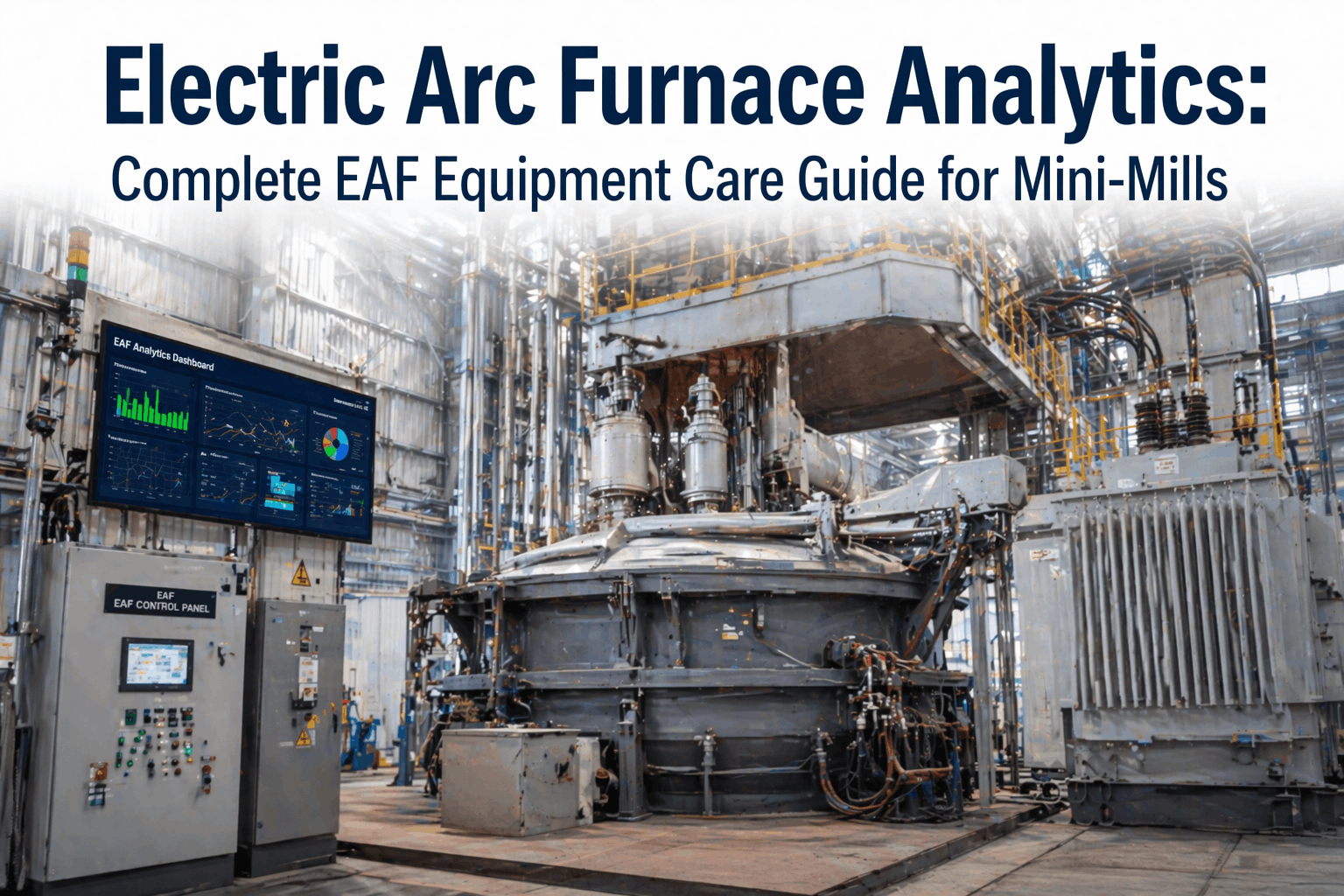
Electric Arc Furnace (EAF) analytics represent more than melting telemetry — they are mission-critical operational intelligence layers that demand rigorous stewardship, precision data and a maintenance strategy built for the modern mini-mill era. From high-voltage transformer protection to electrode regulator optimization, EAF equipment care is reshaping how steel plant leaders maintain, operate, and future-proof their most energy-intensive assets. Without a data-driven approach to arc furnace asset management, mini-mills face accelerating component failure, massive energy inefficiencies, and ballooning unscheduled downtime costs that strain production margins for decades. This guide delivers actionable insight into how modern analytics platforms are transforming Electric Arc Furnace governance from reactive crisis response into proactive, evidence-based melting excellence.
Is Your EAF Operational Data Working for You?
Unify electrode management, refractory monitoring, and hydraulic maintenance workflows into one intelligent platform designed for high-performance steel melting.
Why EAF Equipment Analytics Is Redefining Modern Mini-Mill Management
The stewardship of Electric Arc Furnaces has always been uniquely challenging — but the stakes have never been higher. High-current arc stability, water-cooling panel integrity, electrode consumption rates, and antiquated hydraulic controllers all require specialized technical knowledge combined with real-time monitoring capabilities that traditional SCADA systems simply cannot provide. Modern EAF analytics platforms bridge this critical gap by aggregating data from transformer DGA sensors, hydraulic pressure monitors, electrode regulator logs, and thermal imaging systems into a single, unified intelligence layer. When steel mill leaders book a demo, the most common discovery is that their melt shops are generating enormous volumes of untapped data that — once connected — can prevent catastrophic component failures and dramatically reduce per-ton energy expenditures.
Electrode Management
Analyze arc stability, phase currents, and regulator mast movement to detect mechanical binding and abnormal graphite consumption. Receive breakage predictions before they stall the heat.
Refractory Health Monitoring
Integrate shell thermocouples and slag chemistry data to map hearth wear dynamically. Flag hot spots and thinning zones to optimize fettling schedules and ensure safe campaign extensions.
Cooling System Intelligence
Monitor Delta-T and pressure drops across EAF roof and shell panels. Detect micro-leaks and scale build-up early to prevent steam explosions and panel burn-throughs.
Hydraulic System Analytics
Track proportional valve response and pump vibration baselines for furnace tilting and roof swing. Prevent structural lock-ups by identifying fluid degradation before it impacts cycle time.
Building a Unified Analytics Architecture for Arc Furnace Equipment
A purpose-built EAF analytics platform must address four foundational requirements unique to high-capacity melt shops: electrode performance tracking, material-specific deterioration monitoring, transformer health profiling, and long-range capital forecasting for relines and upgrades. Mini-mills that have already booked a demo consistently report that connecting their fragmented logbooks, sensor data, and maintenance records into a unified layer is the single most impactful step in their shop's digital transformation.
| Analytics Module | Primary Function | EAF Application | Operational Benefit | Priority Level |
|---|---|---|---|---|
| Electrode Regulator | Arc length & power control | Phase current balancing | Lower kWh/ton consumption | Critical |
| Transformer Health | DGA & Oil monitoring | Tap changer & winding health | Prevents catastrophic loss | Critical |
| Cooling Analytics | Flow & Delta-T tracking | Roof & shell water panels | Explosion zone prevention | Emergency |
| Hydraulic Pulse | Valve & pump telemetry | Furnace tilt & roof swing | Eliminates cycle delays | High |
| Off-Gas Analytics | Temperature & flow tracking | Fourth hole & ducting health | Optimized energy recovery | Standard |
How Analytics Platforms Support Global Steelmaking Efficiency Standards
Adherence to modern energy efficiency and safety standards is a non-negotiable requirement for competitive mini-mills. Yet most shops still manage their critical asset data through paper logs, disconnected spreadsheets, and verbal shift handovers. This creates dangerous information gaps that can jeopardize safety certifications, lead to arc furnace accidents, and expose plants to significant operational liability during audit cycles. iFactory's platform addresses this by digitizing every touchpoint — from thermal profiles to maintenance work orders — into an audit-ready system of record. Melt shop directors who book a demo early in their upgrade planning achieve stronger safety outcomes and faster ROI on new sensor deployments.
EAF Asset Inventory & Condition Digitization
Create a comprehensive digital registry of all critical furnace fabric — shell panels, hearth refractory, electrode masts, and transformer tap changers — mapped against their current health ratings.
IoT Sensor Deployment for Asset Monitoring
Install high-frequency current sensors, proportional valve monitors, and additional thermocouples across high-risk zones. Integrate these directly with the iFactory gateway for real-time telemetry.
Predictive Asset Management Activation
Connect sensor streams to the central analytics platform. Configure role-specific dashboards for melters, maintenance engineers, and plant reliability officers.
AI-Driven Failure Prediction
Enable machine learning models to automatically generate PM work orders when telemetry indicated early-stage component failure, such as valve latency or transformer oil gas spikes.
Long-Range Reline & Upgrade Planning
Leverage historical wear data to generate defensible capital forecasts for hearth relines and transformer upgrades, aligning maintenance spending with actual asset health.
Top Operational Gaps in Modern Electric Arc Furnace Management
Most mini-mills pursuing improvements to their EAF equipment care encounter a predictable set of operational and documentation challenges. Understanding these gaps improves implementation success and helps maintenance officers allocate finite budgets more strategically across the arc furnace analytics program.
High-frequency arc and electrode data remains locked in PLC silos, preventing plant-wide correlation between power quality and component wear.
Hearth wear and fettle logs are managed manually, introducing errors that can lead to breakout risks or premature (and expensive) relines.
Without continuous Delta-T monitoring, panel failures are only detected after a steam event, leading to dangerous and costly EAF shutdowns.
Shops lack real-time correlation between regulator performance and graphite tip breakage, leading to hidden operational cost spikes.
Transformers are monitored periodically rather than continuously, missing transient gas spikes that indicate emerging winding or tap-changer faults.
Maintenance tasks are triggered by schedules rather than condition, wasting labor and spare parts on assets that are performing within spec.
Modernize Your Mini-Mill EAF Intelligence Today
Deploy a unified analytics platform that integrates electrode management, transformer health, and water-panel monitoring built specifically for the steel industry.
Electric Arc Furnace Analytics — Common Questions Answered
How does iFactory improve electrode consumption rates?
Our platform analyzes electrode regulator mast vibration and phase arc stability in high resolution. By identifying mecahnical binding or suboptimal arc lengths early, we allow operators to tune mast response, radically reducing mechanical breakage and unnecessary graphite oxidization.
Can this platform integrate with our existing EAF transformer DGA monitors?
Yes. iFactory is designed to ingest data from all major dissolved gas analysis (DGA) and tap-changer telemetry systems. By unifying this with operational furnace load data, we provide a complete health profile that calendar-based testing cannot match.
How does the system prevent water-cooled panel steam explosions?
We maintain a continuous monitor of temperature differentials (Delta-T) and flow discrepancies across every individual roof and shell panel. Any deviation from the cooling performance baseline triggers an immediate 'High Risk' work order to inspect for internal scale or micro-leaks before they breach the panel.
What is the typical ROI for an EAF analytics deployment?
Most mini-mills achieve full ROI within 12-18 months. This is driven by the prevention of even a single major unplanned downtime event (like a transformer failure), combined with sustained improvements in electrode yield and per-ton energy efficiency. Book a demo to see a steel-specific ROI calculation for your melt shop.