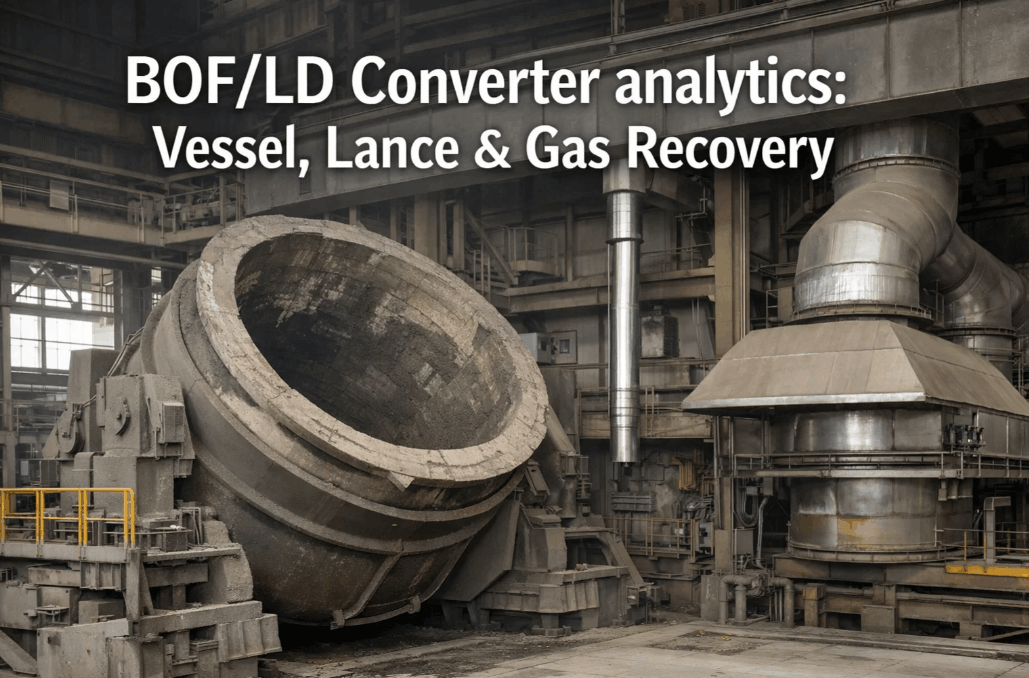
Basic Oxygen Furnace (BOF) converter management represents the apex of integrated steelmaking asset stewardship—a discipline where architectural lining integrity, oxygen injection precision and gas recovery efficiency converge. From the high-temperature wear patterns of vessel refractory to the supersonic flow dynamics of oxygen lances, BOF converter analytics are transforming how integrated steel plants maintain, operate, and future-proof their most critical refining assets. Without a data-driven approach to converter vessel relining and lance lifecycle management, shops face accelerating refractory loss, oxygen plant inefficiencies, and massive unscheduled downtime events that jeopardize annual production targets. This guide delivers deep technical insight into how modern analytics platforms are converting raw metallurgical telemetry into proactive, evidence-based converter stewardship for the global steel industry.
Is Your Converter Operational Data Maximizing Your Campaign Life?
Unify vessel lining laser profiling, oxygen lance wear tracking, and gas recovery hood analytics into one intelligent platform designed for high-tonnage steelmaking.
Why BOF Converter Analytics Is Redefining Steelmaking Performance
The stewardship of the LD converter has always been a balancing act between throughput and asset preservation — but the stakes have never been higher. Supersonic oxygen injection, slag splashing dynamics, waste heat recovery cycles, and trunnion bearing stability all require specialized technical intelligence combined with real-time monitoring capabilities that traditional Level 1 SCADA simply cannot provide. Modern BOF converter analytics platforms bridge this critical gap by aggregating data from 3D laser profilers, lance pressure sensors, hood water-cooling monitors, and vibration sensors into a single, unified intelligence layer. When integrated steel plant leaders book a demo, the most common discovery is that their refining aisles are generating enormous volumes of untapped data that — once connected — can significantly safely extend vessel campaigns and optimize slag chemistry in real-time.
Vessel lining Analytics
Integrate 3D laser profiling data to map refractory thickness dynamically. Optimize slag splashing and gunning schedules to target high-wear zones in the tap hole and trunnion areas before shell exposure.
Oxygen Lance Management
Monitor supersonic nozzle wear, cooling water Delta-T, and lance vibration. Predict lance lifecycle failures and skull formation triggers to prevent premature nozzle burn-out and refine yield.
Gas Recovery Hood Analytics
Track off-gas CO concentration and cooling water pressure in the BOF gas recovery hood. Optimize suppressed combustion cycles to maximize energy recovery and ensure structural stability.
Trunnion Bearing Monitoring
Deploy high-resolution vibration and temperature sensors on trunnion bearings. Identify lubricant degradation and misalignments in the tilt mechanism before they lead to emergency vessel stalls.
Building a Unified Analytics Architecture for Integrated Steel Converters
A purpose-built BOF analytics platform must address four foundational requirements unique to high-tonnage refining facilities: refractory wear tracking, lance lifecycle management, gas recovery optimization, and long-range capital forecasting for vessel relines. Integrated mills that have already booked a demo consistently report that centralizing their fragmented 3D scans, lance nozzle logs, and bearing telemetry is the single most impactful step in their campaign management journey.
| Analytics Module | Primary Function | BOF Application | Preservation Benefit | Priority Level |
|---|---|---|---|---|
| Refractory Tracker | Laser thickness mapping | Vessel bricks & tap hole | Prevents shell burnthrough | Critical |
| Lance Intelligence | Blow pattern & wear tracking | Supersonic oxygen lances | Consistent yield & yield | Critical |
| Hood Monitor | Water-cooling & heat balance | Waste heat boiler & hood | Maximized steam recovery | High |
| Tilt Dynamics | Drive current & vibration | Trunnion rings & tilt drives | Avoids vessel lock-ups | High |
| Off-Gas Analytics | CO recovery & cleaning | Electrostatic precipitators | Emissions compliance | Standard |
How Analytics Platforms Support International Steelmaking Safety & Efficiency
Compliance with international steelmaking safety standards and CO2 reduction targets is a non-negotiable requirement for modern LD converter operations. Yet most integrated plants still manage their basic oxygen furnace data through disconnected shift logs, manual refractory estimates, and reactive inspections. This approach creates dangerous documentation gaps that jeopardize safety audits, endanger furnace campaigns, and increase energy waste in the BOF hood analytics cycle. Modern analytics platforms address this directly by digitizing every compliance touchpoint — from trunnion bearing health to off-gas recovery rates — into a single, audit-ready system of record. Facility directors who book a demo early in their maintenance cycle consistently achieve better yield outcomes and lower refractory consumption rates.
Converter Asset Inventory & Condition Digitization
Create a comprehensive digital registry of all critical converter fabric — refractory zones, lance nozzles, trunnion lubrication ports, and gas recovery boilers — mapped against their baseline performance ratings.
Integration of 3D Laser & IoT Sensor Streams
Connect existing 3D laser scanners, lance water-flow sensors, and trunnion vibration monitors to the central iFactory gateway. Capture real-time deterioration trends that periodic visual inspections miss.
Refractory & Maintenance Analytics Platform Activation
Launch unified dashboards for melters, maintenance supervisors, and yield engineers. Configure automated alerts for trunnion temperature spikes and lance nozzle pressure drops.
Predictive Campaign Modeling
Enable AI-driven wear forecasts that automatically suggest slag splashing modifications and gunning priorities based on real-time thickness mapping and heat-count data.
Long-Range Reline & Capital Planning
Use historical wear and maintenance data to build defensible 10-year capital forecasts for vessel shell relining and trunnion bearing replacements, aligning spending with objective asset health.
Top Operational Gaps in Integrated Steel BOF Converter Management
Most agencies pursuing improvements to their BOF converter analytics programs encounter a predictable set of operational and documentation challenges. Understanding these gaps improves implementation success and helps yield officers allocate finite budgets more strategically across complex converter vessel relining programs.
Laser thickness scans sit on standalone vendor workstations, preventing melters from correlating blowing practices with real-time lining wear rates.
Lance nozzle heat counts and tip inspections are managed manually, introducing errors that can lead to oxygen pressure drops and poor refining yield.
Most trunnion bearings lack continuous vibration monitoring, leaving the entire refining aisle vulnerable to catastrophic mechanical stall during a tap.
Without predictive wear modeling, gunning and fettling are performed on a schedule rather than by condition — wasting material and vessel downtime.
Water-cooling and off-gas telemetry are disconnected, preventing analytics from identifying early-stage hood scaling or micro-leak events.
Vessel campaigns are scheduled based on historical averages rather than actual lining consumption, leading to premature shutdowns or high-risk shell exposures.
Integrating Level 2 Automation into Steel Converter Analytics
One of the most technically demanding aspects of steel converter analytics is the responsible integration of metallurgical Level 2 automation with physical asset monitoring. Oxygen flow rates, cooling water pressures, and charge chemistry must all be synchronized into a single data stream to provide context for asset deterioration. iFactory’s platform supports this by maintaining detailed documentation of every blow cycle and trunnion movement — creating a complete digital record that supports future preservation planning and yield optimization.
Key BOF Analytics Capabilities for Modern Integrated Steelmaking
Maintain continuous digital thickness records for vessel refractory, including MgO saturation tracking and automated slag splashing optimization alerts.
Centralize before/during/after blow pressure data, lance tip photographic records, and treatment rationale for every lance lifecycle in a unified digital archive.
Track every trunnion ring and tilt drive intervention—documenting lubricant consumption, thermal impacts, and compliance for each maintenance event.
Automatically generate energy recovery performance reports for the gas recovery hood, demonstrating measurable steam yield improvements aligned with CO2 targets.
Modernize Your Basic Oxygen Furnace Performance Today
Deploy a unified analytics platform that integrates refractory mapping, oxygen lance tracking, gas recovery monitoring, and trunnion health — built for integrated steel.
BOF Converter Analytics Management — Technical FAQs Answered
How does the platform help calculate the optimal time for a vessel reline?
iFactory combines real-time 3D laser profiler thickness mapping with historical wear rates and the slag splashing coefficient. This provides a predictive date for relining that is based on objective safety limits rather than heat-count averages, ensuring you get every possible heat out of a lining without shell risk.
Can we integrate our existing slag chemistry data into the analytics flow?
Yes. The platform is designed to ingest chemical analysis data for slag (MgO, FeO) to correlate chemical erosion trends with physical wear mapping—providing melters with actionable feedback on slag chemistry adjustments to preserve the hearth.
How does BOF analytics support oxygen lance maintenance?
By monitoring nozzle pressure differentials and water Delta-T throughout every blow, iFactory identifies the early stages of tip erosion and internal scaling. This allows maintenance teams to rebuild lance tips during scheduled turnarounds rather than facing an emergency failure mid-heat.
What is the ROI for implementing trunnion bearing predictive analytics?
The ROI is typically achieved with the prevention of a single vessel-stall event. A trunnion bearing failure during a tap is one of the most expensive and dangerous events in a steel mill. By identifying lubricant failure or bearing fatigue months in advance, iFactory ensures your refining aisle stays fully operational.
How does the platform handle the integration of manual 'visual' inspection logs with sensor data?
iFactory uses a hybridized data model that digitizes manual nozzle tip photos and visual lining observations alongside millisecond IoT telemetry. This allows the AI to 'ground truth' its predictive wear models against actual physical evidence, providing melters with the highest possible confidence in reline timelines.
Can the system predict gas recovery hood failures before leaks occur?
Yes. By cross-analyzing cooling water pressure drops with off-gas thermal peaks, the platform identifies the early signatures of tube scaling and thermal fatigue. This enables maintenance teams to target specific hood panels for weld repair during a planned outage, preventing mid-campaign steam leaks that force emergency shutdowns.