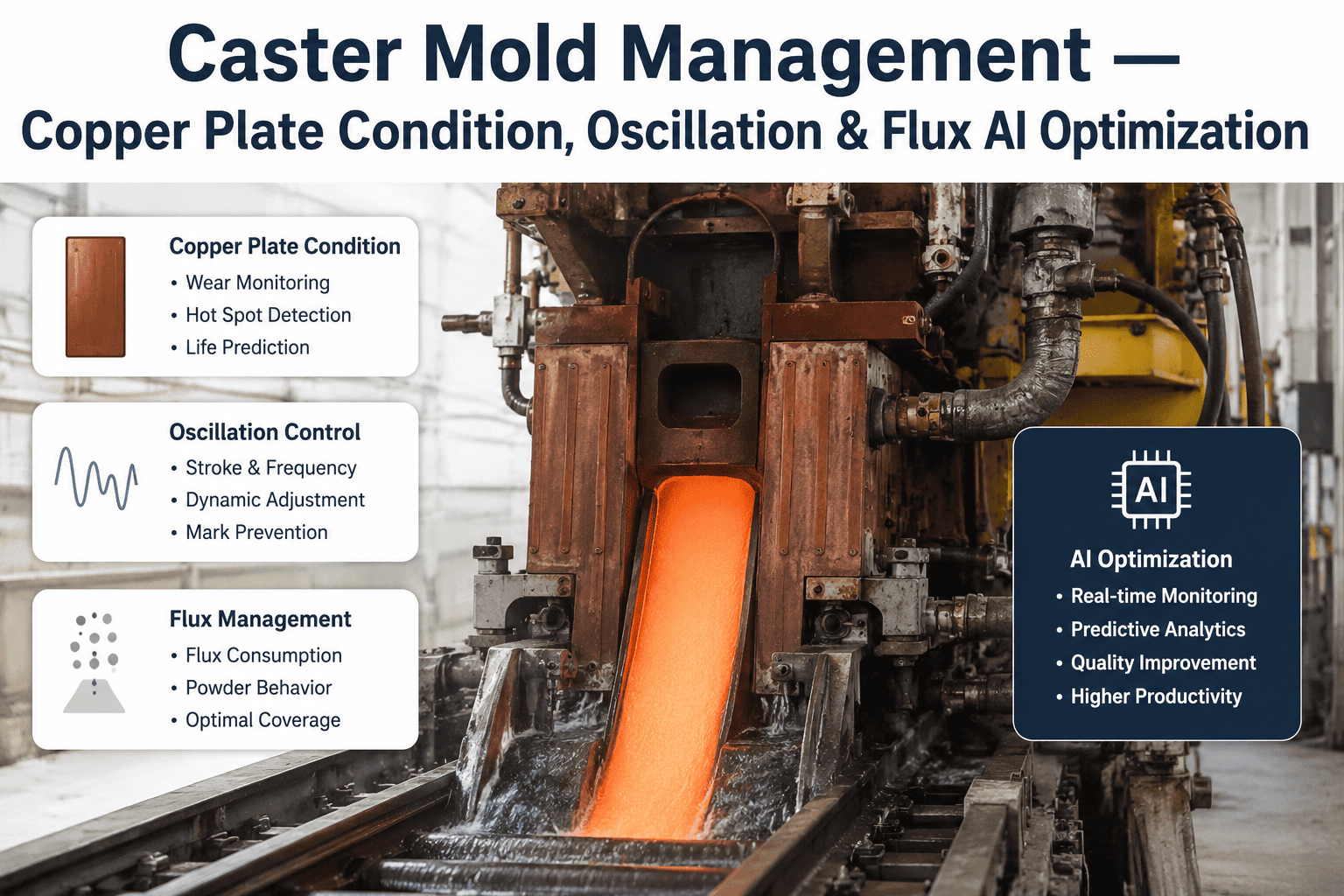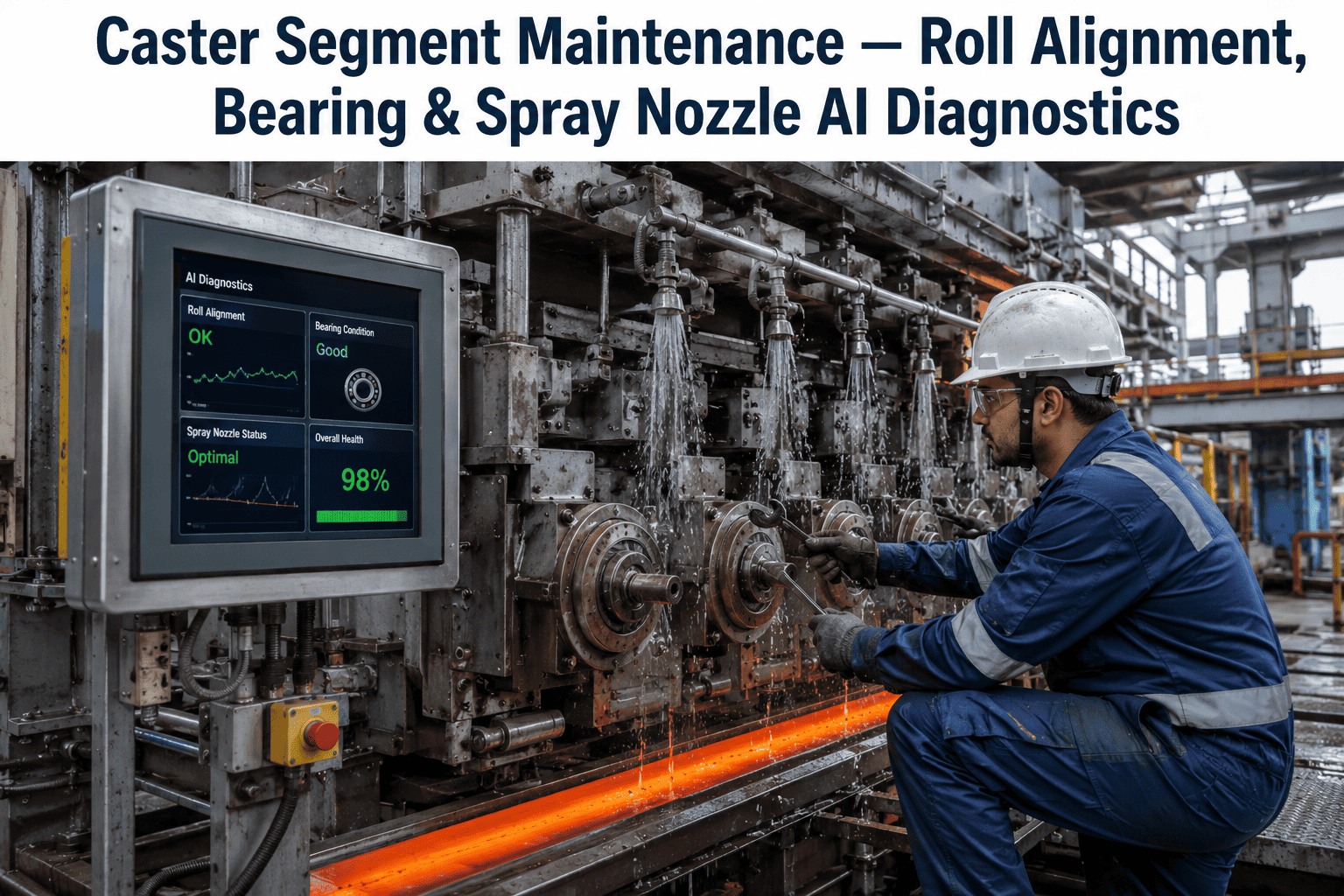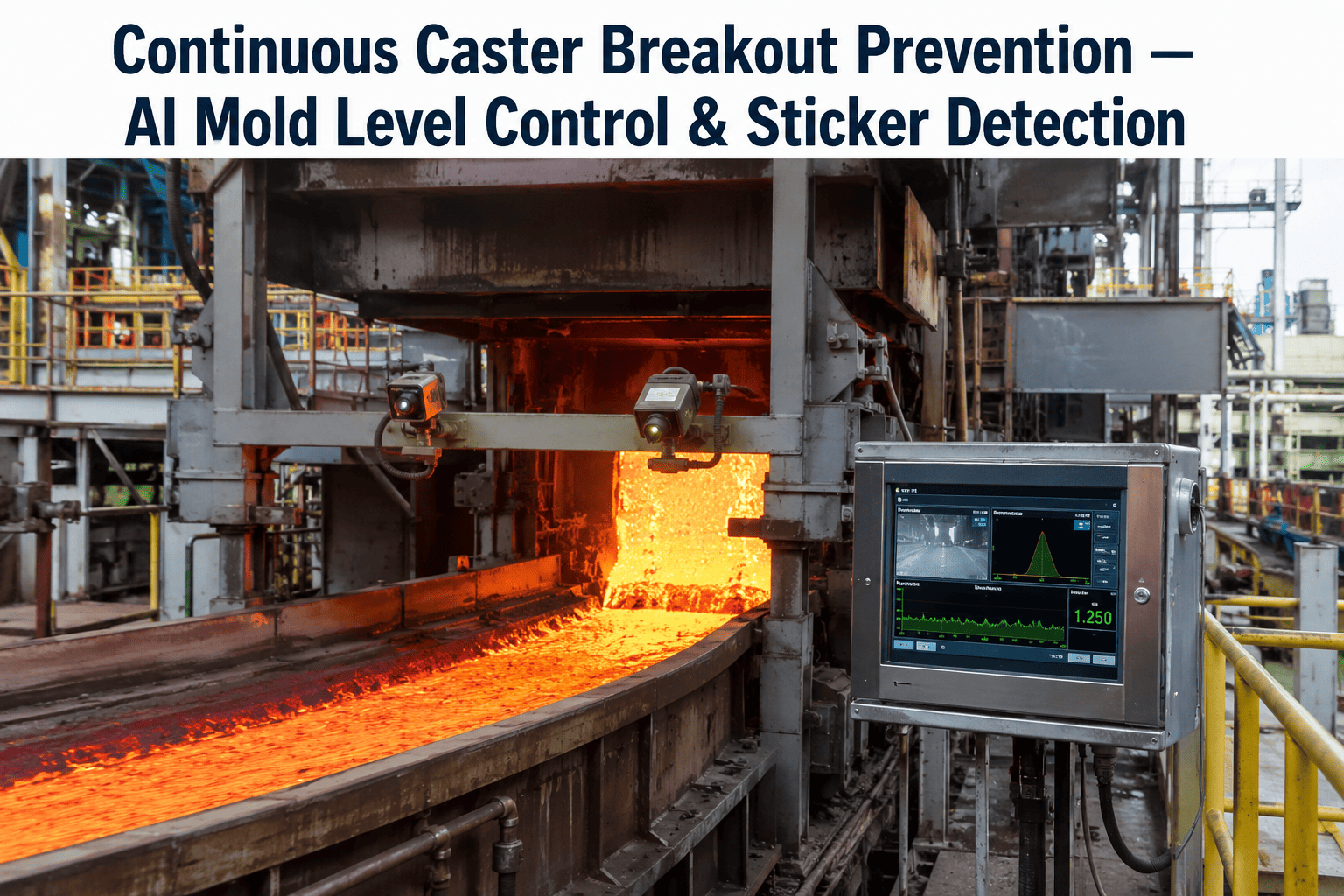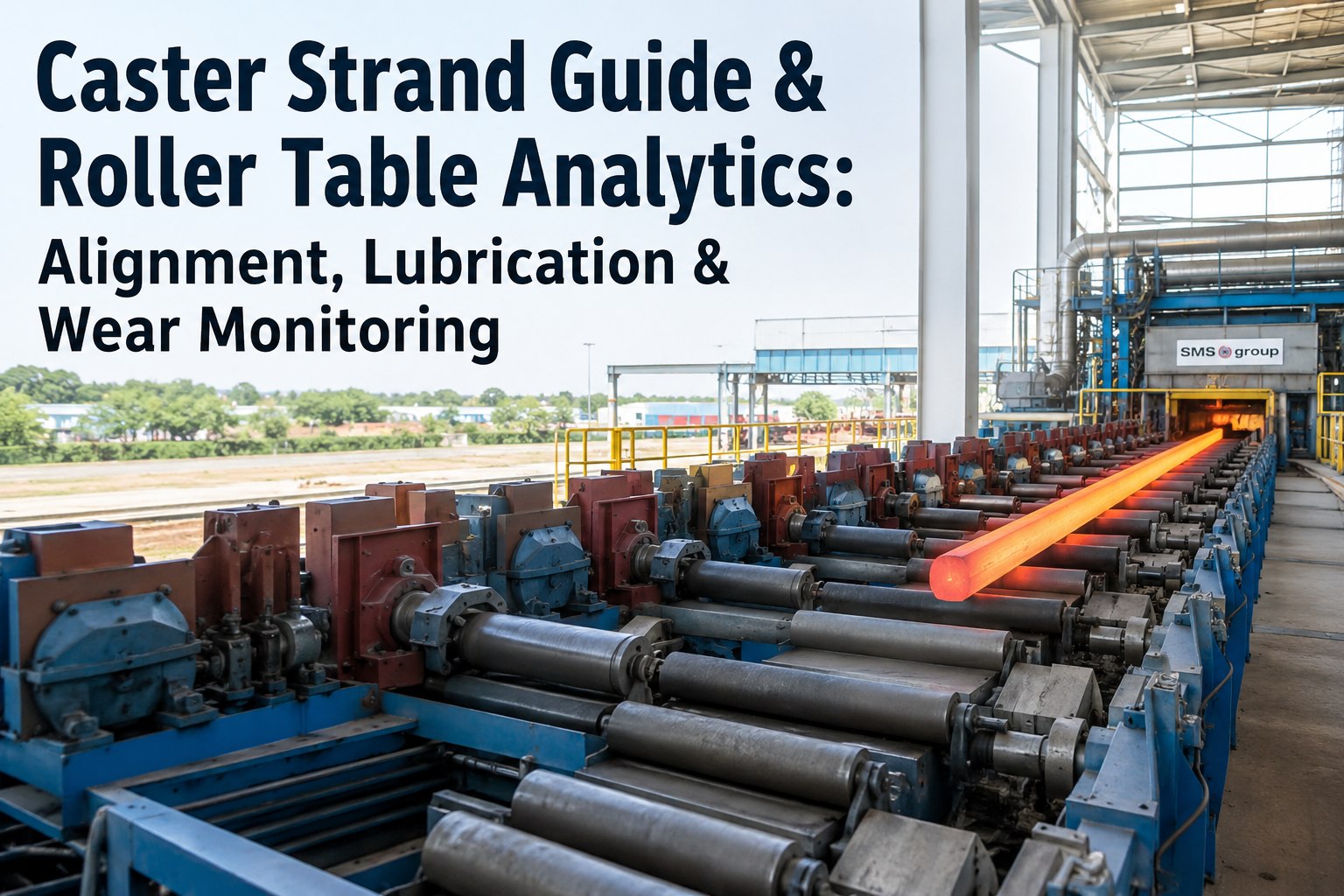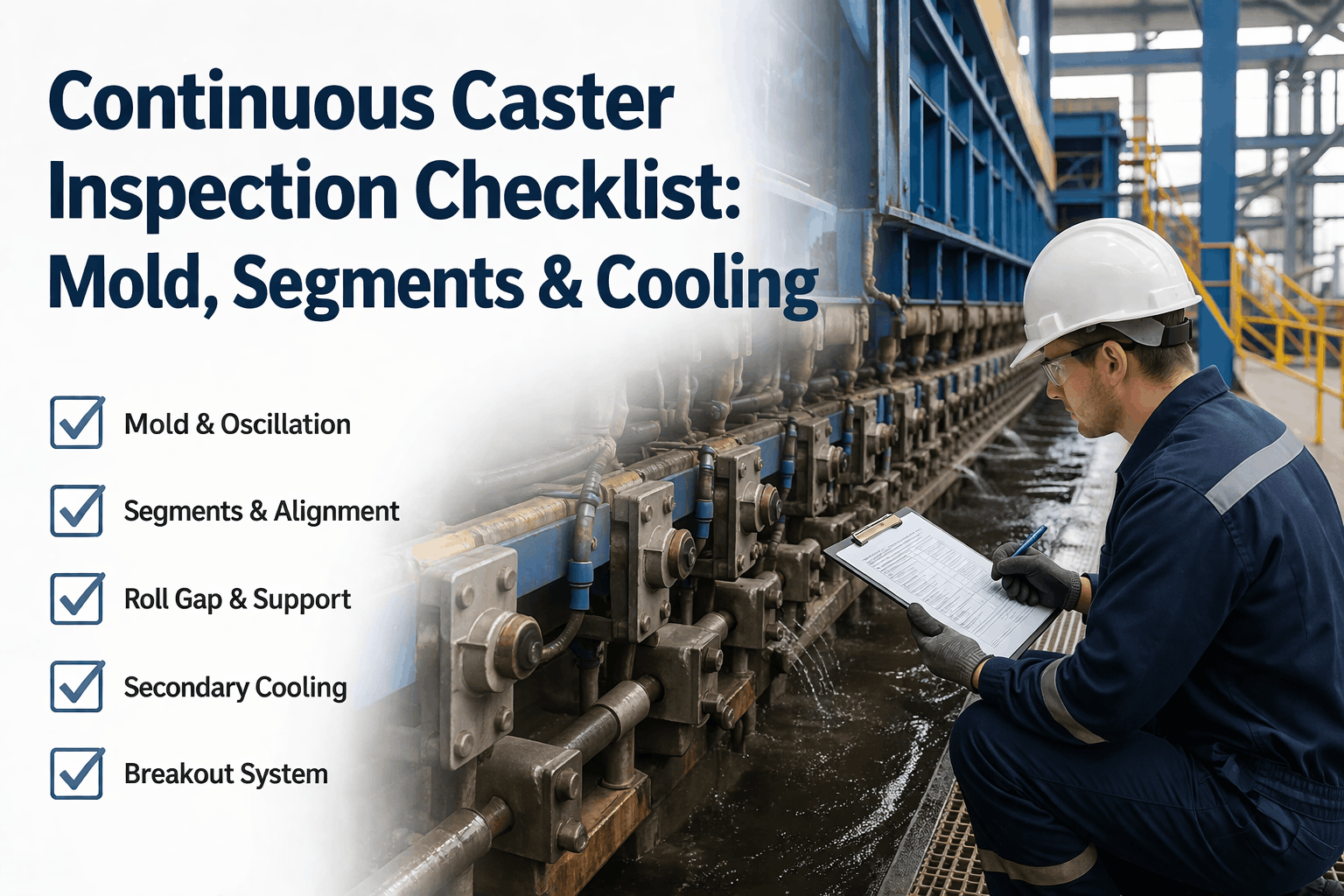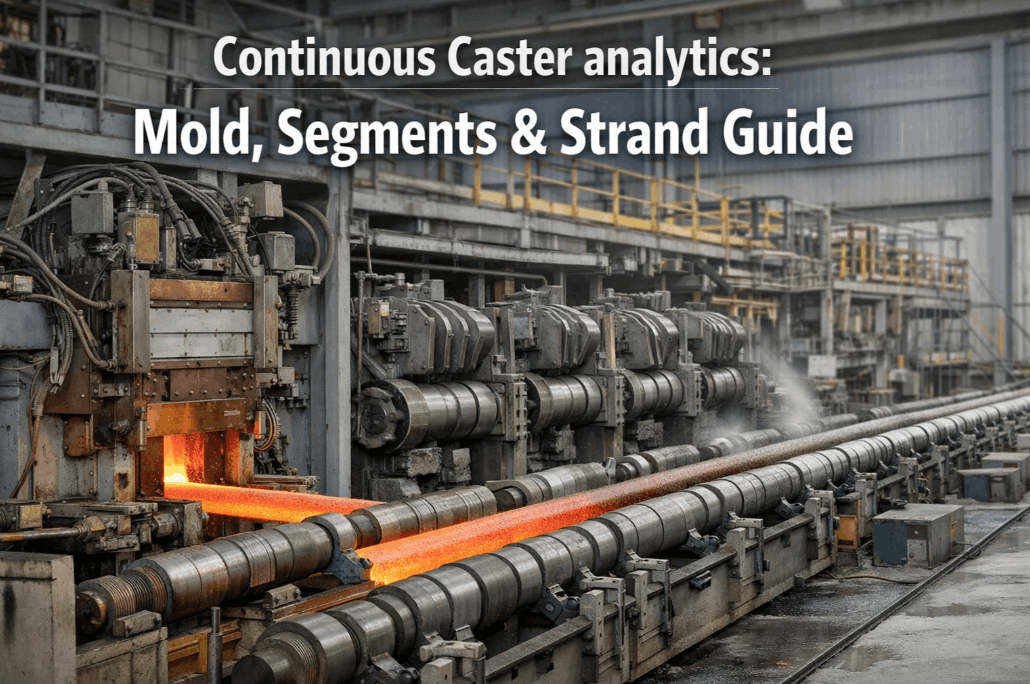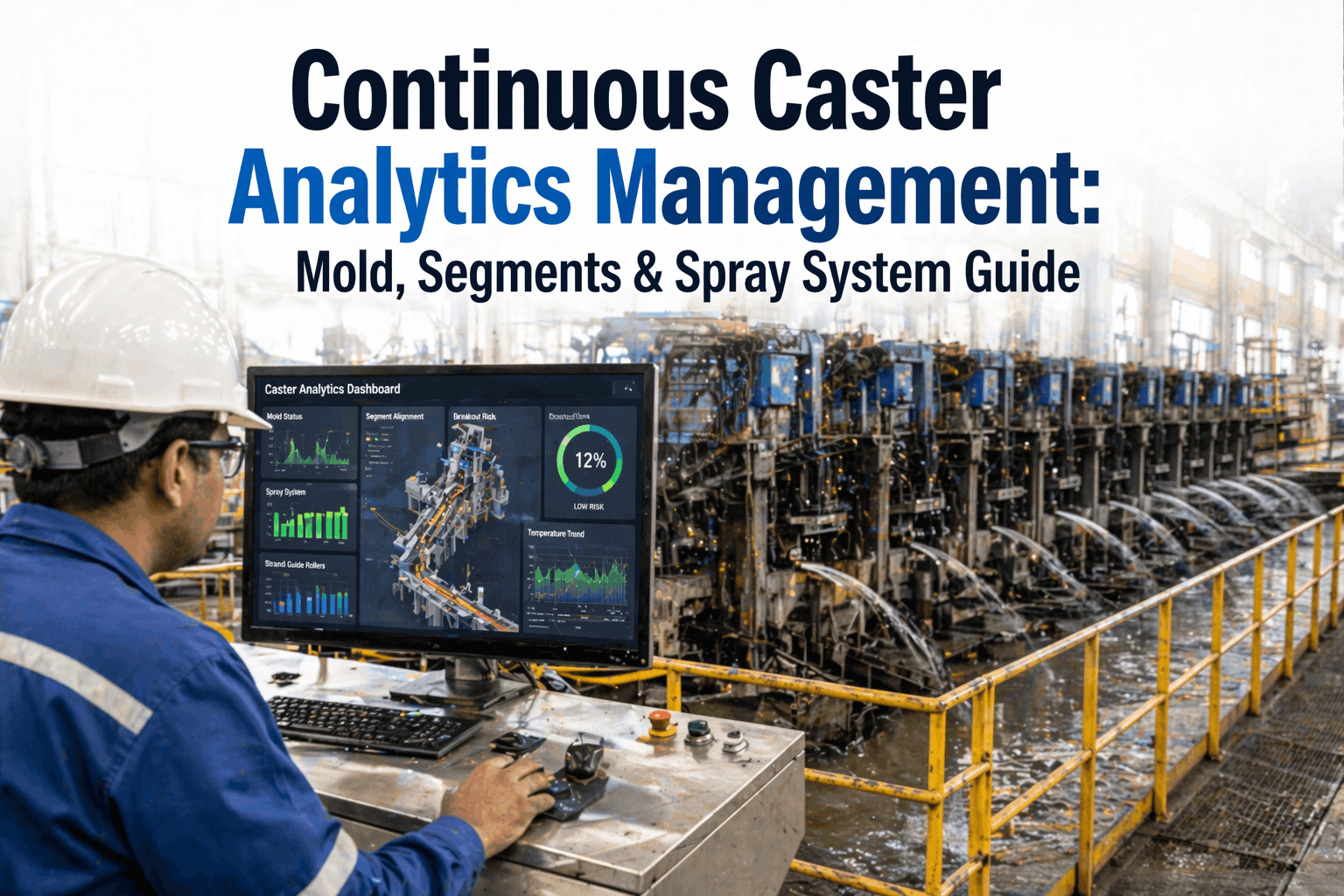
Continuous casting analytics represent the technical pinnacle of liquid-to-solid steel transition—a high-complexity operational layer where thermodynamic modeling, mechanical alignment, and fluid dynamics converge. From the initial solidification in the mold to the final metallurgical length of the segment aisle, caster performance defines the difference between premium slab quality and catastrophic strand failure. As integrated mills move toward high-speed casting of crack-sensitive grades, the stewardship of segments, spray headers and guide rollers is reshaping how steel plant leaders maintain and future-proof their melt shop throughput. Without a data-driven approach to continuous caster analytics, plants face non-uniform cooling profiles, unplanned segment changes, and expensive internal defects that strain production yields for decades. This guide delivers actionable insight into how modern analytics platforms are transforming caster management from reactive maintenance into proactive, evidence-based casting excellence.
Is Your Caster Management System Optimized for Zero-Defect Production?
Unify secondary cooling control, segment alignment tracking, and spray nozzle diagnostics into one intelligent platform designed for high-performance continuous casting.
Why Integrated Caster Analytics Is Redefining Secondary Metallurgy
The stewardship of the continuous casting machine has traditionally been fragmented — managed through disconnected PLC loops for cooling, manual logs for segment changes, and visual inspections for nozzle health. This creates dangerous information gaps that lead to overcooling, strand bulging, and internal cracks. Modern caster analytics platforms bridge this critical gap by aggregating thermodynamic cooling models, hydraulic clamping pressures, and nozzle flow telemetry into a single, unified intelligence layer. When reliability officers book a demo, the most common discovery is that their secondary cooling zones are often operating on outdated 'spray tables' that fail to account for the actual surface temperature profiles of modern steel grades.
Secondary Cooling Analytics
Transition from static spray tables to dynamic, model-based control. Analyze heat removal efficiency across every spray zone to maintain uniform surface temperature and prevent corner cracking.
Segment Alignment Tracking
Monitor hydraulic clamping pressures and cylinder strokes to identify caster roll alignment deviations. Detect strand bulging early to prevent internal quality rejection and segment damage.
Spray Nozzle Diagnostics
Deploy automated flow-pressure mapping to identify clogged or misaligned air-mist nozzles. Receive alerts for manifold discrepancies before they create thermal 'hot spots' on the strand.
Strand Guide Health Monitoring
Track guide roller rotation, bearing temperatures, and grease consumption across the entire machine length. Identify seized rollers that create surface scabs and mechanical drag.
Building a Unified Intelligence Layer for Caster Equipment Care
A purpose-built caster analytics platform must address three foundational systems: the mold, the spray aisle, and the segment guide. Integrated plants that have successfully booked a demo report that unifying these metrics is the single most impactful step in achieving zero-breakout campaigns and superior slab internal quality.
| Asset System | Primary Function | Analytics Insight | Operational Benefit | Priority Level |
|---|---|---|---|---|
| Secondary Cooling | Strand solidification | Dynamic Thermal Modeling | Eliminates Corner Cracks | Critical |
| Caster Segments | Strand containment | Clamping Pressure Trends | Prevents Strand Bulging | Critical |
| Spray Nozzles | Heat removal uniformity | Flow/Pressure Anomaly Map | Stops Thermal Hot Spots | High |
| Strand Rollers | Guide & Support | Bearing Thermal Profile | Reduces Mechanical Drag | Standard |
| Mold Oscillation | Friction management | Load Cell & Frequency Sync | Better Surface Finish | Quality |
The Path to Digitizing Continuous Casting Management
Achieving continuous caster analytics excellence requires a structured approach that moves from raw data collection to predictive metallurgical logic. Most mills find that starting with spray nozzle inspection digitization and secondary cooling modeling provides the fastest yield ROI, followed by deep segment alignment analytics. Casting managers who book a demo early in their modernization cycle achieve stronger quality outcomes and faster throughput ramp-ups.
Sensor Audit & Secondary Cooling Digitization
Verify the accuracy of spray zone flow meters and manifold pressure sensors. Integrate existing 'spray tables' into the iFactory thermodynamic model for baseline verification.
Segment Clamping & Alignment Mapping
Connect hydraulic clamping cylinder data to the analytics platform. Map segment gap settings against casting speed to create a 'gold standard' alignment profile for every steel grade.
Automated Spray Nozzle Diagnostic Activation
Enable the iFactory Nozzle Expert module to monitor pressure-flow curves 24/7. Automatically flag nozzles that deviate from the design performance envelope of $\pm15\%$.
Predictive Guide Roller Condition Monitoring
Deploy wireless bearing sensors or integrate PLC-based roller rotation counters. Configure AI models to predict roller seizure based on mechanical drag and cooling efficiency drops.
Dynamic Soft Reduction & Quality Correlation
Enable dynamic 'soft reduction' logic by feeding real-time metallurgical length data into the segment gap controls—minimizing centerline porosity and improving internal quality.
Top Operational Gaps in Modern Continuous Caster Management
Most integrated mills pursuing caster equipment care improvements encounter a predictable set of technical data silos. Understanding these gaps improves implementation success and helps maintenance officers allocate finite budgets more strategically across the caster analytics program.
Relying on speed-based 'spray tables' that fail to account for the unique thermodynamic behavior of peritectic or high-strength steel grades.
Failing to correlate cylinder clamping pressures with strand thickness, leading to 'stealth' bulging that creates internal cracks.
Without manifold pressure-flow mapping, a single clogged nozzle can create a thermal hot-spot, resulting in a breakout or quality rejection.
Guide rollers are changed on fixed schedules rather than condition, leading to seized rollers that create surface scabs on prime product.
Alignment and roll-gap records remain on paper, preventing QA managers from auditing the machine geometry after a segment change.
Liquid steel superheat data is disconnected from secondary cooling control, leading to over-or-under cooling during grade transitions.
Modernize Your Casting Intelligence Today
Deploy a unified analytics platform that integrates secondary cooling control, segment alignment, and spray nozzle diagnostics built specifically for the steel industry.
Continuous Caster Analytics — Technical Questions Answered
How does iFactory improve secondary cooling more than our Level 2 system?
Standard L2 systems use static speed-based spray tables. iFactory’s **Dynamic Thermal Model** calculates the 3D temperature profile of the strand in real-time, accounting for radiation, conduction, and air-mist cooling. This allows for precision cooling that prevents corner cracking in sensitive steel grades.
Can the platform detect a single clogged spray nozzle?
Yes. By cross-analyzing zone manifold pressure against measured water flow in high resolution, our **Nozzle Expert** module identifies the specific flow-pressure signature of a clogged or misaligned nozzle before it creates a thermal hot-spot on the slab.
How do we monitor segment alignment without taking the machine offline?
We use **Hydraulic Clamping Pressure Analytics**. By monitoring the pressure variations in individual segment cylinders during casting, iFactory identifies abnormal 'strand pushing' events that indicate misalignment or roll gap deviations — allowing for targeted maintenance during the next outage.
What is the ROI on digitizing caster segment management?
The ROI is driven by 'Zero-Waste Maintenance'. By extending segment campaigns by just 15% through precision alignment tracking and condition-based roll changes, mills save millions in annual workshop labor and de-bricking costs. Book a demo to see a steel-specific ROI simulation.