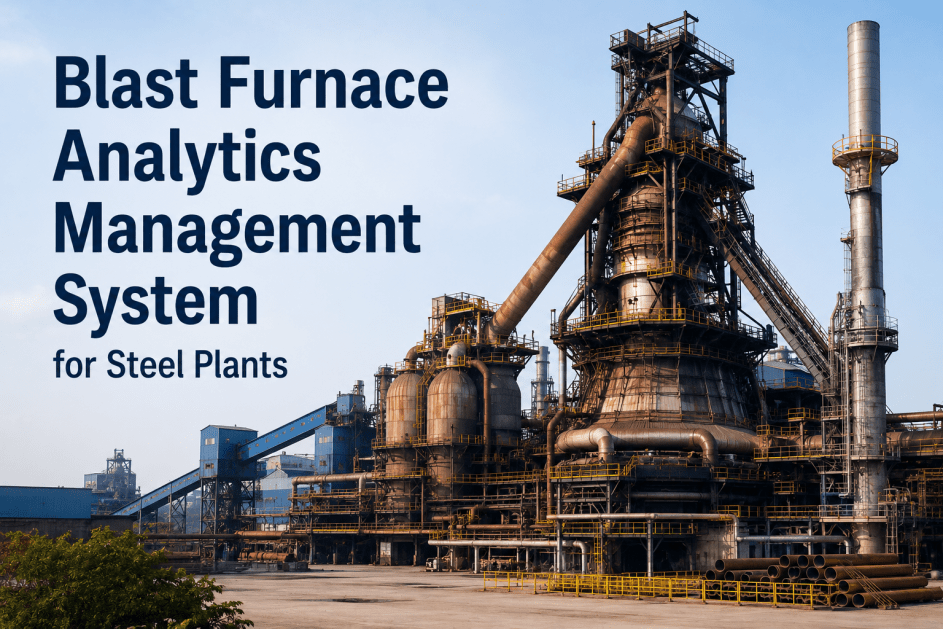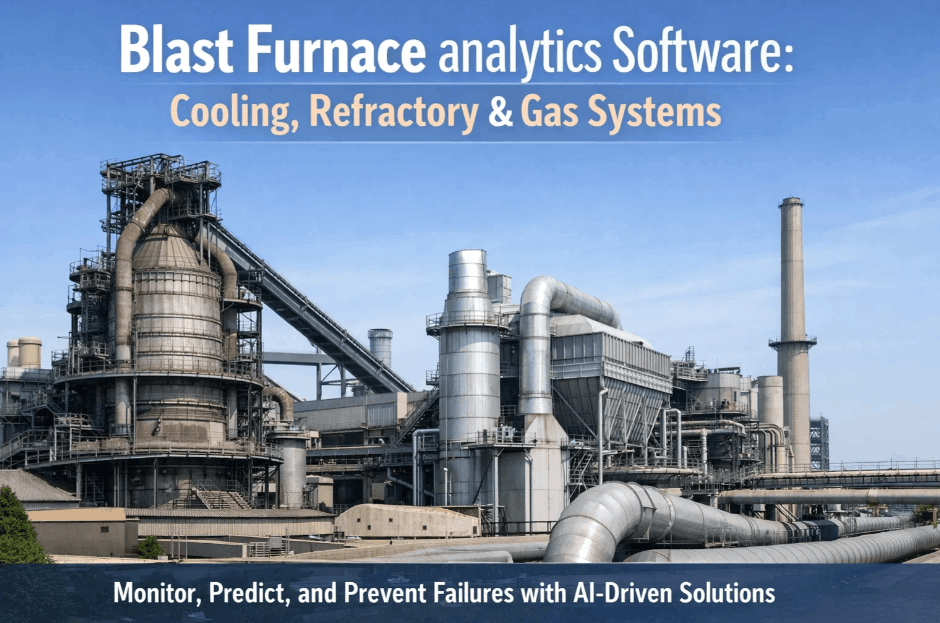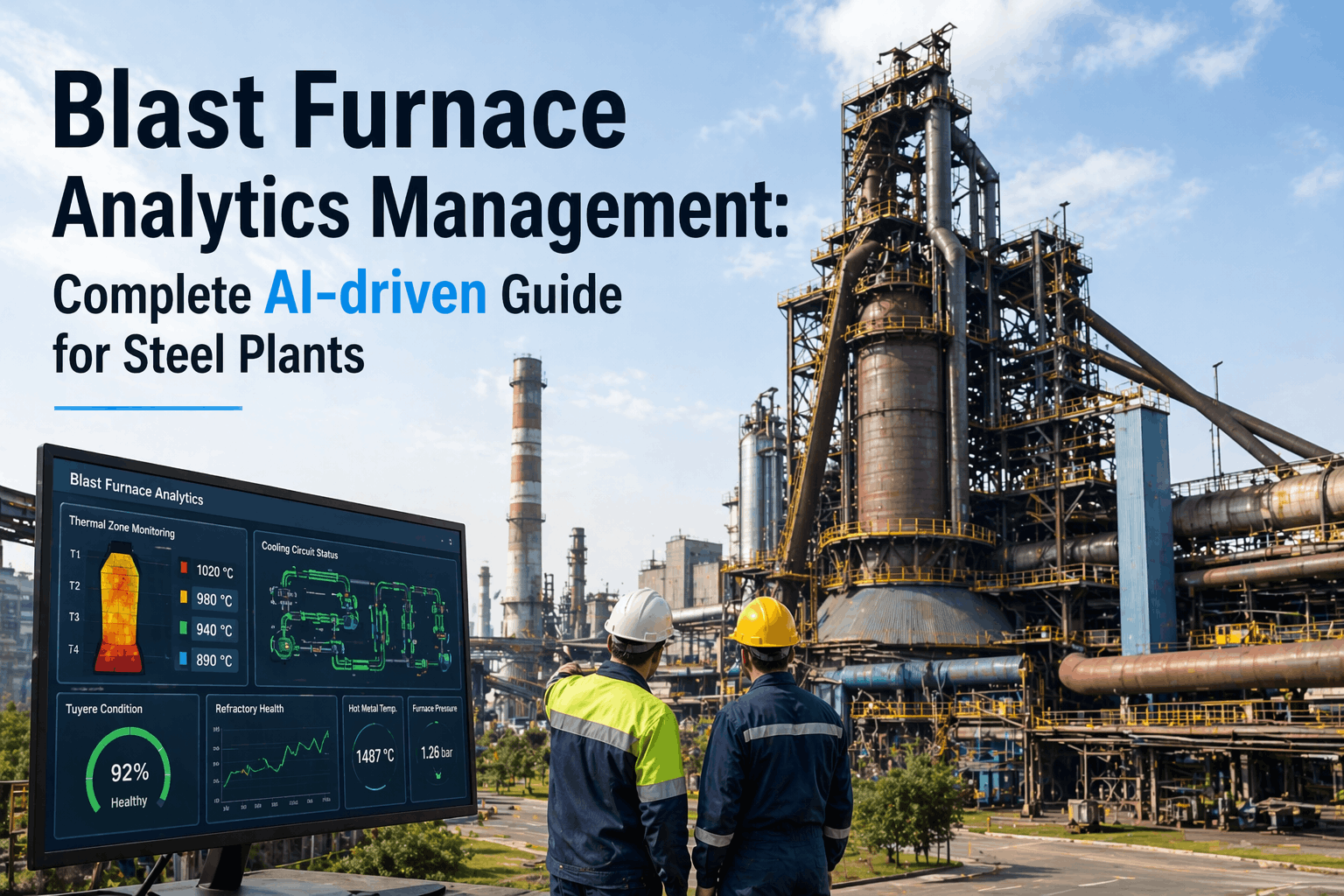
A **Blast Furnace (BF)** is the chemical and thermal engine of an integrated steel mill—and its most significant operational risk. With unplanned shutdowns costing up to $1.2M per day in lost iron production and energy penalties, move beyond reactive maintenance toward a unified **AI-driven command center**. iFactory unifies the data from 200+ thermocouples, stave cooling circuits, and tuyere raceway sensors to provide a prescriptive window into your hearth’s health and campaign longevity. Book a Demo to stabilize your furnace campaign.
Blast Furnace Analytics Management: The 2026 AI Command Guide
Predict stave failures, optimize raceway stability, and extend your hearth campaign life by 5+ years with iFactory’s metallurgical AI.
Blast Furnace Risk Matrix: Severity vs. Probability
Managing a Blast Furnace is an exercise in balancing production intensity with thermal safety. This matrix illustrates the critical failure modes that iFactory actively monitors to prevent catastrophic campaign termination.
The 3 Pillars of AI-Driven Furnace Stability
iFactory’s **Metallurgical AI Layer** doesn't just read sensors—it understands the physics of ironmaking. We unify SCADA data, IR camera feeds, and chemical analysis into a single stability score. Schedule a Casthouse audit to benchmark your current stability analytics.
Hearth & Refractory Integrity
We map the erosion profile of your hearth refractories in real-time. By monitoring the "Deadman" behavior and thermal distribution, the AI predicts thinning areas 12 months before they reach critical thickness.
Cooling Circuit & Stave Logic
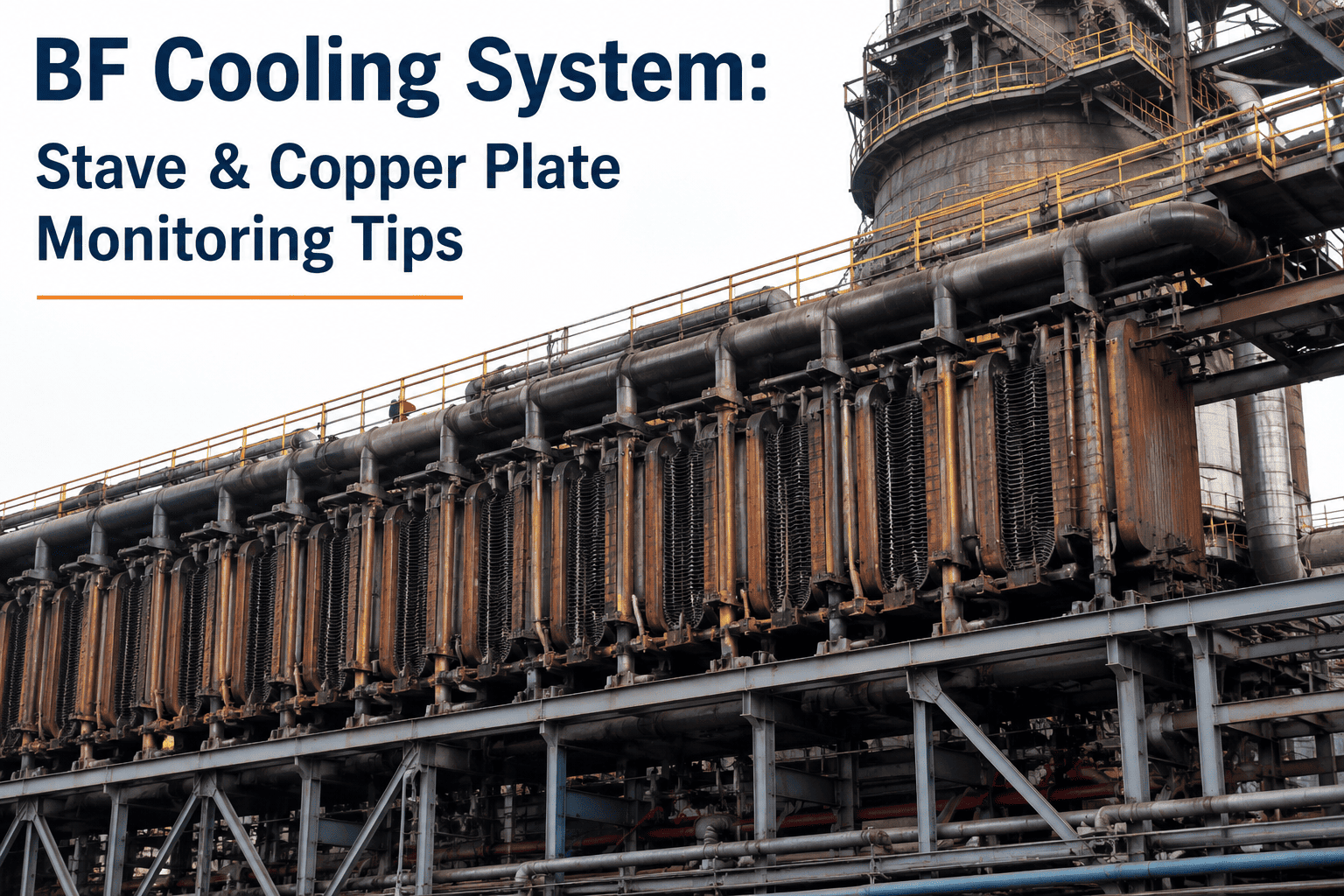
Monitor heat flux across copper and cast-iron staves. iFactory detects water-flow deviations and regional thermal spikes that indicate a "scaffold" drop or localized shell stress.
Tuyere & Raceway Health
Combined AI vision and pressure analytics monitor tuyere stability. Detect water leaks or nozzle blockages instantly to prevent water-in-furnace incidents that threaten shell integrity.
Furnace Strategy Evolution: The Campaign Lifecycle
Your maintenance and analytics strategy must evolve as your furnace ages. iFactory adapts its AI thresholds to match the specific wear-cycle of your hearth refractories.
Campaign Initialization (Years 1-3)
Establishing "Ideal State" thermal baselines. calibrating AI models to the new refractory thermal conductivity coefficients.
Stable Production Mode (Years 4-10)
High-frequency condition monitoring. Focus on tuyere reliability and gas-flow distribution to maximize production yield.
Erosion Management Mode (Years 11-14)
Predictive hearth thinning analysis. Activating prescriptive cooling logic to stabilize the remaining lining and defer relining costs.
Reline Preparation (Year 15)
Transitioning to reline project tracking. Digitizing as-built refractory records for the next campaign generation.
Ironmaking Analytics Maturity Index
The BF Analytics Deployment Journey
Deploying iFactory for a Blast Furnace is a non-invasive process that provides immediate visibility without furnace downtime.
Historian & PLC Data Sync
Connect iFactory to your existing furnace historians. We map the geometry of your 200+ thermocouples and cooling stave arrays into a 3D thermal twin layer.
Refractory Erosion Baselining
Our AI analyzes your last 5 years of hearth thermal behavior to establish the current "Theoretical Erosion" baseline, giving you an exact measurement of current safety margins.
Stability Cockpit Activation
Launch the real-time BF stability dashboards for casthouse and control room teams. Mobile alerts are configured for rapid threshold breaches in cooling or tuyere raceways.
Prescriptive AI Mode Engaged
Full activation of the AI Copilot. The platform begins suggesting set-point adjustments to cooling flows and burden distribution to stabilize thermal anomalies proactively.
BF Analytics FAQ: Ironmaking Best Practices
How does AI vision assist in tuyere raceway monitoring?
We analyze high-speed camera feeds for raceway brightness and movement patterns. The AI can detect "black tuyeres" or partial blockages that indicate a burden hang or water leak before they destabilize the lower furnace zone.
Can iFactory predict a hearth "burn-through" event?
Yes. By correlating thermal spikes across multiple thermocouple layers and analyzing heat-flux in the surrounding staves, iFactory detects the specific thermal signatures that precede a breakouts, allowing for emergency casting or set-point reductions.
Does the platform handle "Deadman" behavior tracking?
Our AI models analyze the coke-bed permeability and liquid iron flow behavior. A "floating deadman" or localized congestion is flagged to the metallurgy team so burden distribution can be adjusted to maintain center gas flow.
Is it possible to extend a campaign after refractory erosion is detected?
Absolutely. By utilizing prescriptive cooling—where water flow is dynamically adjusted to create a "skull" of solidified iron against the thin refractory—iFactory can stabilize the erosion and safely extend campaign life by 24–48 months.
How does the platform secure Casthouse data?
All furnace telemetry is processed via site-isolated Edge nodes. No raw process data leaves your local network unless explicitly authorized, and all AI modeling is performed in a SOC2-compliant secure cloud environment.
What is the upfront cost of BF Analytics deployment?
We use a value-based subscription model. For a furnace of standard capacity, prevent just ONE unplanned 24-hour shutdown pays for the platform for 3+ years. ROI is typically realized within the first 90 days of go-live.
Stabilize Your Heart. Protect Your Campaign.
iFactory delivers the metallurgical depth and AI-driven precision needed to govern the world's most critical ironmaking assets.