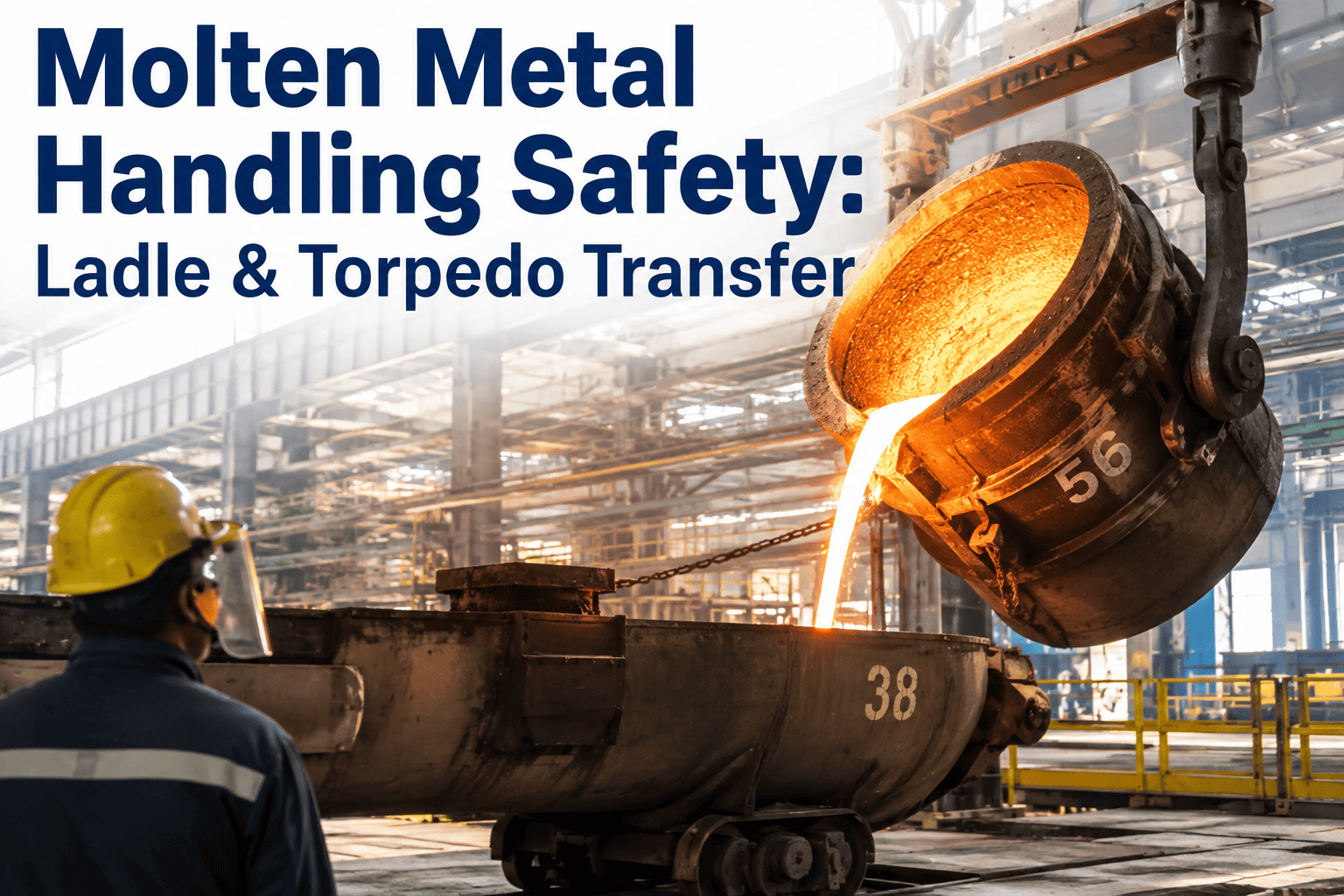
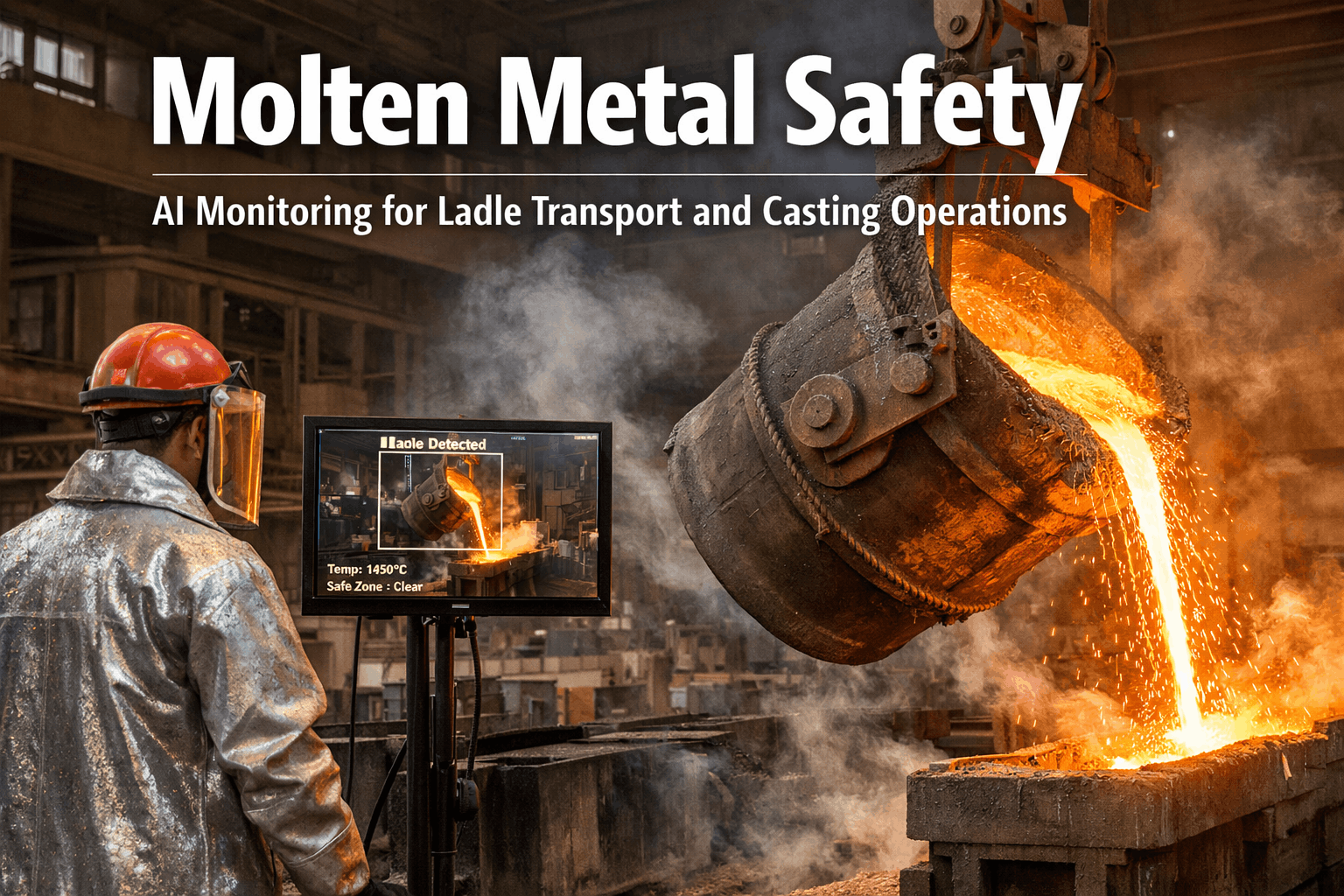
Molten metal handling sits at the top of every steel plant's risk register, and for good reason — a breach, a splash event, or a mishandled ladle transfer can escalate faster than any other hazard on the floor. Traditional safety programmes rely on procedures, training, and human vigilance, all of which matter, but none of which can watch every ladle, every pour, and every hot-work zone continuously across three shifts. Safety managers looking to add a continuous layer of monitoring on top of existing procedures can book a demo to see how AI vision and process monitoring support molten metal safety programmes today.
Continuous Monitoring for the Highest-Consequence Hazard in the Plant
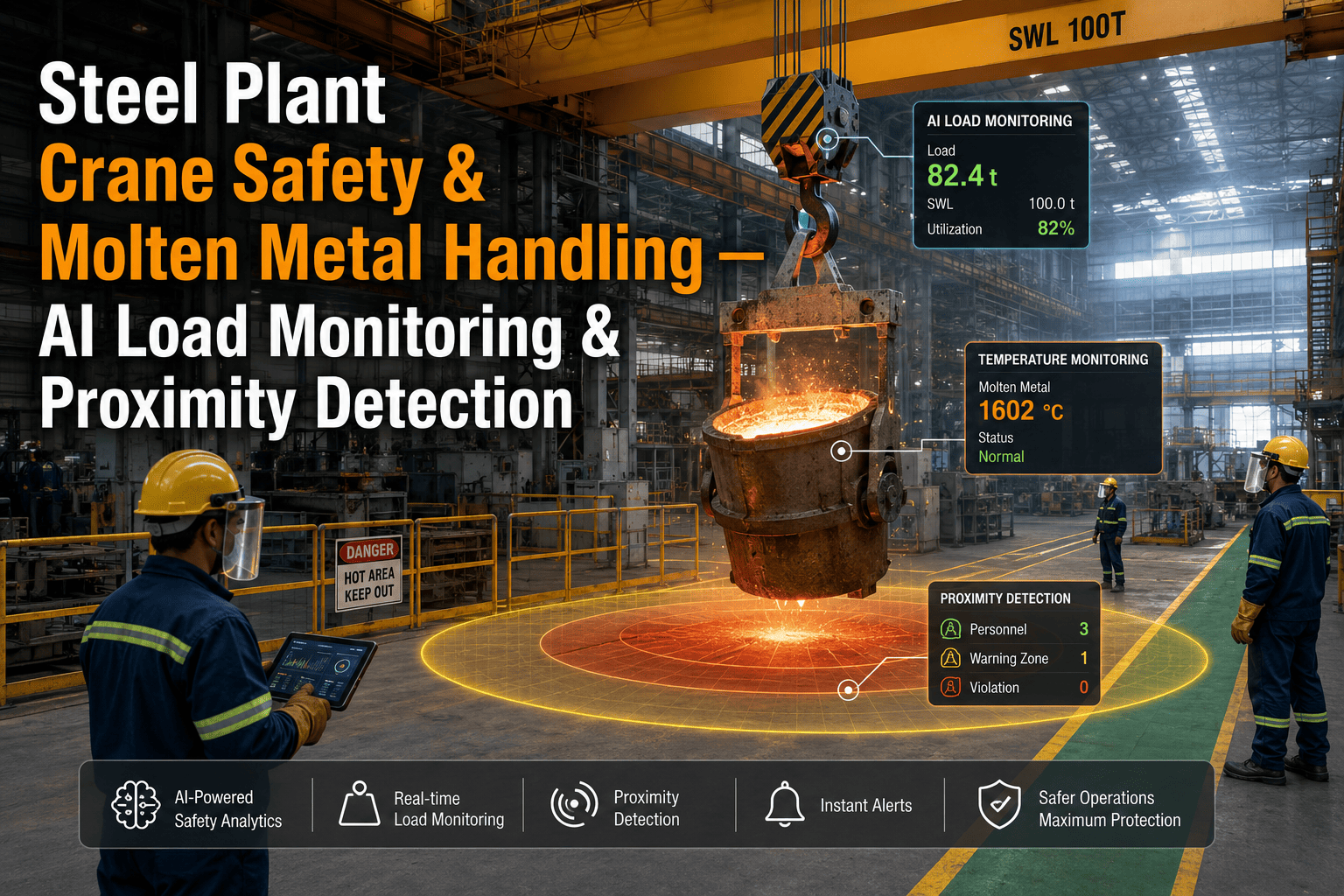
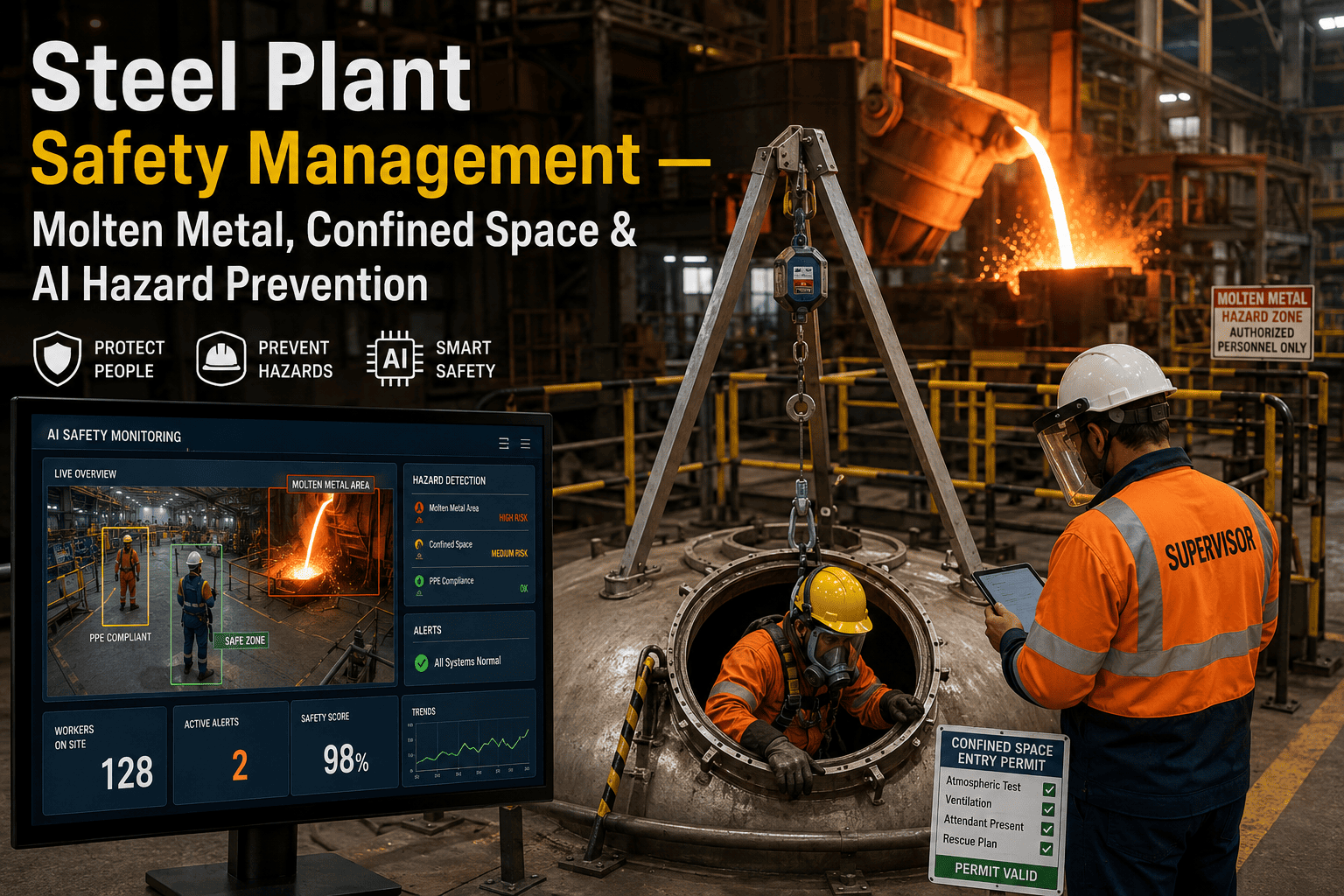
AI vision and process monitoring watch ladle condition, pour zones, and hot-work areas around the clock, surfacing hazardous conditions to supervisors before they escalate into an incident.
Where Monitoring Adds a Layer Procedures Can't
Procedures and training set the standard for how molten metal work should be done. Continuous monitoring adds a second layer that checks whether conditions are actually matching that standard, shift after shift, without depending on any one person catching every deviation.
What the System Watches, and Why
Each monitored zone maps to a specific category of risk in molten metal handling, drawn from established process safety practice across integrated steelmaking operations.
| Monitored Area | What Is Tracked | Alert Trigger |
|---|---|---|
| Ladle & Vessel Condition | Refractory thermal signature, wear trend | Deviation from expected wear curve |
| Pour & Transfer Zones | Exclusion zone occupancy, timing | Personnel or equipment in restricted zone |
| Crane-Assisted Transfers | Load position, transfer sequence timing | Sequence deviation from standard procedure |
| Hot-Work Areas | Thermal zones, proximity to active work | Unplanned thermal event or proximity breach |
Walk Through Your Molten Metal Handling Areas With Our Team
Every plant's ladle handling and pour sequence is different. iFactory safety engineers will review your current process and identify where continuous monitoring would add the most value.
From Detected Condition to Supervisor Action
A monitoring system only adds value if the people responsible for the area actually see the alert in time to act on it. iFactory routes every flagged condition directly to the right supervisor, not into a report nobody reads until the next morning.
Supporting the Safety Programme You Already Run
Continuous monitoring is not a replacement for procedures, training, or supervision — it is a layer that supports all three by giving them better visibility into what is actually happening on the floor.
Building Monitoring Into an Existing Safety Culture
A monitoring system introduced without buy-in from the workforce that operates around molten metal every day is unlikely to succeed, no matter how capable the technology is. The plants that get the most value from continuous monitoring treat it as an extension of a safety culture that already values procedure and vigilance, not as a surveillance layer imposed from outside that operation.
Involving frontline supervisors and experienced operators early in configuring exclusion zones and safe operating parameters does more than improve the accuracy of the system. It also means the people closest to the work have a hand in defining what "normal" looks like, which builds trust in the alerts once the system goes live. A parameter set built entirely by an outside team, without that frontline input, is far more likely to generate alerts that don't match how the work actually happens on the floor.
Rollout sequencing matters for adoption as much as it matters for technical risk. Starting with the single highest-risk zone, running the system in an observation-only mode for a period before alerts go live to supervisors, gives the safety team time to validate that the parameters are correctly tuned before anyone's daily workflow is affected by a false alert. That validation period also produces the first concrete examples of what the system catches, which becomes the strongest argument for expanding coverage to additional zones.
How alert and incident data gets used matters just as much as whether the system catches something. Plants that position continuous monitoring primarily as a tool for closing gaps in the safety programme — updating a procedure, adjusting an exclusion zone, reinforcing a training point — tend to see stronger long-term engagement from the workforce than plants that treat every alert as a compliance record to be filed away. The technology works best as a feedback loop for continuous improvement, not as a static reporting tool.
Over time, the trend data generated by continuous monitoring becomes one of the most valuable inputs into a plant's broader safety programme, surfacing patterns that would be nearly impossible to identify from incident reports alone, since incident reports only capture what already went wrong. A near-miss pattern that recurs at the same time of shift, or in the same transfer sequence, gives the safety team a chance to correct a systemic issue long before it becomes a serious event.
Coordinating Monitoring With Emergency Response Planning
Continuous monitoring around molten metal handling has value well beyond catching a developing deviation before it escalates — it also gives an emergency response team far better situational awareness in the moments after an incident does occur. A system that has been tracking ladle condition, zone occupancy, and process parameters continuously can provide responders with real-time information about exactly what was happening at the moment an alert triggered, rather than relying entirely on radio reports from personnel who may themselves be responding to an unfolding situation.
Bringing the emergency response team into the configuration process alongside safety and operations staff ensures that the alerting and escalation pathways line up with how the response plan is actually structured. An alert that reaches only a shift supervisor, when the response plan calls for a broader notification to the emergency response coordinator and control room simultaneously, creates a gap between what the technology does and what the plan expects, and that gap is best identified during configuration rather than discovered during an actual event.
Drills and tabletop exercises are a natural place to incorporate the monitoring system once it is live, giving the response team a chance to practice using the real-time information the system provides under simulated conditions rather than encountering it for the first time during an actual emergency. Plants that build this into their existing drill schedule tend to get far more value from the system's response support capabilities than plants that only think about integration after deployment is complete.
The logged history that continuous monitoring produces also becomes a valuable input for post-incident review and root cause investigation, giving safety teams a documented timeline of process conditions leading up to and during an event, rather than relying solely on witness accounts reconstructed after the fact. This does not replace a thorough investigation process, but it does give investigators a more complete and objective starting point, which often shortens the time needed to identify contributing factors and close out corrective actions.
Frequently Asked Questions
The questions safety managers most often raise before adding continuous monitoring to a molten metal handling programme.
Book a Molten Metal Safety Review
Share your current ladle handling and pour zone procedures. iFactory safety engineers will identify where continuous monitoring fits alongside what you already have in place.