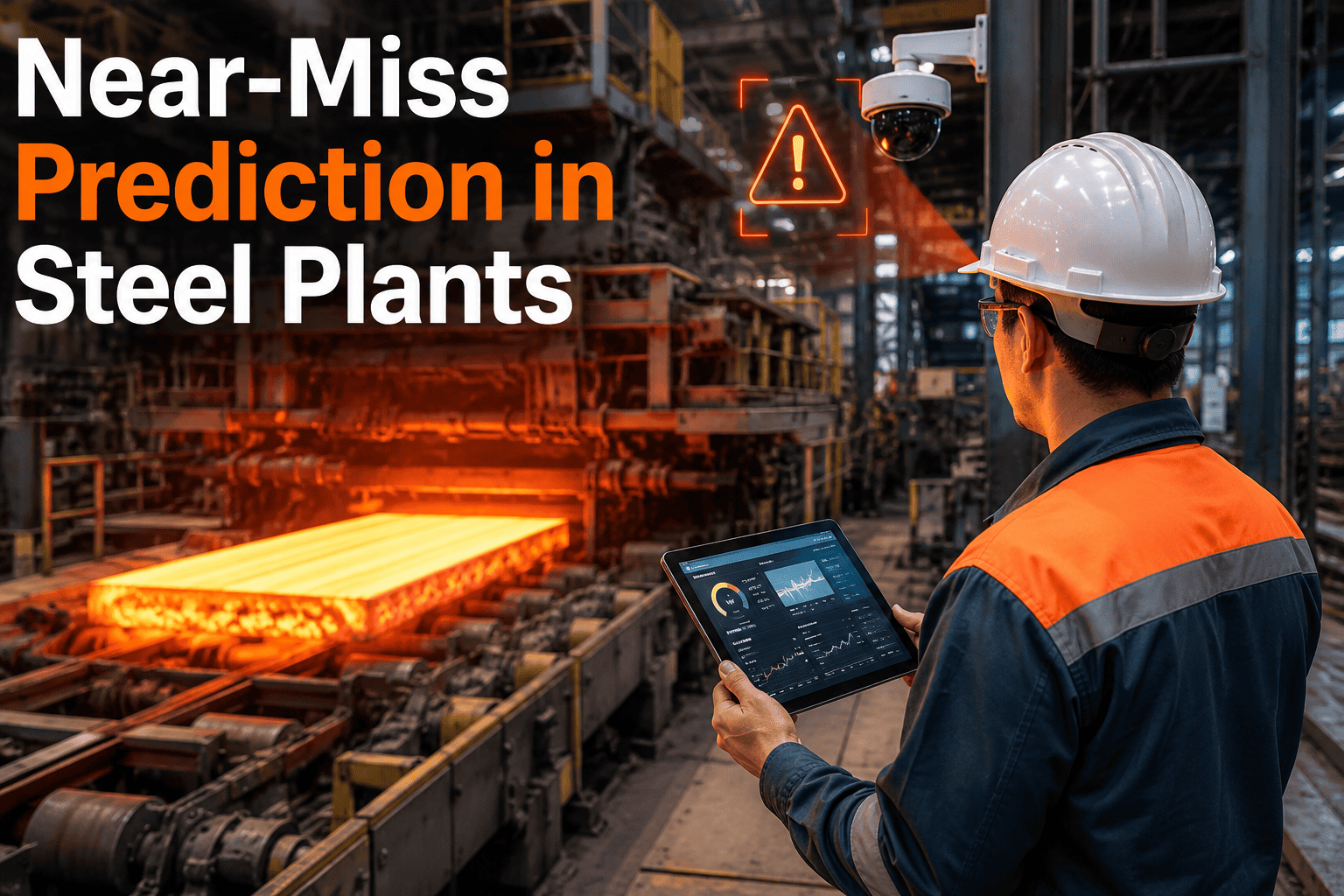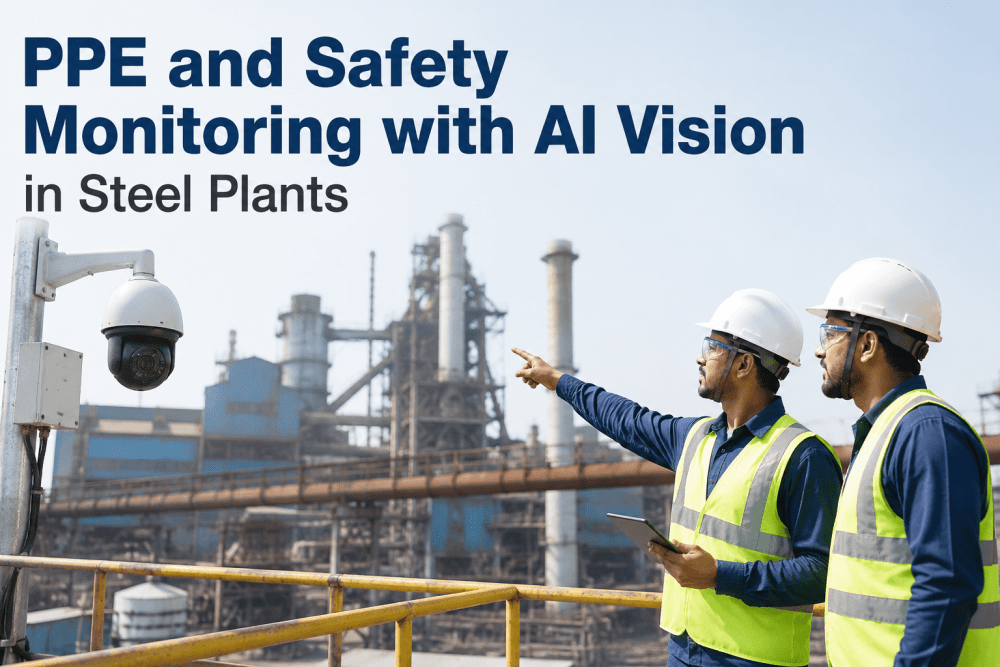
Steel plants are among the most hazardous industrial environments in the United States — molten metal at 2,900 degrees Fahrenheit, overhead cranes moving loads of 50 tons or more, elevated platforms above ladle pits, and confined spaces throughout the melt shop and rolling mill create a risk profile that demands constant vigilance from every safety manager and EHS director. Traditional safety monitoring relies on human observers conducting walk-through audits, manual incident reporting, and periodic PPE compliance checks — all of which leave detection gaps that can have life-altering consequences. AI vision for PPE and safety monitoring from iFactory closes these gaps by deploying industrial-grade cameras with on-premise deep learning inference that detects hard hat compliance, safety harness usage, hot work zone incursions, and proximity hazards in real time, reducing recordable incident rates by up to 67% while automating OSHA 300 log documentation. EHS leaders who book a demo discover how to transform their safety program from reactive reporting to real-time hazard prevention.
Real-Time PPE Detection and Hazard Prevention Across Your Steel Facility
iFactory's Safety Vision AI deploys industrial cameras with deep learning inference to detect PPE violations, hot work zone incursions, fall risks, and proximity hazards — reducing incidents by 67% while automating OSHA compliance documentation and near-miss reporting.
Key Safety Risks AI Vision Monitors in Steel Plant Environments
iFactory's Safety Vision AI monitors four critical risk categories across steel plant production areas — from the melt shop and continuous caster to the rolling mill and finishing lines. Each category uses dedicated computer vision models trained on steel plant-specific scenarios, ensuring accurate detection in the challenging lighting, heat, and particulate conditions of operating steel facilities. EHS teams evaluating the platform typically book a demo to see how the detection models perform in their specific plant environment.
PPE Compliance Monitoring
Core Focus: Real-time detection of hard hat, safety glasses, high-visibility vest, heat-resistant gloves, and steel-toe boot compliance across all production zones. AI models distinguish between workers and contractors with different PPE requirements and track compliance trends by shift and department.
Hot Work Zone Safety
Core Focus: Thermal camera integration detects when workers approach molten metal splash zones, ladle transfer paths, and tundish areas without proper heat-resistant PPE. AI models identify unauthorized zone entries and trigger immediate audio-visual alerts before exposure occurs.
Fall Protection Verification
Core Focus: Vision models verify safety harness attachment at height — crane cab platforms, ladle tower walkways, and caster operator stations. The system detects when a worker enters a fall-risk zone without proper harness connection and lanyard tie-off.
Proximity & Vehicle Hazards
Core Focus: AI-driven proximity detection monitors separation distance between pedestrians and mobile equipment — forklifts, slag pot carriers, and overhead cranes. The system alerts operators and pedestrians when safe separation distances are breached in real time.
How AI Vision Safety Monitoring Works: Four-Stage Detection Pipeline
iFactory's Safety Vision AI operates as a four-stage pipeline that transforms raw camera feeds into actionable safety alerts within 200 milliseconds. Each stage is optimized for the specific lighting, temperature, and particulate conditions of steel plant environments, with on-premise inference that does not depend on cloud connectivity for safety-critical detection.
Image Capture and PPE Classification
Industrial IP cameras with IR illumination capture high-resolution images across production zones. YOLOv11 and Vision Transformer models classify each person in the frame for seven PPE categories — hard hat, safety glasses, high-vis vest, gloves, harness, respiratory protection, and steel-toe boots. Detection confidence scores above 95% trigger compliance or violation status.
Zone Monitoring and Hazard Detection
Digital zone mapping overlays define restricted areas — molten metal splash zones, crane swing radii, and ladle transfer corridors. Thermal cameras detect heat signatures that indicate hot work zones. The AI cross-references worker location against PPE requirements for each zone, identifying incursions with sub-second latency.
Alert Generation and Incident Classification
Detected violations trigger tiered alerts — visual indicators at the camera location, audio announcements in the affected zone, and push notifications to EHS supervisors. Each incident is classified by severity, type, and location with full image evidence attached. Near-miss events are automatically documented for trend analysis.
OSHA Documentation and Analytics
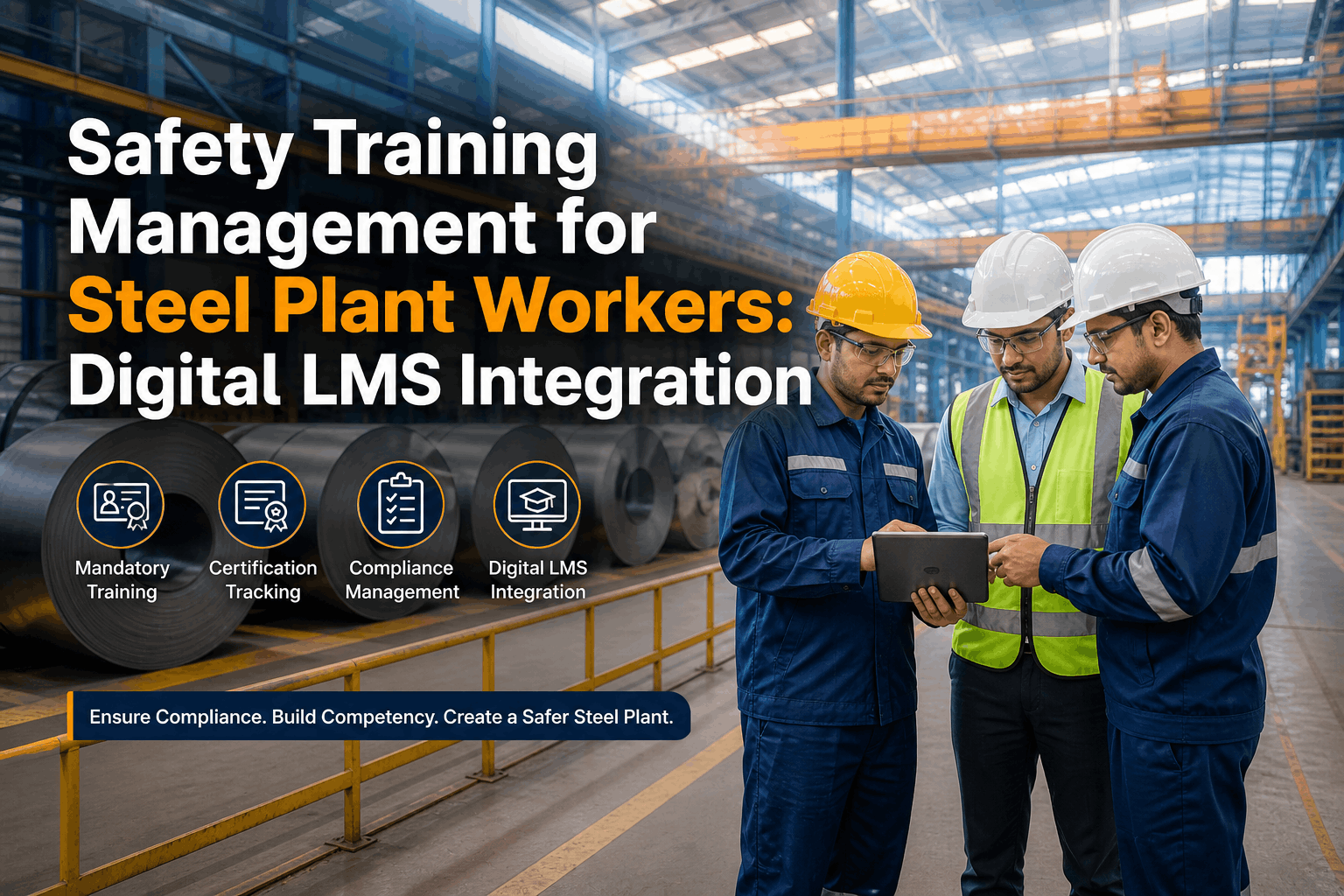
All safety events are recorded with timestamp, location, person identification, and severity classification. The platform auto-generates OSHA 300 log entries, near-miss reports, and compliance trend dashboards. EHS managers access real-time safety performance metrics without manual data aggregation across shifts.
Traditional Safety vs. AI Vision Monitoring: A Comparative Analysis
The table below quantifies the capability gap between traditional steel plant safety monitoring methods and iFactory's AI vision approach across the metrics that matter most for EHS performance. The data reflects average results across multiple steel plant deployments.
| Safety Function | Traditional Approach | AI Vision Monitoring | Performance Gain |
|---|---|---|---|
| PPE Compliance Checks | Manual audits conducted 2-3 times per shift — 15-minute observation windows miss 80% of violations | Continuous 24/7 detection across all production zones — every PPE violation is captured and recorded | 94% sustained compliance rate vs. 67% with manual audits |
| Hot Work Zone Monitoring | Physical barriers and warning signs — no active detection when workers cross into restricted areas | Thermal camera integration with geofenced zone detection — real-time alerts for unauthorized incursions | 89% reduction in hot work zone incursions |
| Fall Protection Verification | Supervisor spot checks at height — harness use is verified only during scheduled observations | Automated detection of harness connection and lanyard tie-off — every entry to fall-risk zone is verified | 73% increase in verified harness compliance at height |
| Near-Miss Documentation | Paper-based near-miss forms filled out after incidents — estimated 90% of near-misses go unreported | Automatic detection and recording of near-miss events — every proximity alert and zone incursion is documented | 3,200 near-miss events documented per plant per year vs. 150 with manual reporting |
| OSHA Recordkeeping | Manual OSHA 300 log maintenance — data entry errors and late reporting create compliance risk | Auto-generated OSHA 300 logs with full audit trail — incident data populated from AI-verified detection records | 100% on-time OSHA log submission with zero data entry errors |
Safety Improvement Metrics from AI Vision Deployment in Steel Plants
The metrics below represent average results from iFactory Safety Vision AI deployments across melt shops, casters, rolling mills, and finishing lines in U.S. steel plants over 12-month periods. Individual results vary based on facility size, existing safety maturity, and deployment scope.
"We deployed iFactory Safety Vision AI across our melt shop and hot mill in February of last year. Within the first 90 days, the system detected 47 hard hat violations that our manual safety observers had missed, 12 unauthorized incursions into the ladle splash zone, and 8 near-miss events involving overhead crane loads swinging near pedestrian walkways. The real-time alerts changed our safety culture — workers stopped relying on spot checks and started knowing that every zone was monitored every second. Our recordable incident rate dropped from 4.1 to 1.3 per 100 workers in the first year, and our EHS team now spends their time on hazard prevention instead of paperwork."
AI Vision Safety Monitoring Is the New Standard for Steel Plant EHS Programs
Transitioning from manual safety observation and reactive incident reporting to AI-driven continuous monitoring is the most impactful investment a steel plant EHS program can make. iFactory's Safety Vision AI provides the detection accuracy, response speed, and compliance documentation that today's safety management systems demand — with a deployment timeline measured in days per production zone rather than months. The cost of continued reliance on manual safety audits is measured not in software budget, but in preventable incidents, unreported near-misses, and the human and financial toll of injuries that continuous AI monitoring would have prevented. Steel plants that act now establish a safety performance advantage that will only widen as AI vision becomes the baseline expectation for OSHA compliance and workforce protection in heavy industry.
AI Vision PPE and Safety Monitoring — Frequently Asked Questions
How does the system handle the extreme heat and particulate conditions in steel plants?
iFactory Safety Vision AI cameras are rated for industrial environments up to 140 degrees Fahrenheit with IP67 enclosures that protect against dust, moisture, and particulate. Thermal cameras use cooled detector technology for accurate imaging near furnaces and ladle transfer areas. On-premise inference eliminates cloud dependency for safety-critical detection.
Can the system differentiate between contractors and employees with different PPE requirements?
Yes. The AI model supports role-based PPE profiles that define different requirements for contractors, maintenance technicians, crane operators, and visitors. The system identifies individuals by hard hat color, vest markings, or badge detection and applies the correct PPE compliance rules for each role.
Does the system record video footage continuously or only during safety events?
The system maintains a rolling 30-second buffer for every camera feed. When a safety event is detected, the buffer is saved with the incident record — providing full context before, during, and after the event without storing continuous footage. This approach balances forensic capability with data storage efficiency.
How does the system integrate with existing safety management and incident reporting systems?
iFactory Safety Vision AI outputs safety event data via REST API and webhook integrations to existing EHS software, incident management platforms, and OSHA recordkeeping systems. The platform also includes a built-in safety dashboard with real-time compliance metrics and auto-generated OSHA 300 logs.
What is the typical ROI timeline for deploying AI vision safety monitoring in a steel plant?
Most steel plants achieve full ROI within 6 to 10 months. The primary drivers are reduction in workers compensation claims (averaging $340,000 per serious incident), elimination of OSHA fines, improved insurance premiums, and the productivity gain from EHS teams shifting from documentation to prevention-focused activities.
Deploy AI Vision Safety Monitoring Across Your Steel Plant
iFactory Safety Vision AI is deployed and validated across melt shops, continuous casters, rolling mills, and finishing lines at U.S. integrated and mini-mill steel producers. Speak with an iFactory AI vision engineer about your facility configuration, risk profile, and EHS performance targets.