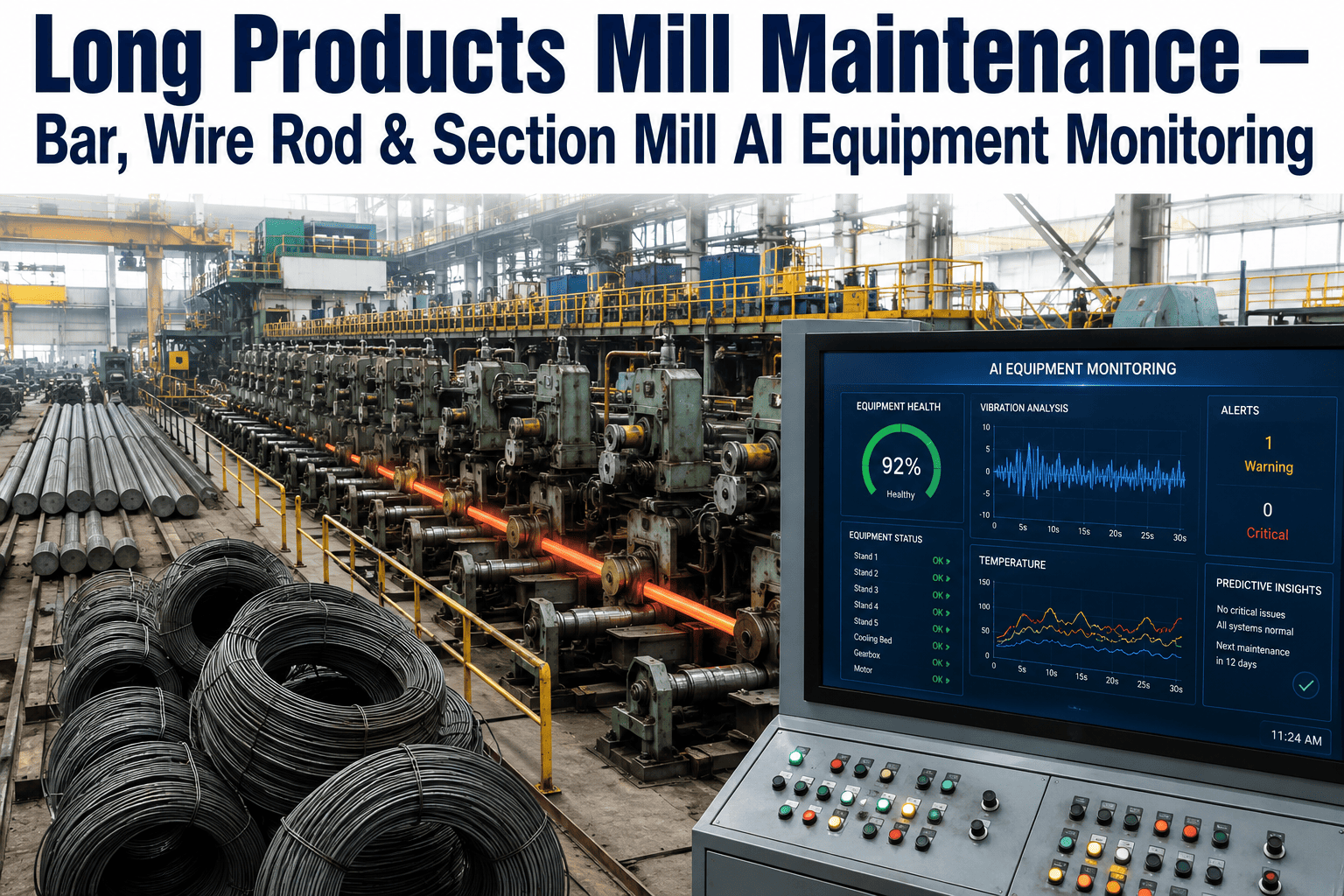
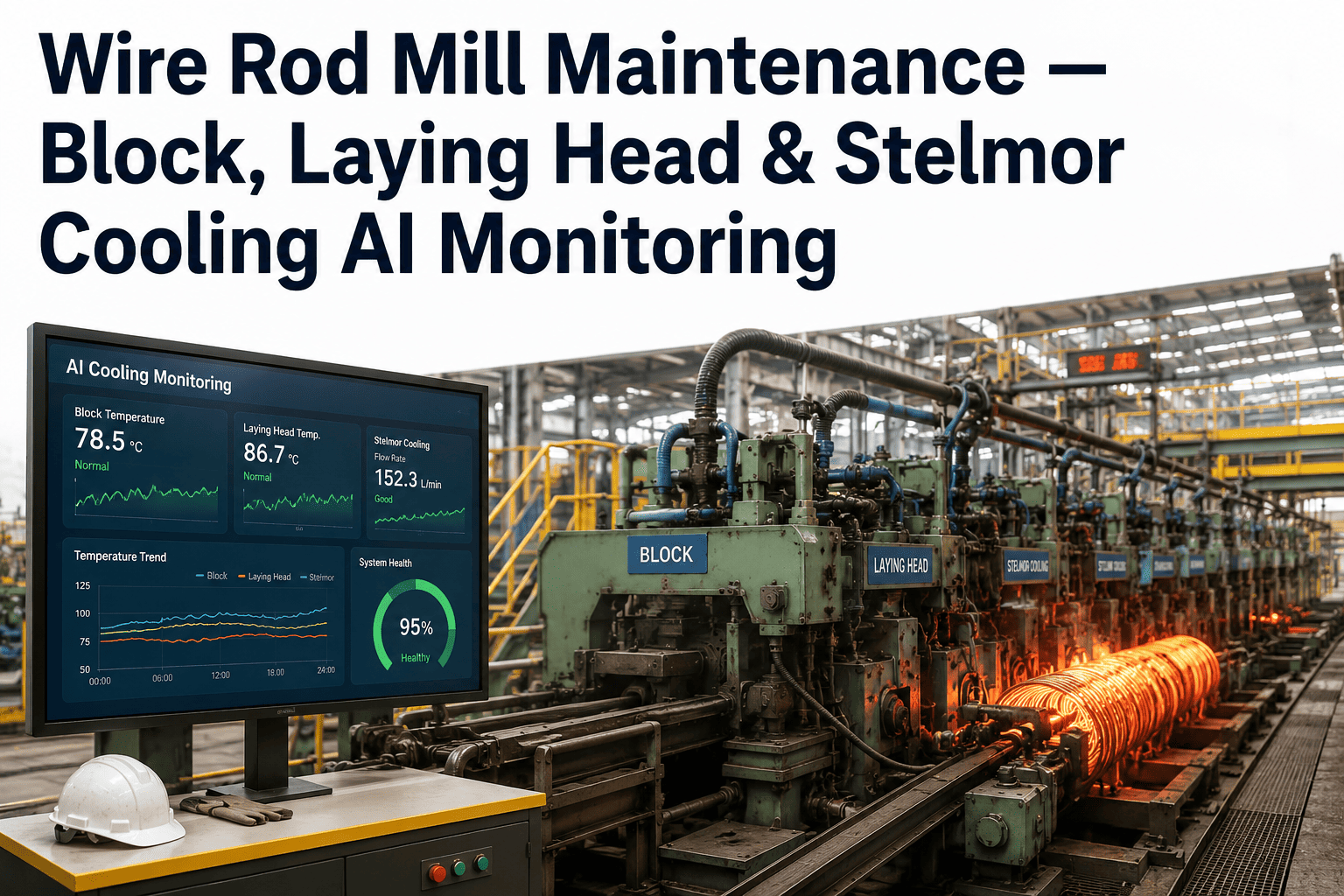
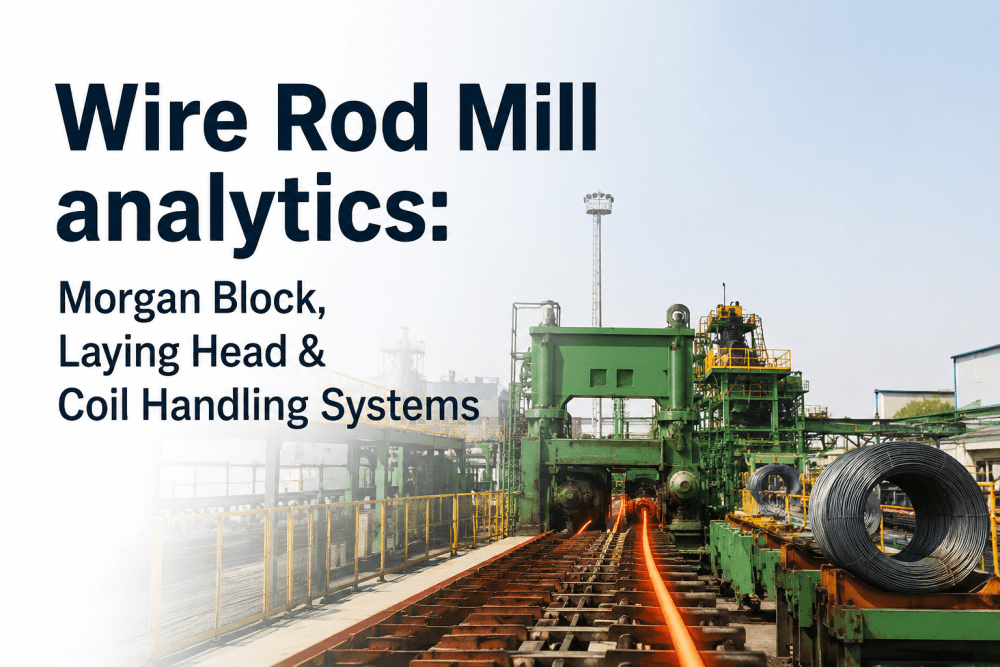
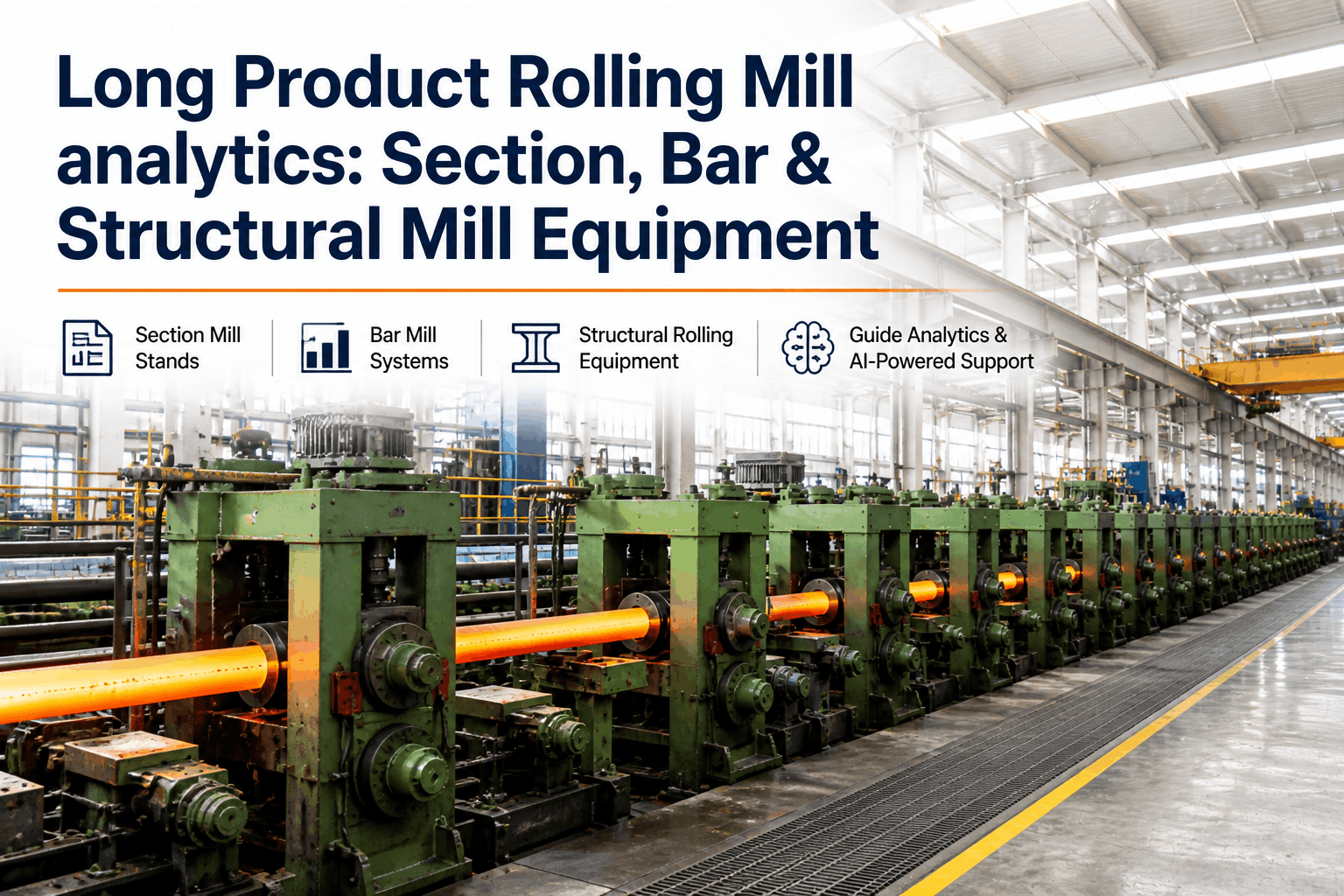
In the high-speed arena of finishing mills, **long products mill analytics** for bar, wire rod, and rail rolling lines represents the ultimate challenge in dynamic mechanical stability and dimensional precision. Unlike flat products, long products are rolled at extreme velocities—often exceeding 120 m/s in wire rod blocks—where a single guide misalignment or looper malfunction can trigger a catastrophic "Cobble" in milliseconds. Legacy mill management relies on operator intuition and periodic visual guide inspections, which are structurally incapable of capturing the transient vibration harmonics that precede a block failure. iFactory’s AI-driven suite transforms these high-speed lines into predictive ecosystems: tracking **guide wear** with micron-level precision, monitoring **loop layer** harmonics in finishing blocks, and ensuring **rail profile** integrity through real-time dimensional twins. Steelmakers who book a long products operational audit are discovering that their "Hidden Downtime" from minor cobbles and guide-changes is often reducing their net mill availability by up to 15%—a gap that iFactory closes through proactive asset stewardship.
Is Your Bar or Wire Mill Operating at Its Theoretical Yield Limit?
Deploy real-time guide wear tracking, finishing block vibration AI, and cooling bed equipment health monitoring in one unified Long Products intelligence platform.
What Long Product Mill Analytics Means for High-Volume Rolling Excellence
Rolling long products—whether it's high-tensile wire rod, merchant bar, or heavy rails—is a test of continuous mechanical synchronization. A standard bar mill might feature 18 to 22 stands, each with its own set of **rolling guides** and loopers that must maintain precise tension and alignment. Traditional maintenance cycles are often "Fixed Interval," leading to either premature guide replacement or, worse, running a guide to the point of failure. **AI-driven long product analytics** shifts this paradigm by aggregating data from high-frequency vibration sensors, laser calipers, and motor torque harmonics into a single "Mill Stewardship" layer. When long product producers schedule a technical demo, they see firsthand how predictive alerts for looper instability can prevent cobbles hours before they occur.
Guide Wear Tracking AI
Monitor the friction and vibration signatures of entry and delivery guides. AI predicts the exact point of guide fatigue, preventing surface scratches and cobbles.
Wire Rod Block Vibration
Track the high-frequency harmonics of finishing blocks (up to 120m/s). AI identifies gear-mesh failures and bearing wear in the "Wolf" blocks before they seize.
Loop Layer Condition AI
Monitor the stability of the loop layer in wire rod mills. Prevent "Birdnesting" by automatically adjusting the laying head speed and pipe geometry based on live loop harmonics.
Rail Profile & Gauge AI
Continuous laser profiling of rails during rolling. AI correlates roll force and temperature to maintain strict dimensional tolerances for high-speed rail standards.
Cooling Bed Health AI
Track the mechanical alignment and drive torque of cooling bed rakes and rollers. Prevent warping and ensure uniform metallurgical properties across the product length.
Shear Accuracy Analytics
Monitor the timing and blade condition of flying shears. Optimize cutting lengths to minimize "Shorts" and maximize the net yield of the mill.
"Our Wire Rod mill was suffering from 'Unexplained Block Failures' every 3 weeks. iFactory's vibration AI showed us that the failures were actually preceded by 48 hours of subtle harmonic drift in the gearbox. We've moved to condition-based overhauls and haven't had a catastrophic block failure in over a year. The increase in mill availability has been game-changing."
Solving the "Blind Spots" in Bar, Wire & Rail Rolling
Operating a high-speed long products mill without deep asset analytics leads to "Guide Over-Consumption"—wasting expensive rolling components—and "Reactive Cobbles"—which are the single biggest cause of mill downtime. iFactory's **Long Products AI** solves this by providing a unified view of the mill's physical state. If you are facing cobble issues or guide-related defects, you can book a mill health audit today.
Problem 1 — Undetected Guide Wear
A worn entry guide can cause "Twisting" of the bar, leading to a cobble in the next stand. iFactory's AI monitors the "Friction Signature" of every guide. When the signature deviates from the baseline, it indicates the onset of wear or misalignment, allowing the mill crew to adjust or replace the guide during a planned gap.
Problem 2 — Laying Head "Birdnesting"
In wire rod mills, the laying head must perfectly synchronize with the conveyor speed. Even a 1% mismatch can cause the wire to tangle. iFactory's "Loop Sync AI" monitors the vibration and speed of the laying head pipe, automatically adjusting the setpoints to ensure a perfect loop pattern on the Stelmor conveyor.
Problem 3 — Rail Straightness & Warping
Heavy rails must meet incredibly tight straightness tolerances. Uneven cooling on the bed causes "Camber" that requires expensive cold-straightening. iFactory's Cooling Bed AI monitors the thermal profile and rake torque, ensuring that every rail cools uniformly to meet Class-A straightness standards.
Increase net mill uptime by 12% by eliminating unplanned cobbles and reducing guide-change times.
Reduce "Shorts" and "Ends" by 18% through precision flying shear timing and rolling tension control.
Reduce guide and rolling component OpEx by 20% by moving from fixed-interval to condition-based replacement.
Achieve 99.5% adherence to tight rail and bar profiles through real-time laser gauge integration.
The ROI of Intelligence: KPI Gains from iFactory Long Product AI
Optimizing your bar or wire mill isn't just a maintenance win; it's a direct booster for your "Yield-to-Ton" ratio. The benchmark chart below shows the average gains achieved by leading long product producers within 12 months of adopting iFactory's mill intelligence platform. These results are driven by "Physics-Based AI." Mill managers who book a demo today are securing these stability gains for the next campaign.
Stop Reactive Rolling. Start Driving High-Speed Excellence Today.
Our platform gives long products producers continuous guide wear mapping, block vibration tracking, and audit-ready dimensional analytics—all in one system.
Frequently Asked Questions: Long Products Mill Analytics
How does iFactory predict guide wear at 100m/s rolling speeds?
We use a "Friction-Harmonic Model." By monitoring the high-frequency vibration spectra and motor torque fluctuations at each stand, iFactory's AI identifies the specific vibration frequency associated with bar-to-guide contact. As the guide wears, this frequency signature shifts, allowing us to predict the "Remaining Safe Life" of the guide before it causes a surface defect.
Can the platform prevent wire rod "Birdnesting" on the conveyor?
Yes. Birdnesting is caused by a speed mismatch between the laying head and the conveyor. iFactory's "Loop Sync AI" continuously monitors the conveying speed and the laying head RPM. If it detects a drift that threatens loop stability, it provides real-time setpoint adjustments to the PLC to maintain a perfect Stelmor pattern.
What is the ROI on Rail Rolling dimensional analytics?
The ROI is driven by two factors: 1) Reducing "Profile Rejections" by catching dimensional drift at the first stand rather than the last, and 2) Minimizing cold-straightening costs by ensuring uniform cooling. Most rail mills see a full ROI within 6 to 9 months.
Does the platform support high-speed Wire Rod Finishing Blocks?
Absolutely. Finishing blocks are the most critical assets in a wire mill. iFactory monitors the vibration, oil temperature, and gear-mesh harmonics of the "Wolf" blocks. Our AI is trained to detect the tell-tale "Bearing Skidding" signature that precedes a high-speed block seizure.
Can we track cooling bed equipment health for Bar Mills?
Yes. iFactory monitors the drive torque and rake alignment of the cooling bed. If the rakes become misaligned or a roller motor begins to draw excess current, the AI flags it as a "Warping Risk," allowing maintenance to intervene before the product quality is impacted.
How does the AI handle different product grades (Rebar vs. Quality Bar)?
The platform features "Grade-Specific Recipes." The AI recognizes that rolling high-carbon quality bar requires different tension and guide-clearance parameters than standard rebar. The predictive limits for wear and vibration are automatically adjusted based on the current heat's grade data.
Is iFactory compatible with older legacy merchant bar mills?
Yes. iFactory is designed to modernize legacy assets. We can install wireless "Smart Guides" and vibration sensors on older mill stands, bringing modern AI-driven cobble prevention to mills that lack advanced Level-2 automation.
How long does implementation take for a typical Bar or Wire Mill?
A standard iFactory Long Products deployment takes **8 to 12 weeks**. This includes sensor installation, Edge Gateway setup, and the initial "Learning Phase" where the AI baselines your specific rolling speeds and guide wear patterns. Request an implementation roadmap here.