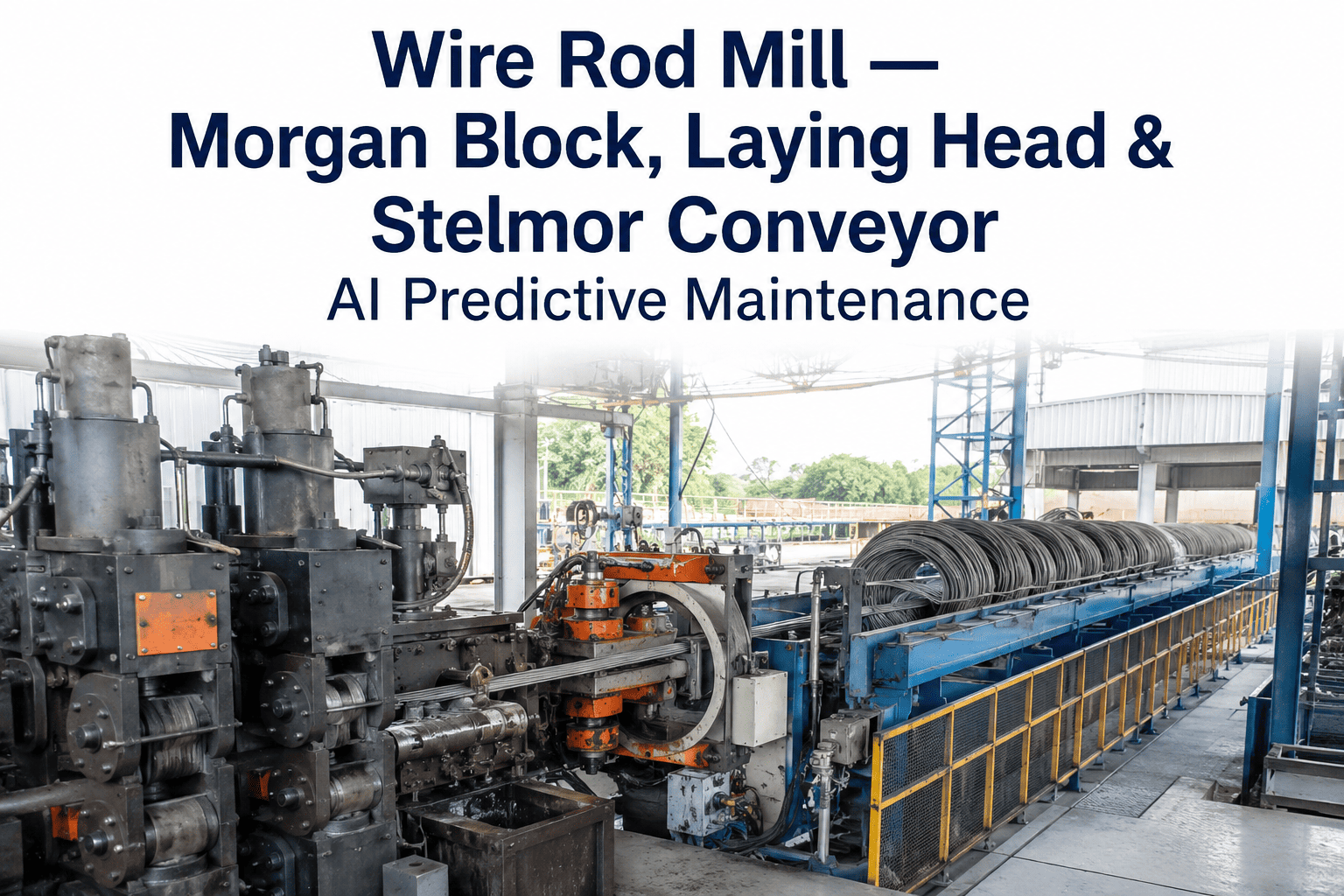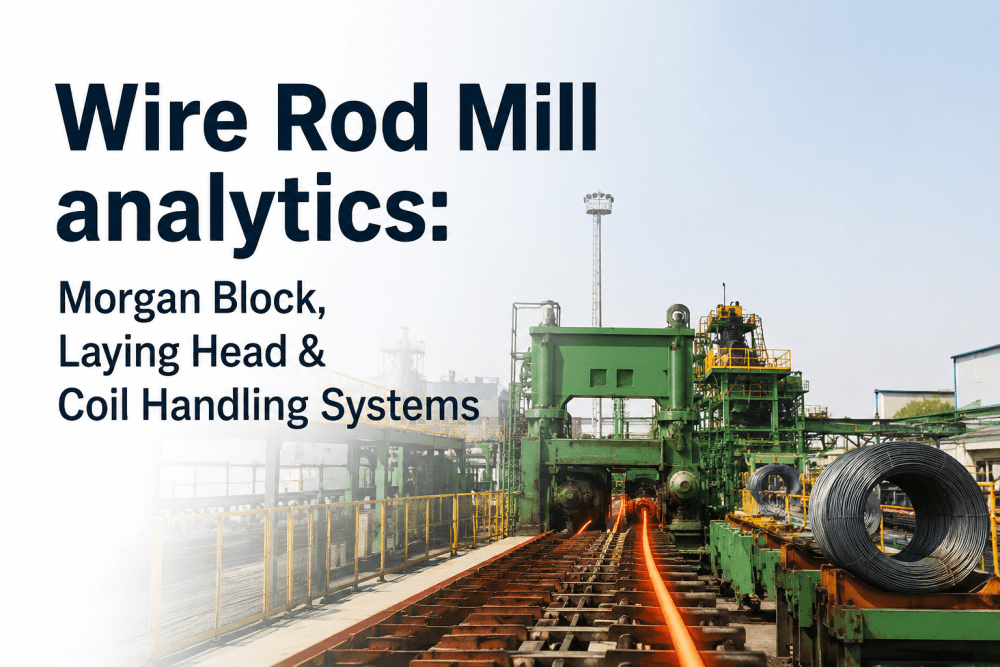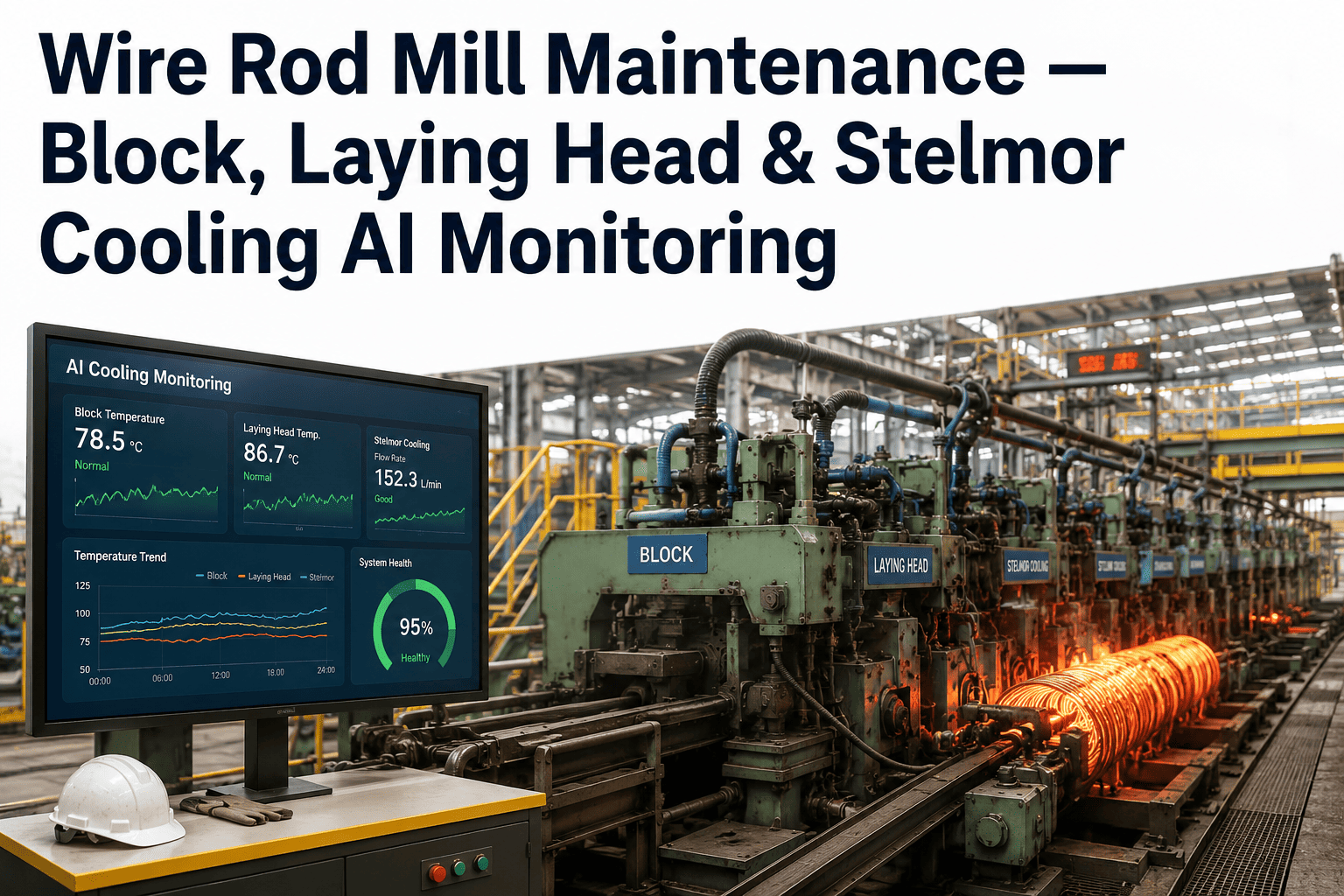
In the demanding environment of modern wire rod mills, maintaining optimal performance of critical subsystems such as the finishing block, laying head, and Stelmor cooling conveyor is paramount for achieving consistent wire rod properties and superior surface quality. The high-speed rotation and extreme thermal cycles inherent in these processes accelerate wear on block bearings and laying head mechanisms, while the Stelmor conveyor must precisely manage cooling rates to control microstructure. Traditional periodic maintenance strategies often miss early indicators of degradation, leading to unscheduled downtime and costly quality deviations. Advanced AI-driven predictive monitoring offers a transformative approach, enabling real-time anomaly detection and prescriptive maintenance. By leveraging vibration analysis, thermal imaging, and operational data, manufacturers can preempt failures, optimize performance, and ensure product uniformity across carbon and alloy grades. For a deeper dive into how iFactory's solutions can transform your wire rod mill operations, book a demo to explore tailored AI monitoring strategies.
AI-Powered Wire Rod Mill Maintenance: Precision Monitoring for Superior Quality
Unlock consistent wire rod properties and surface quality with intelligent monitoring of finishing blocks, laying heads, and Stelmor cooling conveyors.
Finishing Block Bearing Reliability
Predictive models analyze vibration signatures to detect bearing wear, misalignment, and lubrication issues before they cause unplanned stops.
Laying Head Rotation Precision
Continuous monitoring of rotational speed and torque ensures uniform coil formation, reducing cobbles and improving downstream handling.
Stelmor Cooling Conveyor Condition
Thermal and vibration analysis of conveyor rollers and drive systems prevents uneven cooling that can lead to inconsistent mechanical properties.
Wire Rod Quality Assurance
Integrated AI correlates equipment health with surface defects and dimensional variations, enabling proactive adjustments to maintain tight tolerances.
The Critical Role of Finishing Blocks in Wire Rod Production
The finishing block is the heart of the wire rod mill, responsible for achieving the final diameter and surface finish. Operating at speeds exceeding 100 m/s, the block bearings endure extreme radial and axial loads. Any deviation in bearing condition directly impacts rod roundness and surface quality. AI monitoring systems utilize high-frequency accelerometers and temperature sensors to capture subtle changes in vibration patterns and thermal profiles. By training machine learning models on historical failure data, these systems can predict remaining useful life with over 90% accuracy. This allows maintenance teams to schedule interventions during planned outages, eliminating emergency shutdowns and reducing scrap rates. Furthermore, AI-driven analytics can differentiate between bearing wear, imbalance, and misalignment, providing targeted recommendations that minimize downtime and extend component life.
Step-by-Step Implementation of AI Monitoring in Wire Rod Mills
Sensor Deployment
Install high-frequency accelerometers and thermocouples on finishing block bearings, laying head shafts, and Stelmor conveyor rollers. Ensure robust data acquisition under harsh mill conditions.
Data Integration
Aggregate vibration, temperature, speed, and torque data into a unified edge computing platform. Synchronize with mill PLC and MES for contextual operational insights.
Model Training
Train deep learning models on historical failure and quality data to recognize precursors to bearing spalling, laying head misalignment, and conveyor wear patterns.
Real-Time Alerts
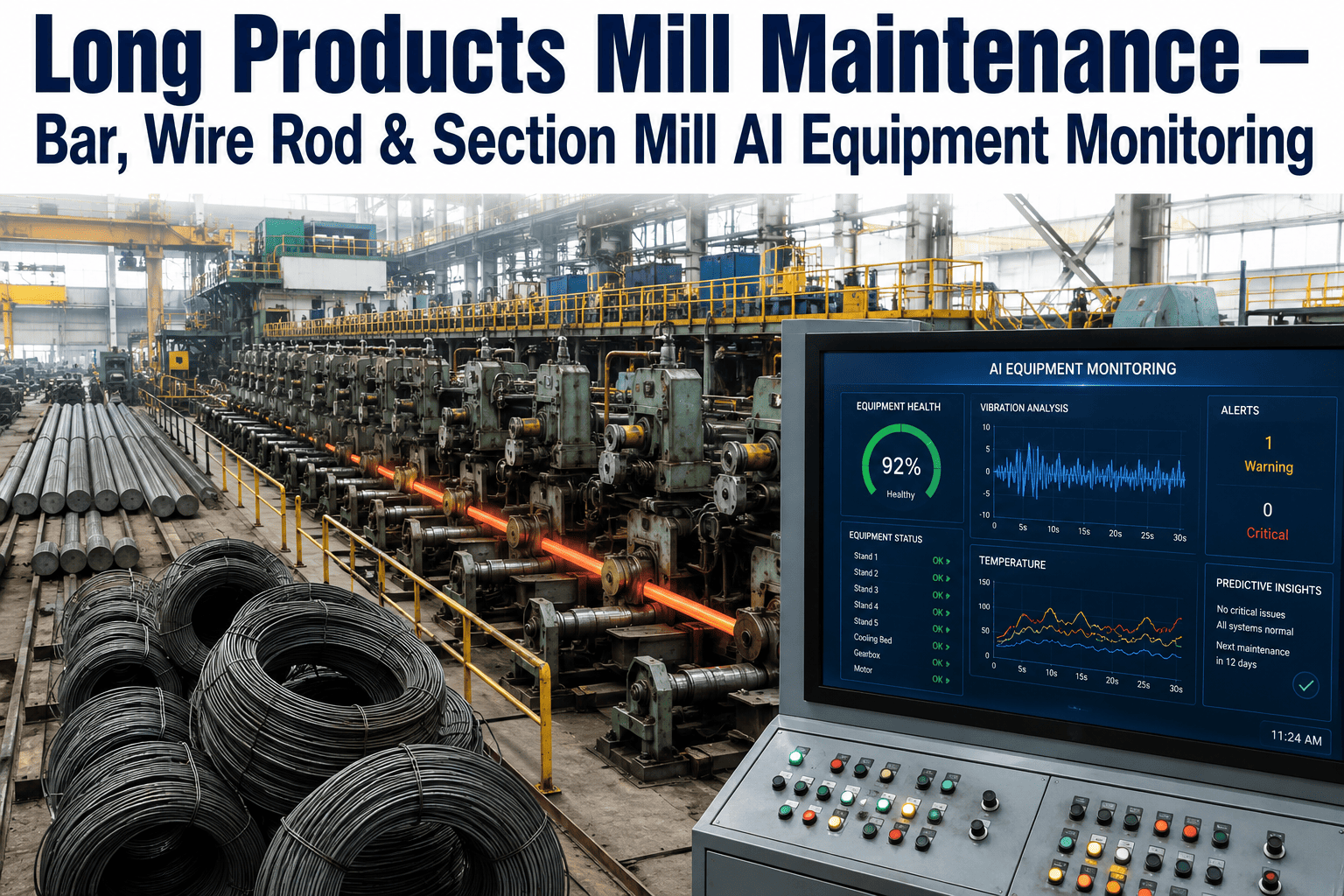
Deploy dashboards that provide real-time health scores and predictive alerts. Maintenance teams receive actionable recommendations with estimated remaining useful life.
Continuous Improvement
Leverage feedback loops to refine models. Correlate equipment health with final rod quality metrics to continuously optimize maintenance schedules and process parameters.
Ready to Transform Your Wire Rod Mill Maintenance?
Discover how AI-driven monitoring can elevate your production quality and reduce downtime. Schedule a personalized demo with our experts today.
Traditional vs. AI-Driven Maintenance: A Comparative Analysis
| Parameter | Traditional Maintenance | AI-Driven Predictive Maintenance |
|---|---|---|
| Detection Method | Periodic manual inspections | Continuous real-time sensor monitoring |
| Failure Prediction | Based on historical averages | Machine learning models with >90% accuracy |
| Downtime Impact | Reactive, often unplanned | Proactive, scheduled during planned outages |
| Quality Assurance | Post-production testing | Real-time correlation with equipment health |
| Cost Efficiency | High emergency repair costs | Reduced spare parts inventory and labor |
Laying Head Dynamics: Ensuring Uniform Coil Formation
The laying head is a high-speed rotating mechanism that forms the finished rod into coils. Its precise rotation is critical for consistent coil geometry, which directly impacts downstream handling and annealing processes. AI monitoring focuses on rotational speed consistency, torque variations, and vibration patterns. A deviation of even 1% in rotational speed can cause coil stacking irregularities, leading to tangling and production stoppages. By analyzing real-time data, AI models can detect bearing degradation, drive belt slippage, or imbalance before they affect product quality. Additionally, thermal monitoring of the laying head shaft can identify lubrication failures or excessive friction, enabling maintenance teams to intervene early. This level of precision ensures that every coil meets the exact specifications required for automotive, construction, and industrial applications.
Real-Time Vibration Analysis
Detect bearing defects, imbalance, and misalignment in finishing blocks and laying heads with sub-micron accuracy.
Thermal Profiling
Monitor Stelmor conveyor roller temperatures to identify hot spots that can cause uneven cooling and microstructure variations.
Predictive Remaining Life
Receive accurate estimates of remaining useful life for critical components, allowing optimized spare parts planning.
Quality Correlation
Link equipment health data with final rod tensile strength, ductility, and surface finish to drive process improvements.
Frequently Asked Questions
How does AI monitoring improve finishing block bearing life?
AI monitoring continuously analyzes vibration and temperature data to detect early signs of bearing wear, such as spalling or contamination. By predicting failures weeks in advance, maintenance can be scheduled during planned downtime, preventing catastrophic breakdowns. This proactive approach can extend bearing life by up to 40% and reduce unplanned outages. For more details on implementation, contact our support team for a tailored assessment.
What sensors are required for laying head monitoring?
Key sensors include high-frequency accelerometers (up to 10 kHz) mounted on the laying head housing, a rotary encoder for precise speed measurement, and thermocouples for bearing temperature. These sensors feed data into an edge device that performs initial signal processing before transmission to the cloud. The system can also integrate existing PLC data for torque and current. For a comprehensive sensor list and installation guide, book a demo with our engineering team.
Can AI monitoring handle multiple wire rod grades?
Yes, AI models can be trained on data from different steel grades (carbon, alloy, stainless) and adjust monitoring thresholds accordingly. The system learns the unique vibration and thermal signatures associated with each grade, enabling accurate anomaly detection regardless of product mix. This flexibility is critical for mills that produce a wide range of wire rod diameters and material specifications. For case studies on multi-grade implementations, visit our support page.
How does the Stelmor cooling conveyor affect rod quality?
The Stelmor conveyor controls the cooling rate of the wire rod after rolling, which determines the final microstructure and mechanical properties. Uneven cooling due to roller wear, misalignment, or drive issues can lead to variations in tensile strength and ductility across the coil. AI monitoring of roller vibration and temperature ensures uniform cooling, reducing scrap and rework. For a detailed analysis of cooling conveyor optimization, schedule a consultation with our process experts.
What ROI can I expect from implementing AI monitoring?
Typical ROI includes a 30-40% reduction in unplanned downtime, 25% improvement in first-pass yield, and 20% reduction in maintenance costs. These gains result from fewer emergency repairs, optimized spare parts inventory, and improved product quality. Payback periods are often under 12 months for large wire rod mills. To calculate a customized ROI for your facility, book a demo and speak with our analytics team.
Elevate Your Wire Rod Mill Performance with AI
Join industry leaders who have transformed their maintenance operations. Book your personalized demo today and see the iFactory difference.