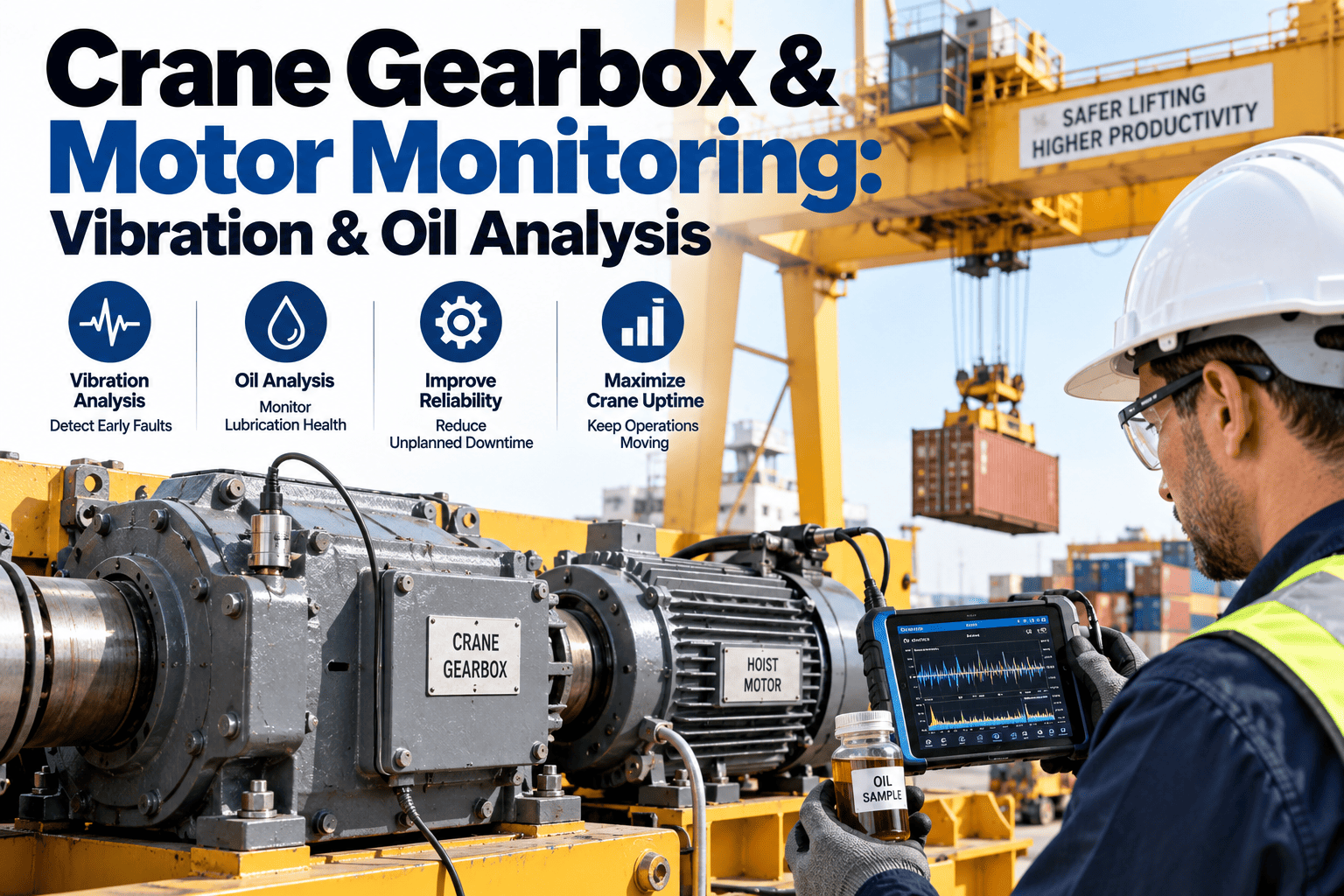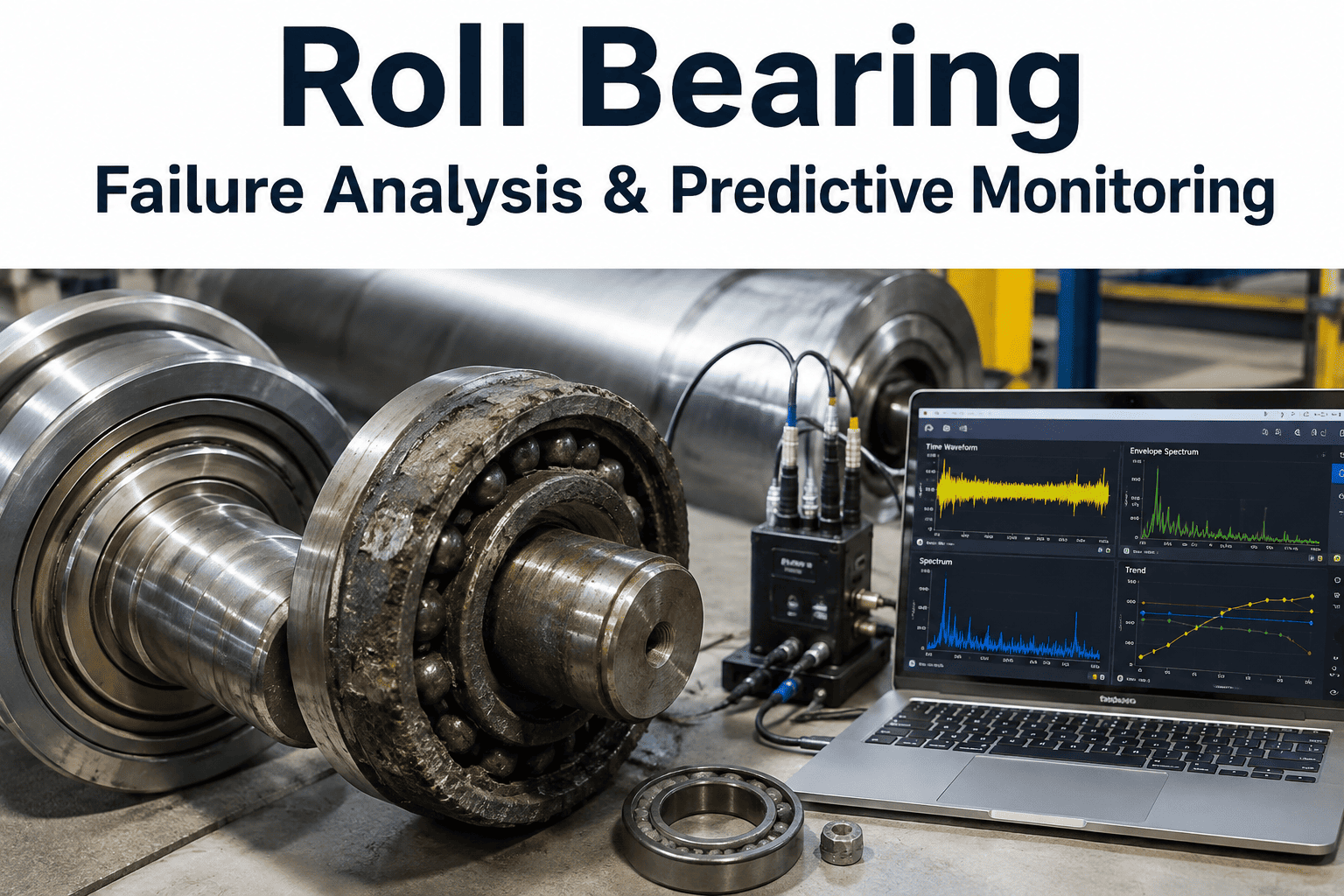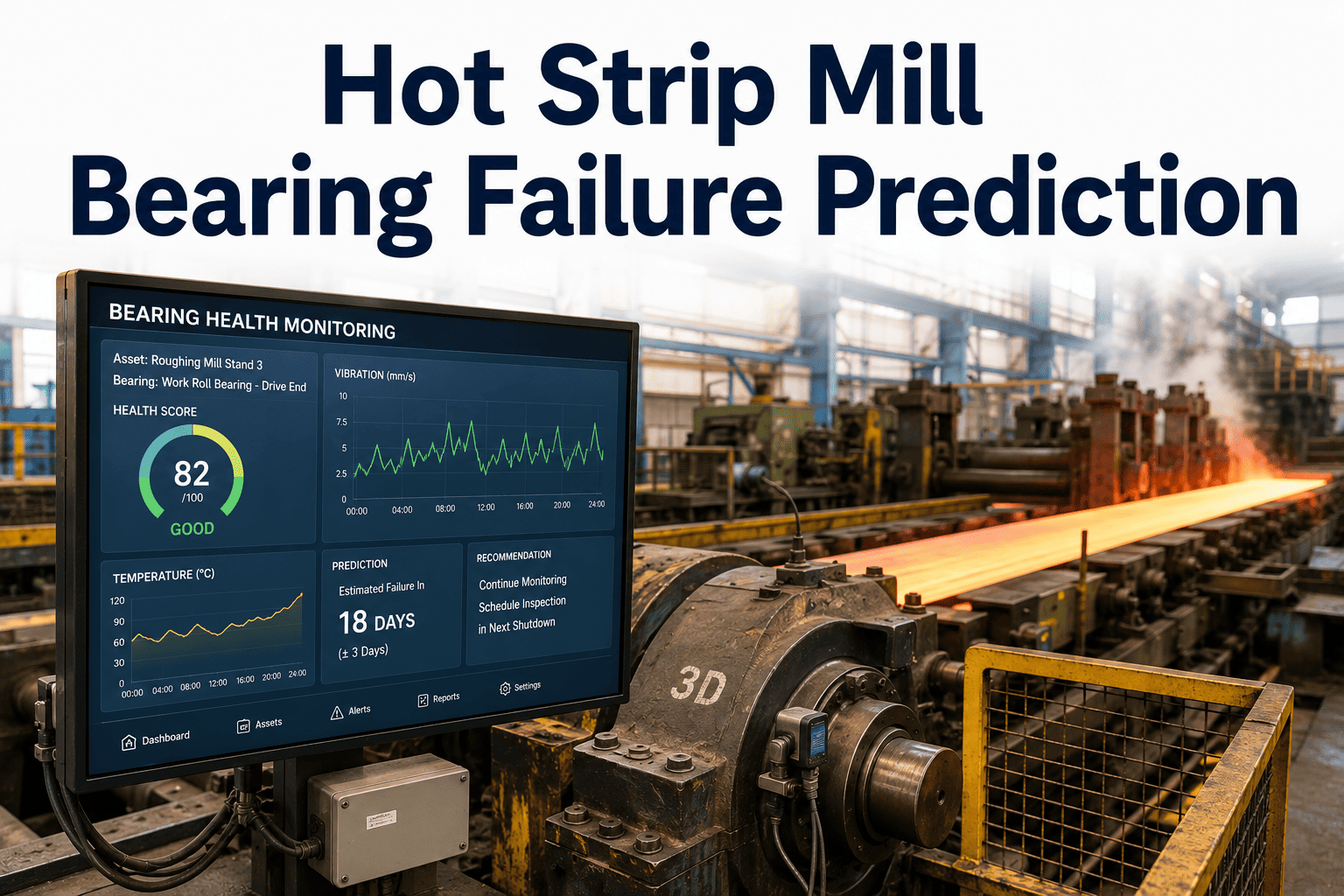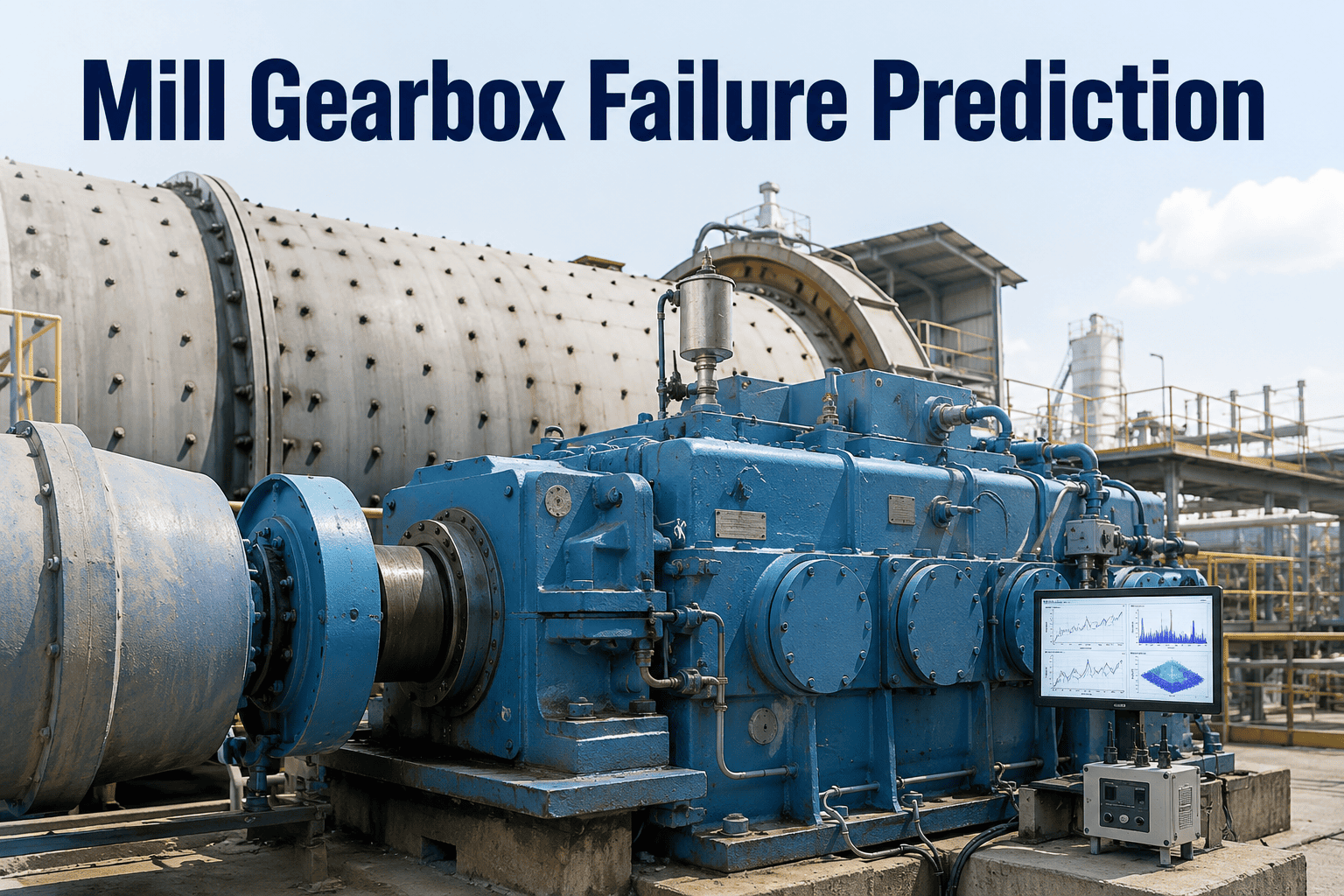
For mechanical reliability professionals in steel manufacturing, gearbox reliability is the single largest variable separating planned maintenance from forced outages. A single pinion stand gearbox failure on a hot strip mill finishing train can halt 300 tons per hour of production — and the lead time for a replacement helical or bevel-helical gearbox is typically 26 to 40 weeks for a precision-ground, case-hardened unit from a certified OEM. The mechanical reliability challenge in steel mill gearbox management is not about detecting failures after they occur — it is about identifying the specific degradation trajectory of gear mesh wear, bearing fatigue, and lubrication breakdown months before any of those failure modes reach the threshold where unplanned replacement is the only option. AI-driven predictive maintenance for gearboxes and reducers closes this gap by applying machine learning models trained on vibration spectral data, oil analysis trends and thermal profiles to forecast remaining useful life with enough precision to schedule replacements during planned outages rather than emergency shutdowns. Mechanical reliability teams that schedule a gearbox PdM assessment with iFactory are discovering that the data already exists in their DCS and CMMS systems — it simply needs the right analytical architecture to extract predictive value from it.
Steel mill gearboxes operate under conditions that accelerate wear mechanisms beyond what standard industrial gearbox design life curves predict. Impact loading from billet entry into roughing stands, thermal cycling from 1,200-degree slab contact, and contaminant ingress from scale and cooling water create an operating environment where gear mesh frequency amplitudes can shift 200-400% between a Monday morning cold start and a Friday afternoon steady-state run. Traditional time-based maintenance intervals — change oil every 6 months, perform vibration survey every 3 months, replace bearings at 5 years — were designed for constant-load, constant-temperature applications, not for the cyclic thermal and mechanical loading that defines steel mill gearbox service. The gap between scheduled maintenance timing and actual degradation rate is where unplanned failures occur, and it is the gap that AI-driven condition-based PdM is designed to close. Reliability professionals who book a platform demo consistently find that their first gearbox PdM deployment reveals degradation patterns their existing vibration program had been missing for years.
Evaluating your gearbox PdM strategy against current reliability performance? Book a 30-minute gearbox reliability assessment with iFactory's steel industry predictive maintenance team.
The Gearbox Reliability Challenge in Steel Manufacturing
Steel mill gearboxes and reducers operate across a wider range of loading conditions than any other industrial gearbox application class. A roughing stand main drive gearbox in a hot strip mill experiences impact loads exceeding 300% of rated torque during billet entry, followed by steady-state operation at 60-80% of rated capacity, followed by thermal soak-back during idle periods that subjects the gearbox housing to differential thermal expansion between the input shaft and the output shaft. These cyclic loading and thermal conditions produce failure modes that are distinct from the constant-load wear patterns that standard gearbox life calculation methods assume.
The four primary failure mode categories that dominate steel mill gearbox reliability — gear mesh fatigue, bearing degradation, lubrication breakdown, and housing distortion — each develop on different timescales and require different monitoring approaches. Gear mesh fatigue (pitting, micro-pitting, tooth root cracking) typically develops over 6-18 months under normal operation but can accelerate to catastrophic failure in days if lubricant film thickness degrades below the critical threshold. Bearing degradation in mill gearboxes follows a predictable progression from incipient spalling to measurable vibration increase to final cage failure, but the window between first detectable vibration change and functional failure is often 4-8 weeks — shorter than typical quarterly vibration survey intervals. Lubrication breakdown in steel mill gearboxes is driven by water ingress from cooling systems, particulate contamination from scale ingress, and thermal degradation from sustained high-temperature operation above 85 C. Mechanical reliability teams that schedule a gearbox PdM assessment receive a failure mode analysis specific to their mill configuration and gearbox types.
How AI-Driven Gearbox PdM Works
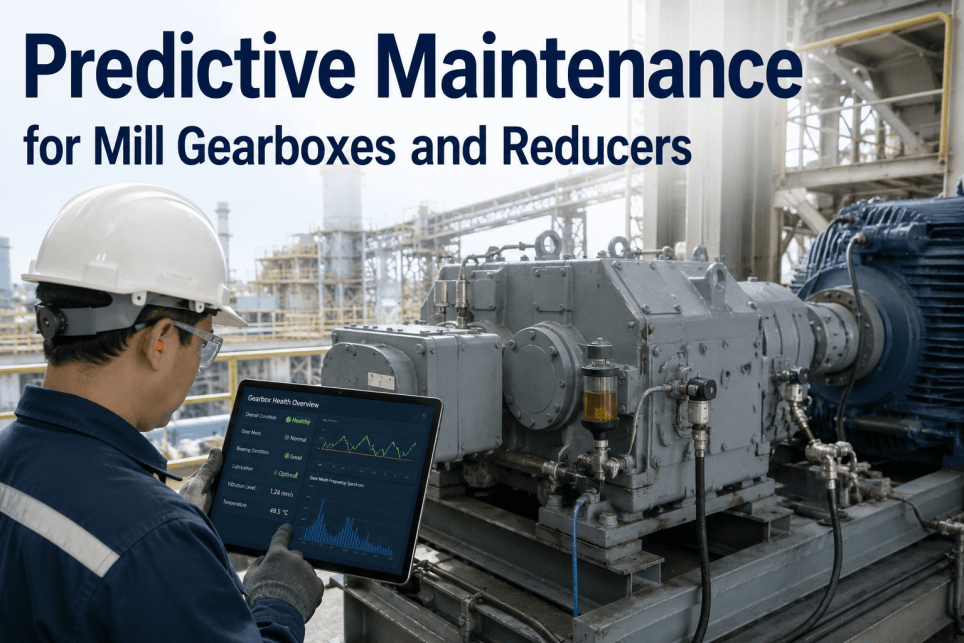
AI-driven predictive maintenance for steel mill gearboxes and reducers operates through a layered analytical architecture that integrates vibration spectral analysis, oil condition monitoring, thermal imaging, and operational data into a unified remaining useful life model. The platform's machine learning models are trained on 12-24 months of historical gearbox data correlated against confirmed failure events and maintenance records, enabling the identification of specific degradation patterns before traditional alarm thresholds are crossed. Mechanical reliability teams that schedule a technical review receive a detailed demonstration of how each analytical layer is configured for their specific gearbox types, mill configurations, and operating cycles.
Gearbox PdM Technology Comparison
The technology landscape for gearbox predictive maintenance in steel manufacturing spans multiple monitoring approaches — from traditional manual vibration surveys to fully automated AI-driven platforms. Each approach delivers different detection sensitivity, lead time, and labor requirement profiles that must be evaluated against the criticality of the gearbox asset class and the available maintenance organization resources. The following comparison maps the key capability differences across the monitoring technology spectrum available to mechanical reliability teams.
| Technology Approach | How It Works | Detection Lead Time | Labor Requirement | Failure Mode Coverage | Best Fit Application |
|---|---|---|---|---|---|
| Manual Periodic Vibration Survey | Portable vibration data collector used on monthly or quarterly route basis. Spectral analysis performed by vibration analyst. Trends compared to ISO 10816 limits. | Detection window limited by survey interval. Gearbox failing 2 weeks after survey is detected at next survey — up to 3 months late. | 1-2 hours per gearbox per survey. Analyst time for spectral interpretation. Total labor: 40-80 hours per month for a hot strip mill. | Advanced gear mesh and bearing failures detectable at survey time. Rapidly developing failures may be missed between surveys. Oil analysis not integrated. | Non-critical gearboxes, low-duty-cycle applications, facilities without budget for permanent monitoring infrastructure |
| Online Vibration Monitoring System | Permanently installed accelerometers with continuous data acquisition. Automated alarm thresholds based on overall vibration or predefined frequency bands. Alerts when levels exceed fixed limits. | Continuous monitoring eliminates survey interval gap. Detection occurs when vibration crosses alarm threshold — typically 2-4 weeks before functional failure for bearing degradation. | Minimal daily labor. Periodic threshold review required. Analyst time for alarm investigation: 5-10 hours per month for a mill. | Broadband vibration and envelope detection. Limited ability to distinguish between failure modes. False alarm rate of 15-25% common with fixed-threshold systems. | Critical gearboxes where continuous monitoring is justified. Facilities with in-house vibration analysts. Transition path to AI-based analytics. |
| AI-Driven PdM Platform with Multi-Sensor Fusion | ML models trained on gearbox-specific historical data. Vibration, oil, thermal, and operational data fused into unified health score. RUL prediction with confidence intervals. Automated work order generation. | Detection at earliest deviation from baseline spectral signature — typically 8-16 weeks before functional failure for gear mesh and bearing degradation modes. Oil analysis integration detects lubrication failures 12-20 weeks early. | Minimal daily labor. Model training and validation during deployment. Ongoing model retraining automated. Analyst time: 2-4 hours per month for model review. | All four primary failure mode categories. Distinguishes between gear mesh, bearing, lubrication, and housing failures. Cross-correlates vibration and oil data for higher confidence. | Critical gearboxes on continuous-process lines. Mills with 20+ gearboxes requiring centralized monitoring. Facilities targeting zero unplanned gearbox failures. |
Evaluating your gearbox PdM strategy against current reliability performance? Book a 30-minute gearbox reliability assessment with iFactory's steel industry predictive maintenance team.
Measured Reliability Outcomes at Steel Mills Using AI Gearbox PdM
Evaluating your gearbox PdM strategy against current reliability performance? Book a 30-minute gearbox reliability assessment with iFactory's steel industry predictive maintenance team.
Expert Review: What Mechanical Reliability Teams Miss in Gearbox PdM Programs
Frequently Asked Questions
Conclusion: The Economic Case for AI-Driven Gearbox PdM Is Measurable and Immediate
The data from deployed gearbox PdM programs at steel mills is unambiguous: the combination of vibration spectral analysis, oil condition monitoring, thermal trending, and operational data fusion — applied through machine learning models trained on facility-specific gearbox failure history — delivers failure detection lead times that traditional monitoring methods cannot achieve. A gearbox PdM program that costs $145,000-195,000 to deploy across a hot strip mill prevents an average of $2.1 million per year in avoided unplanned failure costs, emergency replacement labor, and production loss. The return on investment is not theoretical — it is measured at facilities that have moved from quarterly vibration surveys and time-based oil changes to continuous AI-driven condition-based monitoring with multi-sensor fusion and remaining useful life prediction.
The question for mechanical reliability professionals is no longer whether AI-driven gearbox PdM works. The question is how many unplanned gearbox failures their facility will experience while they evaluate platforms that have already been proven at peer mills. The technology is deployable today, the integration path with existing vibration and oil analysis programs is well-defined, and the cost structure produces positive ROI within the first avoided failure. For steel mills still managing gearbox reliability on fixed-interval maintenance schedules and manual vibration routes, every quarter of delay represents measurable failure risk that AI-driven PdM could have predicted and prevented.