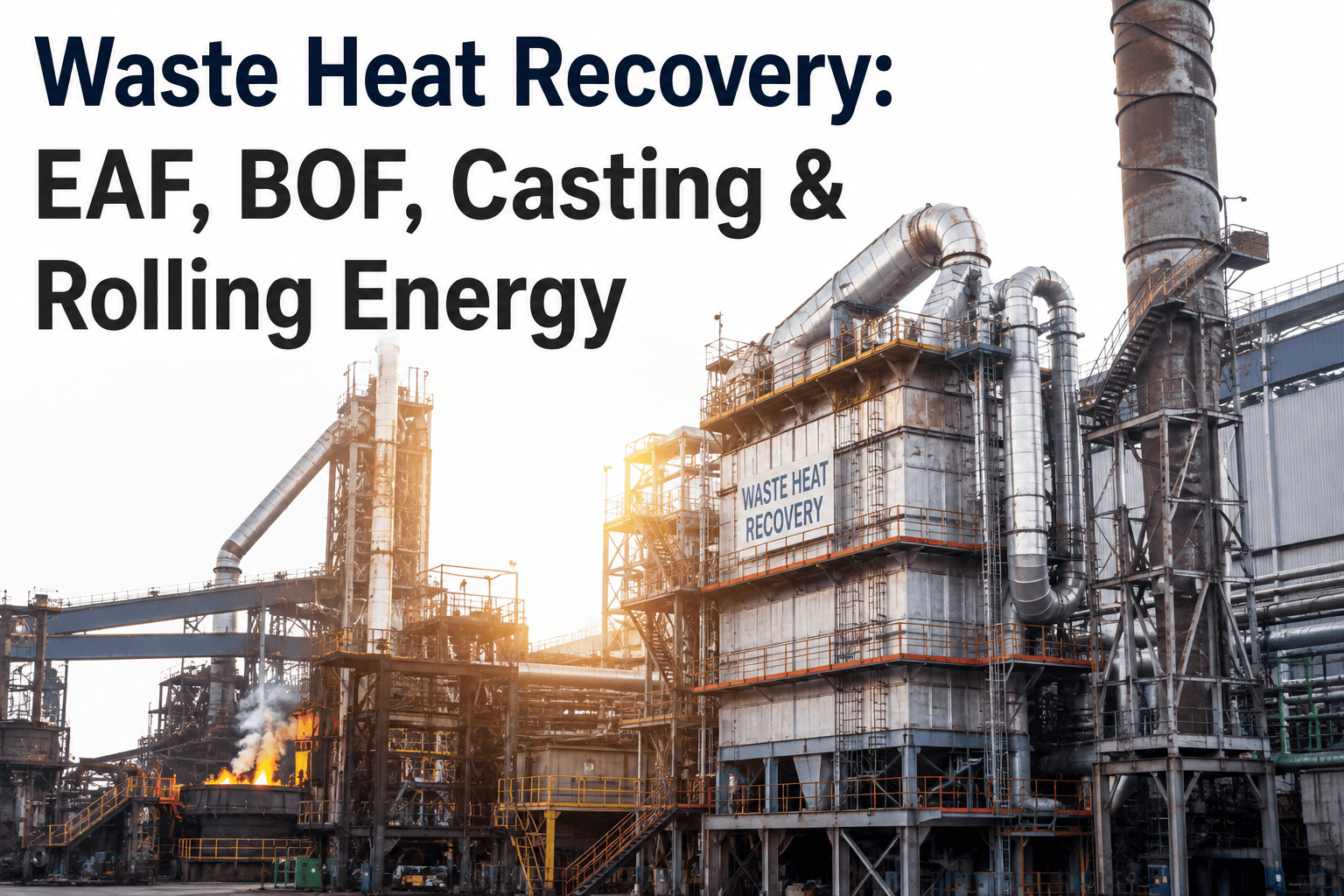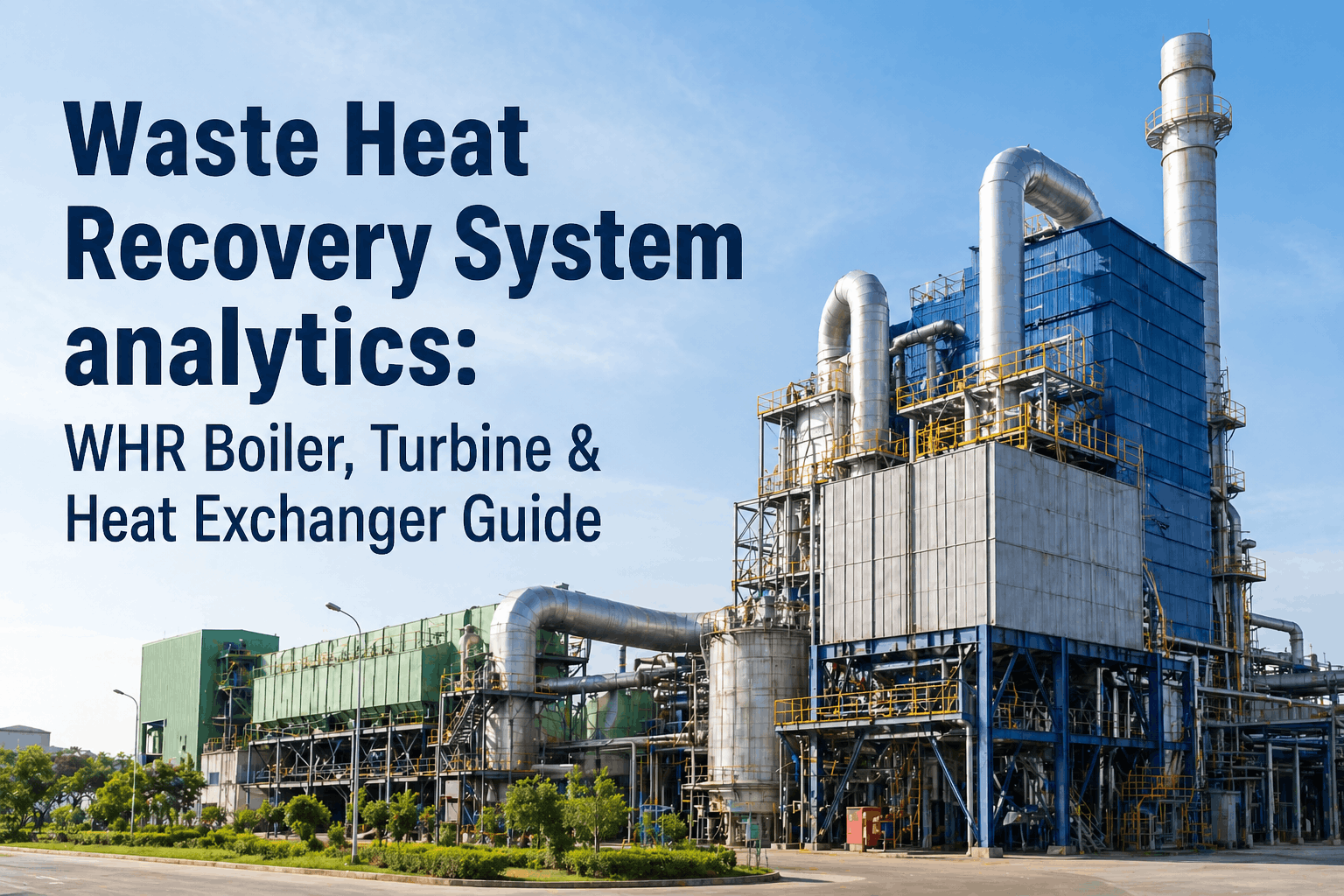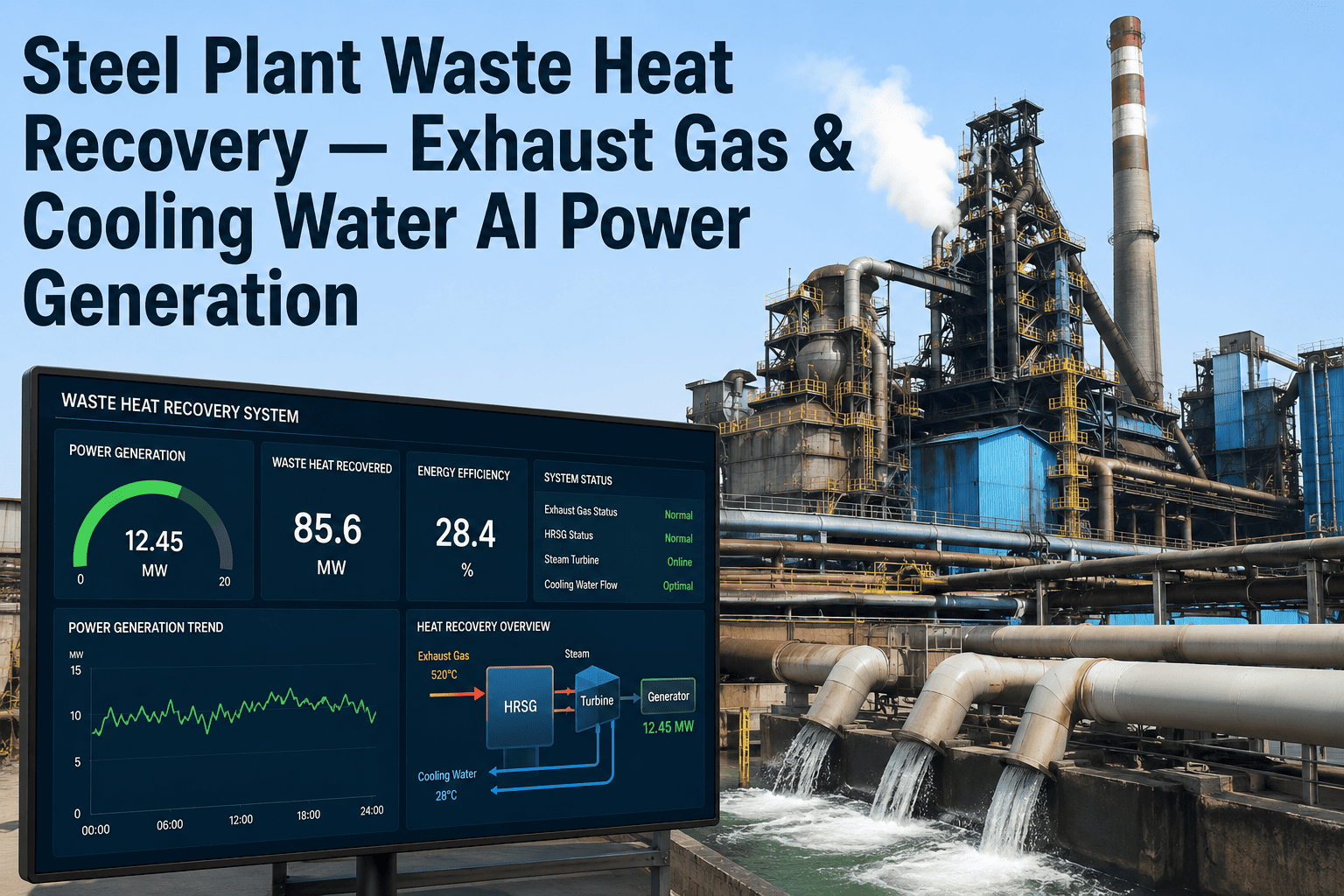
A steel plant loses more usable energy through exhaust gas, hot product, and cooling water than most facilities ever recover, largely because waste heat recovery equipment quietly degrades through fouling, scale, and vacuum loss long before anyone notices the megawatts slipping away. EAF off-gas leaving the furnace at roughly 2,200°F, coke oven gas exiting at 650 to 980°C, and sinter cooler air around 300°C all represent recoverable energy, but the boilers, economizers, and turbines that convert that heat into steam and power only perform at design efficiency when every heat exchanger surface and every turbine seal stays close to its commissioned condition. Process engineers who monitor WHR equipment condition with the same rigor applied to production assets catch efficiency loss while it is still a cleaning or seal replacement rather than a capital repair. Engineers who book a demo of iFactory's WHR monitoring typically start with economizer approach temperature, since it is one of the earliest and clearest indicators of fouling-driven efficiency loss.
Recover More of the Heat Your Plant Is Already Producing
iFactory tracks boiler, economizer, and turbine condition across every waste heat recovery system, catching fouling and efficiency loss before it erodes captive power generation.
Why Waste Heat Recovery Efficiency Erodes Silently
Steel plants operate blast furnace gas boilers, coke oven gas boilers, continuous casting cooler recovery systems, and EAF off-gas capture that together represent a significant share of total plant energy recovery potential. Each of these systems depends on heat transfer surfaces staying clean and turbine components staying within design tolerance, but scale formation, biological growth in cooling water circuits, and fouling deposits reduce heat transfer coefficient gradually rather than suddenly. Approach temperature, the difference between hot-side outlet and cold-side inlet, rises steadily as fouling accumulates, and by the time this shows up as a noticeable drop in generated power, weeks or months of avoidable efficiency loss have often already passed.
EAF Off-Gas
~2,200°FHigh-temperature recovery for power generation or scrap preheating.
Coke Oven Gas
650–980°CRegenerative recovery and dry quenching capture sensible heat efficiently.
Blast Furnace Top Gas
Pressure-BasedTop pressure recovery turbines generate power at zero fuel cost.
Sinter Cooler Air
~300°CAccessible, relatively clean gas suited to ORC or air preheating.
Cooling Water Circuits
Low-GradeLarge volume, lower temperature, best suited to preheating applications.
Matching Recovery Technology to Heat Source
Different waste heat streams demand different recovery technologies, and selecting the wrong match reduces both energy yield and equipment reliability over the life of the installation. Process engineers who book a consultation with iFactory can review which recovery technologies are already installed on their site and where monitoring would add the most immediate value.
| Heat Source | Typical Technology | Primary Failure Risk | Monitoring Focus |
|---|---|---|---|
| Coke Oven Gas | High-pressure recovery boiler | Tube wall thinning, corrosion | Water chemistry, tube inspection |
| Hot Coke (CDQ) | Coke dry quenching | Refractory wear | Steam quality, refractory condition |
| BF Top Gas | Top pressure recovery turbine | Blade wear, pressure loss | Turbine efficiency, gas pressure |
| Sinter Cooler Air | Organic Rankine Cycle | Working fluid degradation | Heat exchanger approach temperature |
| Process Cooling Water | Economizer preheating | Scale, biological fouling | Approach temperature drift |
Stop Losing Recovered Power to Fouling You Can't See Yet
iFactory tracks approach temperature, turbine vacuum, and boiler water chemistry continuously, so cleaning and maintenance are scheduled before generation capacity drops.
Where AI Monitoring Catches What Calendar Maintenance Misses
WHR boilers, economizers, and turbines are typically maintained on fixed inspection intervals that were set based on general experience rather than the specific fouling rate a given plant's water chemistry and gas composition actually produce. AI-based condition monitoring tracks the real trend for each asset, correlating approach temperature, vacuum pressure, and turbine efficiency against operating history so cleaning and inspection schedules match actual degradation rate rather than a generic calendar assumption.
Economizer Fouling Detection
Rising approach temperature signals scale or biological fouling building in the heat exchanger, allowing cleaning to be scheduled before feedwater preheating efficiency drops materially.
Condenser Vacuum Monitoring
Falling vacuum from tube fouling or failed air evacuation directly reduces turbine efficiency, and continuous vacuum trend tracking catches this before back-pressure losses compound.
Boiler Water Chemistry
Oxygen scavenging and alkalinity control are tracked continuously to prevent the internal corrosion and tube wall thinning that high-temperature recovery boilers are especially prone to.
Turbine Efficiency Trending
Recovery turbines operating across wide steam quality ranges are monitored for efficiency drift that indicates blade wear or seal degradation before output falls noticeably.
Waste Heat Recovery Potential, By the Numbers
Recoverable energy is not distributed evenly across a steel plant's waste heat sources, which is why prioritizing monitoring investment by recovery potential produces the fastest return.
Rolling Out AI Monitoring Across WHR Assets
Because WHR systems span multiple process areas, from coke ovens to the caster to the rolling mill, rollout typically prioritizes the highest-capacity recovery system first before extending to the full plant.
Baseline the Highest-Value Recovery System
The system contributing the largest share of recovered power, often the coke oven gas boiler or BF top gas turbine, is instrumented and baselined first.
Correlate Fouling Trends With Output
Approach temperature and turbine efficiency trends are correlated against measured power output to validate the model's predictive accuracy against real generation loss.
Shift Cleaning and Maintenance to Condition-Based
Once validated, cleaning and inspection intervals move from fixed calendar scheduling to condition-triggered planning aligned with actual fouling rate.
Extend Across Remaining WHR Systems
Monitoring extends to sinter cooler ORC systems, EAF off-gas recovery, and cooling water economizers across the remainder of the plant.
Waste Heat Recovery Monitoring — Frequently Asked Questions
Which waste heat source offers the fastest return on monitoring investment?
Coke oven gas and blast furnace gas recovery systems typically offer the largest share of recoverable energy, making them the highest-priority monitoring targets, though sinter cooler air is often the easiest to instrument due to its cleaner, more accessible gas stream. Teams that book a demo can review a prioritization specific to their plant's process configuration.
How does rising approach temperature translate into lost power generation?
As fouling increases approach temperature, the heat exchanger transfers less energy per unit of surface area, which reduces steam generation upstream of the turbine and lowers overall electrical output even though the gas source itself has not changed. Left unaddressed, this loss compounds gradually until a scheduled cleaning event restores baseline performance.
Can AI monitoring extend the life of recovery boiler tubes?
Continuous water chemistry monitoring, including oxygen scavenging and alkalinity control, helps prevent the internal corrosion that accelerates tube wall thinning in high-temperature recovery boilers, extending useful tube life beyond what calendar-based chemistry checks typically achieve.
Does this monitoring approach work for both wet and dry coke quenching systems?
Yes, though the specific parameters differ: dry quenching systems are monitored primarily for refractory condition and steam quality, while wet quenching systems have limited recovery potential and are typically evaluated for conversion opportunity rather than ongoing optimization.
How quickly can a plant expect to see monitoring pay for itself through recovered generation?
Payback timing depends heavily on existing fouling rates and how far current maintenance practice already lags optimal cleaning intervals, but plants with significant unaddressed fouling often see measurable output improvement within the first few maintenance cycles after baseline monitoring begins. Plants can contact support to discuss expected timelines for their specific configuration.
Turn Waste Heat Recovery Into a Continuously Optimized System
iFactory helps process engineers monitor boiler, economizer, and turbine condition across every waste heat recovery asset, protecting captive power generation from silent fouling losses.