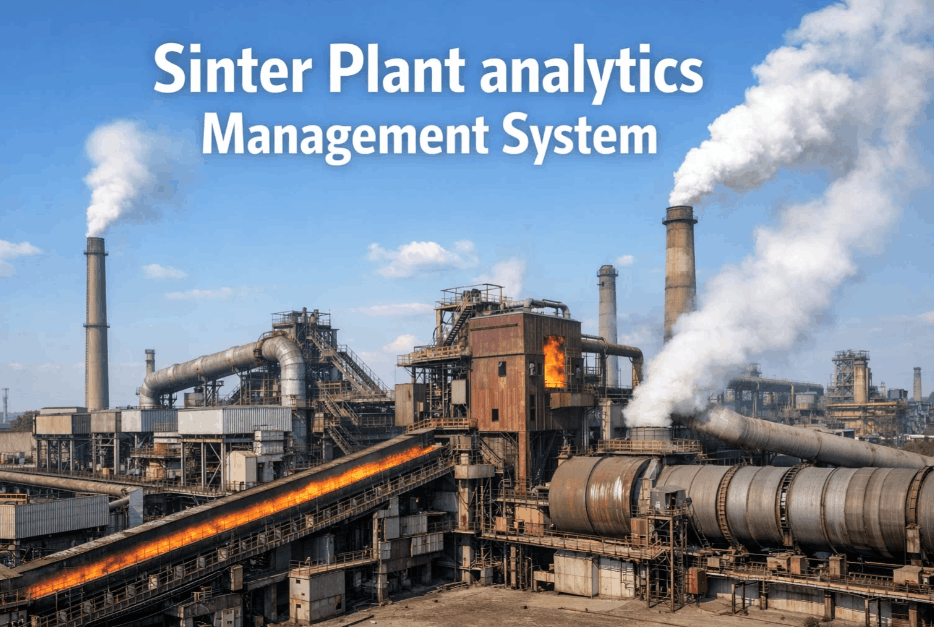
Sinter Plant analytics: Machine, Cooler & Exhaust Gas Treatment Equipment
By Friar Lawrence on May 22, 2026
Sinter plants are the upstream heartbeat of integrated steelmaking — converting iron ore fines, limestone, coke breeze, and return fines into a thermally processed burden material that the blast furnace can efficiently reduce. When the sinter machine runs well, the blast furnace runs well. When it does not, the production losses cascade downstream within hours. Yet sinter plant maintenance programs remain among the most calendar-dependent, least data-driven in the integrated steel value chain. Strand drives, wind boxes, cooler fans, electrostatic precipitators, and ignition hoods are maintained on fixed intervals — regardless of actual operating condition, cumulative thermal load, or the progressive wear signatures that predict failure weeks before it occurs. Organizations that schedule a sinter plant maintenance demo with iFactory are discovering how AI-integrated condition monitoring closes the gap between scheduled inspection and real-time equipment health — before a strand stoppage shuts down the blast furnace burden supply.
The Maintenance Intelligence Gap in U.S. Sinter Plants
Sinter machine availability directly determines blast furnace burden continuity. Calendar-based maintenance is the primary driver of avoidable downtime in sintering operations.
$95K
average cost per hour of unplanned sinter machine stoppage including BF burden impact
–41%
reduction in unplanned sinter plant downtime with AI condition monitoring programs
18 mo
typical full ROI window for an integrated sinter plant predictive maintenance program
The maintenance challenge in sintering is compounded by the thermal environment. Sinter machines operate at process temperatures exceeding 1,300°C at the burn-through point, with cooler exhaust temperatures ranging from 150°C to 400°C depending on bed depth and strand speed. Lubricants degrade faster. Seals fail sooner. Wear rates on pallets, grate bars, and wind box seals are nonlinear functions of operating temperature and sinter mix chemistry — not calendar time. This article maps the maintenance requirements for every major equipment category in the sinter plant, the failure modes that drive unplanned stoppages, and how iFactory's AI-integrated platform converts real-time operating data into prioritized work orders before the blast furnace feels the burden shortfall.
Sinter Machine: Strand, Drive, and Pallet Car Analytics
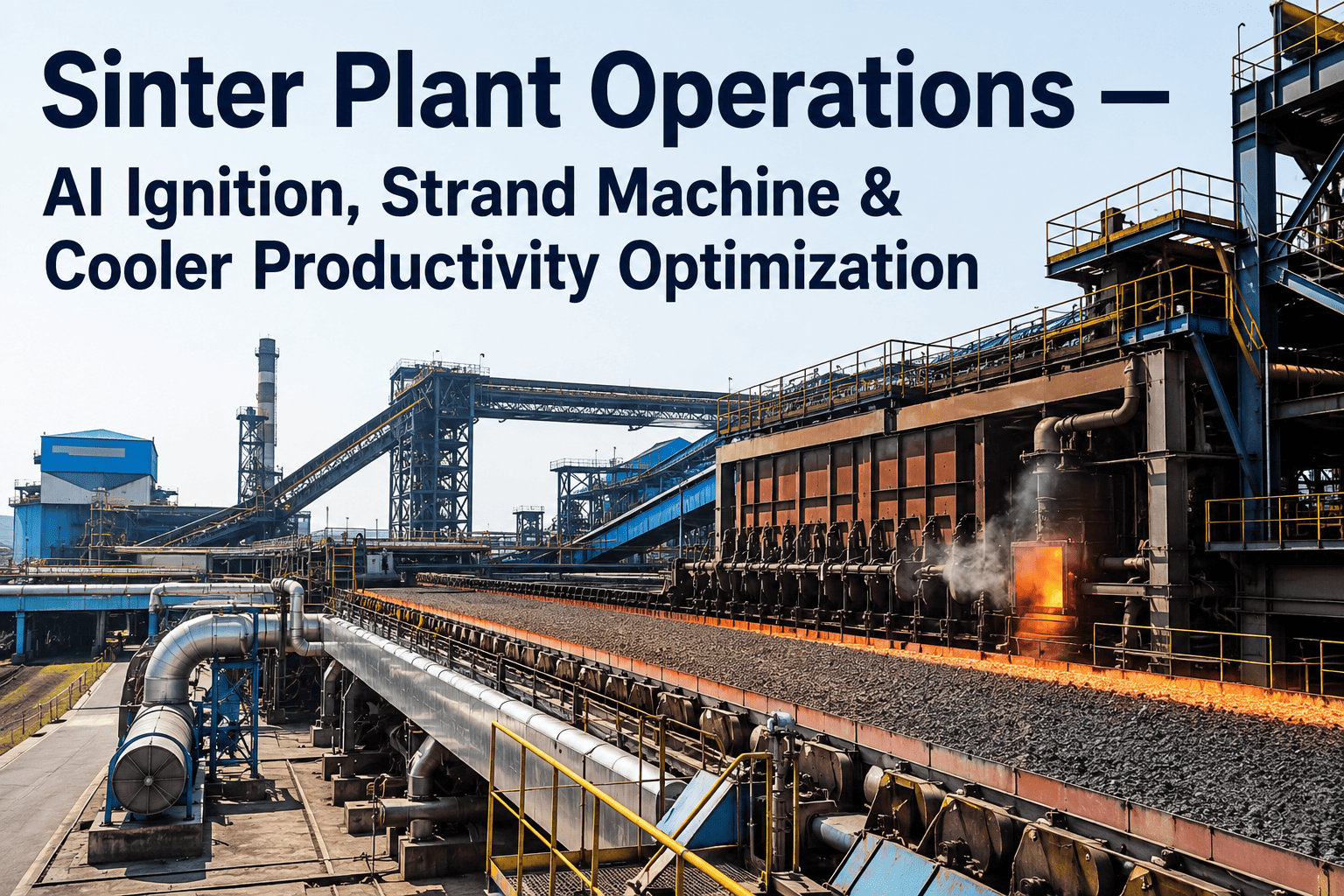
The sinter machine strand is the core production asset in the sintering circuit — a continuous conveyor of pallet cars carrying the green mix from the feed end through the ignition hood, sintering zone, and discharge point. Each pallet car undergoes thermal cycling from ambient to 1,300°C and back every circuit, creating progressive grate bar warping, side plate wear, and wheel bearing degradation that a monthly visual inspection schedule cannot detect at the rate these components deteriorate.
STRAND DRIVE
Main Drive & Sprocket System
Drive motor current trending, sprocket tooth wear monitoring via vibration signature analysis, and lubrication cycle tracking. Current draw deviation above 8% baseline indicates pallet car drag from damaged wheels or misaligned guides — detectable 2–4 weeks before strand seizure.
Motor Current TrendingVibration AnalysisLube Cycle Tracking
PALLET CARS
Grate Bar & Side Plate Condition
Grate bar warping and breakage rates are tracked by circuit count and operating temperature profile. iFactory correlates grate bar replacement frequency with mix chemistry and burn-through point location, identifying which operating conditions accelerate grate bar consumption beyond the design replacement interval.
Grate Bar Life TrackingCircuit CountTemperature Correlation
WIND BOXES
Wind Box & Suction Seal Integrity
Wind box suction seals between pallet cars and the fixed ductwork are among the highest wear-rate components in the sintering system. Pressure differential monitoring across each wind box zone detects seal deterioration through suction loss signatures — quantifying air infiltration before it shifts the burn-through point and degrades sinter quality.
Pallet car wheel bearings on the return strand operate in high-dust, elevated-temperature environments with limited lubrication access. Ultrasonic bearing monitoring and temperature trending on individual car axle positions identifies developing bearing failures before they cause a strand derailment — the highest-consequence failure mode in the sinter machine system.
The sinter cooler receives hot sinter from the discharge end of the strand at 700–900°C and reduces it to a handleable temperature — typically below 150°C — before it enters the crushing and screening circuit. Cooler availability is a direct constraint on strand throughput: if the cooler cannot accept sinter at the machine discharge rate, the strand must slow or stop. Yet cooler maintenance programs in most U.S. steel plants amount to a lubrication schedule and an annual inspection during the planned outage — missing the progressive deterioration patterns that cause the majority of unplanned cooler stoppages.
Radial and tangential cooler fans maintain the airflow profile that determines cooling rate and sinter temperature at the discharge. Motor current trending, bearing vibration analysis (ISO 10816-3), and impeller erosion tracking via flow coefficient deviation identify fan performance degradation before it reduces cooling capacity below the level needed to match strand throughput.
2
Cooler Grate & Drive Ring Condition
Rotary cooler grate sections and the drive ring gear experience progressive wear from abrasive hot sinter contact. Drive motor torque trending identifies increasing mechanical resistance from grate section jamming or drive ring backlash development — both failure modes with 3–6 week detectable lead time before they cause a cooler trip that stops the strand.
3
Cooler Discharge Temperature Profiling
Infrared temperature sensors at the cooler discharge provide a continuous thermal map of sinter bed temperature uniformity. Hot spots above the 150°C target indicate localized airflow blockage from grate section damage or duct pluggage — enabling targeted maintenance rather than a full cooler inspection that requires a strand hold.
4
Lubrication Monitoring & Auto-Alert
Cooler trunnion bearings and drive ring lubrication points are monitored via automatic lubrication system flow confirmation and bearing temperature trending. Missed lube cycle detection is automated — eliminating the manual inspection walk that is skipped during high-production periods and directly causes the majority of cooler bearing failures in U.S. sinter plants.
5
Work Order Generation & Throughput Impact Model
When cooler condition parameters cross alert thresholds, iFactory generates a prioritized work order with the calculated throughput impact of deferring repair — quantifying the production cost of the maintenance deferral decision in real time. Maintenance planners see not just that a component is degrading, but what the strand slow-down cost will be if intervention is delayed to the next planned outage.
–41%
Unplanned Downtime Reduction
Average reduction in unplanned sinter plant stoppages in facilities running continuous condition monitoring versus calendar-only PM programs over a 12-month comparison period.
+17%
Cooler Fan Life Extension
Average increase in cooler fan impeller service life when AI-driven performance trending replaces fixed replacement intervals, by catching early-stage erosion before it accelerates into structural impeller failure.
3.2 wk
Average Detection Lead Time
Average advance warning provided by iFactory condition monitoring before a sinter cooler component reaches failure threshold — enabling planned intervention during a scheduled maintenance window rather than emergency shutdown.
Connect Your Sinter Plant to iFactory Condition Monitoring
iFactory integrates with your existing process historians, vibration sensors, and lubrication systems to deliver real-time sinter machine and cooler health monitoring with automated work order generation. See how it maps to your specific equipment configuration in a live platform walkthrough.
Exhaust Gas Treatment: ESP, Bag Filter & Main Exhaust Fan Analytics
Sinter plant exhaust gas treatment systems sit at the intersection of production reliability and environmental compliance. The main exhaust fan — the largest rotating machine in the sintering circuit by power consumption — creates the negative pressure that draws combustion air through the sinter bed and determines strand speed capability. The electrostatic precipitator or bag filter downstream of it captures particulate matter to meet EPA emission limits under 40 CFR Part 60, Subpart A and the Iron and Steel MACT standards. When either system underperforms, the plant faces a choice between slowing the strand to stay within emission limits or running to throughput and accepting citation risk. Neither outcome is acceptable. iFactory's exhaust gas treatment monitoring module eliminates that choice by detecting ESP and bag filter performance degradation before it constrains production. Book an exhaust gas treatment monitoring demo
iFactory integrates with CEMS (Continuous Emission Monitoring Systems) to correlate real-time opacity and SO₂ readings with equipment condition parameters — providing emission compliance context for every maintenance alert.
Ignition Hood & Raw Material Handling: Upstream Equipment Analytics
Ignition hood performance and raw material handling system reliability are the two upstream variables with the greatest influence on sinter quality consistency — yet both receive disproportionately less maintenance attention than the strand and cooler systems they feed. An ignition hood with degraded burner performance or a failing gas pressure regulator does not stop the machine immediately. It produces poor ignition uniformity that shows up as sinter quality variance — higher return fines, reduced tumble index, degraded reducibility — that the blast furnace absorbs as efficiency loss before the cause is traced back to the sintering circuit.
Ignition Hood Analytics Program
Individual burner flame temperature monitoring via thermocouple array — detects clogged nozzles and gas pressure imbalance before ignition quality degrades
Gas pressure regulator cycling frequency tracking — increasing regulation frequency indicates valve seat wear requiring replacement before loss of pressure control
Refractory lining temperature trending via embedded thermocouples — identifies hot spots indicating refractory spallation before structural lining failure requires emergency shutdown
Ignition hood pressure differential control — suction balance between hood interior and sinter bed surface monitored to prevent over-ignition or under-ignition conditions
Burn-through point (BTP) correlation — iFactory links ignition hood burner condition to BTP location trending, identifying ignition performance degradation through its downstream impact on sintering zone position
Automated work order generation when burner performance drops below 95% of design heat release — linking maintenance trigger to sinter quality impact quantification
Raw Material Handling Equipment Analytics
Drum mixer fill level and motor current trending — identifies liner wear and mixing blade degradation through energy consumption deviation from the baseline at equivalent throughput
Proportioning bin weigh feeder calibration drift tracking — automatic recalibration alerts when feeder accuracy deviates beyond ±0.5% of target, preventing mix chemistry shift before it affects sinter basicity
Return sinter screen vibration monitoring — screen motor bearing analysis and deck amplitude trending detects screen blinding and bearing deterioration that reduces oversized return fines separation efficiency
Conveyor belt tension and tracking monitoring — load cell and belt tracking sensor integration identifies belt slippage and mistracking before they cause material spillage or belt damage in the high-temperature zone near the strand discharge
Coke breeze and limestone bin flow monitoring — bin pluggage detection via load cell rate-of-change analysis, triggering flow restoration alerts before a proportioning interruption creates a green mix chemistry excursion
Windbox draft profile monitoring — individual wind box suction readings mapped to the sinter bed position model, identifying localized permeability changes from mix moisture or granulation problems before they shift BTP position outside control limits
Want to see how iFactory maps condition monitoring to your sinter plant's specific equipment configuration — strand, cooler, ESP, and ignition hood in a single dashboard? Schedule a 30-minute platform walkthrough with iFactory's metals industry engineering team.
Integrated Maintenance Program: From Fragmented PM to Unified Equipment Intelligence
The structural challenge in sinter plant maintenance is not a lack of data — it is a lack of data integration. A typical U.S. sinter plant generates vibration data from 40–80 monitoring points, process data from 200–500 PI tags, lubrication records in a paper-based PM system, work orders in a CMMS that is not connected to the condition monitoring platform, and emission compliance records in a separate environmental management system. No single person can monitor all of these simultaneously, which means the failure signal that shows up in the vibration data on Monday is not connected to the lubrication miss recorded on Friday until after the bearing fails on Wednesday. iFactory's unified sinter plant maintenance platform eliminates those disconnects.
MAINTENANCE PROGRAM ELEMENT
TRADITIONAL APPROACH
iFACTORY AI APPROACH
PROGRAM IMPACT
Strand Drive Monitoring
Monthly vibration route by technician
Continuous — automated alert at 8% current deviation
3–4 week failure detection lead time
ESP Performance Tracking
Daily opacity log reviewed weekly
Real-time field current + rapper confirmation
Zero missed EPA opacity threshold events
Cooler Fan Maintenance
Fixed 6-month overhaul interval
Condition-based — +17% average life extension
$280,000+ annual parts cost reduction
Ignition Hood Burner Analytics
Quarterly burner inspection during outage
Continuous flame temp + BTP correlation
Sinter quality variance reduction linked to burner health
Lubrication Compliance
Manual route — missed during high production
Auto-lube flow confirmation + bearing temp alert
Bearing failure rate reduced by 63% on average
Work Order Generation
Manual entry after condition report review
Automated — alert to work order in under 4 minutes
Finding-to-repair cycle compressed by 6.2 days avg
Expert Perspective
"The sinter plant is where maintenance programs most often fail integrated steel operations — not because the equipment is poorly designed, but because the data that would allow proactive intervention exists in four or five separate systems that nobody has connected. I have reviewed sinter plant RCA reports where the vibration data showed the main exhaust fan developing an imbalance fault six weeks before it tripped, the process historian showed the suction pressure dropping progressively over that same period, and the work order system had a lubrication miss recorded two weeks prior — but none of those systems talked to each other, so nobody connected the dots until the fan was on the ground. What the AI platform does is not magic. It connects data streams that already exist and alerts the right person at the right time. The economics are not subtle: one prevented main exhaust fan failure in a sinter plant pays for three to five years of platform costs, and that is before you count the blast furnace burden disruption that comes with every unplanned strand stoppage."
— Sinter Plant Reliability Engineering, Integrated Steelmaking Operations & Predictive Maintenance, Industry Best Practice
63%
reduction in sinter plant bearing failures with automated lubrication compliance monitoring
6.2 days
average compression of finding-to-repair cycle with automated work order generation
$1.4M+
average annual avoided downtime cost recovery in iFactory-integrated sinter plant programs
Conclusion: Sinter Plant Analytics Is a Blast Furnace Reliability Investment
Every ton of sinter the strand fails to deliver becomes a blast furnace throughput constraint within hours. Managing that risk through calendar-based PM programs and disconnected condition monitoring systems is the structural reason that unplanned sinter plant stoppages remain one of the most costly maintenance failure modes in integrated steelmaking. The equipment is instrumented. The failure modes are predictable. The data streams exist. What most U.S. sinter plants lack is the platform that connects those streams — vibration to lubrication record to process historian to work order — in real time, with AI-driven alert logic that tells the right person what is wrong, which asset it affects, and what it will cost to defer the repair.
iFactory's sinter plant maintenance platform delivers that integration across every equipment category: strand drive and pallet cars, cooler fans and grate systems, ESP and bag filter performance, main exhaust fan condition, ignition hood burner health, and raw material handling system reliability. The result is a maintenance program that responds to equipment condition rather than calendar intervals, reduces unplanned stoppages by an average of 41%, and builds the audit-ready maintenance history that supports both regulatory compliance and capital planning decisions.
–41%
Unplanned Sinter Plant Downtime
+17%
Cooler Fan Service Life Extension
63%
Bearing Failure Rate Reduction
$1.4M+
Annual Avoided Downtime Cost
Turn Sinter Plant Sensor Data Into Automated Maintenance Intelligence
iFactory connects your sinter machine, cooler, ESP, bag filter, ignition hood, and raw material handling equipment into a single AI-powered condition monitoring dashboard — with automated work order generation, lubrication compliance tracking, and emission alert integration. Get a free sinter plant maintenance readiness assessment scoped to your equipment configuration.
The five highest-priority condition monitoring points on a sinter machine strand are: main drive motor current (baseline deviation indicates pallet car drag or sprocket wear), strand speed vs. motor load ratio (identifies progressive mechanical resistance), wind box pressure differential by zone (quantifies suction seal wear and air infiltration rate), pallet car wheel bearing temperature on the return strand (detects developing bearing failures before derailment risk), and burn-through point location via waste gas temperature profile (an integrating indicator of overall strand condition, mix permeability, and ignition performance simultaneously). iFactory integrates all five parameter sets into a single strand health score updated every 15 minutes, with alert thresholds calibrated to your specific machine design and operating range.
iFactory integrates with the ESP's transformer-rectifier controller to monitor secondary current and voltage in each electrical field continuously — a more sensitive early-warning parameter than outlet opacity because field performance degradation precedes opacity exceedance by hours to days. Rapper timing and stroke confirmation are tracked per rapper to detect mechanism failures before they cause plate buildup that suppresses collection efficiency. All ESP performance data is timestamped and linked to the CEMS opacity and SO₂ data stream, creating an integrated compliance record that documents both the emission reading and the equipment operating condition at the time of any exceedance event. This documentation is directly usable in EPA inspection responses under 40 CFR Part 60 Subpart A and can demonstrate good-faith equipment maintenance as a mitigating factor in any enforcement action.
ISO 10816-3 (now superseded by ISO 20816-3) defines vibration severity zones for industrial fans with shaft heights above 315mm — the category that covers main exhaust fans and cooler fans in steel plant applications. The standard defines four severity zones: Zone A (new equipment, RMS velocity ≤2.3 mm/s), Zone B (acceptable long-term operation, ≤4.5 mm/s), Zone C (caution, ≤7.1 mm/s), and Zone D (danger, trip recommended). iFactory configures bearing vibration alerts at the Zone B/C boundary as a maintenance action trigger and at the Zone C/D boundary as an urgent shutdown-prevention alert. For main exhaust fans where the consequence of trip is immediate strand stoppage, iFactory additionally monitors 1x and 2x running speed vibration components to distinguish mass imbalance (from blade erosion or buildup) from misalignment or bearing defect signatures — enabling the right corrective action to be specified in the work order rather than requiring a post-dismantling diagnosis.
Ignition hood burner condition affects sinter quality through two mechanisms: ignition temperature uniformity and ignition time at the bed surface. A burner array operating with 15–20% of nozzles partially blocked from coke deposits or scale buildup creates a non-uniform ignition profile across the strand width — producing high-strength sinter on the well-ignited portions and under-sintered material on the poorly ignited sections. This shows up as increased return fines generation (typically 3–7% above baseline), reduced mean tumble index (often 2–4 points), and variable reducibility in the blast furnace burden. iFactory quantifies this connection by correlating individual burner thermocouple data with downstream sinter quality parameters from the laboratory management system — identifying which burner condition thresholds correspond to measurable quality degradation for your specific mix chemistry and strand speed combination. This correlation becomes the basis for condition-based burner maintenance intervals that replace fixed quarterly inspection schedules.
iFactory's sinter plant integration typically follows a four-phase deployment: Phase 1 (weeks 1–3) covers data connectivity — integrating process historian, vibration monitoring system, CEMS, and CMMS via OPC-UA, Modbus, or REST API depending on existing infrastructure. Phase 2 (weeks 3–6) establishes equipment baselines and configures alert thresholds specific to each asset. Phase 3 (weeks 6–10) activates automated work order generation and validates the finding-to-repair workflow with the maintenance planning team. Phase 4 (months 3–6) focuses on AI model refinement using the plant's actual failure history and operating patterns. ROI typically appears on two timescales: immediate savings from the first condition-based PM deferrals (avoiding unnecessary scheduled overhauls) and reliability ROI from prevented failures accumulating over 6–18 months. For a mid-sized U.S. sinter plant producing 3,000–5,000 tons per day, full platform cost recovery within 12–18 months is the consistent outcome — driven primarily by avoidance of 1–2 unplanned strand stoppages that would otherwise have occurred within that period. A site-specific ROI model using your plant's actual downtime history and production value can be developed during a free 30-minute assessment session.