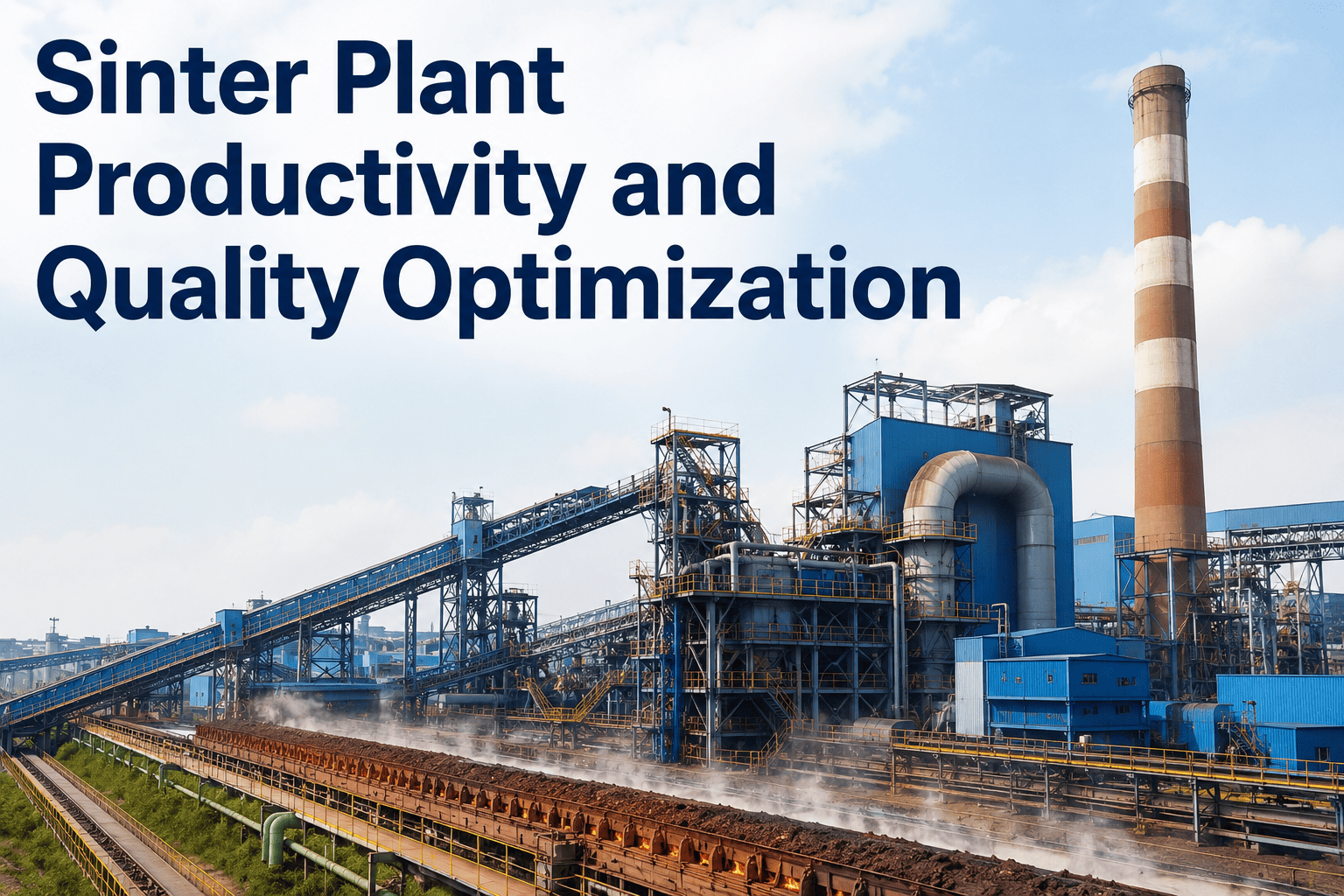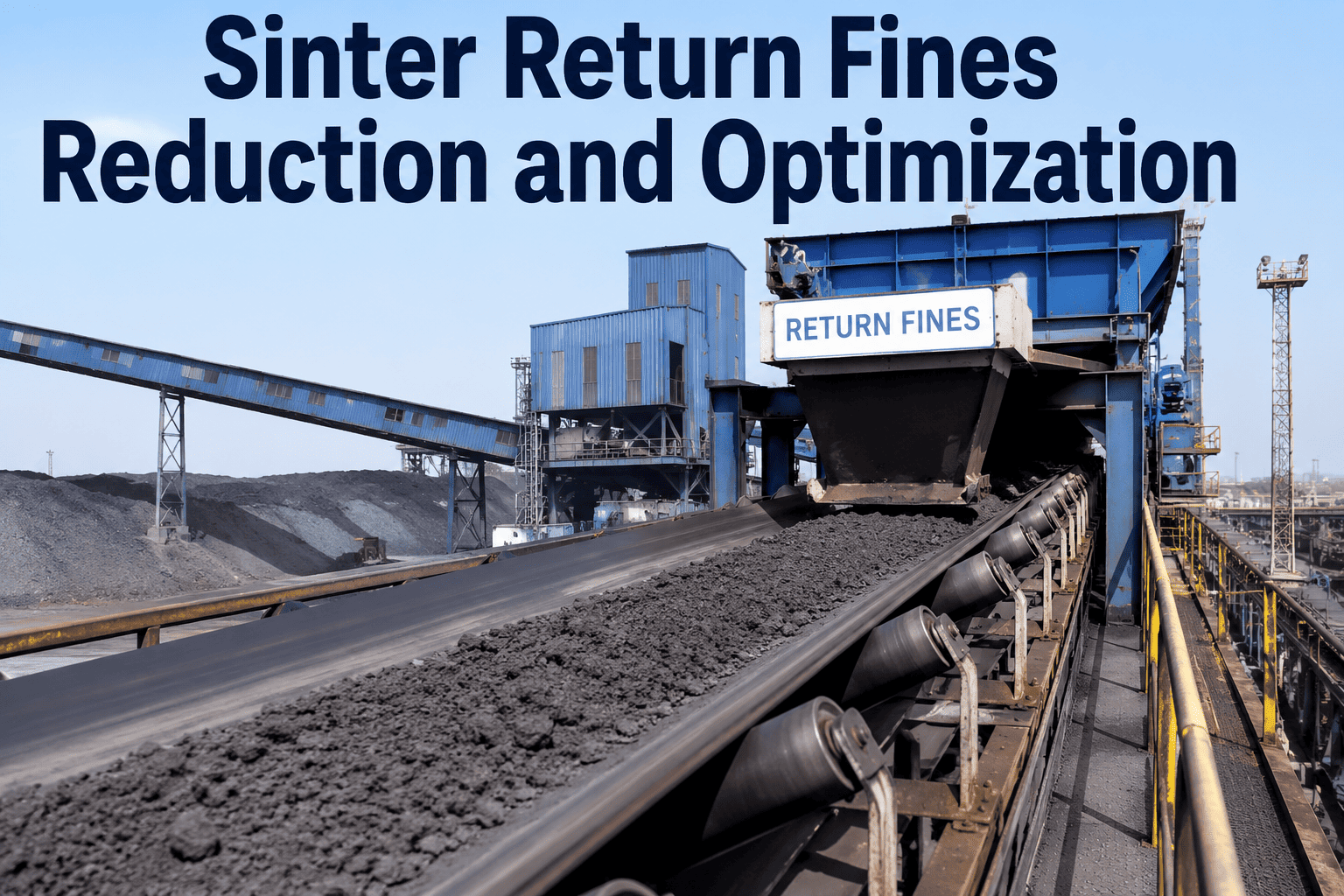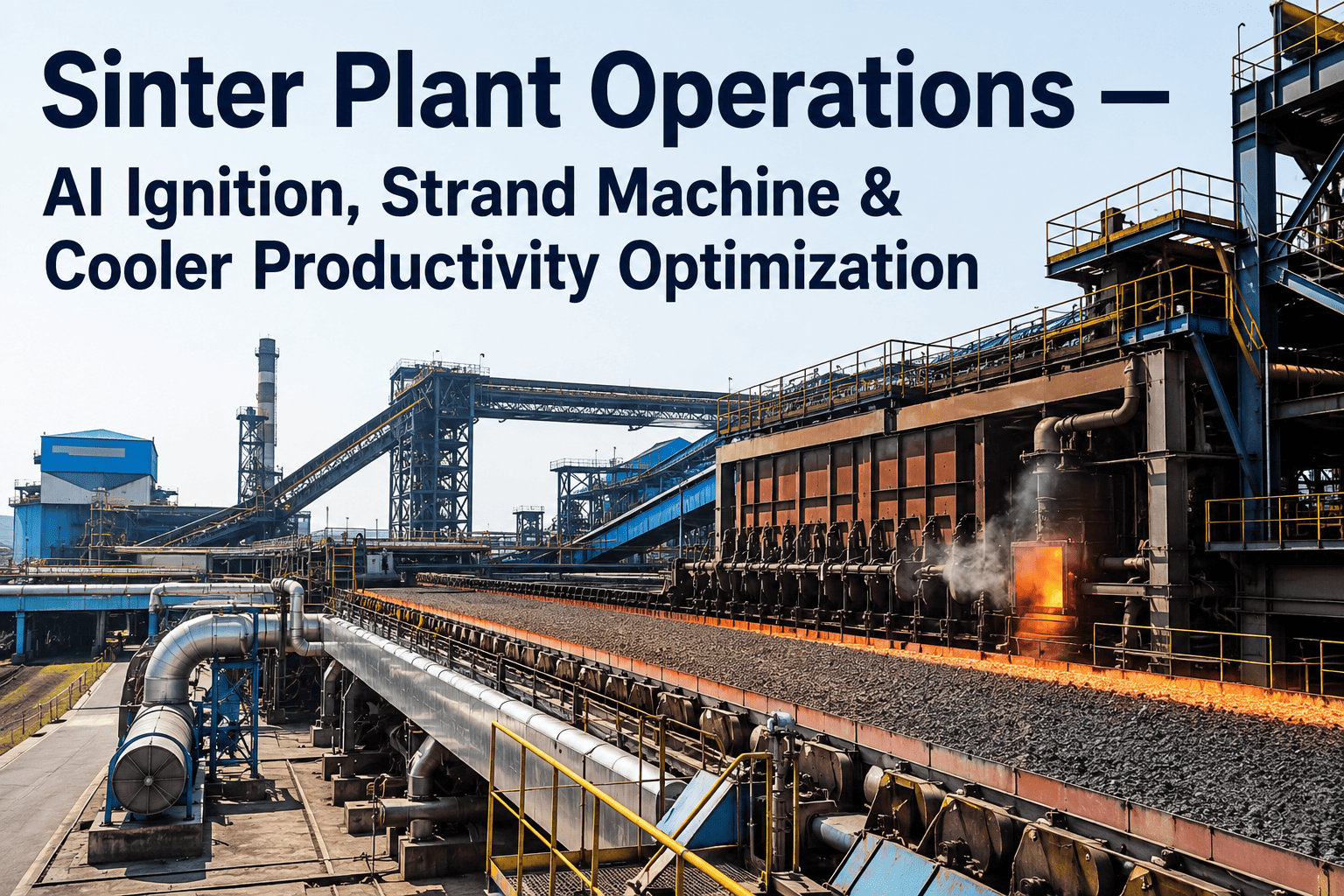
Sinter quality is decided in about forty minutes — the time it takes raw mix to travel from ignition hood to discharge on the strand. Everything that happens in that window determines whether the plant ships consistent, well-fused sinter with a stable BV index or spends the next shift fighting return fines and inconsistent blast furnace feed. Ignition intensity, strand bed permeability, and cooler airflow all interact continuously, and a process engineer watching them through periodic sampling is always working a step behind the strand. AI-based process monitoring reads that whole window in real time. See how it maps to your own strand data when you book a demo.
Forty minutes on the strand decides sinter quality. AI reads every one of them in real time.
Ignition performance, strand machine condition, and cooler efficiency interact continuously across the sintering cycle. AI process monitoring holds BV index and productivity steady by catching drift before it reaches the discharge end.
The sintering process, stage by stage
Raw mix becomes finished sinter through four connected stages on the strand. Each stage sets up conditions for the next, so a problem at ignition doesn't stay contained to ignition — it shows up as a downstream permeability or cooling issue if it isn't caught early. Understanding this chain is the starting point for any process improvement effort, because treating the four stages as independent variables to optimize separately misses exactly the interactions that determine whether a batch ships as consistent, well-fused sinter or ends up partly reclassified as return fines.
Productivity across the three critical zones
Sinter plant productivity is a function of three zones working in balance, not any single zone maximized in isolation. Pushing ignition intensity too hard without matching strand permeability just moves the bottleneck downstream.
Why cooler airflow deserves its own attention, not just ignition and strand
Cooler performance tends to get less engineering attention than ignition and strand permeability, partly because a cooler rarely causes an outright quality failure the way a cold ignition zone does. But cooler airflow efficiency affects two things that matter directly to plant economics: how quickly hot sinter can be brought down to a safe handling temperature, and how much of that heat can be recovered rather than exhausted. A cooler running below its airflow potential either slows the effective throughput of the whole strand, because product backs up waiting to cool, or ships product at a higher-than-ideal temperature that creates handling and screening problems downstream.
Heat recovery adds a second dimension worth tracking separately from cooling rate. Many sinter plants use cooler exhaust air for preheating or waste heat recovery, and the efficiency of that recovery depends on maintaining a consistent airflow and temperature profile across the cooler bed. Uneven cooling — hot spots where product isn't getting adequate airflow — reduces both the mechanical cooling performance and the quality of the exhaust stream available for heat recovery, a double cost that's easy to miss without airflow visibility at the individual cooler zone level rather than a single aggregate exhaust temperature reading.
iFactory benchmarks ignition, permeability, and cooler performance against your plant's own historical operating range, not a generic industry average.
Periodic sampling versus continuous process monitoring
Most sinter plants still rely on lab sampling of finished sinter to judge process performance — tumbler strength tests, size distribution, and BV index checked on a batch basis after the product is already made. That approach tells you what happened, not what's happening, and by the time a lab result comes back, the strand has already produced several more batches under whatever condition caused the quality shift in the first place.
| Monitoring approach | Periodic lab sampling | AI continuous process monitoring |
|---|---|---|
| Feedback timing | After the batch is already produced | Real-time during the sintering cycle |
| Ignition performance | Inferred from downstream product quality | Measured directly at the hood |
| Bed permeability | Not directly measured | Tracked continuously via suction and airflow |
| Root cause attribution | Difficult to trace back to zone or shift | Tied directly to zone, time, and raw mix batch |
| Corrective action | Applied to the next batch | Applied within the current cycle where possible |
Why permeability drift is the hardest problem to catch manually
Of the three zones that determine sinter productivity, bed permeability is the one most likely to drift without anyone noticing until it shows up in finished product quality. Ignition problems tend to announce themselves — a hood running cold produces a visibly different flame pattern, and operators develop an intuition for spotting it. Cooler airflow issues show up as an obvious temperature problem at discharge. Permeability drift is quieter. It develops gradually as raw mix moisture, granulation, or coke breeze distribution shifts slightly from batch to batch, and none of those shifts are dramatic enough on their own to trigger a manual intervention.
The compounding effect is what makes this expensive. A slightly less permeable bed doesn't just reduce productivity on that batch — it changes how the combustion front propagates, which changes fusion consistency, which changes how much of that batch ends up as return fines that then get recycled back into the raw mix for a future batch. Left unaddressed across several shifts, this can turn into a self-reinforcing cycle where return fines content keeps climbing and nobody can point to a single root cause because the drift happened gradually across many batches rather than in one identifiable event.
Continuous wind box suction monitoring breaks this cycle by making permeability visible zone by zone, batch by batch, instead of inferring it after the fact from product quality. When suction readings across the strand width start to diverge from their normal pattern, that's the permeability signal showing up in real time — days or weeks before it would otherwise surface as a return fines problem an engineer has to investigate backward from finished product data.
Four zones on the strand worth watching separately
Not every section of the strand behaves the same way, and treating the whole bed as one uniform zone hides exactly the variation that matters most for consistent sinter quality.
What consistent BV index is actually worth downstream
Sinter quality doesn't stop mattering once it leaves the strand. Blast furnace operators depend on a stable BV index and consistent size distribution to maintain furnace permeability, and sinter that varies significantly batch to batch forces the furnace to compensate — usually through more conservative burden management that trades away some of the productivity the furnace would otherwise deliver. A sinter plant that ships tightly controlled, consistent product isn't just meeting a quality spec, it's directly enabling the blast furnace to run closer to its productivity ceiling.
Return fines carry a second, more direct cost. Every tonne of sinter that comes back as fines has to be reprocessed through the raw mix, consuming strand capacity and fuel a second time without producing any net new finished product. On a plant running near capacity, a meaningfully elevated return fines ratio can represent a significant share of total strand throughput being spent reprocessing material rather than producing new sinter — capacity that's effectively invisible on a simple output tonnage report but very visible once return fines ratio is tracked as its own metric.
Because ignition, permeability, and cooling all interact, isolated point fixes rarely hold. A plant that tightens ignition control without addressing a permeability issue elsewhere on the strand often sees the productivity gain erode within weeks as the untreated variable reasserts itself. This is the core argument for monitoring all three zones together rather than optimizing one in isolation — the strand behaves as one system, and the process view should match that.
The sinter plant monitoring stack
AI-based sinter process monitoring layers sensing, real-time analysis, and operator guidance into one system that reads the strand continuously rather than at sample intervals.
Frequently asked questions
iFactory brings ignition, strand, and cooler data into one real-time process view built for sinter plant engineers. Book a demo and see it against your own strand's operating data.