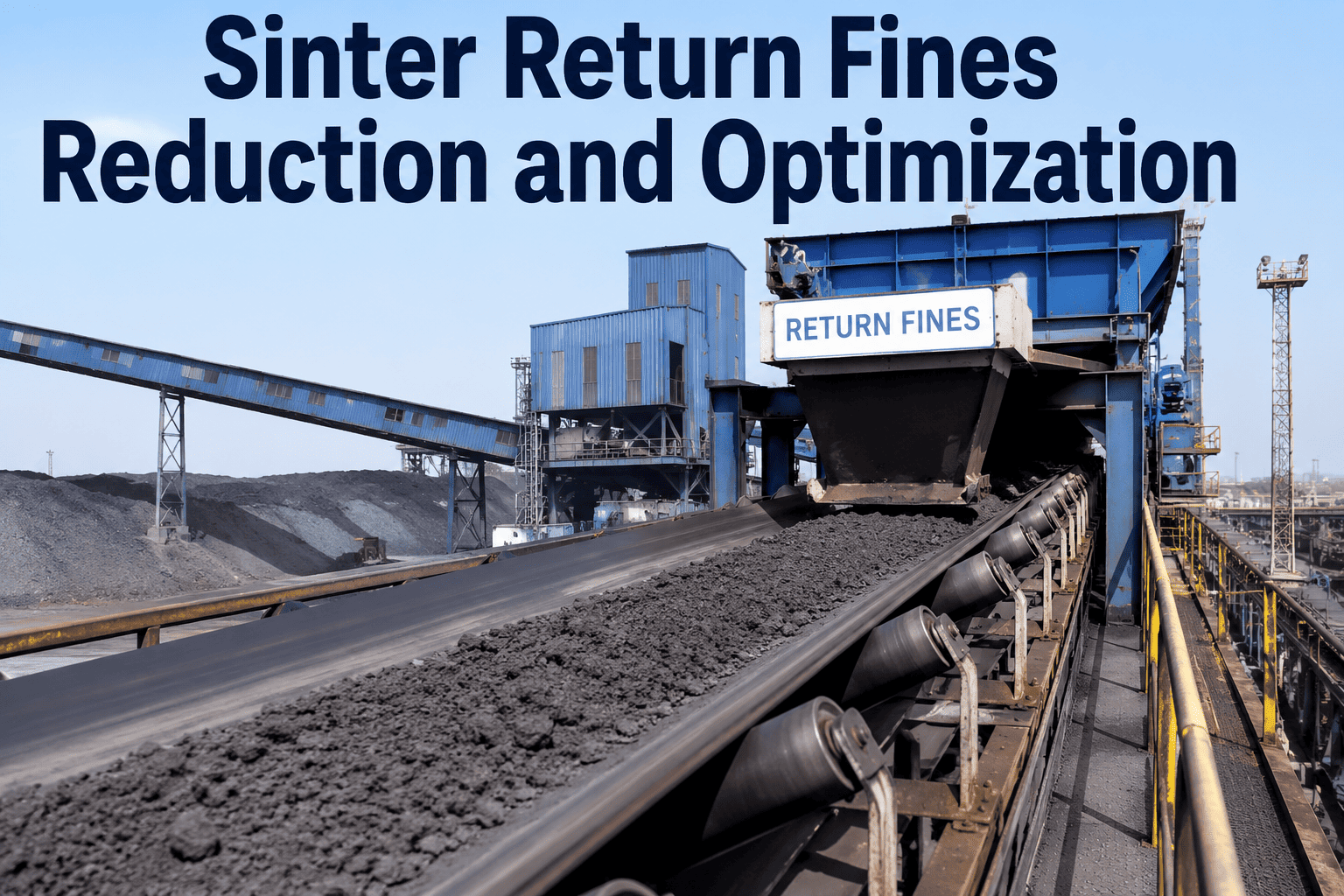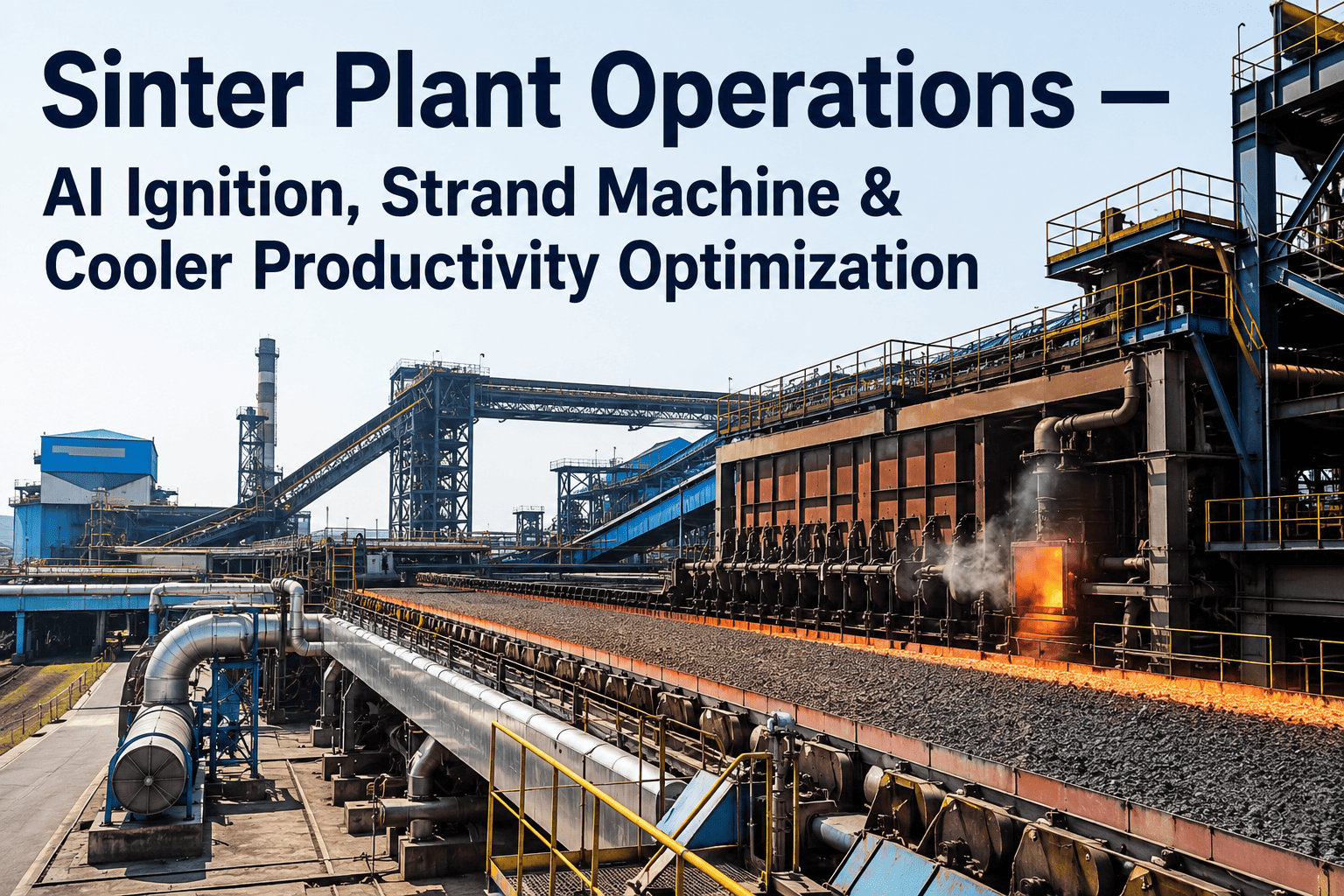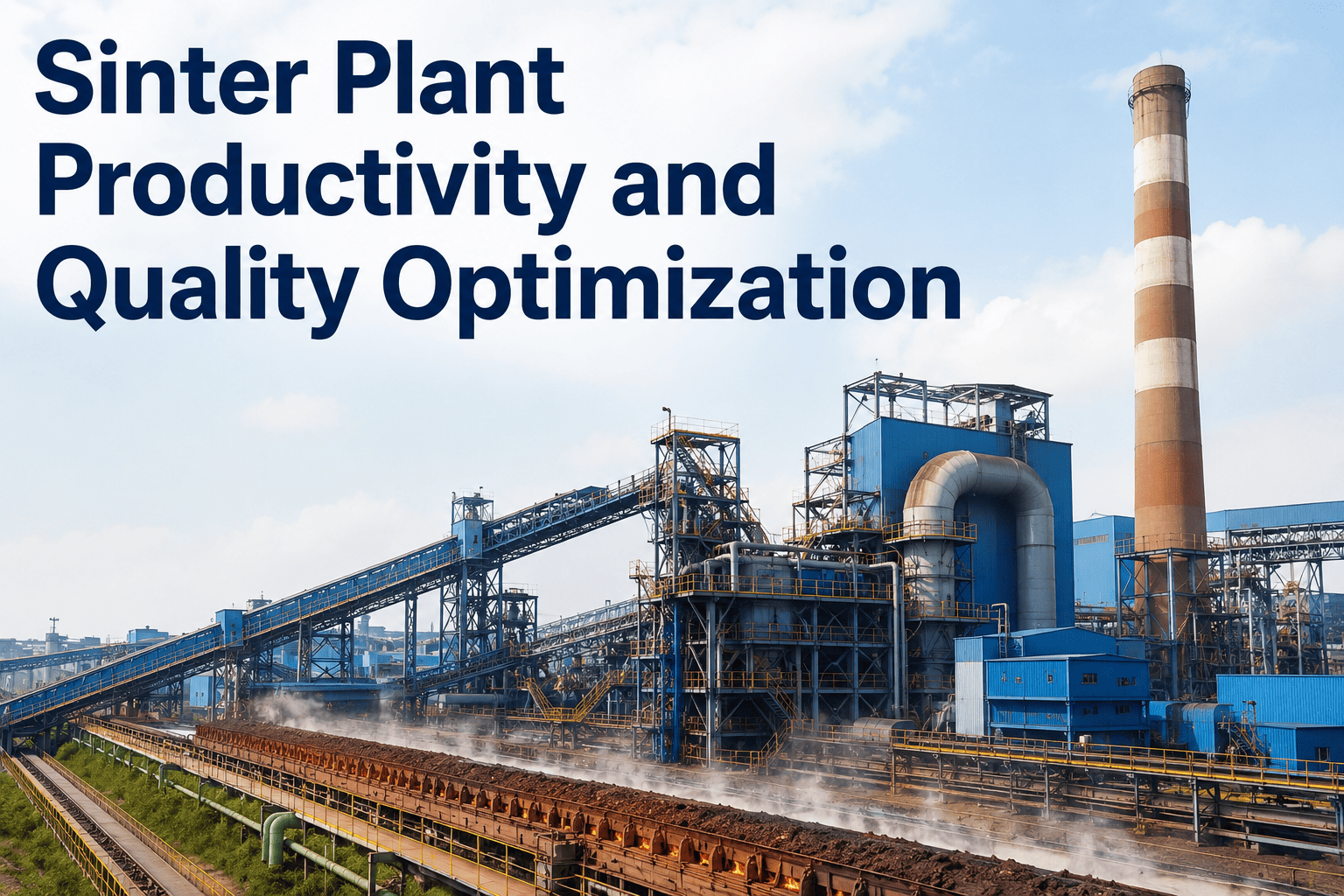
Sinter quality decides how well every downstream tonne of hot metal gets made, yet most sinter plants are still tuned by feel — a little more moisture here, a slightly richer mix there, based on what worked last week. RDI, RI, and basicity all drift together in ways that are hard to track by eye across three shifts a day, and a sinter plant chasing throughput often trades away exactly the quality consistency the blast furnace needs most. iFactory's sinter AI holds mix, ignition, and cooling in the narrow band that keeps both quality and output moving together. Book a sinter plant review to see where your RDI and productivity are actually trading off today.
Sinter Quality and Throughput Don't Have to Be a Trade-Off
AI-guided mix, ignition, and cooling control keeps RDI, RI, and basicity inside target while lifting strand output — because the two are only in conflict when the process is tuned by feel.
The Three Numbers That Define Sinter Quality
A blast furnace superintendent judges incoming sinter on three interconnected properties. Get any one wrong and the furnace pays for it in fuel rate or productivity weeks later.
RDI (reduction degradation index)
Measures how much sinter breaks down into fines during early-stage reduction inside the furnace. High RDI chokes gas permeability exactly where the burden needs it most.
RI (reducibility index)
Measures how readily oxygen can be stripped from the sinter by reducing gas. Low reducibility forces the furnace to burn more coke to achieve the same reduction.
Basicity (CaO/SiO2)
Sets the slag chemistry and melting behavior downstream. Basicity swings from batch to batch force the furnace operator to constantly re-tune burden and flux.
Feel-Based Tuning vs. Model-Guided Tuning
Both approaches use the same raw materials and the same strand. The difference is whether mix and process adjustments are based on the last shift's memory or on a continuously updated model of how this specific mix behaves.
- Mix moisture adjusted by operator judgment shift to shift
- Basicity checked only after the fact, in lab results
- Ignition temperature held at one fixed setpoint regardless of mix
- Return fines rate treated as a fixed cost of doing business
- Quality and productivity managed as competing priorities
- Mix moisture set from a live model of current raw material blend
- Basicity predicted before sintering, not confirmed after
- Ignition profile adjusted to match bed permeability in real time
- Return fines actively minimized as part of the productivity target
- Quality and productivity optimized as one joint objective
How the Model Holds Quality and Output Together
Rather than optimizing throughput and quality as separate problems, the model treats sinter mix, ignition, and cooling as one connected system with a single joint objective.
Raw material fingerprinting
Incoming iron ore fines, coke breeze, and flux are characterized continuously so the model always knows what mix it is actually working with.
Mix and moisture prediction
Target moisture and basicity are set per batch based on the current raw material fingerprint, rather than a single fixed recipe.
Ignition and bed permeability control
Ignition temperature and strand speed are adjusted to match how permeable the current bed actually is, not a standard setting.
Cooling rate tuning
Cooling airflow is tuned to lock in the sinter's mineralogical structure at the point that gives the best RDI and RI for that particular mix.
Closed-loop quality feedback
Lab RDI, RI, and basicity results feed back into the model, continuously sharpening its prediction accuracy for the next batch.
Find Where Your Sinter Quality Is Leaking Productivity
iFactory analyzes your last quarter of mix, process, and lab quality data to show exactly where RDI, RI, and basicity are costing you strand output.
Sinter Quality Benchmarks Blast Furnaces Look For
Targets vary with ore source and furnace burden design, but these ranges reflect what ironmaking teams typically expect from a well-run sinter plant.
What Changes After Model-Guided Sinter Control
Figures reported by sinter plant teams comparing performance before and after joint quality-productivity optimization.
A Sinter Plant Manager's View on Joint Optimization
Every time we pushed strand speed up, quality would slip a little, and every time we protected quality, throughput would slip. It felt like a fixed trade-off until the model showed us the trade-off was really coming from mix moisture lagging behind ore blend changes. Once that was corrected automatically, both numbers moved up together, which none of us expected.
Five Reasons Sinter Quality Drifts Under Pressure
Quality drift on a sinter strand is rarely one dramatic failure. It is usually several small, reasonable-sounding decisions compounding under production pressure.
Ore blend switching
A change in incoming ore fines chemistry shifts basicity and moisture needs, but the mix recipe often does not update until the next lab cycle.
Throughput pressure on ignition time
Speeding up the strand to hit a tonnage target without adjusting ignition intensity leaves parts of the bed under-sintered.
Coke breeze size variation
Inconsistent coke breeze sizing changes combustion rate across the bed, producing uneven strength and RDI within the same batch.
Return fines recycling imbalance
Return fines proportion left unmanaged changes bed permeability and combustion behavior in ways that are easy to miss shift to shift.
Delayed lab feedback
RDI and RI results often arrive hours after the batch that produced them, so corrections always lag the actual process by a full cycle or more.
Sinter Quality Health Check: What to Review This Week
These are the same checks the model runs continuously — most plants can start reviewing them manually as a first diagnostic step.
RDI and RI variability plotted batch to batch against ore blend change events for the same period
Mix moisture setpoint compared against actual incoming raw material moisture content, not the standard recipe value
Basicity swing measured batch to batch and cross-referenced against flux dosing consistency
Return fines percentage tracked against strand productivity to see if recycling is quietly capping output
Lab turnaround time reviewed to see how far behind the live process quality feedback actually runs
Ignition intensity and strand speed checked together, not independently, against any recent throughput push
Frequently Asked Questions
Can quality and productivity really improve at the same time?
In most sinter plants, yes, because the perceived trade-off is usually caused by mix and process settings lagging behind raw material changes rather than a genuine physical limit. Closing that lag with live data typically improves both together rather than forcing a choice.
How quickly can the model react to an ore blend change?
Once raw material fingerprinting is in place, mix recommendations update within the same shift a new blend arrives, rather than waiting for the next scheduled recipe review. Book a demo to see this on a blend change from your own plant's history.
Does this require new sensors on the sinter strand?
Most sinter plants already have the moisture, temperature, and gas flow instrumentation needed. The model is typically deployed against existing strand instrumentation and lab quality data first, before any new hardware is considered.
How does this handle multiple ore sources blended together?
The raw material fingerprinting step is designed specifically for blended sourcing, tracking each component's contribution to the final mix chemistry rather than assuming a single homogeneous ore input.
What is the typical path to a pilot deployment?
Most sinter plants start with a data review covering three to six months of mix, process, and lab quality records, followed by a validation period against live production. Talk to a specialist about the data your plant already has available.
Stop Trading Sinter Quality for Throughput
Book a 30-minute scoping call and bring your last quarter of mix, process, and lab quality data. iFactory shows exactly where RDI, RI, and basicity are costing you output.