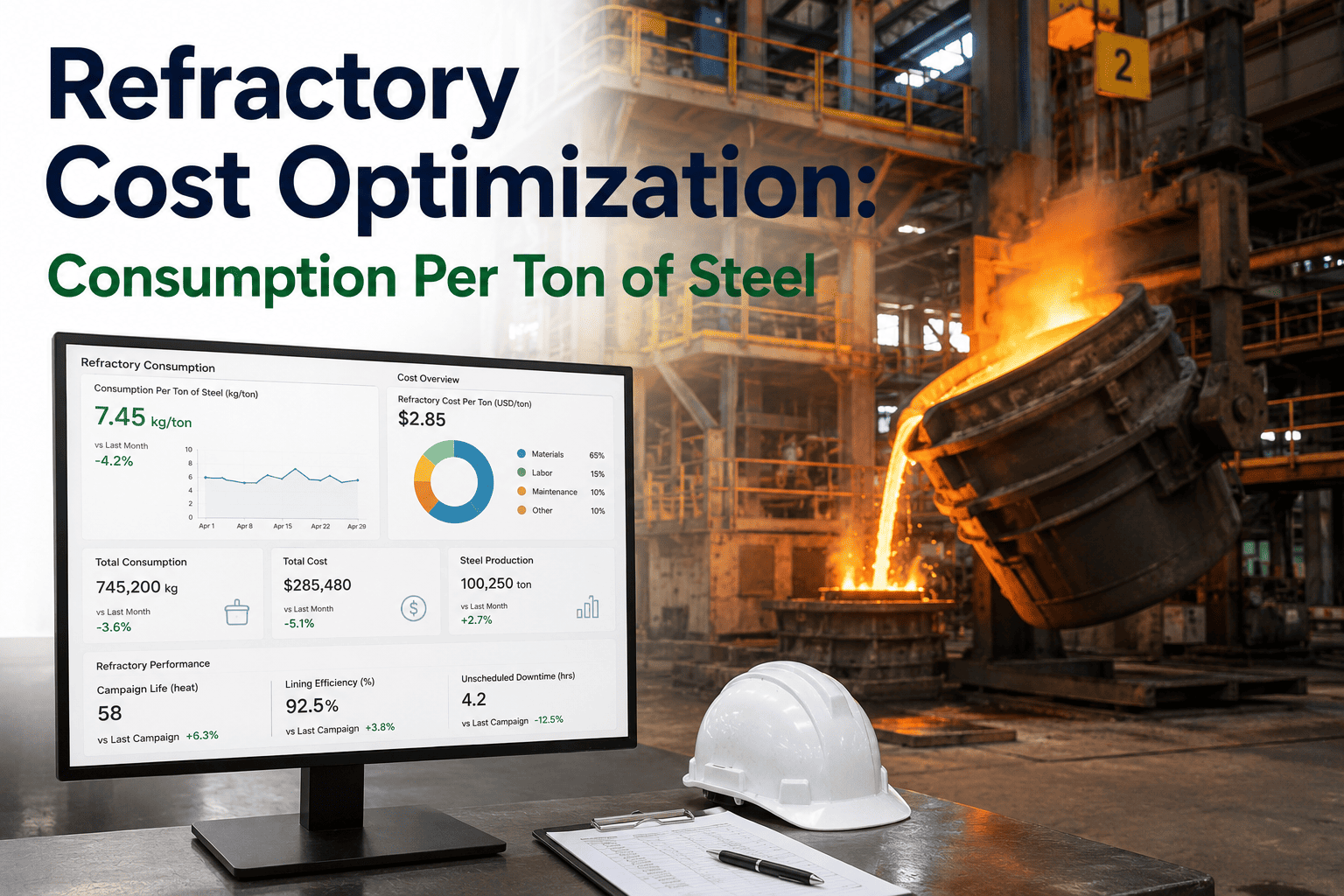
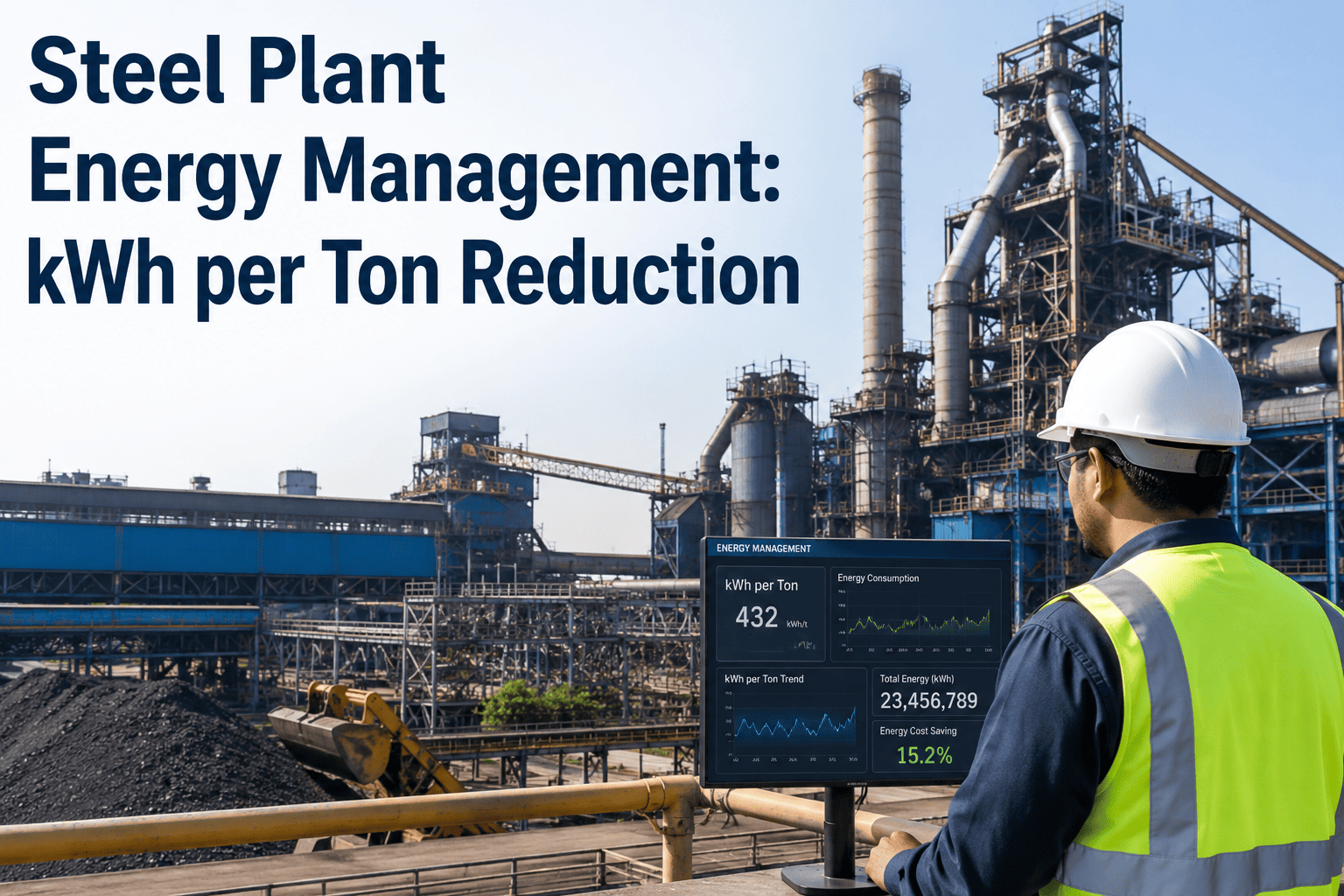
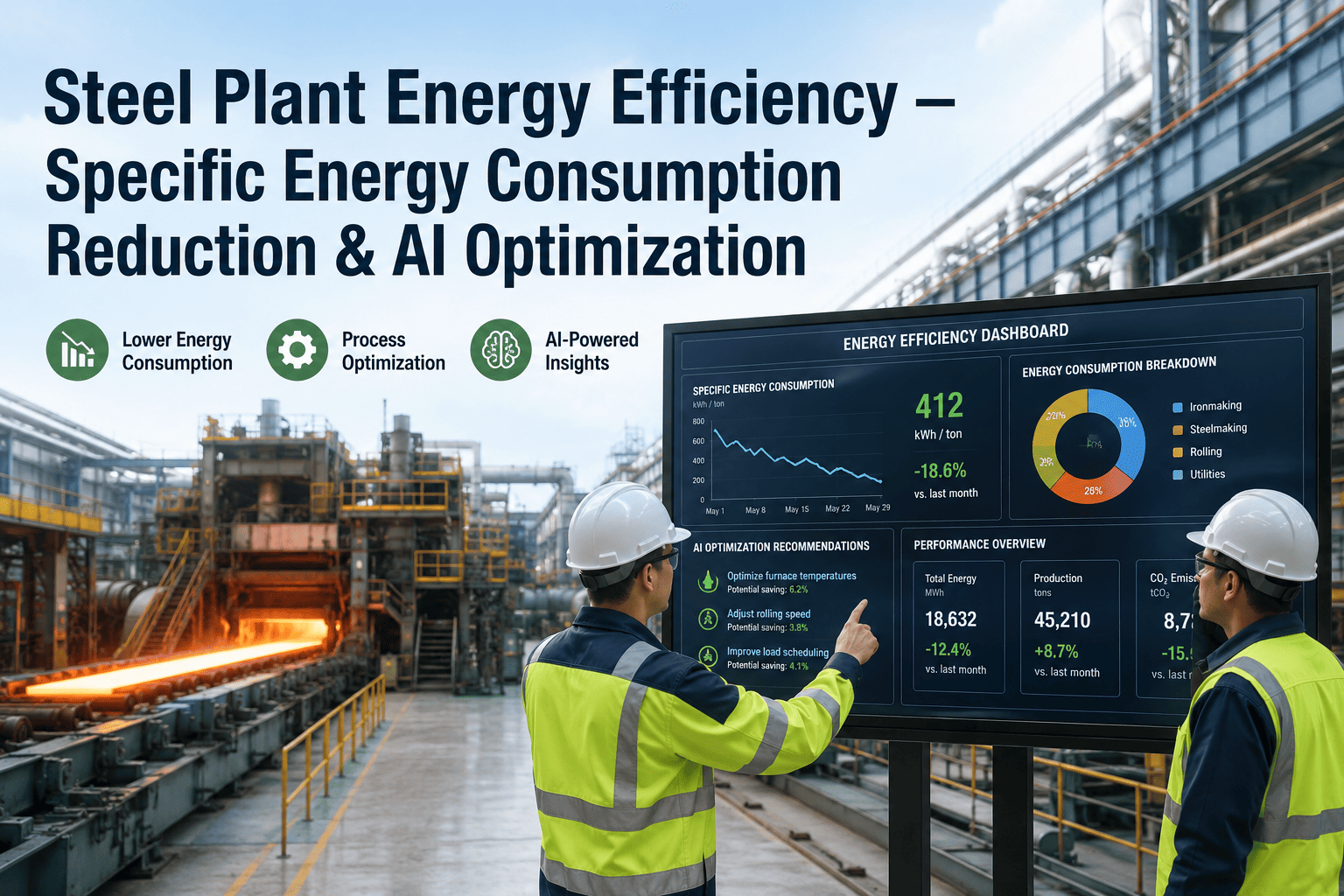
Energy is the largest controllable cost in steel production — representing 20–40% of total operating expenses depending on the route and region. For a 3 MTPA integrated plant, even a 1% improvement in specific energy consumption translates to $800,000–$2.5M in annual savings. Yet most steel plants still manage energy through weekly reports, manual gas balance spreadsheets, and reactive load shedding. iFactory's Energy Dashboard and AI Optimization platform replaces this with real-time visibility, predictive load scheduling, and AI-driven recommendations that systematically reduce energy intensity across every production unit — from blast furnace gas recovery to electrical demand peak management.
Steel Plant Energy Management: AI-Powered Consumption Optimization & Cost Reduction
Reduce energy costs by 8–15% with real-time SEC tracking, gas balance AI, electrical load optimization, and PAT scheme compliance — all in one platform.
The Energy Problem Every Steel Plant Knows — But Few Have Solved
Steel plants generate, recover, and consume energy across dozens of interconnected streams — blast furnace gas, coke oven gas, converter gas, steam, compressed air, and grid electricity all flowing simultaneously. Managing this system manually — with shift logs and monthly energy reports — leaves enormous savings on the table. Schedule a demo to see iFactory's energy AI in action — real-time gas balance, electrical load prediction, and SEC tracking across every production unit.
Six Energy Intelligence Modules — One Unified Platform
iFactory's Energy Dashboard covers every energy stream in the steel plant — from Gcal/t SEC tracking to grid import cost forecasting. Each module connects to your existing meters, PLC systems, and SAP energy management data.
SEC Dashboard
Real-time Gcal/t tracking per unit — BF, BOF, rolling, finishing — versus shift and monthly targets. Automated alerts when SEC drifts above benchmark.
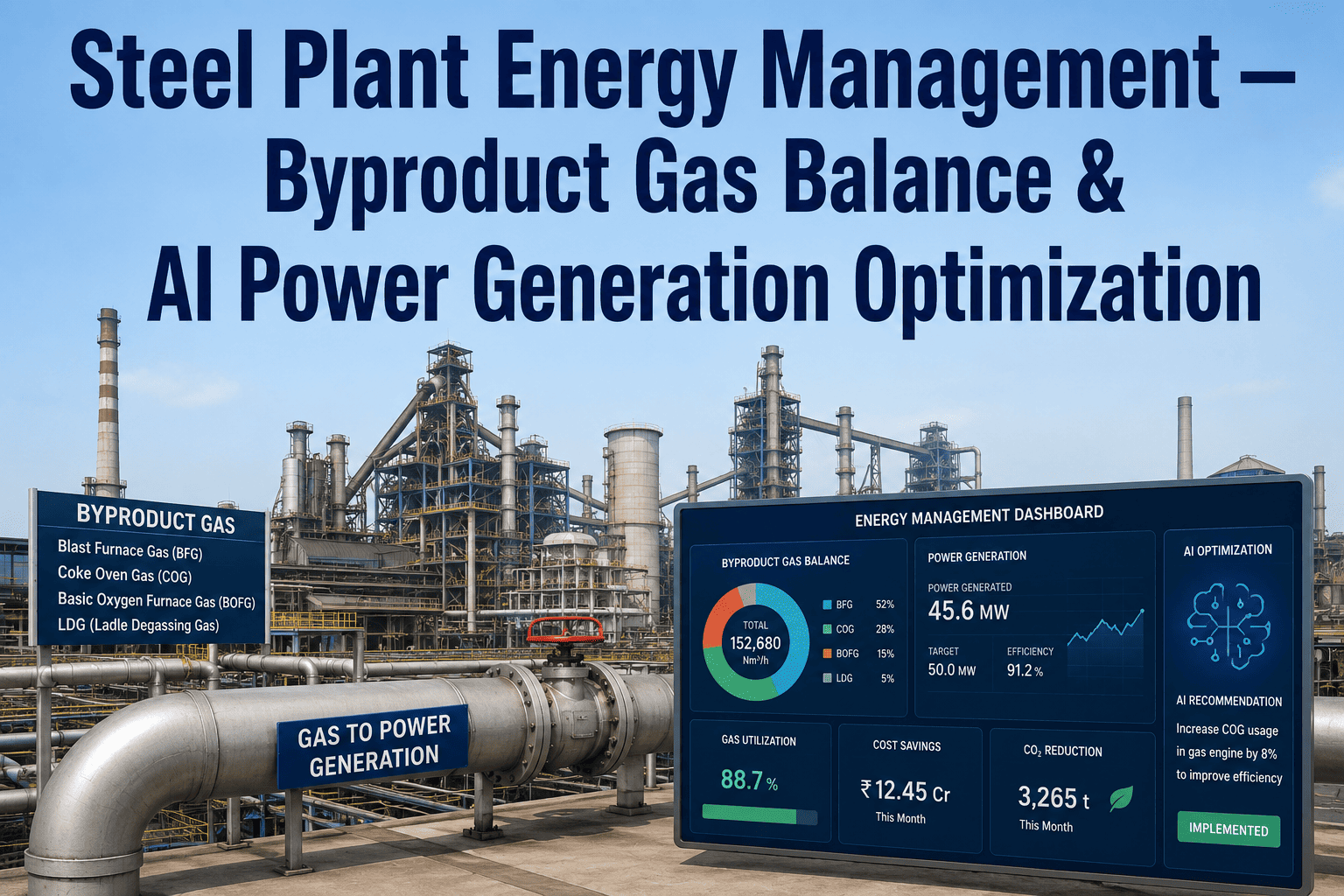
Gas Balance AI
Real-time BF gas, COG, and converter gas balance — predicting surplus and deficit periods 2–4 hours ahead to prevent flaring and optimise co-generation.
Peak Demand Control
AI predicts 15-minute MD peaks and automatically defers deferrable loads — EAF charging, compressed air, water pumping — to avoid grid penalty charges.
PAT Scheme Compliance
Automated SEC data aggregation for Perform Achieve Trade targets — with projection models showing if the plant is on track to achieve its PAT cycle targets before the review date.
Waste Heat Recovery
Tracks WHR system efficiency — sinter cooler, hot stove, BF top pressure — versus design parameters. AI identifies recovery shortfalls before they compound into audit findings.
SAP & PLC Integration
Bidirectional integration with SAP Energy Management and plant PLC/SCADA — energy data flows automatically without manual transcription or delay.
Steel Plant Energy Audit Checklist — All Tracked by iFactory
Every item in a Bureau of Energy Efficiency (BEE) or ISO 50001 energy audit is tracked automatically by iFactory — with real-time data, trending, and SAP-linked corrective action if targets are missed.
- Coke rate per tonne of hot metal tracked daily
- BF gas calorific value and consumption per Gcal/tHM
- Hot stove thermal efficiency vs design baseline
- Reheating furnace SEC per tonne of slab rolled
- COG flaring percentage — target <1% of generation
- Grid import kWh/tcs vs internal benchmark
- Power factor correction — target >0.95 at all feeders
- Maximum demand 15-minute tracking vs contract MD
- Captive power plant heat rate vs design
- Motor efficiency audit — VFD coverage & loading
- Sinter cooler WHR generation vs target MW
- Compressed air specific energy (kWh/Nm³)
- Oxygen plant SEC vs nameplate design
- Steam losses and condensate recovery rate
- Water pumping kWh/m³ — cooling tower efficiency
Energy Savings Benchmarks — What Steel Plants Achieve with iFactory
Results measured across iFactory energy deployments at integrated steel plants of 2–6 MTPA capacity in India, UAE, UK, and Southeast Asia. All figures plant-verified at Month 12.
What an Energy Manager Said
Before iFactory, our gas balance was a spreadsheet that was always four hours behind reality. We were flaring BF gas we could have used — every day. iFactory showed us exactly when surplus was building and we adjusted co-gen scheduling in real time. Our COG flaring dropped from 4.2% to 0.6% in three months. That alone paid for the platform twice over.
Frequently Asked Questions
How does iFactory predict gas surplus and deficit periods?
AI models analyse real-time production schedules, furnace operating cycles, and gas flow data to predict gas balance 2–4 hours ahead — enabling proactive co-gen adjustment before flaring occurs.
Does iFactory support PAT cycle SEC calculation and reporting?
Yes. SEC data is automatically aggregated per BEE methodology — with real-time projections showing whether the plant is on track to meet its PAT cycle target before the assessment date.
How does the peak demand AI reduce grid penalty charges?
AI monitors 15-minute demand windows and automatically defers deferrable loads — pump stations, compressed air, EAF charging slots — to prevent contract MD violations and associated penalty charges.
Can iFactory integrate with our existing energy meters and SCADA?
Yes. iFactory integrates with standard energy metering protocols (Modbus, OPC-UA) and SCADA systems — plus SAP Energy Management for cost allocation and reporting.
How long before energy savings become measurable after deployment?
Gas balance optimisation savings are typically visible within 4–6 weeks. Full SEC improvement — requiring AI model calibration to the plant's specific operating patterns — is measurable by Month 4.
See the Energy Dashboard Live on Your Plant
Get a demo configured around your gas streams, SEC targets, and PAT obligations.