Melting cold scrap from ambient temperature to liquid steel takes a fixed amount of energy no matter how efficient the furnace is, but a meaningful share of that energy requirement disappears the moment the scrap enters the furnace already hot, which is exactly what scrap preheating technology is built to do using heat that would otherwise leave the process as waste off-gas. The three dominant approaches, Consteel continuous charging, shaft furnace preheating, and bucket preheating, each recover that waste heat differently, and each comes with a different capital cost, retrofit complexity, and savings profile that depends heavily on your specific furnace configuration and scrap mix. Picking the wrong one for your operation means either overpaying for capability you don't need or underdelivering on the energy reduction you were counting on, and booking a demo is the fastest way to see the real economics run against your own furnace data.
EAF ENERGY · SCRAP PREHEATING · TECHNOLOGY COMPARISON
The Cheapest Energy an EAF Ever Uses Is the Heat It Already Made
iFactory evaluates Consteel, shaft furnace, and bucket preheating technologies against your specific furnace and scrap profile, quantifying real energy savings and payback before you commit capital.
THREE APPROACHES
How Each Preheating Technology Actually Works
All three technologies recover heat from the furnace off-gas stream and transfer it to incoming scrap before it reaches the melt, but the mechanism, the continuity of the process, and the retrofit requirements differ substantially between them.
Consteel Continuous Charging
Scrap moves continuously on a conveyor through a preheating tunnel using furnace off-gas before entering the furnace shell, eliminating the charging bucket cycle entirely and enabling near-continuous operation.
Shaft Furnace Preheating
A vertical shaft sits above the furnace, holding a column of scrap that preheats as off-gas rises through it before the charge drops into the melt, a design well suited to batch charging operations.
Bucket Preheating
Scrap is preheated inside the charging bucket itself using a dedicated burner or captured off-gas before the bucket is charged into the furnace, requiring the least structural change to an existing furnace layout.
WHAT DRIVES THE SAVINGS
Where the Energy Reduction Actually Comes From
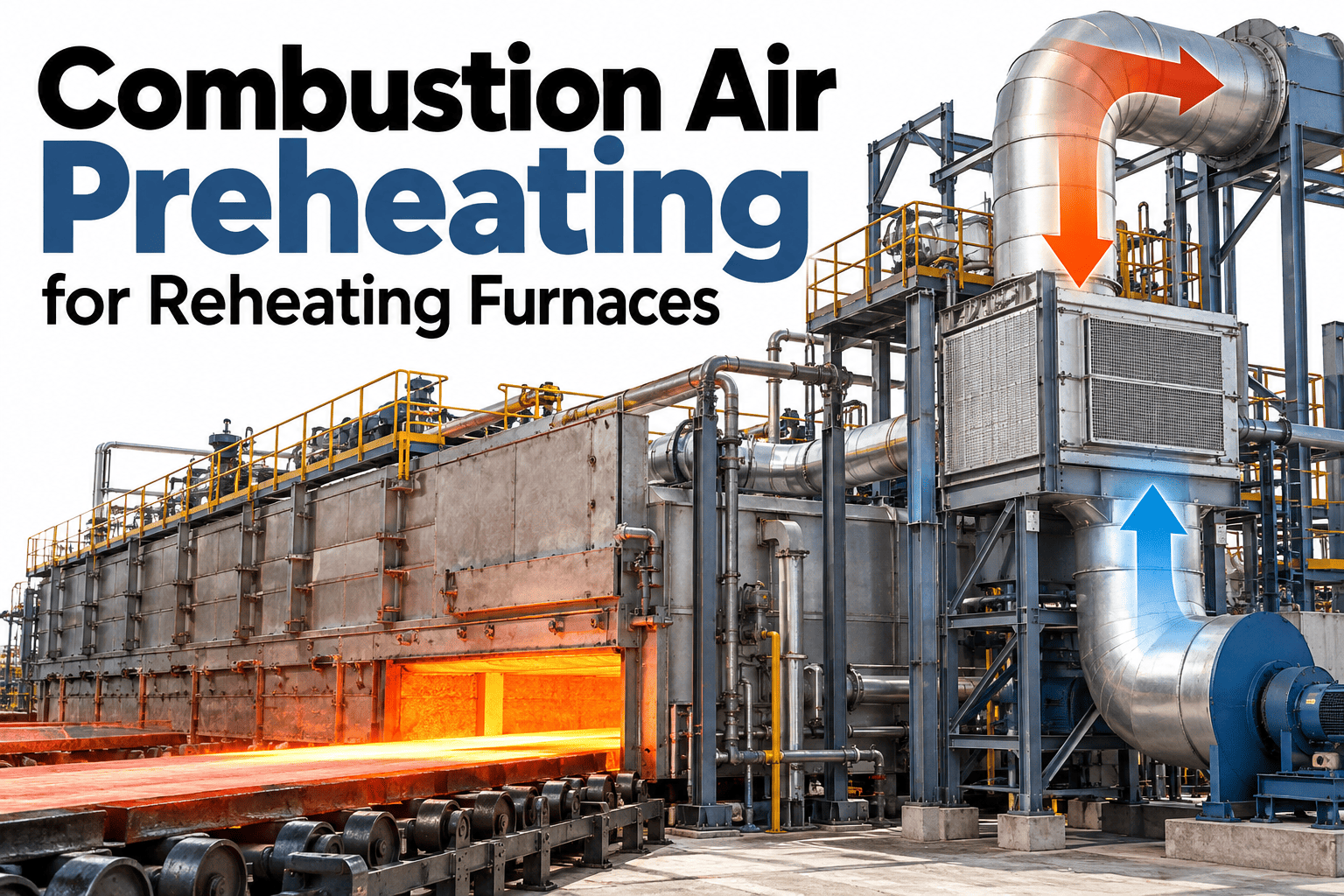
Preheating reduces the electrical energy the furnace needs to reach tap temperature, since a portion of the total heating work has already been done using energy that would otherwise have left the process as waste heat in the off-gas.
1
Off-gas leaves the melt carrying substantial recoverable thermal energy
→
2
That heat is captured and transferred to incoming cold scrap before charging
→
3
Scrap enters the melt already partially heated instead of at ambient temperature
→
4
Electrical energy demand per ton drops since less total heating work remains
Quantify the energy savings for your specific furnace and scrap mix
iFactory can model expected savings across all three technologies against your actual operating data before you commit to a capital decision.
SIDE-BY-SIDE COMPARISON
Choosing Between the Three Technologies
The right choice depends heavily on whether your operation runs batch or continuous charging today, how much structural retrofit your facility can accommodate, and what scrap mix you're actually feeding the furnace.
| Factor |
Consteel |
Shaft Furnace |
Bucket Preheat |
| Charging Style |
Continuous, replaces batch charging entirely |
Batch, integrated above the furnace |
Batch, works with existing bucket charging |
| Retrofit Complexity |
High, significant furnace hall reconfiguration |
Moderate to high, structural addition above furnace |
Lower, works within existing charging equipment |
| Best Fit |
High-volume operations ready to shift to continuous charging |
Batch operations with space for vertical structure |
Operations seeking savings with minimal layout change |
| Capital Intensity |
Highest, but pairs with highest potential savings |
Moderate to high depending on furnace integration |
Lowest of the three approaches |
THE ECONOMICS QUESTION
Why Payback Depends on More Than the Technology Itself
The same preheating technology can deliver very different payback periods across two furnaces, since the actual savings depend on baseline energy consumption, scrap mix consistency, current off-gas temperature, and how many heats the furnace runs per year.
Baseline Energy Use
A furnace already running efficient electrical practice has less room for improvement than one relying heavily on unoptimized power input.
Scrap Mix Consistency
Highly variable scrap density and composition can reduce preheating consistency and the predictability of savings heat to heat.
Off-Gas Temperature
A furnace with higher off-gas exit temperature has more recoverable heat available to capture than one already running a tighter thermal profile.
Annual Heat Volume
Higher throughput furnaces recover the capital investment faster simply by running more heats against the same per-heat savings.
TURNKEY DELIVERY
How iFactory Builds the Economic Case for Your Furnace
iFactory pulls your actual furnace operating data, energy consumption, off-gas temperature, and scrap throughput, and models expected savings and payback across all three preheating approaches before any capital commitment is made.
What Gets Built
Energy savings model calibrated to your actual furnace and scrap data
Side-by-side payback comparison across all three preheating technologies
Retrofit feasibility assessment against your current furnace hall layout
Ongoing performance tracking once a preheating system is installed
Deployment Timeline
Weeks 1-2: Furnace and scrap data collection and baseline analysis
Weeks 3-5: Savings and payback modeling across all three technologies
Week 6: Recommendation delivery with retrofit feasibility assessment
FREQUENTLY ASKED QUESTIONS
What EAF Operators Ask Before Choosing a Preheating Technology
Does scrap preheating affect metal yield or introduce oxidation losses?
Preheating does introduce some oxidation exposure to the scrap surface, since it's held at elevated temperature in the presence of off-gas before charging, and this is a real factor considered in the economic model alongside the energy savings, not a hidden trade-off. Well-designed preheating systems control exposure time and temperature specifically to minimize this effect, and the yield impact is typically small relative to the energy savings achieved, but it should be quantified against your specific scrap grades rather than assumed away.
Book a demo to see the yield impact modeled against your scrap mix.
Can we start with bucket preheating and upgrade to Consteel or shaft later?
Yes, bucket preheating is often the lowest-risk entry point precisely because it requires the least structural change, and many operations use it to validate the energy savings model on their specific furnace before committing to a larger capital project. That said, the technologies aren't simply tiered versions of each other, Consteel in particular represents a fundamentally different charging philosophy, so an eventual upgrade path should be planned deliberately rather than assumed to be a simple next step.
Contact our support team to discuss a phased approach for your operation.
How much does emissions handling change with each preheating technology?
Each technology changes the off-gas capture and handling system to some degree, since the preheating process itself intercepts the gas stream before it reaches the existing emissions control equipment, and Consteel in particular represents the most significant change given its continuous, enclosed charging tunnel design. Any preheating project needs to be evaluated against your existing emissions permits and control equipment capacity as part of the feasibility assessment, not treated as a separate consideration after the fact.
Book a demo to discuss emissions system implications for your specific furnace.
What's a realistic payback period for scrap preheating investment?
Payback varies significantly based on the factors covered above, baseline energy use, scrap mix, off-gas temperature, and annual heat volume, which is exactly why a generic industry payback figure is a poor substitute for modeling your specific operation. High-throughput furnaces with significant recoverable off-gas heat and currently unoptimized electrical consumption tend to see the fastest payback, while lower-volume or already-efficient operations may find the economics less compelling for the same technology.
Contact our support team to discuss what payback range is realistic for your furnace.
Does preheating technology require different operator training or process changes?
Yes, particularly with Consteel, since continuous charging changes the fundamental rhythm of furnace operation compared to the batch charge, melt, refine, tap cycle most operators are trained on, and this operational shift should be planned for as part of the project rather than treated as a minor adjustment. Shaft and bucket preheating require less fundamental process change but still involve new safety and operational procedures around the preheating equipment itself.
Book a demo to discuss training and process change requirements for your team.
CONSTEEL · SHAFT · BUCKET, MODELED AGAINST YOUR FURNACE
Choose the Right Preheating Technology With Real Numbers, Not a Vendor's Average
iFactory evaluates Consteel, shaft furnace, and bucket preheating against your specific furnace and scrap profile, quantifying real energy savings and payback before you commit capital.