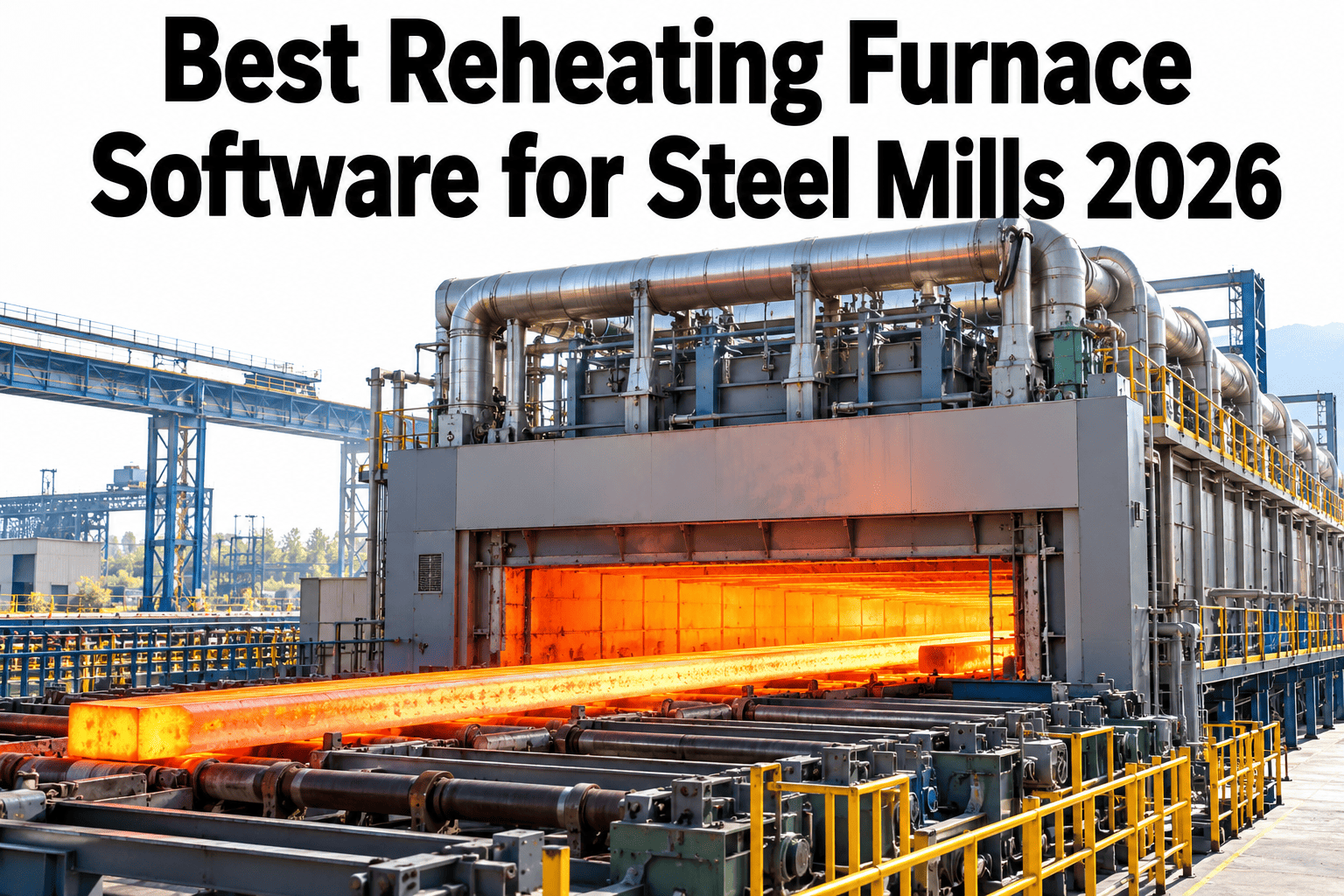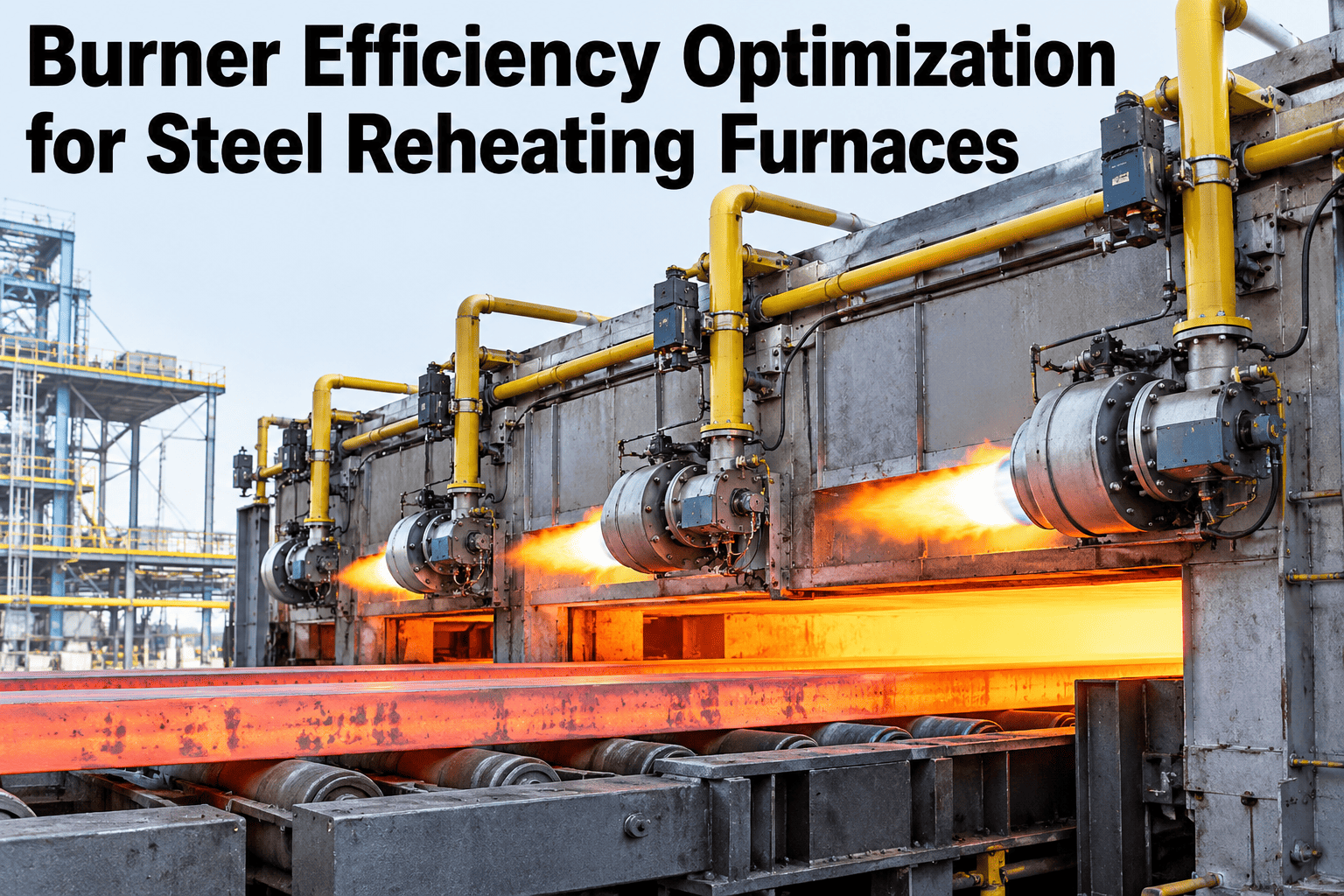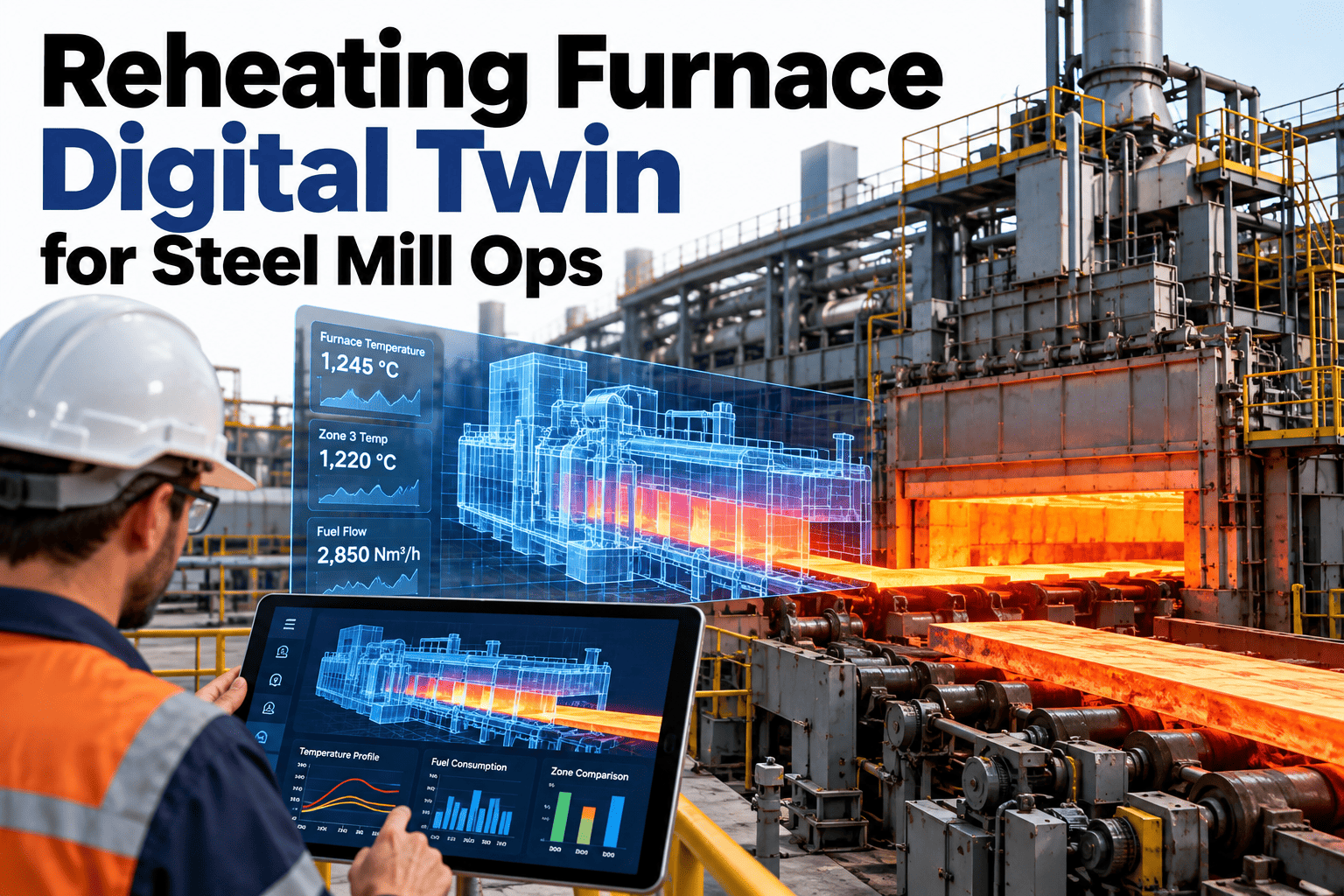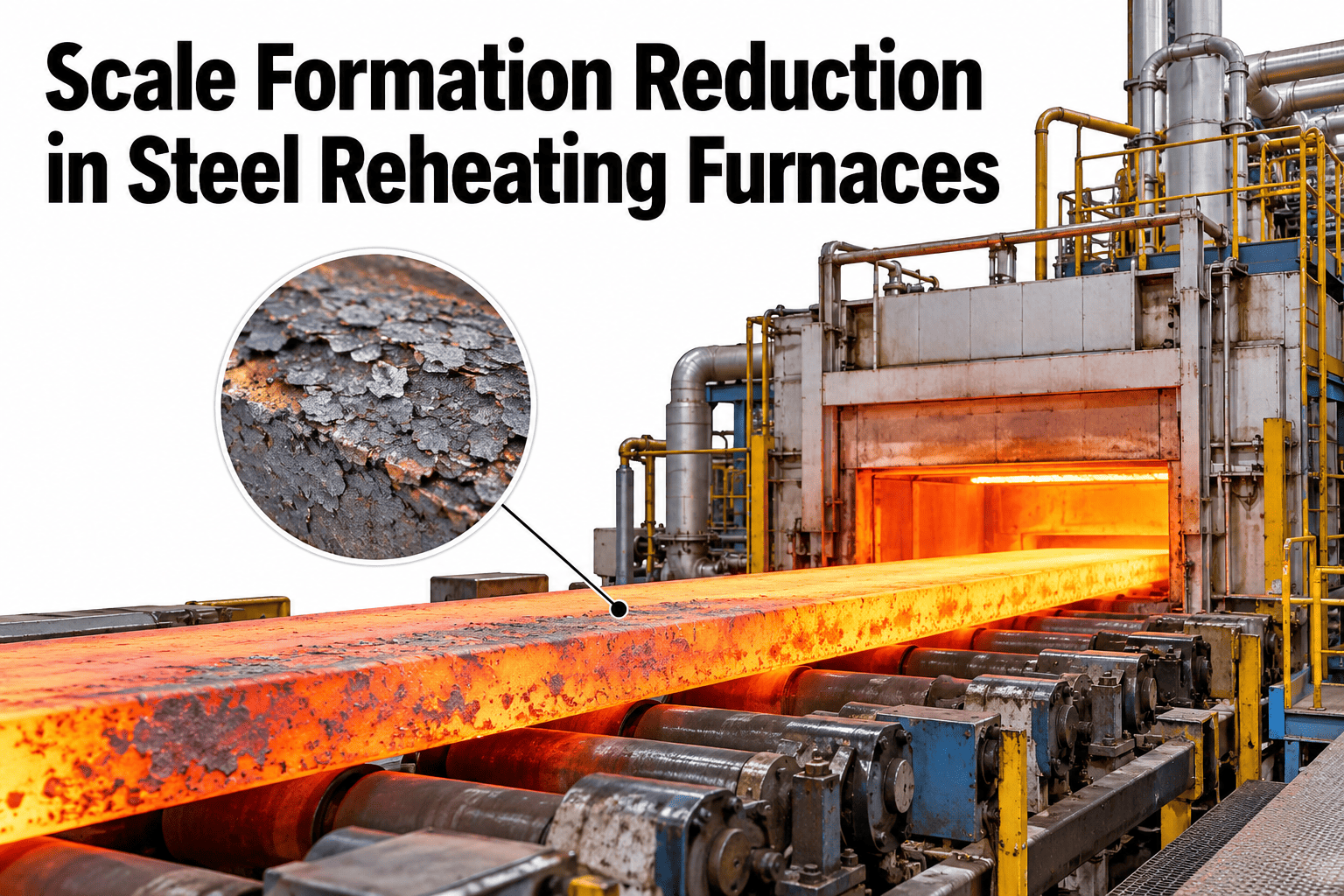
Scale loss in a reheating furnace is yield walking out the door as oxide, and it is one of the few losses that is almost entirely controllable through furnace practice rather than raw material quality. Every minute a billet sits in an oxidizing atmosphere, every extra minute of residence time beyond what the rolling schedule needs, adds to the oxide layer that forms and then gets knocked off in descaling. Atmosphere control, residence time management and low-oxygen firing are the three levers that actually move this number, and they interact closely enough that tuning one without the others rarely holds. Rolling mill teams can see how iFactory AI tracks scale loss against furnace atmosphere and residence time on live mill data before the next campaign review.
Scale Formation Reduction in Steel Reheating Furnaces
Atmosphere control, residence time and low-oxygen firing, working together to keep more of the billet as steel instead of oxide.
Three Things That Grow a Scale Layer
Scale forms wherever hot steel meets an oxidizing atmosphere, so reducing it means attacking the conditions that let the reaction keep running.
Excess oxygen in the furnace atmosphere feeds the oxidation reaction at the steel surface.
The longer steel sits hot and exposed, the thicker the oxide layer that forms.
Higher surface temperature accelerates the oxidation rate itself, independent of time.
All three interact, which is why a furnace that looks fine on one measure can still be losing yield through the other two.
Residence Time: Often Longer Than It Needs to Be
Residence time is frequently set by the slowest part of the rolling schedule, not by what the billet actually needs, which means excess dwell translates directly into excess scale.
| Residence Time Pattern | Common Cause | Effect on Scale |
|---|---|---|
| Buffer for mill delays | Furnace holds extra billets in case of downstream stoppage | Significant added scale on held billets |
| Uneven soak zone timing | Zone residence not matched to actual heating need | Some billets over-soaked while others are rushed |
| Schedule-matched residence | Furnace timing tracks the rolling schedule closely | Scale minimized for the required heating profile |
See Where Your Residence Time Exceeds What's Needed
Book a 30-minute session and iFactory AI will show where actual residence time in your furnace runs beyond the heating requirement, and what that's costing in scale.
Low-Oxygen Firing: Enough Combustion Air, Not Excess
Running with excess combustion air beyond what complete combustion requires adds unnecessary oxygen to the furnace atmosphere, directly feeding scale growth.
A Tuning Sequence That Separates the Levers
Changing atmosphere, residence time and firing all at once makes it impossible to tell which change actually reduced scale. Work through them separately.
Baseline scale loss
Measure current scale loss by zone, product and schedule pattern.
Trim residence time
Match furnace timing closer to actual rolling schedule need.
Tune firing
Move toward low-oxygen firing once residence time is stable.
Confirm the gain
Verify scale reduction holds across varied schedules before locking in.
What a 15 to 30 Percent Scale Reduction Actually Requires
Published ranges for scale loss reduction exist in industry literature, but they typically assume a furnace starting from a meaningfully inefficient baseline. Confirm what is realistic for your own furnace before setting a target.
A furnace already running tight atmosphere control has less room to improve than one with excess air firing.
The larger reductions typically come from addressing atmosphere, residence time and firing together, not one alone.
The reduction needs to hold across normal schedule variation to count as a real gain.
The mills that make lasting progress on scale loss are the ones that measure it by zone and by schedule pattern, rather than relying on a single plant-wide average that hides where the loss is actually concentrated. A furnace can show an acceptable average scale rate while a specific group of held or delayed billets is losing yield well above that average, and averaging over the whole campaign buries the problem instead of fixing it. Track scale loss against residence time pattern specifically, since the billets held longest for schedule reasons are almost always where the easiest gains are found.
Where iFactory AI Fits
iFactory AI tracks scale loss against atmosphere conditions and residence time by zone and by billet, so reduction efforts target where the loss is actually concentrated.
Scale loss by residence pattern
Billets held longer for schedule reasons are tracked separately, showing their specific scale contribution.
Atmosphere monitoring
Combustion air ratio and furnace atmosphere are tracked zone by zone, flagging excess air conditions.
Change tracking
Each tuning adjustment is logged against its measured scale outcome, building real evidence over time.
Ask in plain language
Ask which schedule pattern is driving the most scale loss this week and receive a direct answer.
Frequently Asked Questions
What causes most of the scale loss in a reheating furnace?
Excess oxygen in the atmosphere from over-firing, longer than necessary residence time, and high surface temperature all contribute, with the biggest single factor usually being how much time steel spends hot and exposed beyond what the rolling schedule strictly requires. You can watch scale loss broken down by these factors on sample mill data in a live session.
Is a 15 to 30 percent scale loss reduction realistic for our furnace?
It depends heavily on your starting point: a furnace already running tight atmosphere and residence time control has much less room to improve than one with significant excess air firing or long buffer holds. The only way to know your own realistic target is to measure your current baseline. To do that, request a scale loss baseline review with the iFactory AI team, or ask support what furnace data is needed.
Why does residence time matter more than it seems on paper?
Scale growth is not linear with time, it accelerates the longer steel sits hot and exposed, so even a modest trim in excess residence time for held or buffered billets can deliver a disproportionate reduction in scale loss. A short product tour of residence time tracking shows how this is measured by billet.
Can low-oxygen firing be pushed too far?
Yes, firing with too little combustion air risks incomplete combustion and its own problems, so the goal is matching air to what stoichiometric combustion actually needs, not minimizing air without limit. See how firing ratio is tracked against combustion completeness in a guided walkthrough.
How do we confirm a scale reduction is holding, not just a good week?
Track scale loss across varied schedule conditions, including the delayed and buffered billets that typically show the highest loss, over enough production to rule out normal day-to-day variation. Schedule a walkthrough of scale loss trend confirmation to see how this is judged on your own furnace.
Keep More of the Billet as Steel, Not Scale
iFactory AI tracks scale loss by zone and residence pattern, so reduction effort goes where the loss actually concentrates. Book a walkthrough to see it built around your own furnace.