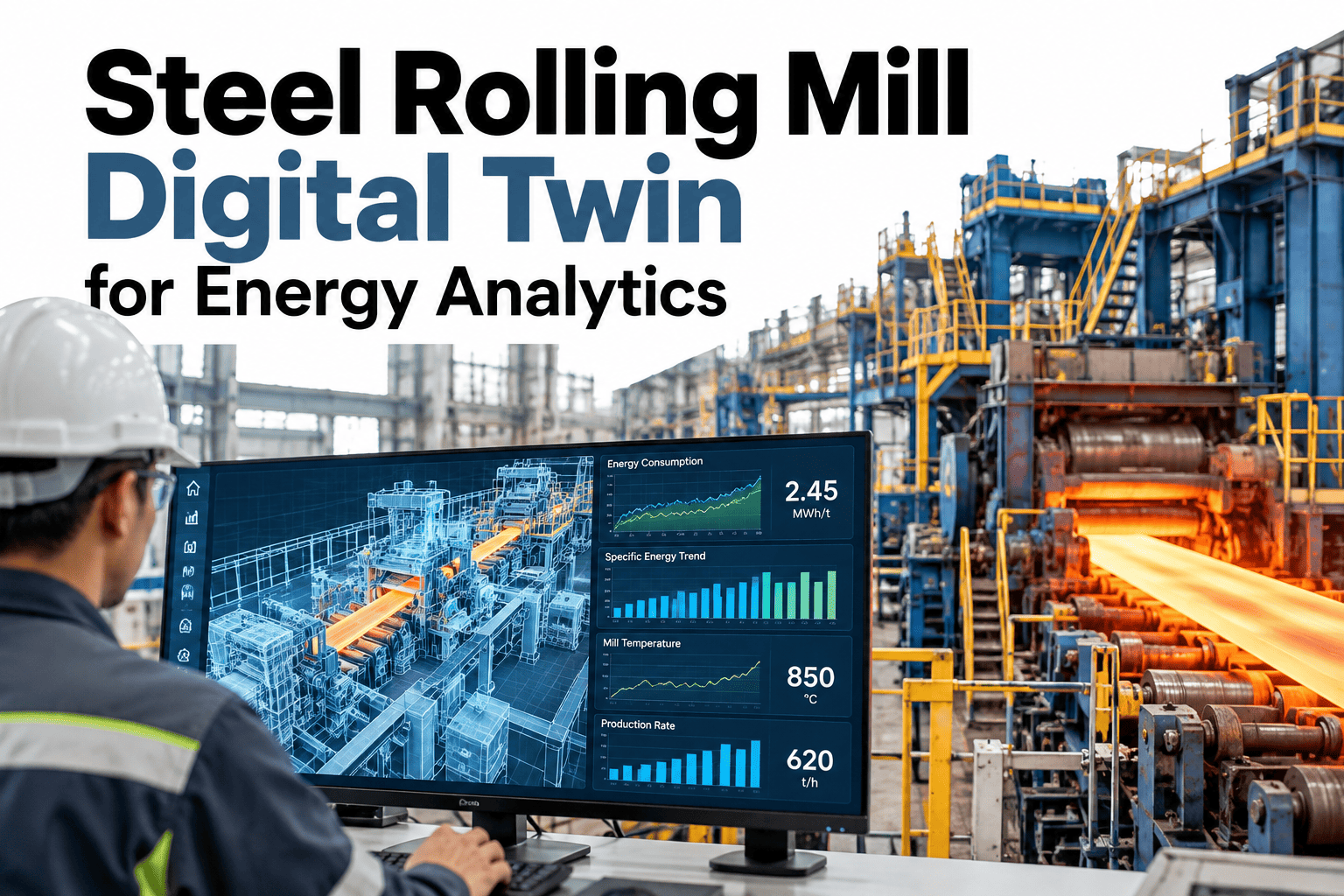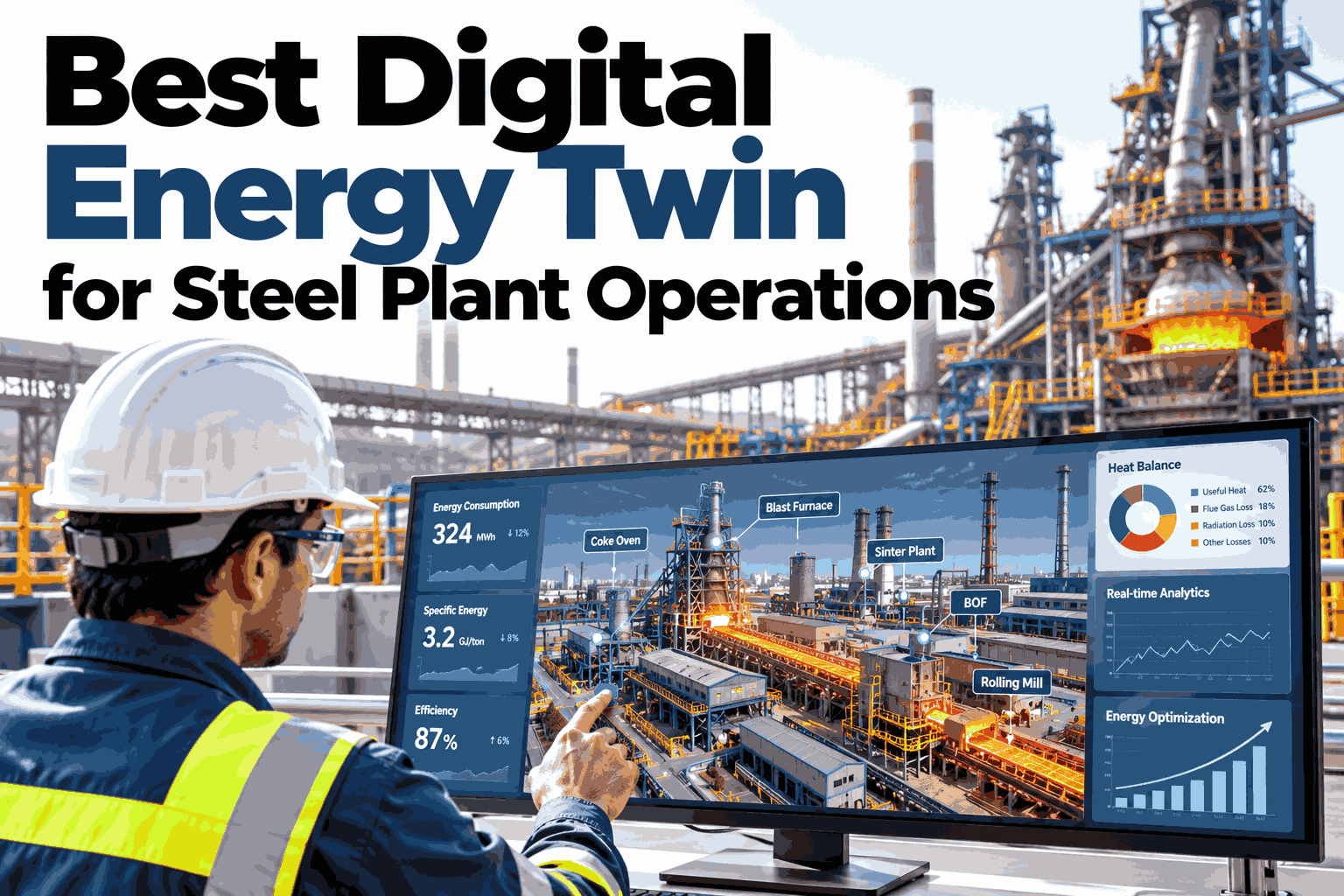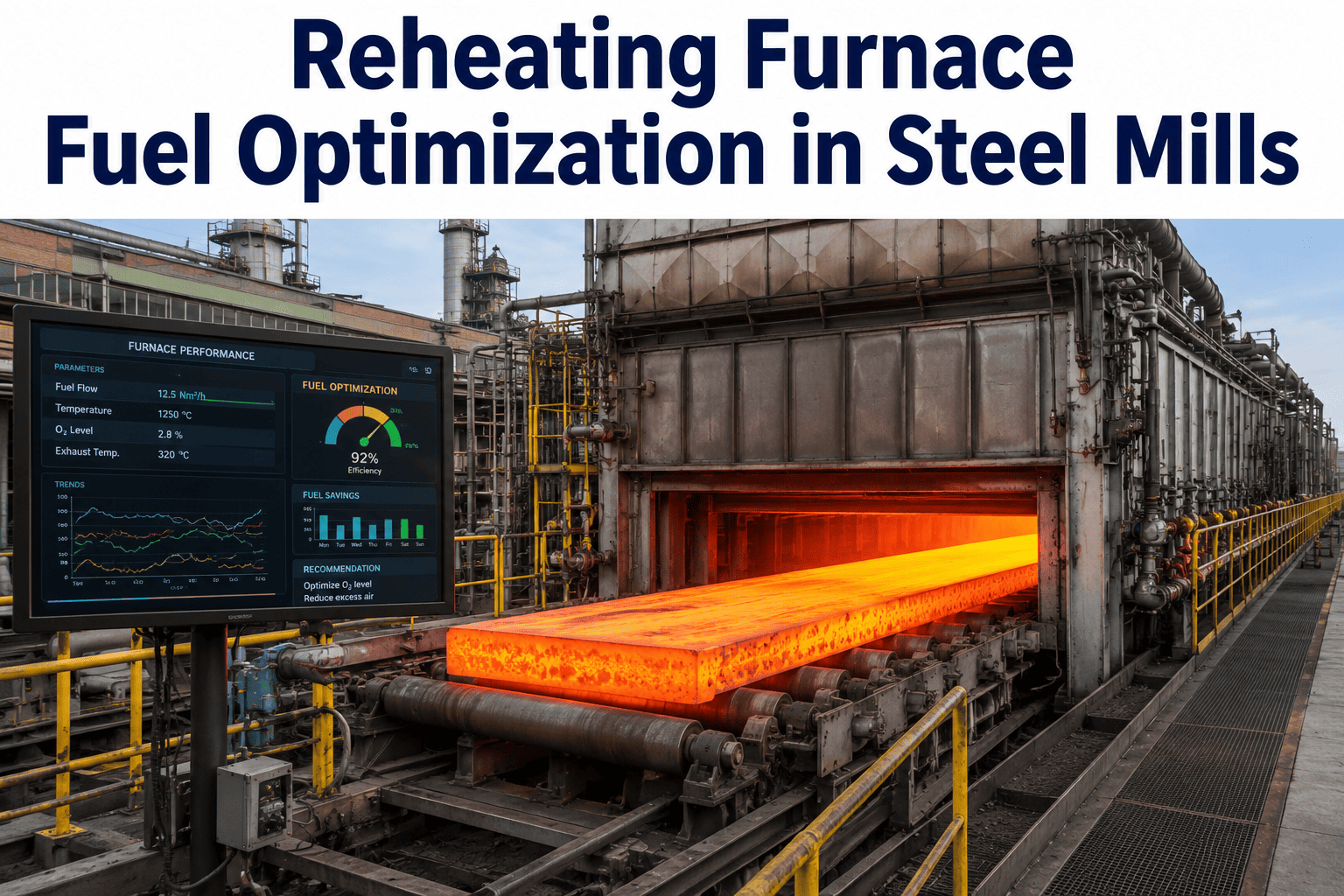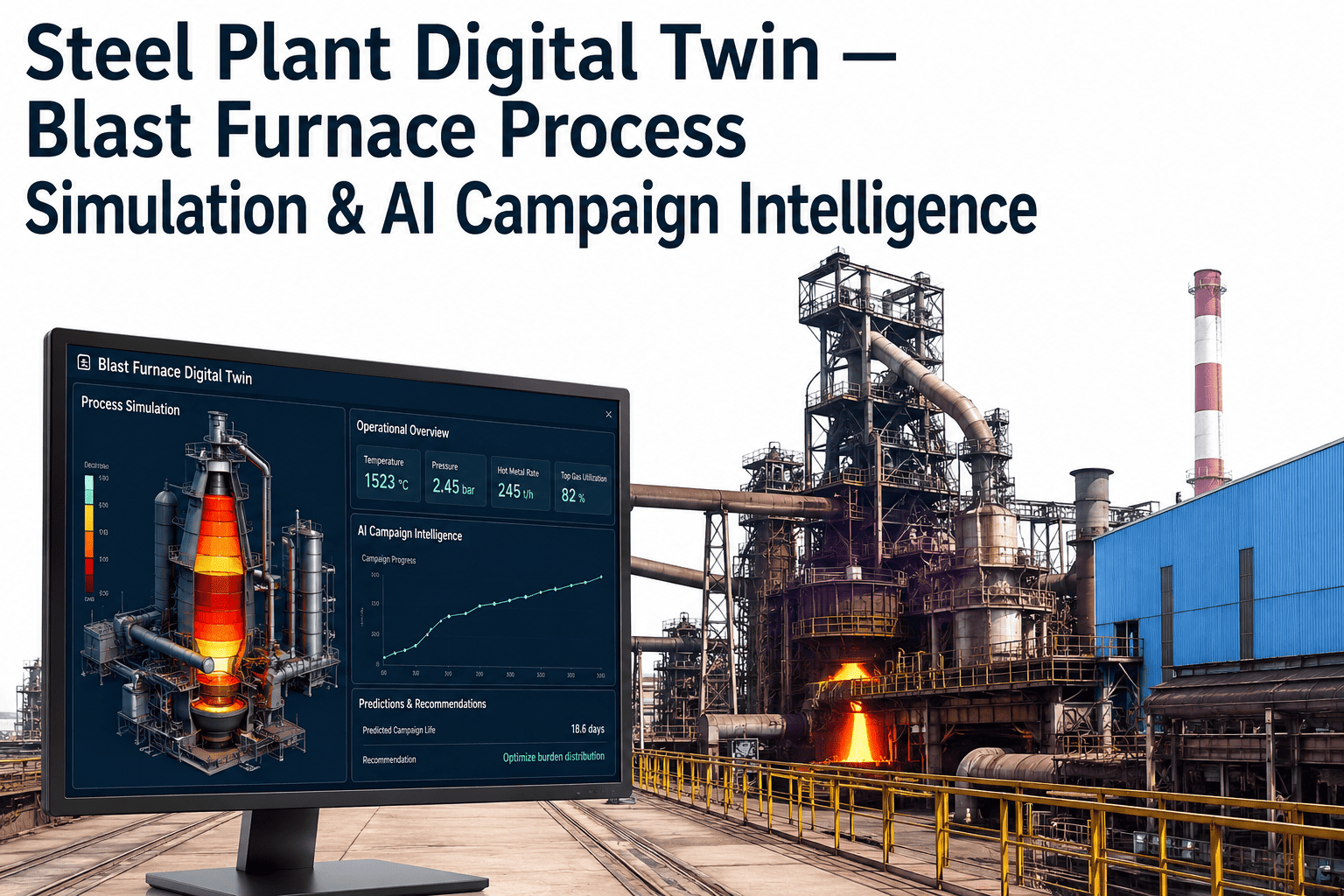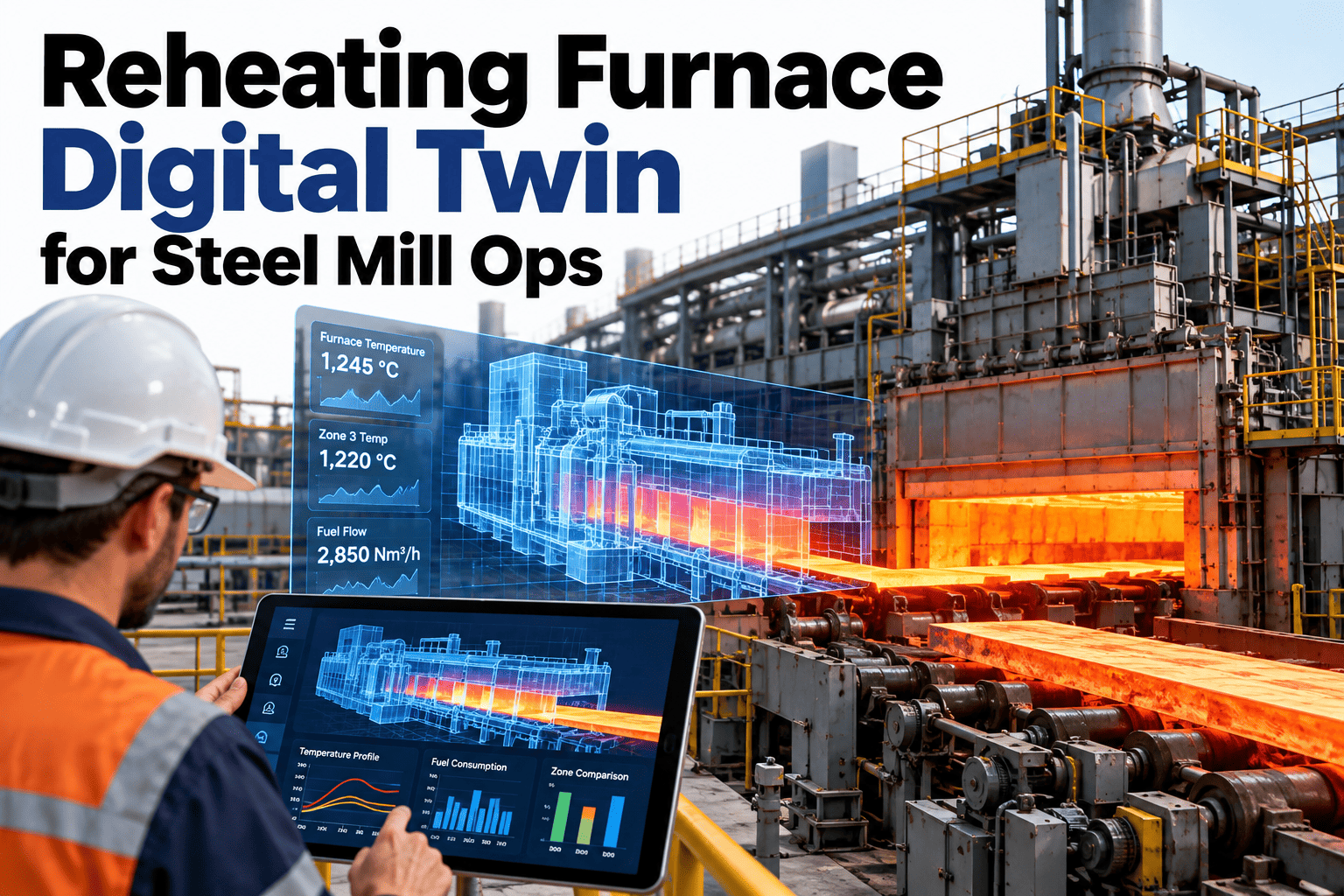
Changing a reheating furnace profile has always been a nervous exercise. Lower a zone temperature to save fuel and you risk cold slab cores. Speed the pusher and you risk uneven heating. Most mills test these ideas on live production and hope. A digital twin offers another path: a physics model, informed by combustion and heat transfer simulation and corrected by live sensor data, that predicts what a change will do before the slabs move. Teams can walk through a furnace twin built around their own zones and sensors and judge what it would reveal.
Test the Profile Change on the Twin, Not on the Slabs
iFactory Reheating Furnace Energy AI combines a CFD-informed physics model with sensor feedback to expose hidden loss paths and validate profile changes.
A Twin Is a Model That Keeps Learning From the Furnace
Sensor readings feed the model, the model predicts what should happen and the gap between the two shows where the real furnace differs.
Conceptual loop. Real twins also handle slab tracking, fuel and air data and process limits.
From Drawings to a Trusted Twin
Trust is earned in stages. Each one compares the model with something measured.
Hidden Loss Paths a Twin Helps Expose
Some losses are invisible to a single gauge. A model that must balance heat in and out brings them into view.
Openings and leaks
Door gaps, charging openings and air infiltration that cool the zones
Water-cooled supports
Skid and beam cooling that removes heat from the furnace
Flue and wall losses
Heat leaving through exhaust or through the structure
Where Heat Typically Goes
The heat balance shows where each unit of fuel ends up. The twin keeps that balance current.
Illustrative shares only. Your own heat balance depends on furnace design and operation.
See What a Heat Balance Would Reveal on Your Furnace
Share your zone layout and a week of temperature and fuel data. We will outline the twin and the first loss paths it would test.
Trial and Error vs Twin-Tested Changes
Both approaches can find savings. One finds them without risking product.
What Fidelity Do You Need
Not every question needs the most detailed model. Match detail to the decision.
| Question | Model Detail | Typical Use |
|---|---|---|
| Where is heat being lost? | Zone-level heat balance | Loss path ranking |
| Will a new profile heat evenly? | Slab temperature through thickness | Profile validation |
| What if throughput changes? | Pusher rate and residence time | Capacity and fuel planning |
| How does burner tuning change zones? | Flame and gas flow behavior | Burner optimization |
What Experienced Furnace Engineers Look For in a Twin
Frequently Asked Questions
How accurate is a reheating furnace digital twin?
Accuracy depends on calibration and sensor quality, and it should be shown against measured data, not asserted. Review the validation evidence for your own furnace with our team before relying on predictions.
Do we need new sensors?
Often existing thermocouples, fuel and flue measurements provide a start. Gaps are found during calibration, so extra sensors are added only where they improve the model.
Can the twin replace furnace trials entirely?
Not entirely. It narrows the options so fewer, safer trials are needed, and a final check on the floor remains sensible. See how a validated change moves from twin to floor in a short walkthrough.
How long does it take to build?
It depends on available data and how detailed the model must be. A zone-level heat balance can come sooner than a full slab temperature model.
Who uses the twin day to day?
Process engineers and energy teams use it for scenarios, and operators see the recommended setpoints. Map which roles in your mill would use it on a short call.
Validate Every Furnace Change Before It Touches a Slab
Bring your furnace layout and recent operating data. We will show the loss paths, the model and a profile change tested on the twin.