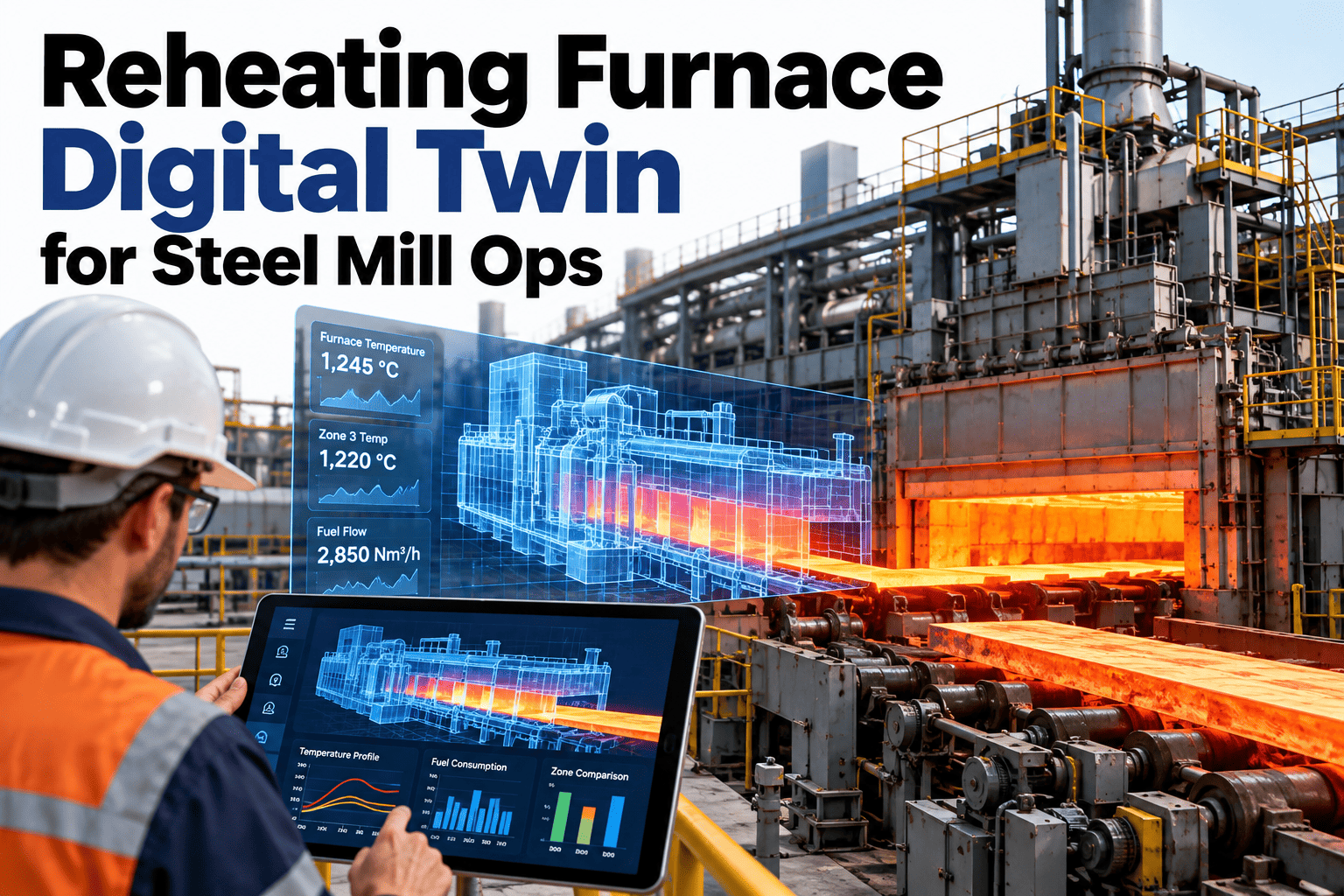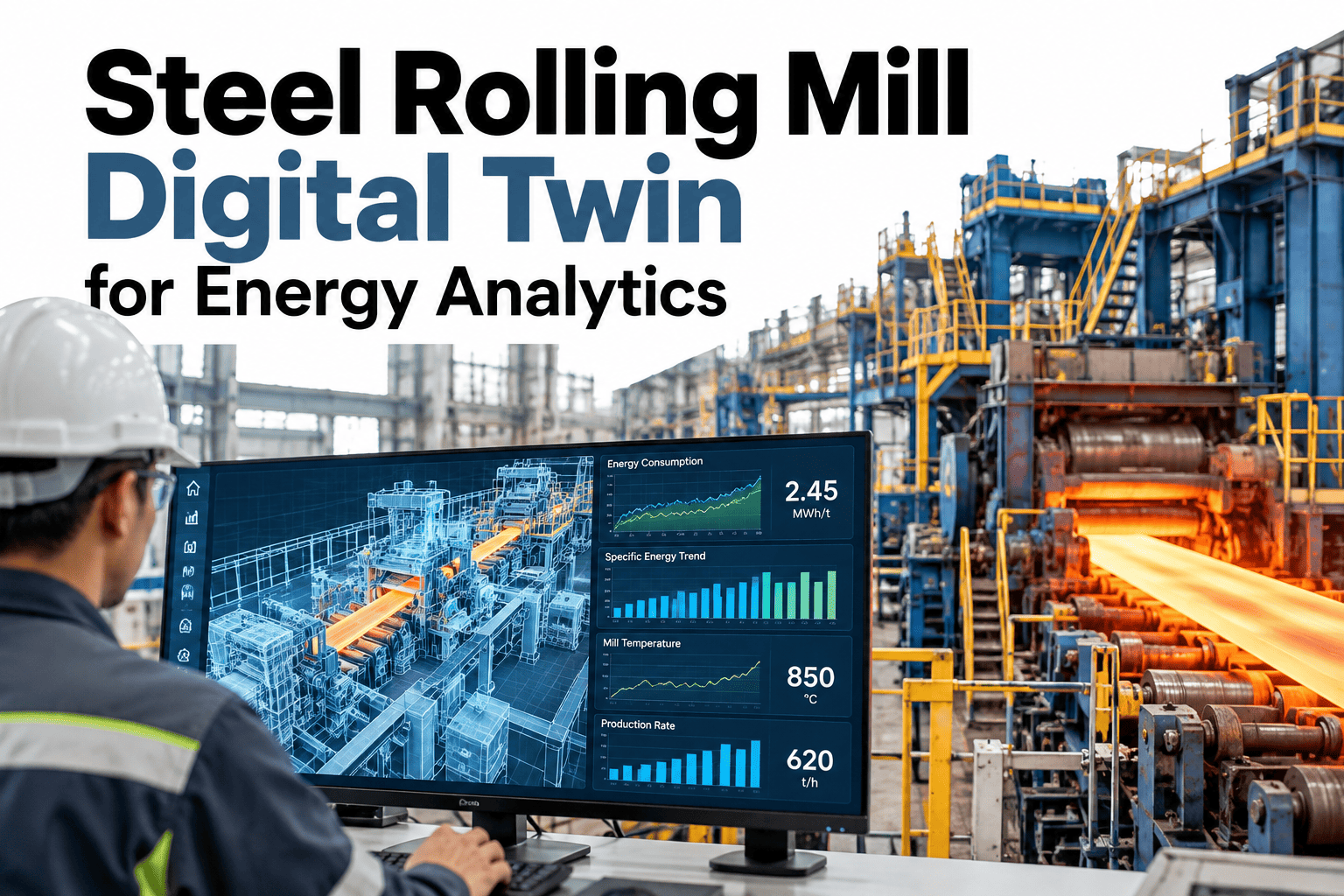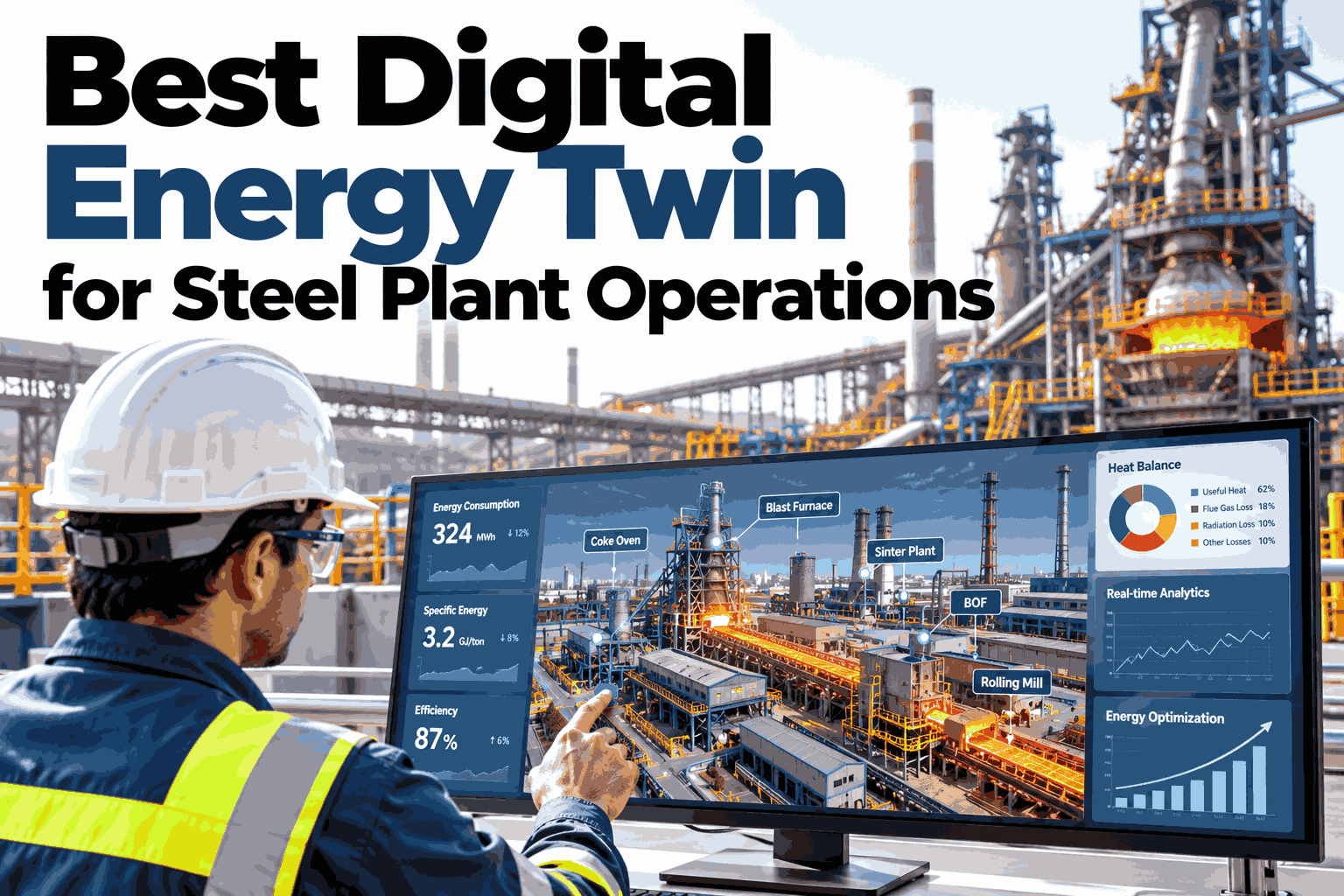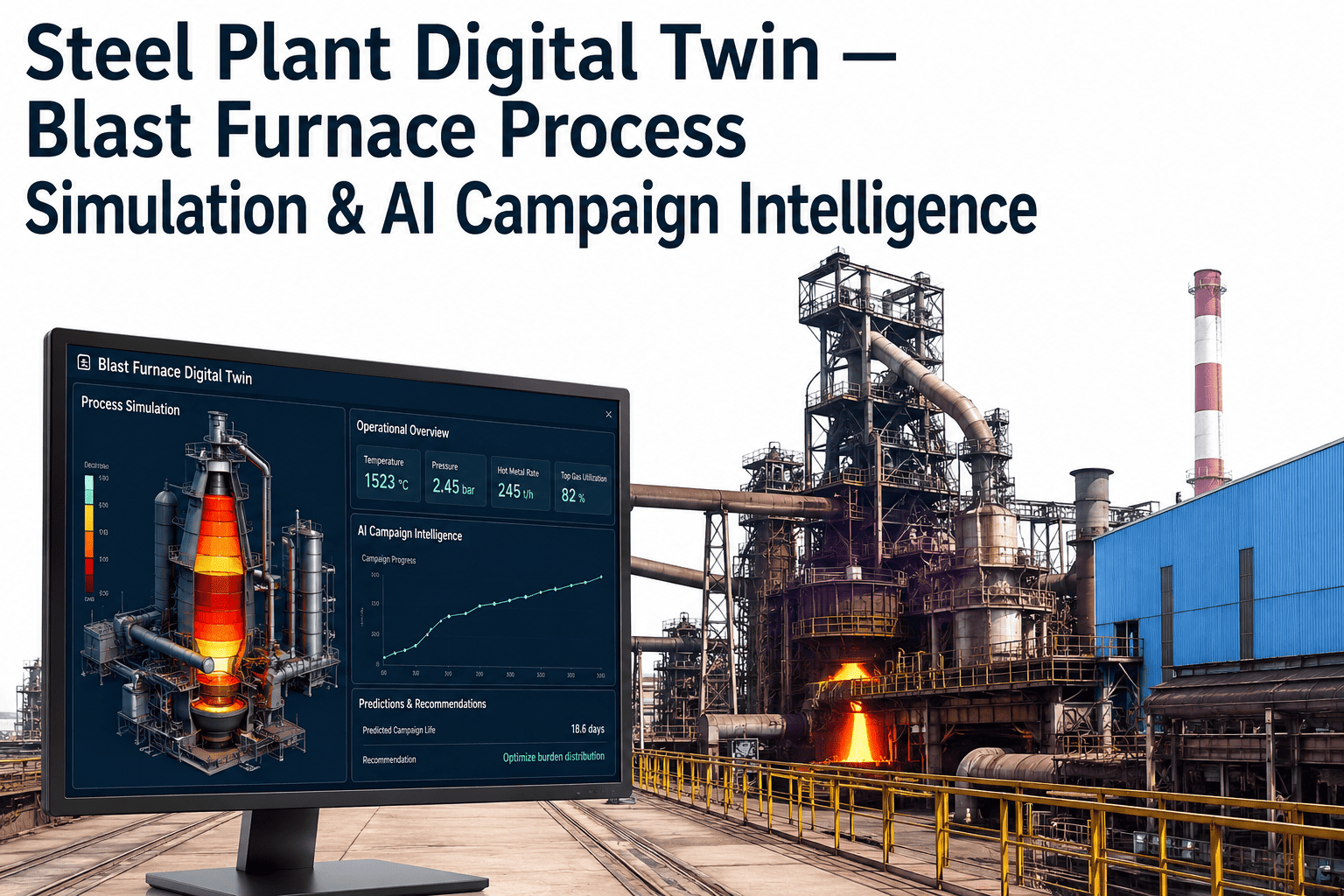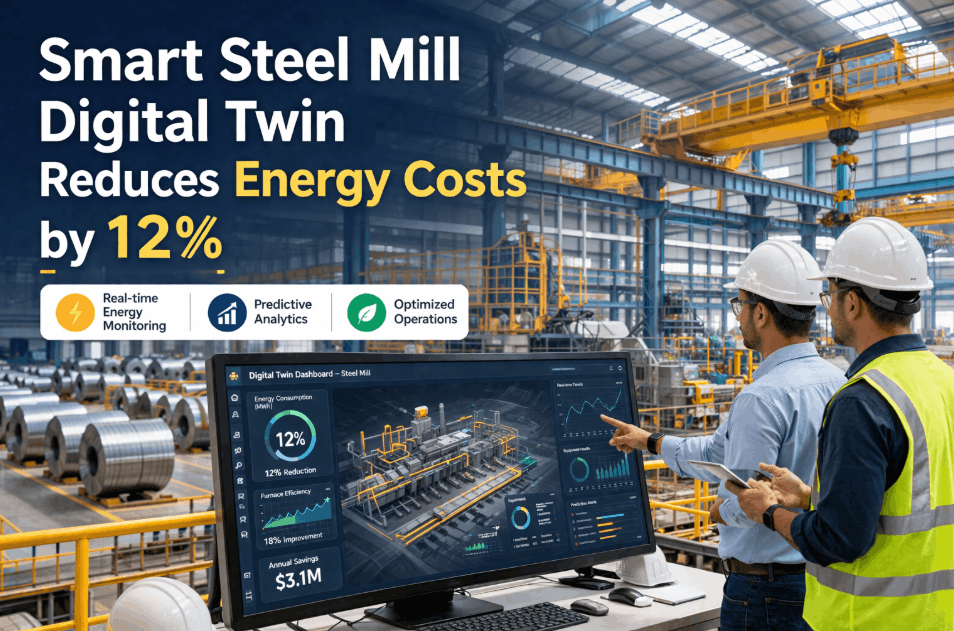
In a high-capacity steel mill, energy isn't just a utility cost; it is the single largest variable expense, often determining the mill's fundamental competitiveness in a global market. For a Tier-1 integrated mill, "invisible energy waste" — caused by unoptimized heating curves, undetected recuperator fouling, and misaligned EAF power distribution — can bleed millions in avoidable fuel and electricity spend. iFactory’s Digital Twin framework bridges this gap by creating a high-fidelity thermal and electrical model that fuses first-principle physics with real-time sensor data. In this featured case study, a 3.1 MTPA steel plant deployed iFactory's Thermal Twin for their reheat furnaces and SEC (Specific Energy Consumption) optimizer for their EAF. The result was a 12% reduction in total energy costs, an 18% surge in furnace thermal efficiency, and over $5.1M in annual value recovery. Book your Digital Twin audit today.
Smart Steel Mill Digital Twin: Reducing Energy Costs by 12% via Real-Time Optimization
How a 3.1 MTPA facility integrated Physics-Based thermal models with iFactory AI to save $5.1M annually and eliminate 560 tons of CO2 emissions.
The Financial Impact — Performance Comparison Table
Direct energy consumption metrics before and after the 18-month Digital Twin deployment. All data points were verified by the plant’s metallurgical audit teams.Verify your plant's ROI.
| Utility / Area | Baseline (Pre-Twin) | Current (iFactory Opti) | Improvement | Annual Value | Verified By |
|---|---|---|---|---|---|
| Reheat Furnace SEC | 1.45 GJ/tonne | 1.22 GJ/tonne | +15.8% | $1.4M | Process Audit |
| EAF Electrical Power | 385 kWh/tonne | 362 kWh/tonne | +6.0% | $820k | Metric Audit |
| Heavy Fuel Oil (HFO) | 24 L/tonne | 20.8 L/tonne | +13.3% | $480k | Energy Dept. |
| Specific Yield Gain | 96.2% | 98.0% | +1.8% | $2.2M | Metal Audit |
| Avoidable Waste Ratio | 14.2% | 4.8% | −66% | $310k | ESG Auditor |
| TOTAL ANNUAL VALUE | -- | -- | 12.0% Overall | $5.1M+ | Plant Finance |
Yield & Mass-Balance Optimization — Reducing Scrap Loss
Maximizing your metallurgical yield is the fastest way to improve bottom-line profitability. iFactory’s Yield Twin tracks every kilogram of scrap, flux, and additive charging to ensure the scrap-to-steel ratio is perfectly optimized for chemistry compliance and cost reduction. Book a Yield Audit.
Smart Scrap Characterization
AI characterization of scrap types using computer vision and historical melt codes. Optimizes the charge mix to use lower-cost scrap while meeting final grade nitrogen and copper limits.
Thermodynamic Slag Control
Real-time thermodynamic slag modeling predicts impurity removal rates. Reduces flux waste by 14% and protects refractory lining from excessive FeO erosion during long heats.
Caster Pacing & Liquid Temp
Aligns EAF tapping with Caster pacer models. Eliminates "Waiting for Heat" production delays and reduces liquid steel temperature drop, preventing ladle skulling and yield loss.
Optimizing the Energy Intensive Core — Furnaces & EAF
Digital twins transform static equipment into dynamic, self-optimizing assets. By modeling the thermal and electrical "ideal state," iFactory identifies exactly where energy is being wasted. Review our technical methodology.
Top 5 Energy-Waste Events Prevented by Digital Twin
The Digital Twin Tech Stack — How it Works
Hybrid Physics-ML Modeling
Most AI fails because it ignores thermodynamics. iFactory uses "Physics-Informed Neural Networks" that anchor energy calculations to metallurgical laws while learning live furnace behaviors.
Dynamic SEC Trending
We calculate your "Ideal SEC" for every heat and billet size. When your actual consumption drifts more than 2% from the twin, the system triggers a presumptive maintenance alert.
EAF Closed-Loop Supervisor
For secondary metallurgy, iFactory acts as an auto-pilot, suggesting optimal transformer tapping and oxygen blowing programs to preserve energy during the melting arc.
ESG & Carbon Dashboard
Every Joule of energy saved is converted into carbon offset metrics, providing your leadership with real-time audit-ready data for ISO 50001 and ESG regulatory compliance.
What the Maintenance Director Said
"Energy was a black box for us. We knew how much we spent at the end of the month, but we didn't know which furnace zone or which EAF shift was bleeding capital. iFactory’s Digital Twin gave us a 'Virtual Thermal Map' of our entire operations. In the first year, we recovered $5.1M — mostly by fixing small, invisible thermal leaks and scrap yield losses."
Frequently Asked Questions
How does the Digital Twin handle different steel grades?
iFactory uses a metallurgical database of 400+ grades to adjust heat capacity
constants automatically.
This ensures "Ideal SEC" targets remain accurate regardless of your
plant's changing product mix.
Does it require new hardware sensors for deployment?
No. iFactory usually leverages existing SCADA and PLC data to build models without new
instrumentation.
Additional IoT nodes are only suggested if the initial audit identifies critical
energy blindspots.
Can it connect to our existing SAP PM system?
Yes, iFactory features native API connectors to pull production data and push work
orders automatically.
This enables maintenance teams to act on energy-saving insights directly
within their existing workflows.
Does it factor in ambient environmental conditions?
Our models use real-time weather data to account for ambient shifts that affect
furnace cooling rates.
This normalization provides a true efficiency metric that isn't skewed by
seasonal or temperature changes.
What is the expected ROI timeline for a 3.0 MTPA plant?
Most facilities experience full ROI within 5 to 7 months through the elimination of
energy waste events.
Long-term value includes extended refractory life and significantly reduced
wear on EAF electrodes.
Recover Millions in Wasted Energy. Deploy Your Digital Twin in 6 Weeks.
Join the global mills saving $5M+ annually with iFactory's Thermal Intelligence.