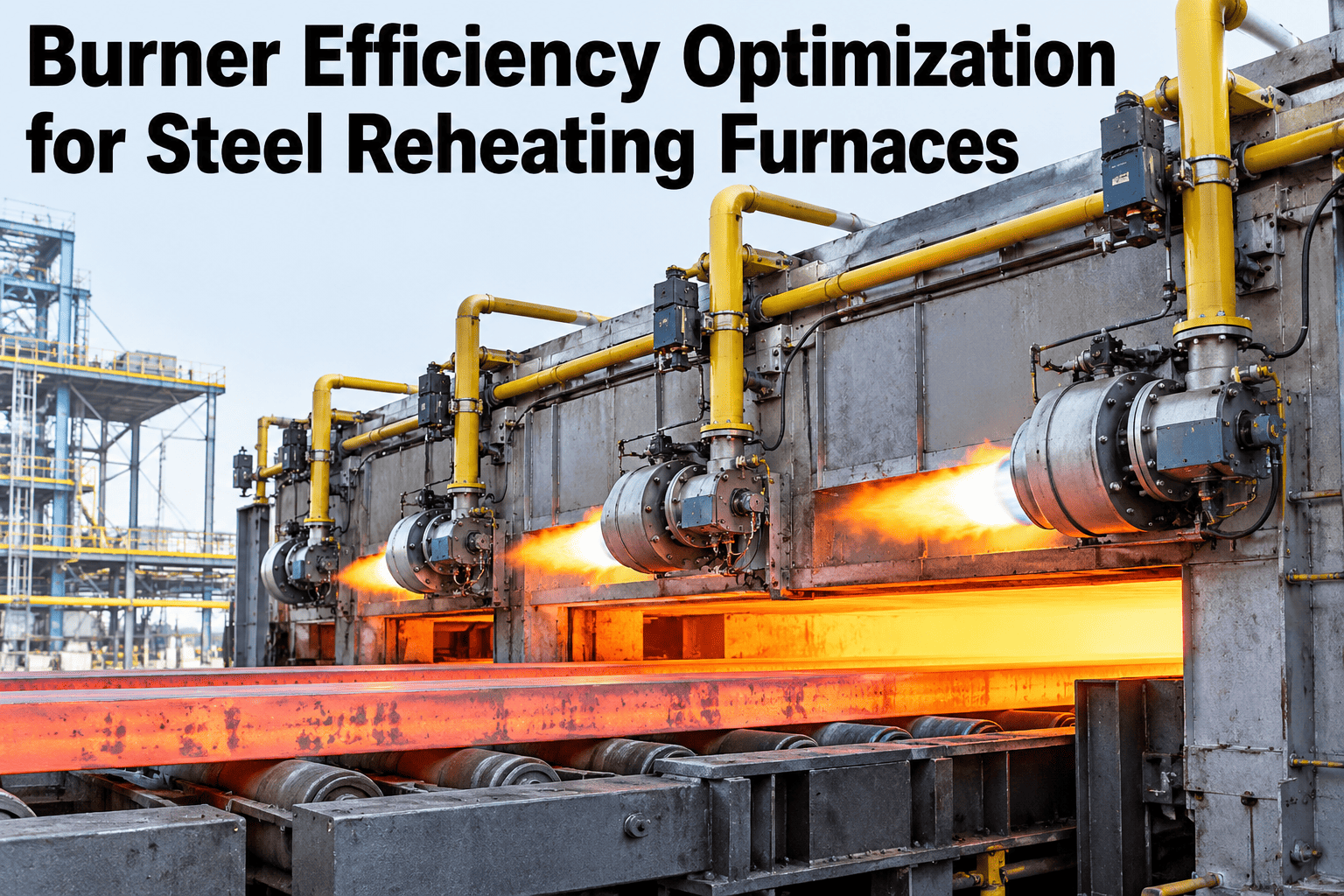
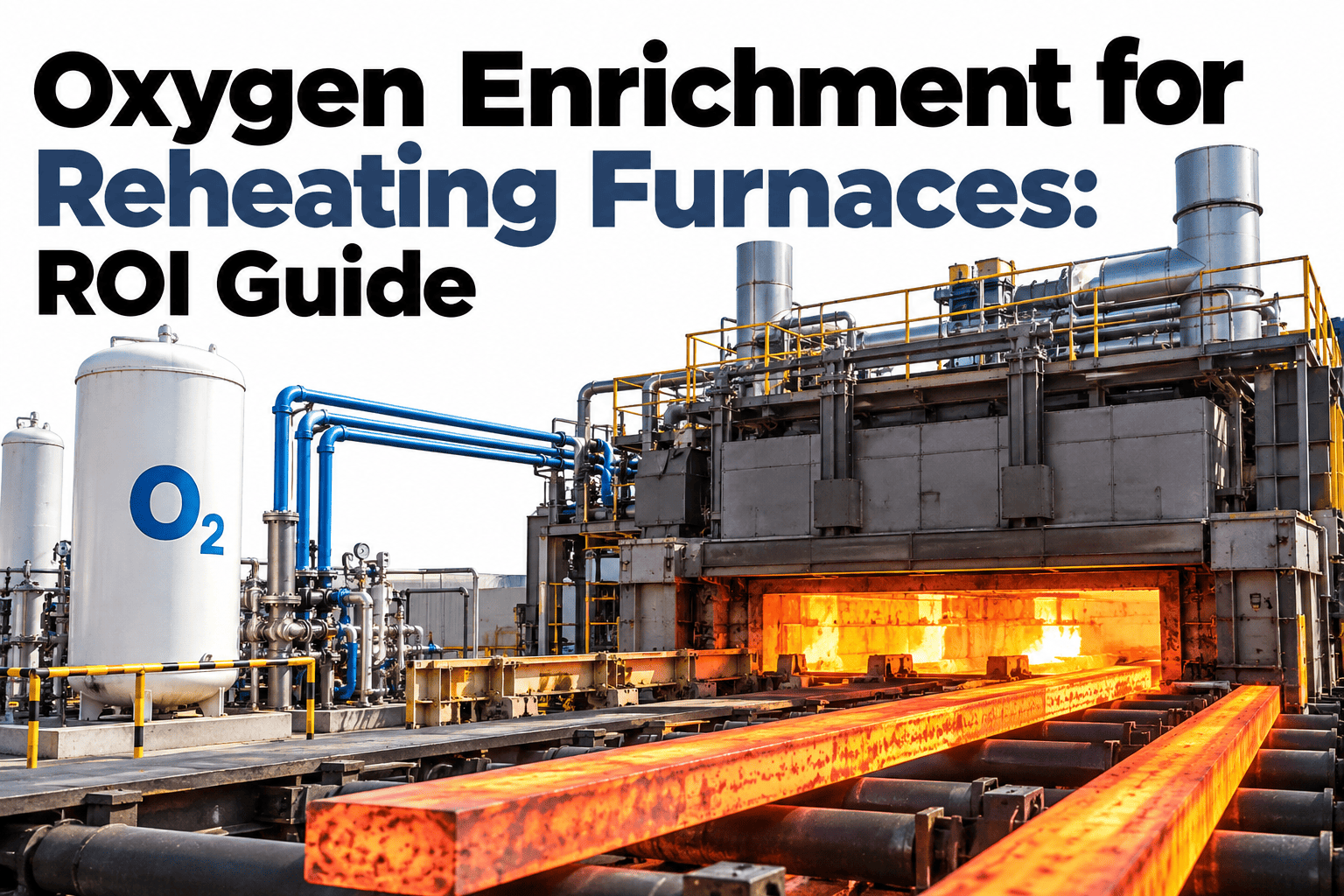
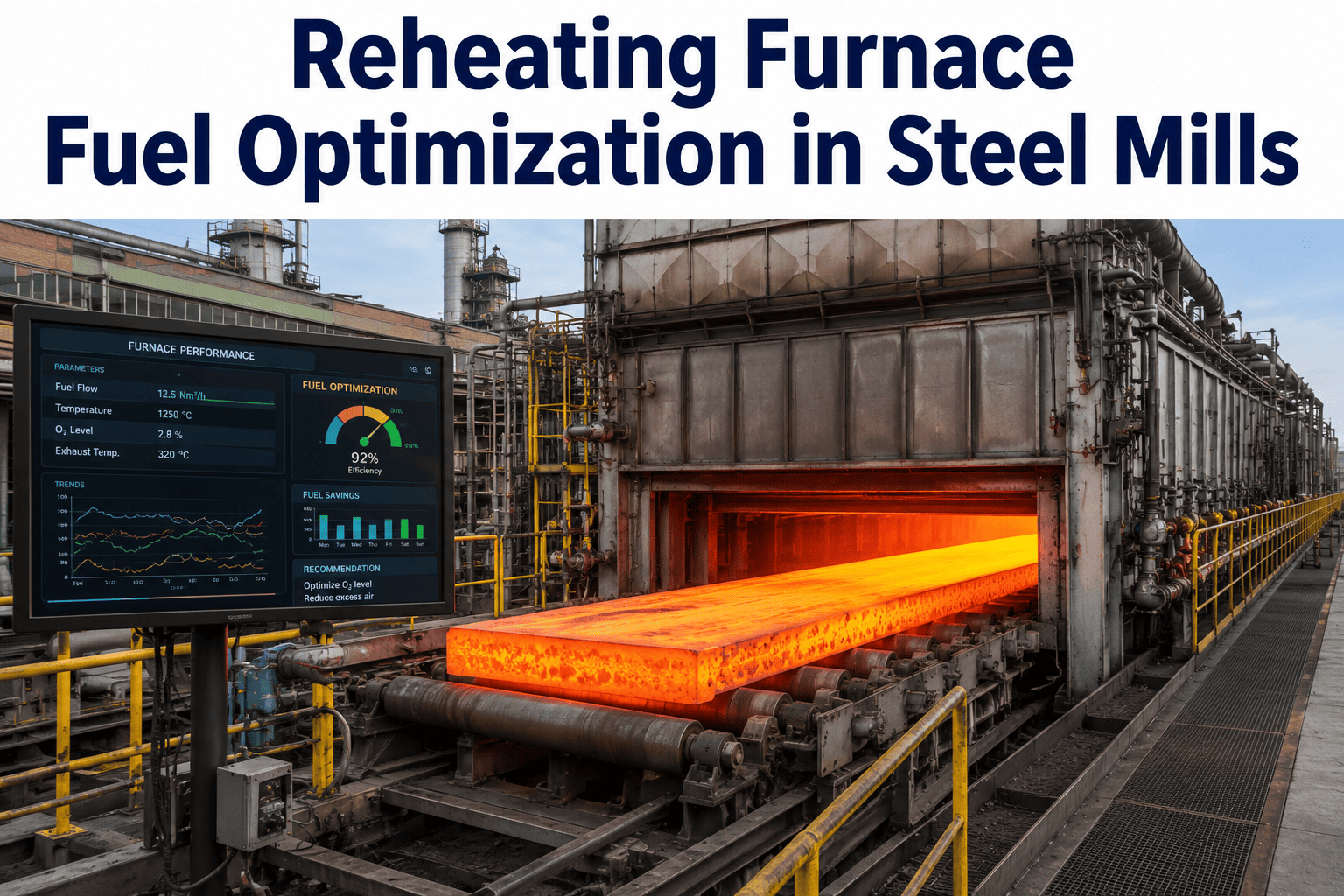
Burners decide how much of a reheating furnace fuel becomes useful heat and how much leaves up the stack. Air-fuel ratio, burner type and tuning all affect specific fuel use, which is the energy used per tonne of steel heated. Regenerative systems recover more heat than recuperative ones, but cost more and raise questions about NOx, which low-NOx designs and careful tuning address. This guide explains the main choices and how to tune for efficiency. To review your own burners, you can walk through a burner efficiency check with our team.
Reheating furnace energy optimisation
Tune Burners So More Fuel Becomes Heat in the Steel and Less Goes Up the Stack
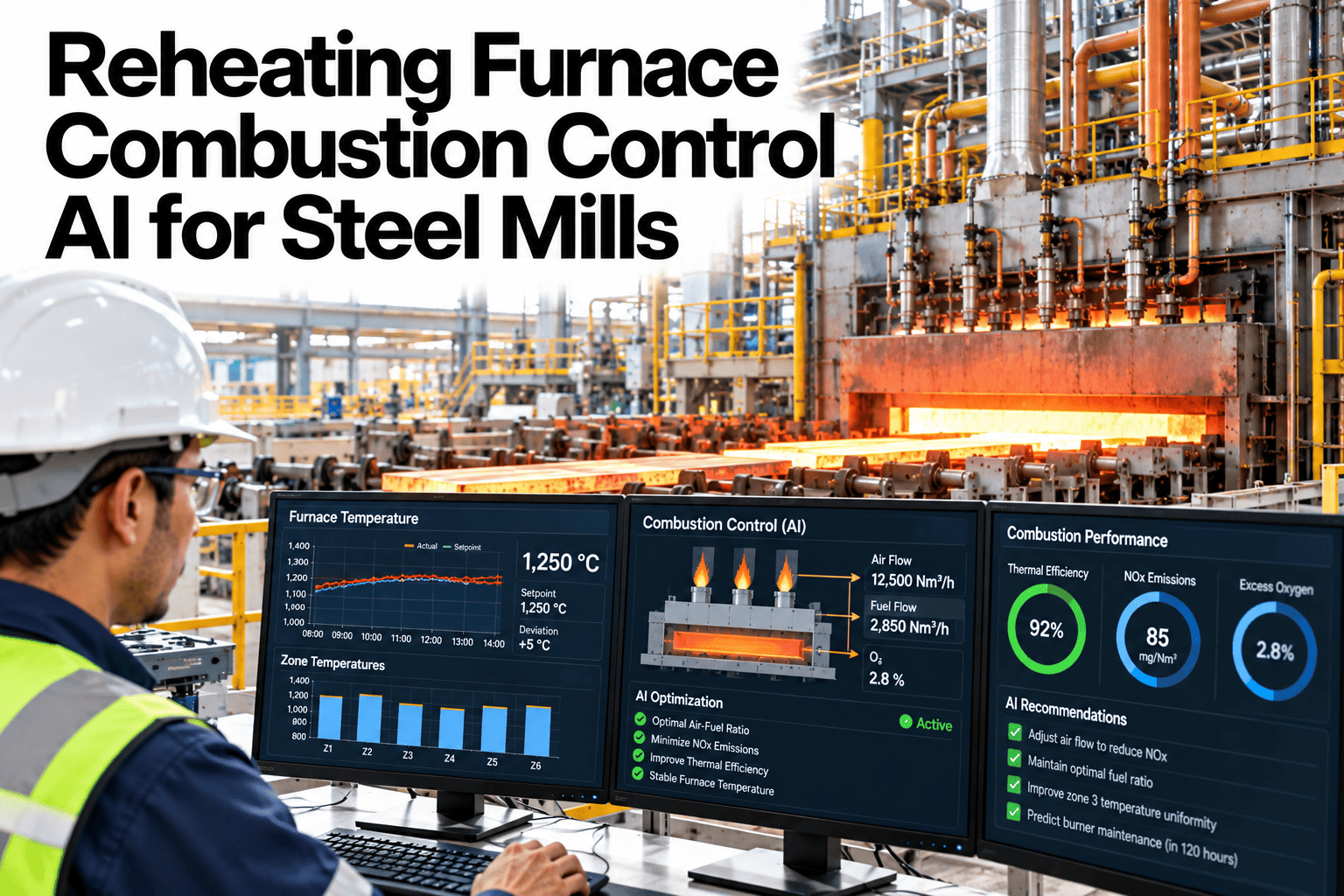
iFactory AI monitors air-fuel ratio, burner balance and heat recovery to cut specific fuel while keeping emissions in check.
Three burner questions
Air-fuel ratioRegenerative or recuperativeLow-NOx tuning
What burners controlEfficiency Starts at the Flame
A burner mixes fuel and air and creates the heat. How well it does that sets the fuel used per tonne.
Ratio
Too much air carries heat out of the stack
Balance
Uneven burners create hot and cold spots
Heat recovery
Preheated air saves fuel
Emissions
NOx rises with flame temperature
The four items interact. Improving one can affect another, so tuning needs a whole-furnace view.
Air-fuel ratioThe Biggest Simple Lever
Burning with the right amount of air wastes the least heat. Too little air leaves unburned fuel. Too much wastes heat in the exhaust.
1
Measure
Track oxygen in the flue gas and fuel and air flows.
2
Compare
Check against the target for each load.
3
Trim
Adjust air to hold the target ratio.
4
Verify
Confirm combustion stays clean and stable.
Targets depend on burner design, load and safety rules. Never reduce air below safe limits.
Burner typesRegenerative Versus Recuperative
Recuperative burners
Continuously preheat air using flue gas
Simpler design and operation
Moderate air preheat
Lower cost and maintenance
Regenerative burners
Work in pairs that alternate firing and exhausting
Very high air preheat
Higher efficiency potential
Higher cost, more complex valves and beds
The better choice depends on furnace size, fuel cost, space and how much heat recovery you already have.
See Where Your Burners Lose Efficiency
Share burner, oxygen and fuel data and see how iFactory AI would identify excess air and imbalance.
Choosing a systemCompare the Main Options
| Factor | Recuperative | Regenerative | What to check |
|---|
| Air preheat level | Moderate | High | Fuel savings potential |
| Capital cost | Lower | Higher | Payback on your furnace |
| Maintenance | Simpler | More valves and beds to maintain | Maintenance capability |
| Flame and NOx behaviour | Easier to manage | Needs careful low-NOx design | Emission limits |
| Fit with existing furnace | Often easier to retrofit | May need layout changes | Space and structure |
Low-NOxCut NOx Without Giving Back Efficiency
High preheat raises flame temperature, which tends to raise NOx. Burner design and tuning manage the trade-off.
Staged air or fuel
Spread combustion to lower peak temperatures.
Flameless combustion
Distribute reaction to avoid hot spots.
Flue gas recirculation
Dilute the flame to reduce peak temperature.
Careful ratio control
Avoid excess oxygen that favours NOx.
Balanced burners
Prevent local hot spots.
Regular tuning
Keep settings aligned with real conditions.
Emission limits differ by region and permit. Confirm requirements with your environmental team.
TuningFour Layers of Burner Care
Instruments
Reliable oxygen, flow and temperature measurement.
Control
Ratio control that follows load.
Burner condition
Clean nozzles, correct flame shape and sealed fittings.
Heat recovery equipment
Healthy recuperators and regenerator beds.
A fault in any layer limits what tuning can achieve. Start with instruments.
Where heat goesAn Illustrative View of Burner-Related Losses
Excess air and poor heat recovery are the main burner-related losses. This split is illustrative.
40 percent: Flue gas heat
Reduced by lower excess air and better recovery.
25 percent: Unbalanced firing
Hot and cold spots force higher setpoints.
20 percent: Leaks and openings
Cold air entering and heat escaping.
15 percent: Other
Cooling, radiation and miscellaneous.
Burner balanceEven Out Burners to Lower Setpoints
Uneven burners make some zones run hot so that others reach target.
Burner behaviour
Even firing
Uneven firing
Clean flame
Ideal
Efficient and stable
Tune the ratio
Flame quality limits efficiency
Poor flame
Balance the burners
Uneven heat drives extra fuel
Repair first
Poor flames and uneven firing together
Trend each burner's behaviour. To explore burner monitoring, ask our team about burner level data.
What improvement looks likeBefore and After a Burner Efficiency Programme
Track specific fuel and oxygen. This view is illustrative.
RolloutFive Steps to Better Burner Efficiency
1
Check instruments
Verify oxygen analysers, flow meters and thermocouples.
2
Measure the baseline
Record specific fuel, oxygen and balance.
3
Fix the basics
Clean, repair and align burners.
4
Tune the ratio
Adjust ratio control by load with safety checks.
5
Review hardware options
Assess recuperators or regenerators if payback supports.
Oxygen analysers verified and calibrated
Fuel and air flow meters checked
Baseline specific fuel by product recorded
Burner condition and flame shape inspected
Safe minimum air limits documented
NOx limits and permit conditions confirmed
Heat recovery equipment inspected
Owner from combustion, maintenance and environment
Expert reviewWhat a Combustion Engineer Would Check First
Burner efficiency starts with measurement. Calibrated oxygen and flow readings, healthy burners and safe limits matter more than the latest hardware.
Verdict
Strong when ratio control, balance and heat recovery are managed together.
Watch for
Cutting air below safe limits or ignoring NOx permits.
Do next
Calibrate instruments and record a baseline before changing any settings.
Frequently asked questionsWhat Steel Mills Ask About Burner Efficiency
What is a good air-fuel ratio target?
It depends on burner design, load and safety rules, so there is no single value. Measure flue gas oxygen, set targets with the burner supplier and safety team and verify combustion stays clean.
Review your ratio targets.
Are regenerative burners always better?
They can save more fuel through high air preheat, but cost more, need more maintenance and require careful NOx control. The right choice depends on your furnace and economics.
Ask about burner selection.
How do we control NOx with high preheat?
Use low-NOx burner designs such as staging, flameless combustion or flue gas recirculation, keep excess oxygen low and tune regularly. Confirm permit limits.
Discuss NOx control.
Can AI help tune burners?
It can trend oxygen, balance and fuel by burner, flag drift and suggest adjustments, while engineers keep safety limits and approve changes.
Ask about AI-assisted tuning.
What should we measure first?
Calibrate oxygen and flow instruments, then record specific fuel, excess air and burner balance for several weeks. This gives a baseline for any change.
Plan a baseline.
Less stack loss, lower fuel per tonne
Turn More of Your Fuel Into Heat in the Steel
Book a session with iFactory AI to check your instruments, find excess air and imbalance and plan tuning or hardware changes that pay back.