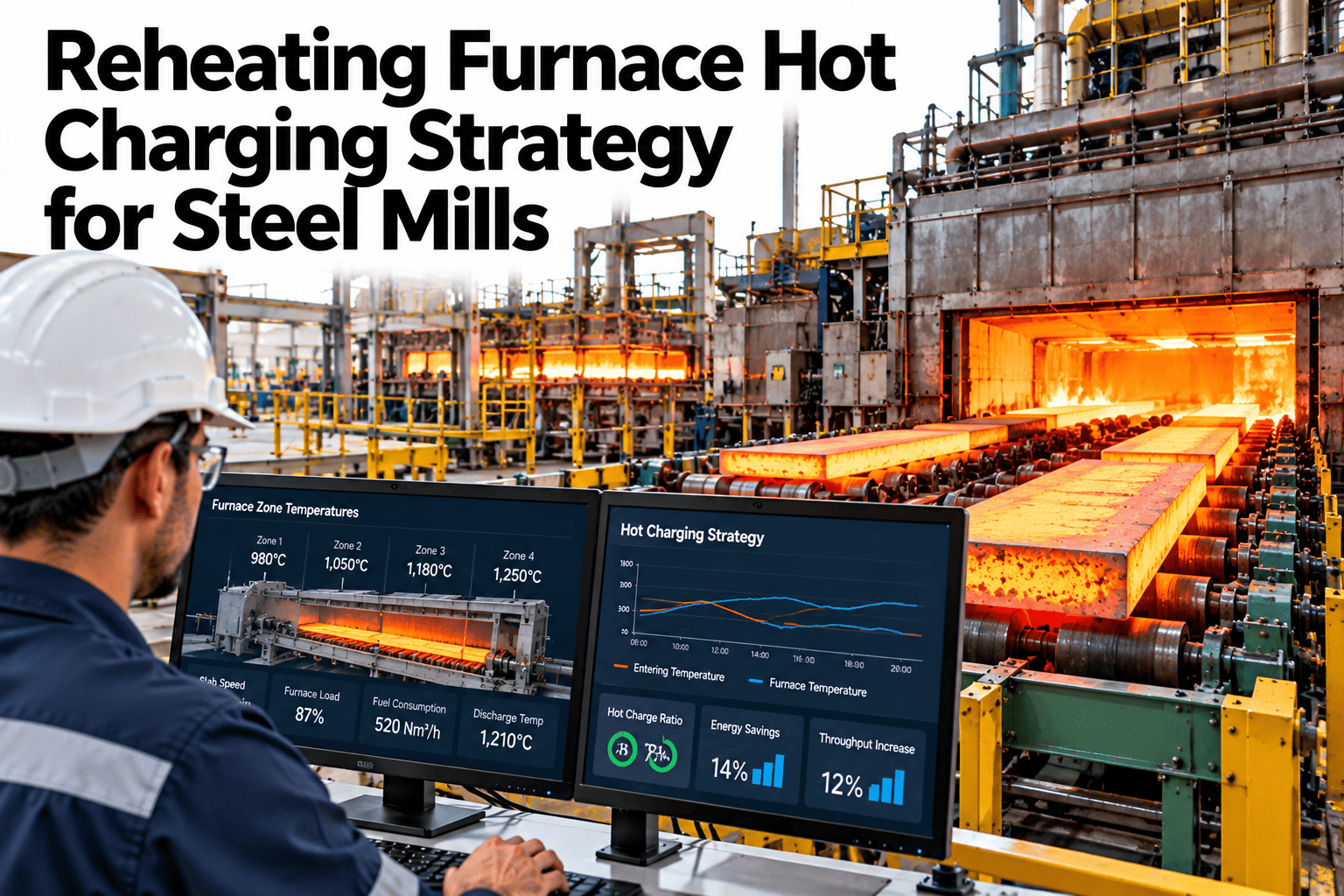
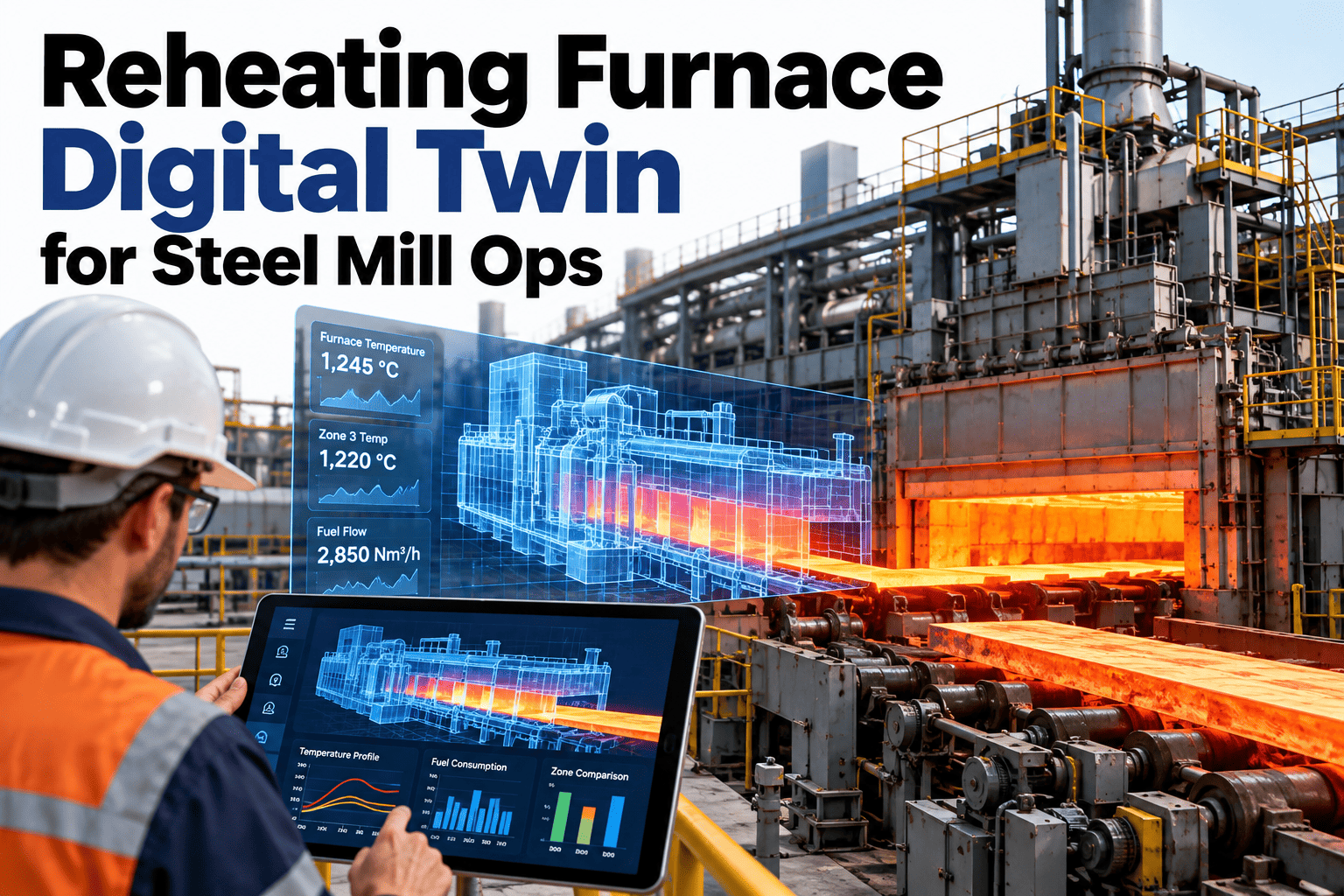
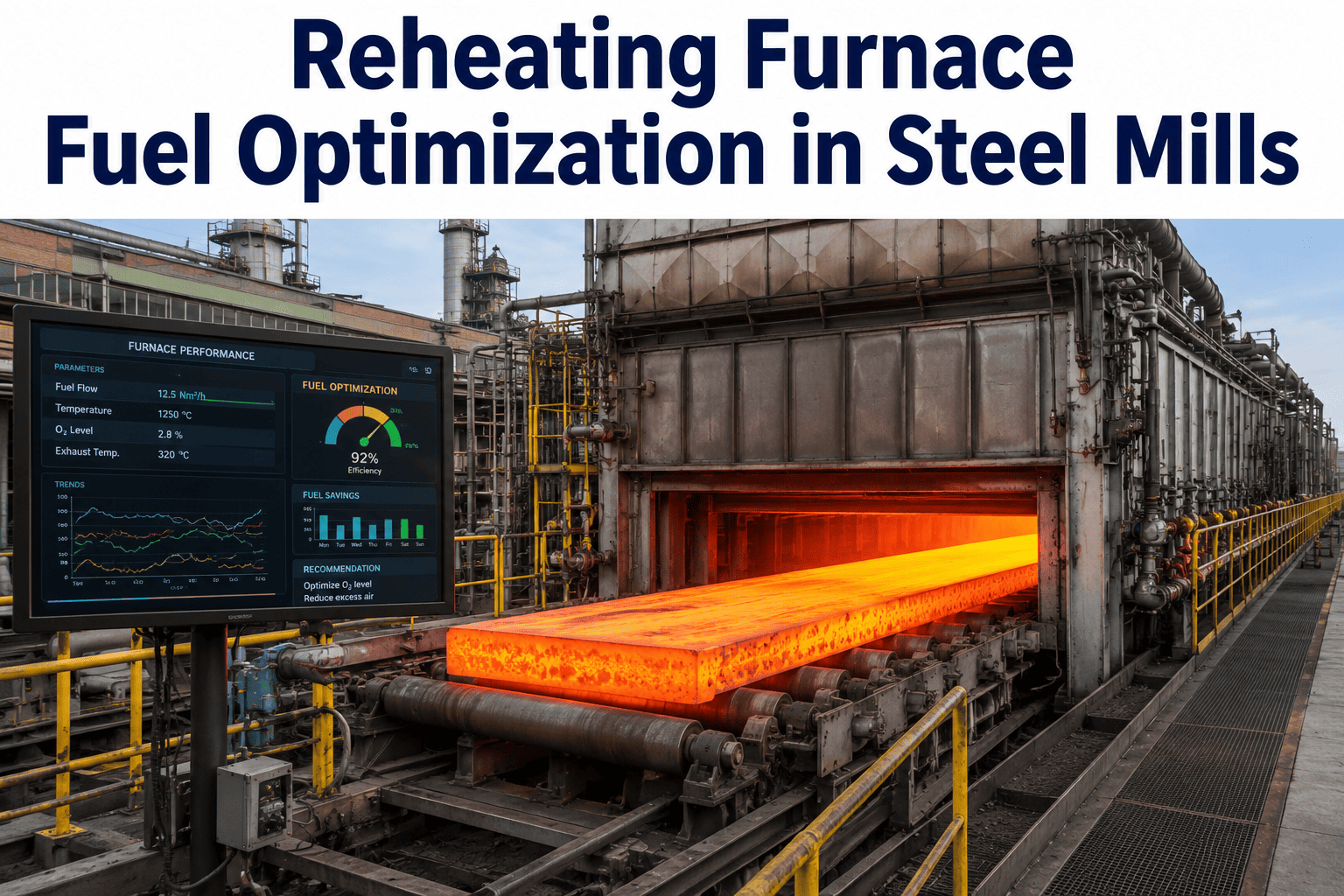
Slabs leave the caster at around 1,200 to 1,250 degrees Celsius, yet in many mills they cool in a yard and are then reheated from cold. Hot charging puts those slabs into the reheating furnace while they still hold much of their heat, which cuts heating time and fuel. The savings depend on how hot slabs arrive, how well the caster and mill schedules match and how reliably the transfer works. To test the case for your own mill, you can review a hot charging plan with our team.
Reheating furnace energy optimisation
Charge Slabs While They Are Still Hot and Cut Reheating Fuel
iFactory AI helps steel mills raise charging temperatures by matching caster and mill schedules, tracking slab heat and tuning furnace control for hot slabs.
Illustrative charging temperature by practice
Why it paysHeat Already in the Slab Is Fuel You Do Not Have to Buy
Reheating furnaces are among the largest energy users in a hot rolling mill. Slab heat is a free starting point.
Fuel
Less gas or oil burned per tonne
Throughput
Shorter heating time can lift furnace output
Emissions
Lower fuel use cuts carbon per tonne
Scale
Less time hot can reduce surface scale loss
Published case studies report energy reductions of up to about 40 percent in favourable conditions. Results vary widely, so every mill should work out its own figure.
Charging practicesCold, Warm, Hot and Direct Charging Are Different Things
Mills describe the practice by how hot slabs are when they enter the furnace.
Cold
Cooled in the yard, then reheated
Warm
Part cooled, some heat kept
Hot
Charged quickly with high retained heat
Direct
Moved from caster to mill with almost no wait
The staircase is illustrative. Actual charging temperatures depend on the slab, the wait time and how well heat is kept during transfer.
The slab journeyFrom Caster to Furnace in Five Moves
Every step between the caster and the furnace either keeps or wastes heat.
Cast and cut
Slabs leave the caster and are cut to length
Inspect
Surface and quality are checked while hot
Transfer
Slabs are moved to the mill on wagons or roller tables
Buffer
Short holds absorb schedule differences
The fewer the waits and the better insulated the path, the more heat arrives at the furnace.
See How Much Heat Your Slabs Arrive With
Share your caster-to-mill layout and schedules and see how iFactory AI could track slab temperature and plan hot charging.
Keeping the heatFour Layers of Temperature Retention
Short waits
Plan casting and rolling so slabs spend minimal time idle.
Covered transfer
Move slabs on covered or insulated wagons and tables.
Smart buffering
Stack and cover slabs so the hottest are used first.
Heat-holding furnace
Use a small furnace to hold or adjust temperature if needed.
A few hot slabs entering a furnace do not by themselves save much. The benefit comes from raising charging temperature consistently across the mix.
Logistics optionsCompare Ways to Move Slabs From Caster to Mill
| Option | How it works | Strength | Watch for |
|---|
| Roller table | Direct line between caster and mill | Fast, little heat loss | Needs close layout |
| Covered rail wagon | Slabs carried in covered cars | Works across longer distances | Cooling during waits |
| Insulated box or hot box | Slabs held in insulated space | Retains heat during buffering | Capacity and handling |
| Crane and yard stacking | Slabs stacked and lifted | Flexible | Greater heat loss |
The right choice depends on plant layout, distance and product mix. Many mills use more than one.
Scheduling fitCaster and Mill Plans Must Fit Together
Hot charging needs the caster output to match what the mill wants to roll next.
Slab status
Matches mill plan
Does not match plan
Good surface quality
Hot charge
Send straight to the furnace
Hold hot
Buffer until the mill is ready
Needs conditioning
Condition then charge
Treat the surface, then warm charge
Cold route
Cool, inspect and plan later
Order changes and quality holds are the usual reasons slabs miss their hot window. To explore schedule tools, ask our team about caster and mill scheduling.
Per-slab decisionA Simple Flow for Every Slab
1
Check quality
Is the slab free of defects that need cold inspection?
2
Check temperature
How hot is it now and how fast is it cooling?
3
Check the plan
Is there a mill slot that matches this slab?
4
Route
Charge hot, hold or send to the cold route.
Making the decision automatically and early keeps hot slabs from waiting for someone to notice them.
What changes in the furnaceFuel Index by Charging Practice
This illustrative index compares relative fuel use per tonne. Cold charging is set to 100.
These bars are illustrative. Furnace control must be tuned for hot slabs, otherwise the saving is lost to overheating or wasted air.
Measure itTrack Four Numbers to Prove the Benefit
Hot charge ratio = tonnes hot charged / total tonnes charged
Ratio
Share of slabs charged hot
Temperature
Average charging temperature
Fuel per tonne
Energy use for each tonne heated
Wait time
Average time from caster to furnace
Track by product type and by season. Averages across the whole mill can hide where the biggest gains remain.
RolloutFive Steps to a Hot Charging Programme
1
Measure today
Record charging temperature, waits and fuel per tonne.
2
Find the heat losses
Map where slabs wait and lose heat.
3
Fix the logistics
Shorten waits and add covers or insulation.
4
Tune furnace control
Adjust setpoints and combustion for hotter slabs.
5
Extend the mix
Add more product types to hot charging step by step.
Baseline fuel per tonne by product
Slab temperature measured or estimated at charging
Caster and mill schedule alignment reviewed
Transfer route and covers assessed
Surface quality rules for hot charging agreed
Furnace control tuned for hot slabs
Hot charge ratio tracked weekly
Owner from melt shop, rolling mill and energy team
Common obstaclesFive Reasons Slabs Miss Their Hot Window
Most mills that try hot charging find the same obstacles. Knowing them early makes planning easier.
1
Order changes
The mill wants a different slab than the caster just made, so hot slabs wait.
2
Caster interruptions
Stops and sequence changes leave gaps in supply.
3
Surface quality holds
Slabs needing inspection or conditioning leave the hot route.
4
Handling equipment
Cranes, wagons and transfer tables become bottlenecks.
5
Weak coordination
Melt shop, mill and planning use different schedules.
Fixing coordination and scheduling usually delivers more than adding equipment.
Where heat is lostSlab Heat Disappears Quickest While Slabs Wait
Heat leaves slabs from the moment they are cut. This illustrative split shows where losses often occur.
35 percent: Waiting in the yard
Slabs sit uncovered between casting and charging.
25 percent: Transfer
Movement between caster and mill on open or lightly covered paths.
25 percent: Buffering
Stacking and holding while the mill finishes earlier orders.
15 percent: Handling
Lifting, turning and positioning steps.
Measure your own pattern. A simple temperature record at four points along the route shows where heat is lost.
Data and sensingSix Data Items a Hot Charging Planner Needs
Slab identity
Every slab tracked from caster to furnace.
Slab temperature
Measured or estimated at key points.
Caster timing
Cut time, sequence and expected finish.
Mill schedule
What the mill will roll next and when.
Furnace status
Free positions, zone temperatures and constraints.
Fuel and energy
Use per tonne by product and charging temperature.
With these six items a planner can decide which slab to charge, which to hold and which to send cold.
One planning viewCombine Caster, Mill and Furnace Information
Hot charging works best when everyone sees the same plan.
Caster scheduleMill rolling planSlab tracking
Hot charging planner
Furnace set-upCrane and transfer tasksDaily reports
A shared view lets planners react quickly when the mill sequence changes.
Who must work togetherFour Teams Share the Result
Melt shop
We aim to cast slabs the mill actually needs.
Rolling mill
We share our plan early and stick to it where we can.
Production planning
We balance orders, slab stock and delivery dates.
Energy team
We track fuel per tonne and report the savings.
Agree shared targets. When each team optimises alone, hot charging suffers.
ProgressionThree Stages of Hot Charging Maturity
Starter
A few product types are hot charged when conditions allow.
Intermediate
Planning links caster and mill for most standard products.
Advanced
Most slabs are hot or direct charged with tuned furnace control.
Most mills move through these stages over many months. To place your mill, ask our team for a hot charging maturity check.
Expert reviewWhat a Reheating Furnace Engineer Would Check First
Expert review
Savings come from consistency. Hot charging only pays when slab heat, schedule and furnace control are managed together, rather than one hot slab at a time.
VerdictStrong where caster and mill are close and schedules can be aligned.
Watch forQuoted savings that ignore quality holds, order changes and control tuning.
Do nextMeasure charging temperature and waits for a month before designing changes.
Frequently asked questionsWhat Steel Mills Ask About Hot Charging
How much fuel can hot charging really save?
Published case studies report reductions of up to about 40 percent in favourable conditions, and some sources quote more for direct charging. Results depend on charging temperature, hot charge ratio and furnace control, so measure your own baseline first.
Estimate your own saving.
Is hot charging possible with a variable order book?
Yes, but it needs scheduling that links casting plans to mill plans and flexible buffering for slabs that cannot roll immediately. Mills often start with products that have stable demand and widen the mix as logistics improve.
Ask about flexible scheduling.
What about slab quality and surface defects?
Hot slabs are harder to inspect, so mills need reliable quality control at the caster or fast inspection while slabs are hot. Slabs that need conditioning take the cold route. Clear rules prevent defects reaching the mill.
Discuss quality rules for hot charging.
Do we need new furnace control?
Hot slabs change heating demand, so control settings tuned for cold slabs can overheat or waste air. Tuning control or using model-based control for the hot-charged mix protects the saving and the product temperature.
Ask about furnace control tuning.
Where should we start?
Start by measuring charging temperature, wait times and fuel per tonne for each product. Then fix the largest heat losses and pilot hot charging on one stable product.
Plan a pilot.
Use the heat you already made
Turn Slab Heat Into Fuel Savings
Book a session with iFactory AI to map your caster-to-mill path, measure slab heat and plan a hot charging pilot that proves the savings.