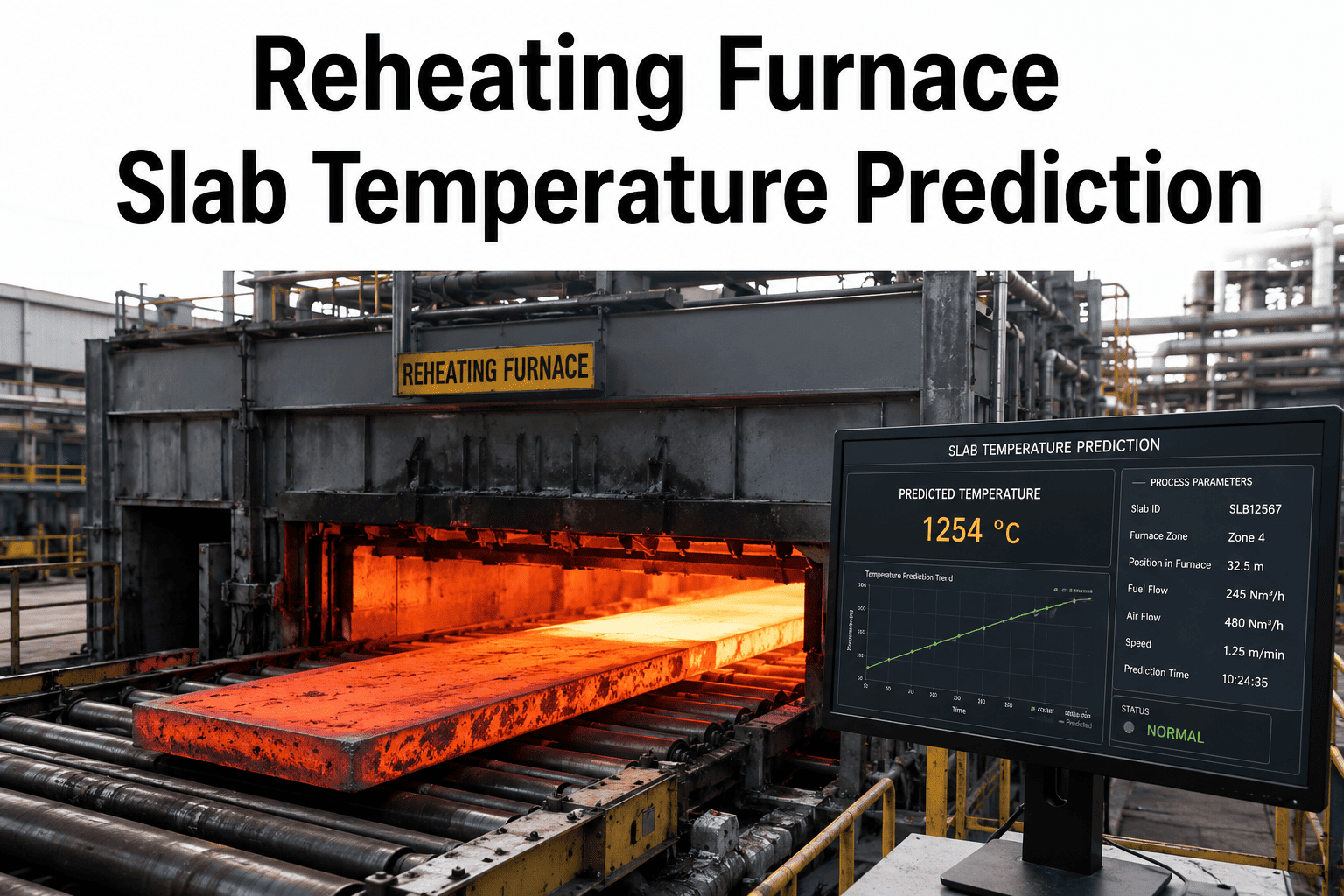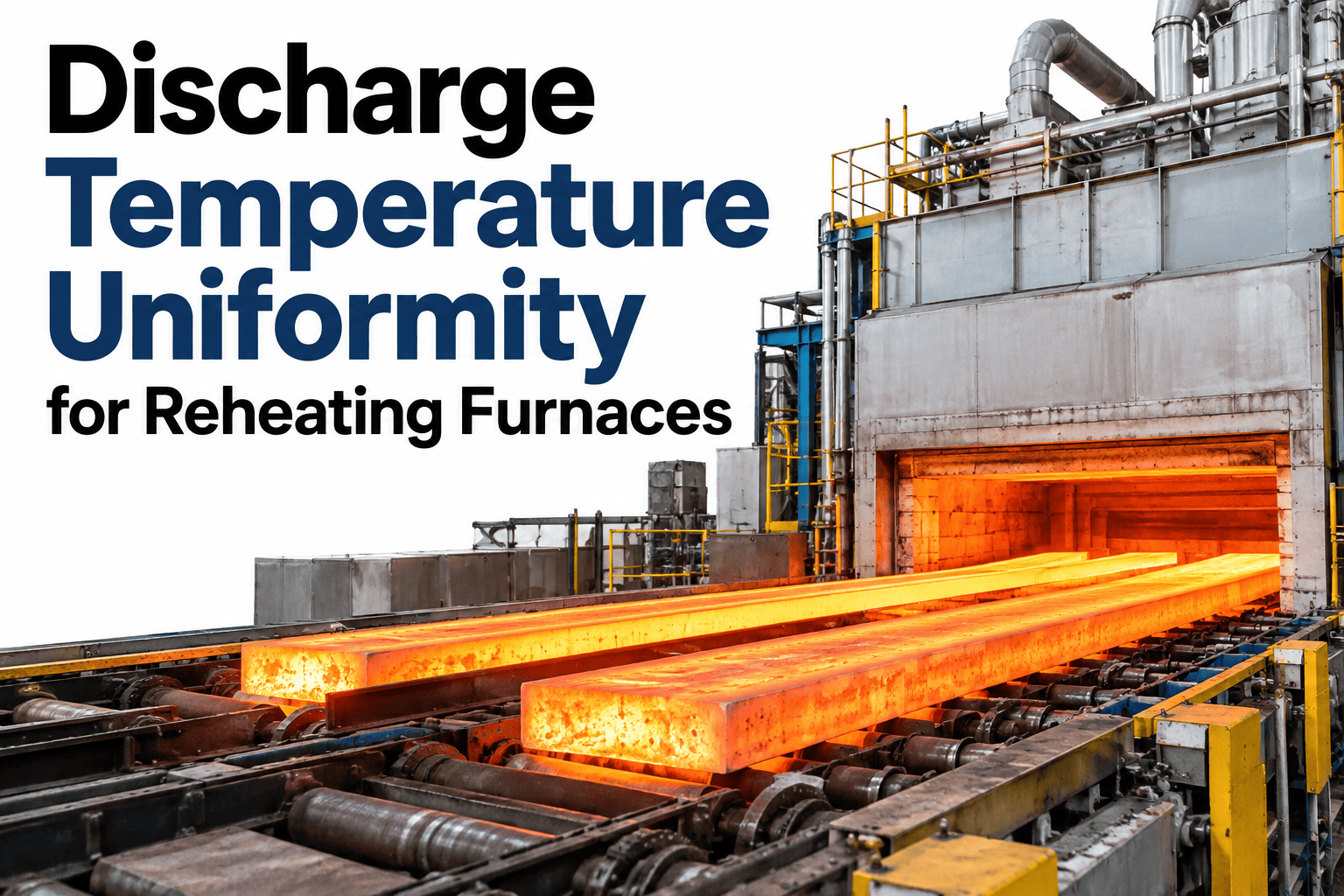
A slab can leave the furnace with the right average temperature and still roll badly. The surface may be hot while the core lags, the tail may be cooler than the head, or the edges may sit below the centre. The mill then sees varying rolling force, uneven gauge and, in the worst cases, edge cracks that become rejects. Uniformity at discharge is what the finishing mill actually needs. Teams can see how through-thickness and head-to-tail uniformity could be tracked on their own furnace and where it breaks down.
Hit the Discharge Temperature in Every Part of Every Slab
iFactory Reheating Furnace Energy AI targets cross-section and head-to-tail uniformity, so slabs reach the mill evenly heated and rolling quality improves.
Inside the Slab: Why Surface Readings Mislead
A pyrometer reads the surface. The core heats more slowly, and the gap between them is what soak time exists to close.
Schematic cross-section. Real temperature gradients depend on slab thickness, grade and heating history.
Three Kinds of Non-Uniformity
Each type has its own causes and its own fix, so name the one you have first.
Through thickness
Surface hot while the core lags, usually from short soak or fast pushing
Head to tail
One end of the slab cooler, often from skid marks or burner imbalance
Edge to centre
Edges losing heat faster, which can promote edge cracking in rolling
From Symptom to Tactic
Match what the mill sees to the likely furnace cause and a first adjustment.
| Symptom at the Mill | Likely Furnace Cause | First Tactic |
|---|---|---|
| Rolling force higher than expected | Cold core or cold tail | Extend soak or revise zone setpoints |
| Cold spots at fixed positions | Skid marks from cooled supports | Adjust skid pattern and soak recovery |
| Edge cracks or rough edges | Cold slab edges | Check burner balance near the walls |
| Variation between slabs in a run | Changing push rate or delays | Smooth throughput and hold rules |
What Non-Uniform Heating Costs the Mill
Heating problems turn up downstream as rolling problems. Rank them to see where the mill feels it most.
Illustrative relative impact. Your own reject and rolling data gives the real order.
Find Out Where Your Slabs Are Uneven Before the Mill Does
Share a week of discharge readings and mill entry data. We will show where heating uniformity breaks and what to adjust first.
A Four-Move Uniformity Loop
Uniformity improves when measurement, estimation and adjustment run as a loop.
When the Mill Stops, the Slabs Keep Heating
Delays are a main cause of overheating and uneven slabs. Decide the response before it happens.
What Experienced Furnace Engineers Look For in Uniformity
Frequently Asked Questions
Why does the surface temperature not tell the whole story?
The surface heats first, while the core follows more slowly. A surface reading can look on target while the core lags. Review how core temperature could be estimated on your furnace using your own data.
How can we measure head-to-tail differences?
Scanning or repeated pyrometer readings along the slab show the pattern, and models can fill the gaps. Skid marks often show as repeating cold spots at fixed positions.
Can better uniformity reduce rejects?
It often helps, since rolling problems from uneven heating can be avoided at source. The size of the benefit depends on your product mix. Estimate the reject link for your own mill with our engineers.
Does lowering furnace temperature hurt uniformity?
It can if soak time is not extended to match. The aim is the right temperature everywhere, not simply the lowest. Test any reduction against core temperature and mill results.
How quickly can we see improvement?
Zone and delay rule changes can show results within weeks, while deeper changes take longer. See which quick wins your furnace data points to on a short call.
Deliver Slabs the Mill Can Roll With Confidence
Bring your discharge data and reject history. We will show the uniformity gaps and the adjustments that close them.