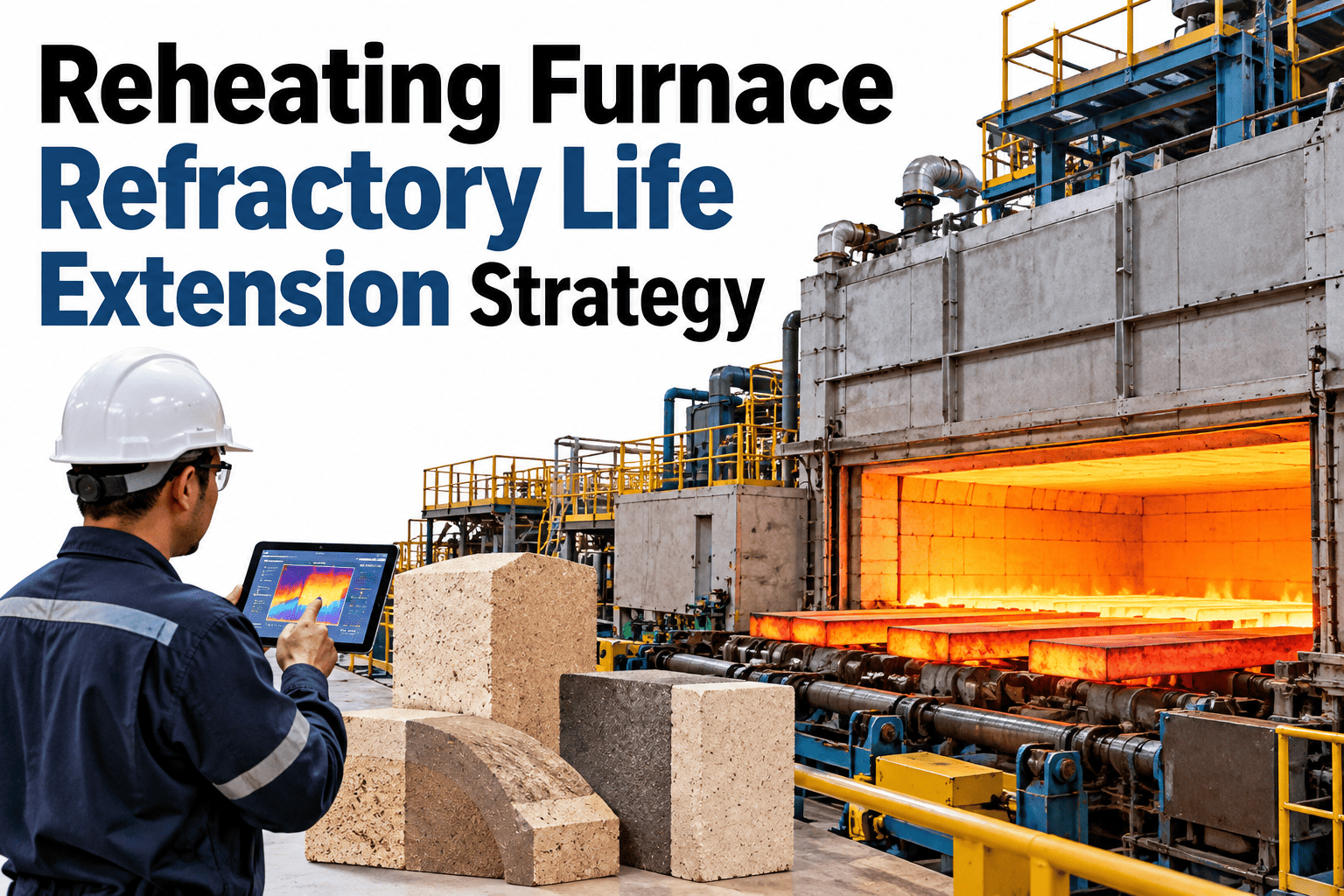
Refractory is the part of a reheating furnace that nobody notices until it fails. A hot spot on the roof, a spalled burner block or a damaged hearth can force a stop long before the planned reline, and every extra year of life defers a large outage and cost. Life is shaped by three decisions: which materials go where, how well they are installed and dried out, and how gently the furnace is cycled. Teams can review a refractory life plan built around their own furnace history and find which decision costs them the most.
Make Every Campaign Longer by Protecting What Lines the Furnace
iFactory Reheating Furnace Energy AI supports material selection, installation quality control and thermal-cycling protection that extend refractory campaigns.
Where Furnace Refractory Wears Differently
Each area faces a different mix of heat, flame, scale and mechanical load, so each needs its own approach.
Simplified section. Real furnaces have zones, doors, skids and flue areas as well.
Matching Material to the Zone
The best material is the one suited to the local conditions, not the one with the best data sheet.
| Area | Main Stress | Selection Focus |
|---|---|---|
| Roof | Heat, flame contact and thermal cycling | Insulation efficiency and spalling resistance |
| Side walls | Heat and mechanical contact from slabs | Abrasion resistance and stability |
| Burner blocks | Flame heat and thermal shock | Shock resistance and shape accuracy |
| Hearth | Scale attack and mechanical load | Chemical resistance and strength |
Installation Quality Checkpoints
Many early failures trace back to installation, not materials. Check these stages.
What Wears Refractory Out
Several mechanisms act together. Ranking them for your furnace shows where to focus protection.
Illustrative relative contribution. Your own inspection findings set the real ranking.
Find Out What Is Really Shortening Your Campaign
Share your last two campaign records and inspection findings. We will help rank the causes and the fixes with the best return.
Uncontrolled vs Controlled Thermal Cycling
Temperature swings crack lining. Controlling them is often the cheapest life extension.
Protection Tactics Worth Writing Down
These practices help refractory last without new materials.
Heat-up curves
Use staged heat-up rates tied to the lining type
Hot spot watch
Track shell and roof temperatures for early warning
Slab handling
Limit contact and damage at walls and entry points
Burner tuning
Keep flames off the lining and balanced across zones
A Campaign Review Plan
Life extension is a cycle, not a one-off project.
What Experienced Furnace Engineers Look For in Refractory Life
Frequently Asked Questions
How long should a reheating furnace refractory last?
Campaign lengths of several years are often discussed, but the real figure depends on the furnace, product and practice. Compare your campaign length against your own conditions with our team.
What is the cheapest way to extend refractory life?
Controlling heat-up, cool-down and stop procedures often costs little and reduces cracking. Dry-out discipline after repairs is the next candidate, since moisture causes early failure.
Does better material always mean longer life?
Not always. A premium material in the wrong zone can fail early. Review material choices for each zone with our engineers before specifying the next repair.
How do we spot trouble before a failure?
Track shell and roof temperatures, inspect during outages and note changes. Hot spots that move or grow are early warnings that deserve attention before they force a stop.
How does this connect to energy use?
Damaged insulation raises wall and roof heat loss, which raises fuel use. See how refractory condition and fuel consumption can be tracked together on a short call.
Push Your Next Campaign Further Without New Risk
Bring your campaign history and inspection notes. We will show the weak points and the protection plan that fits your furnace.