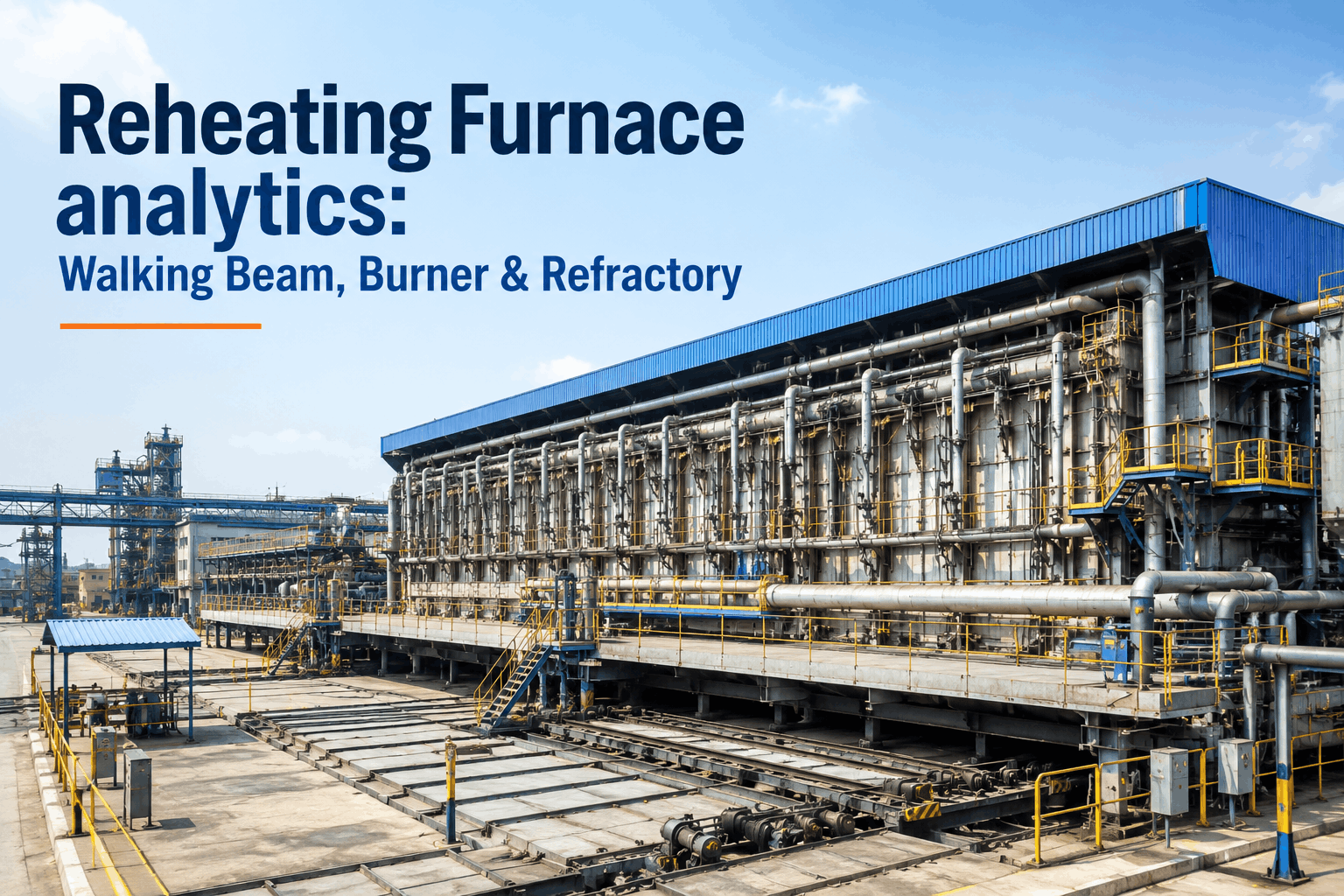
The **Reheating Furnace** is the critical thermal gateway to the rolling mill, yet it remains one of the most complex assets to manage efficiently. It is typically the single largest consumer of energy in a hot-rolling facility and a primary driver of material yield loss due to excessive scaling and decarburization. For mill managers, the operational challenge is a delicate balancing act: maintaining precise discharge temperatures to ensure rolling consistency, minimizing fuel consumption to protect margins, and safeguarding the furnace’s mechanical heart—the walking beam system. Traditional furnace control systems (Level-2) often rely on static thermal models and setpoints that fail to account for real-world variables like varying slab grades, burner nozzle degradation, or unpredicted mill delays. iFactory’s **Reheating Furnace Analytics** platform transforms these high-thermal environments from "black box" operations into predictive, transparent assets. By fusing high-frequency burner harmonics, walking beam drive torque signatures, and 3D refractory thermal mapping, we deliver a comprehensive "Thermal Twin" of your furnace. This digital intelligence not only optimizes fuel-air stoichiometric ratios in real-time but also extends refractory campaign life by years. Book a comprehensive furnace performance audit today to eliminate thermal bottlenecks, reduce your specific carbon footprint, and secure your yield for the next campaign.
What Is AI-Driven Reheat Furnace Analytics?
Reheat furnace analytics is the advanced application of physics-based machine learning to the complex, non-linear thermodynamics of a walking beam or pusher-type furnace. While standard automation systems can track average zone temperatures, iFactory's AI-driven engine monitors the **micro-behaviors** that define furnace health. We analyze individual burner valve responses to identify "lazy burners," detect the thermal "Skid Marks" that cause gauge variation in the rolling mill, and monitor the mechanical synchronization of the walking beam rakes with sub-millimeter precision.
For facilities processing high-value automotive, electrical, or structural steel grades, this level of precision is no longer optional. It isn't just about fuel savings—it’s about ensuring the metallurgical integrity of every slab that enters the mill train. By correlating oxygen enrichment levels with live combustion data, the platform ensures a "Neutral-to-Reducing" atmosphere that prevents the formation of sticky primary scale, which is the leading cause of surface defects in finished coils. Our platform acts as a continuous expert-in-the-loop, adjusting heating curves dynamically based on the specific metallurgical requirements of the charge mix and the real-time speed of the downstream rolling stands.
Solving the "Blind Spots" in Walking Beam Furnaces
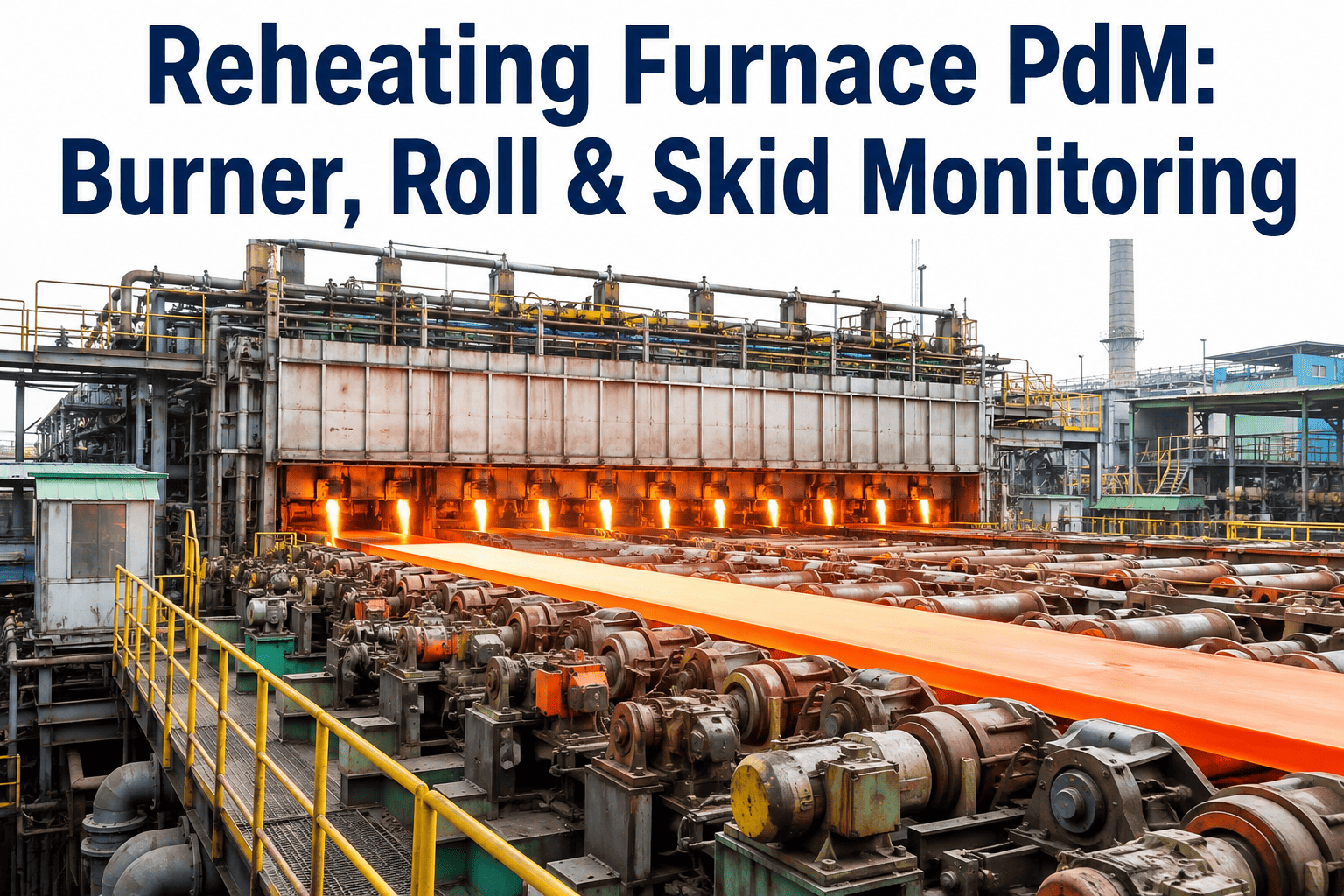
The interior of a reheat furnace is a harsh, opaque environment that remains a "Black Box" for most operators. Relying solely on a few thermocouples in the roof or hearth provides a limited view of the actual thermal transfer to the slabs. iFactory uses high-frequency data harvesting from existing Level-1 sensors and optional IR cameras to illuminate four critical operational areas:
Walking Beam Drive Torque Analytics
We monitor the hydraulic or electric drive torque required to lift and advance the slab load through the furnace. Sudden torque spikes or "Sync Drifts" are often the first indicators of mechanical binding, roller wear, or rake misalignment. Detecting these "Mechanical Harmonics" allows maintenance teams to intervene weeks before a furnace "Jam" occurs, which can otherwise trigger days of catastrophic downtime and refractory damage.
Burner Health & Fuel-Air Ratio AI
Identify "Lazy Burners" and nozzle blockages in real-time without manual inspection. iFactory correlates flue gas O2 levels with individual burner valve positions using a differential zone model. This ensures every burner is operating at peak stoichiometric efficiency, preventing localized hot-spots that damage slabs or fuel-rich atmospheres that waste energy and increase emissions.
Hearth & Skid Refractory Tracking
Monitor the thermal condition of water-cooled skid pipes and hearth refractories. Our AI detects thinning insulation or failing skid buttons 6 months before they cause significant "Slab Shadowing" or structural failure. By mapping the heat flux through the furnace floor, we provide a predictive reline schedule that aligns with planned mill shutdowns.
Atmospheric Decarb Control
Optimize the furnace pressure and air-infiltration to protect the metallurgical surface. Prevent excessive primary scale formation and decarburization by maintaining a "Neutrally Reducing" atmosphere based on live charge-grade data. Book a yield recovery audit to see how we save 2,500+ tons of steel annually for our partners.
Metallurgical & Atmospheric Optimization: The Yield Advantage
One of the most overlooked aspects of furnace management is the impact of the furnace atmosphere on the final product's surface quality. Excessive oxygen in the furnace doesn't just waste fuel—it creates "Sticky Scale" that can be rolled into the steel surface at the roughing mill, leading to rejections from automotive and appliance customers. iFactory's **Atmospheric Intelligence** module synchronizes with your slab chemistry database to adjust the air-fuel ratio dynamically for every slab. If you are processing high-silicon or high-chromium grades, the AI knows that standard heating profiles will lead to excessive decarburization. It compensates by shortening the residence time in high-heat zones and adjusting the pressure setpoints to minimize air infiltration through the discharge doors.
Furthermore, during mill delays, the AI automatically shifts the furnace into "Soak Mode," reducing temperatures to the minimum required for metallurgical stability. This prevents "Over-Heating" which is the primary cause of grain growth and reduced ductility in sensitive alloys. By treating the furnace as a metallurgical reactor rather than just a heater, iFactory users achieve a level of yield recovery that traditional PLC-based controls simply cannot match.
Performance Benchmarks: The ROI of iFactory Furnace AI
Optimizing a reheat furnace is not a one-time project; it's a continuous pursuit of thermal and mechanical stability. The chart below represents the average performance gains realized by iFactory users within the first year of deployment. These benchmarks are driven by our **Proprietary Tapered Heating Algorithms**, which adjust zone setpoints based on mill delays and material chemistry in real-time. For a typical 1.5M ton/year mill, these percentages translate into millions of dollars in recovered energy and yield.
Frequently Asked Questions: Reheating Furnace Analytics
How does iFactory identify a specific "Lazy Burner" among 40+ units?
We use a differential zone analytics model that correlates valve position signals with local thermocouple responses and global flue gas O2 data. The AI identifies outliers that consume excess fuel without contributing the expected thermal energy. This is far more precise than traditional zone-average monitoring and allows for targeted maintenance during the next available gap.
Can the platform prevent Walking Beam "Jams"?
Yes. Most jams are preceded by hours or even days of "Drive Harmonic Drift." iFactory monitors the torque signatures of the lift and traverse cycles at high frequency. If the mechanical resistance deviates from the baseline (indicating slab misalignment, scale buildup on the hearth, or bearing failure), the AI triggers a high-priority alert before a jam occurs.
How does the AI reduce "Slab Shadowing" or skid marks?
Skid marks occur where the slab contacts the water-cooled skid pipes. iFactory monitors the heat-flux of the skid buttons and soak zone firing patterns. It predictively adjusts the soaking time and temperature based on the slab's metallurgical chemistry and thickness to ensure a uniform core temperature, minimizing gauge variation in the roughing stand.
Does the platform support both gas and oil-fired furnaces?
Absolutely. The AI is fuel-agnostic. We map the calorific value and stoichiometric requirements of your specific fuel type (natural gas, coke oven gas, blast furnace gas, or fuel oil) into the burner optimization models to ensure peak efficiency regardless of your energy source or fuel-blending strategy.
What is "Tapered Heating" and how does AI manage it?
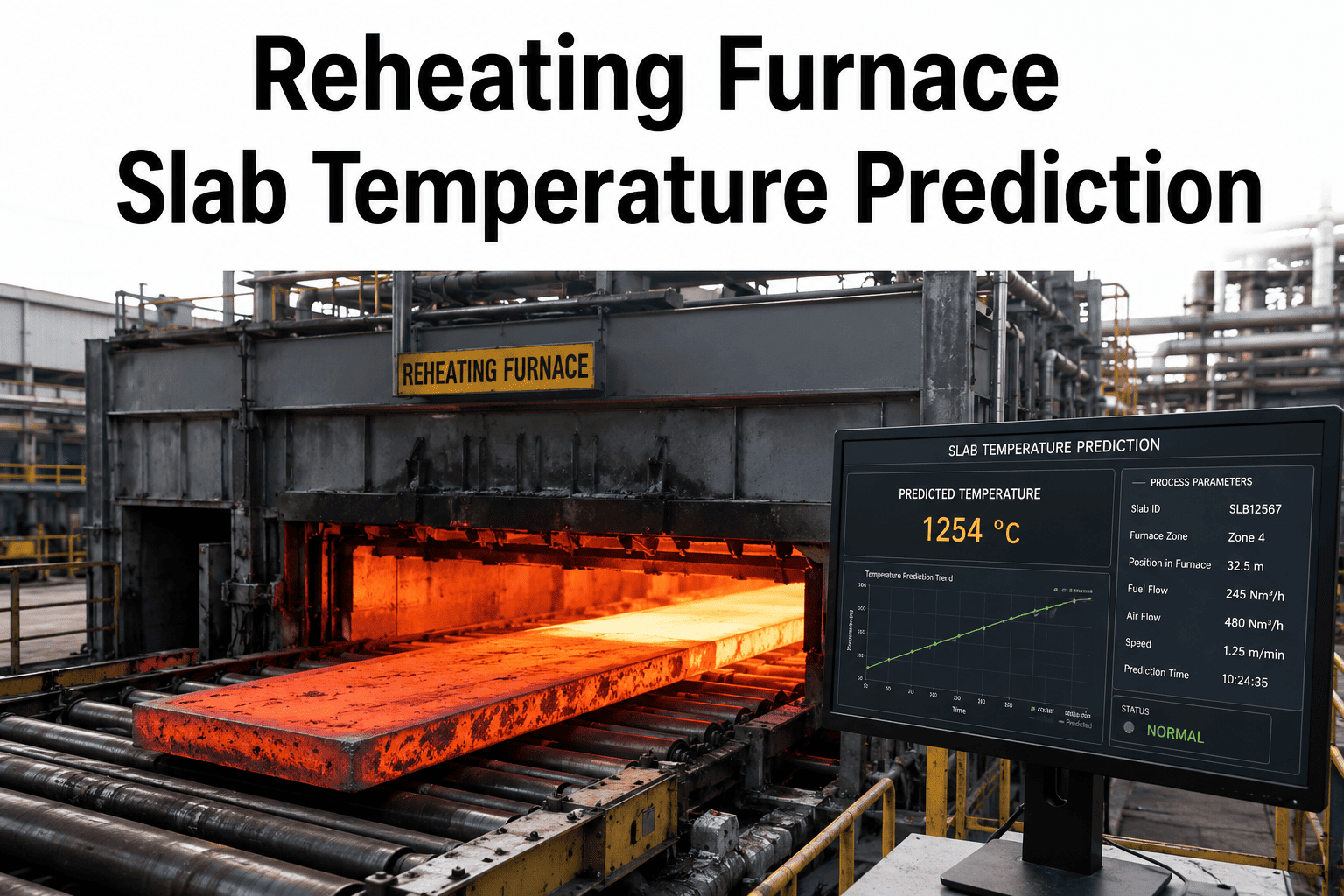
Tapered heating involves heating the head and tail of a slab to different temperatures to compensate for temperature loss during the rolling process. iFactory automates this by calculating the exact thermal "Taper" needed based on the mill's current rolling speed and the slab's transit time, ensuring perfect entry temperature for every foot of material.
How long does implementation take for a typical Walking Beam furnace?
A standard deployment takes **10–14 weeks**. This includes data mapping from your Level-1/Level-2 systems, the installation of any supplemental IR sensors, and a 4-week "Learning Phase" where the AI baselines your furnace's unique thermal and mechanical fingerprints under various production loads.
Does iFactory handle Pusher-type furnaces as well?
Yes. While the mechanical tracking differs (monitoring pusher ram force vs. walking beam torque), the core thermal, atmospheric, and burner optimization modules are equally effective for pusher furnaces, addressing identical scaling, decarburization, and fuel efficiency challenges.
How does the system handle "Mixed Charges" of different steel grades?
iFactory's "Slab-Specific Tracking" ensures that each slab receives the precise heat input it needs. If a high-carbon slab is followed by a low-carbon grade, the AI adjusts the zone setpoints dynamically to prevent overheating the sensitive grade while ensuring the high-carbon slab reaches its metallurgical target temperature.
What is the ROI for a Reheating Furnace AI deployment?
The ROI is typically achieved in **4–8 months**. For a 150-ton/hour furnace, a 10% reduction in fuel costs alone often translates to $600k+ in annual savings, not including the value of yield gains from reduced scaling ($200k+) and mill consistency improvements ($150k+).