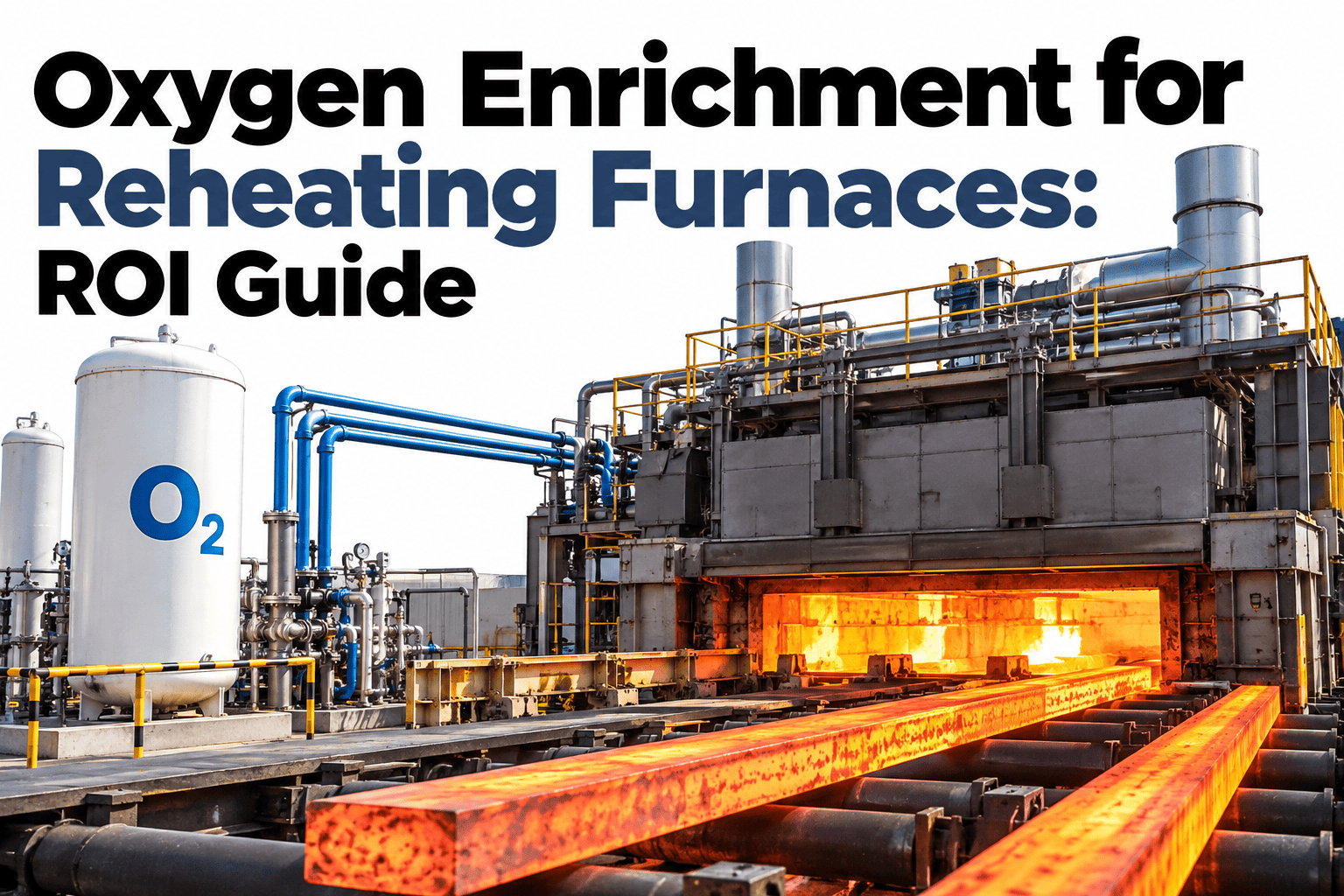
Most of the air that feeds a reheating furnace is nitrogen, which does nothing for combustion but still has to be heated and then thrown away up the stack. Oxygen enrichment swaps part of that nitrogen for oxygen, so the flame runs hotter, the flue gas volume shrinks and less fuel is needed for the same heat. The catch is that oxygen costs money, so the question is never whether enrichment works but whether it pays. Mill teams can run the enrichment economics against their own fuel and oxygen prices before taking a case to management.
Will Oxygen Enrichment Pay Back in Your Mill?
iFactory Reheating Furnace Energy AI models enrichment level economics, air-fuel offset and payback so the decision rests on your numbers.
What Enrichment Removes From the Flue
Less nitrogen means less gas to heat and exhaust. The saved heat shows up as lower fuel for the same slab temperature.
Conceptual comparison. Real volumes depend on enrichment level, fuel and air-fuel ratio.
Enrichment Level: Where the Return Flattens
Early oxygen delivers the most per unit. Pushing higher raises cost and demands more from burners and refractory.
The best level is rarely the highest. It is where the next unit of oxygen stops paying for itself.
What Moves the Payback Most
Payback comes from a handful of inputs. Rank them for your mill before collecting quotes.
Illustrative relative influence. Savings of roughly 8 to 15 percent and payback within two years are often cited, and your own data decides.
The Inputs to a Credible ROI Model
Use measured values wherever possible. Each input has a natural source in the plant.
| Input | What to Capture | Where to Find It |
|---|---|---|
| Fuel price and use | Cost per unit and consumption per tonne | Energy bills and furnace meters |
| Oxygen price | Delivered or on-site generation cost | Supplier quotes |
| Enrichment level | Target oxygen share in the air | Burner supplier limits |
| Operating hours | Productive hours and idle hours | Production records |
| Capital and installation | Equipment, piping and controls | Contractor estimates |
Put Your Fuel and Oxygen Prices Into a Real Payback Model
Share your fuel use, hours and price quotes. We will test enrichment levels and show where the payback holds and where it fades.
Keeping Air and Fuel in Balance
Adding oxygen changes how much air the fuel needs. Without an offset, enrichment can waste oxygen or upset combustion.
Oxygen Enrichment or Air Preheat First
The two routes compete for the same waste heat opportunity. Which one fits depends on what the furnace already has.
Risks to Settle Before You Sign
Enrichment is well proven, though each mill meets the same few hurdles.
NOx and flame temperature
Hotter flames can raise NOx, so permit limits matter.
Burner and refractory limits
Equipment must be rated for the oxygen level planned.
Oxygen handling safety
Piping, materials and cleanliness rules must be followed strictly.
Supply reliability
A stoppage in oxygen supply needs a safe fallback to air.
Walking Through the Economics Step by Step
A credible case is built in order, with each step checked before the next.
Where Enrichment Does the Most Work
Benefit is not spread evenly across the furnace or the day. Aim oxygen where heat demand is greatest.
High-demand zones
Zones that must deliver the most heat to the slab often gain most
Peak throughput periods
Enrichment can help lift capacity when the furnace is pushed hard
Recovery after delays
Faster heat recovery can reduce time lost after a stoppage
Oxygen Supply Options Compared
Supply choice often decides the economics. Compare options on cost, reliability and fit.
| Option | Strength | Watch Out For |
|---|---|---|
| Delivered liquid oxygen | Low capital and fast to start | Price exposure and delivery schedule |
| On-site generation | Lower cost per unit at steady demand | Capital cost and maintenance |
| Pipeline supply | Reliable and continuous | Availability near the site |
| Shared plant supply | Uses existing capacity | Competing demand from other units |
How Payback Reacts to Oxygen Price
Small price changes can move payback by a lot. Test the range, not a single point.
Illustrative sensitivity of attractiveness to price. Your quotes decide the real curve.
Designing a Trial That Proves the Case
A trial turns a model into evidence. Keep it simple and measure the right things.
Enrichment During Production vs During Holds
Where the oxygen goes at different times changes what you save.
Safety Practices for Oxygen Systems
Oxygen supports combustion strongly, so handling rules are strict. Follow supplier and site standards in every case.
Cleanliness and materials
Use components rated and cleaned for oxygen service
Leak detection
Detect leaks early and keep oxygen away from oils and ignition sources
Isolation and shutdown
Provide clear isolation, purge and emergency procedures
Training and access
Train operators and restrict work on oxygen lines to qualified people
Burner and Control Changes You Should Expect
Enrichment is more than a pipe. Controls and burners usually change with it.
| Component | Typical Change | Why It Matters |
|---|---|---|
| Burners | Rated for the planned oxygen level | Flame shape and heat flux change |
| Flow control | Oxygen added as a controlled stream | Enrichment level must stay on target |
| Air-fuel ratio logic | Offset for the enriched mix | Prevents wasted oxygen and poor combustion |
| Safety interlocks | Added oxygen trips and checks | Protects against supply or flame faults |
| Monitoring | Flue oxygen and fuel per tonne tracking | Proves the savings are real |
Common Mistakes in Enrichment Business Cases
Cases that look strong on paper often miss one of these.
Using list price for oxygen
Delivered cost, taxes and contract terms can change the answer
Ignoring idle time
Oxygen and capital costs continue while the furnace waits
Assuming constant savings
Savings change with load, slab size and hold periods
Stacking Savings in the Right Order
Enrichment is one lever among several. Sequence them so each one is measured on its own.
A Staged Decision Path
Move from idea to commitment in steps that each reduce uncertainty.
What Experienced Furnace Engineers Check Before Approving Enrichment
Frequently Asked Questions
How much fuel can oxygen enrichment save?
Savings of roughly 8 to 15 percent are often cited, but they depend on enrichment level, preheat and operating pattern. Estimate where your furnace would land using your own fuel data.
How do we know if it pays back in two years?
Compare yearly fuel saved at your fuel price with yearly oxygen cost plus capital. If the margin is thin, small price changes flip the answer, so test the range before deciding.
Can we combine enrichment with air preheat?
Sometimes, but the extra benefit from enrichment shrinks when air is already hot. Compare the combined case against each option alone with our engineers.
Will enrichment raise NOx emissions?
It can, because the flame runs hotter and less nitrogen is diluting it. The net effect depends on burner design and control. Check the permit position before the design stage.
What should a trial measure?
Track fuel per tonne, oxygen use, flue oxygen and slab temperature against a baseline. See how a trial would be set up on your furnace in a short call.
Decide on Oxygen With Your Own Numbers
Bring your fuel bills, production hours and oxygen quotes. We will build the enrichment case and show the payback range.