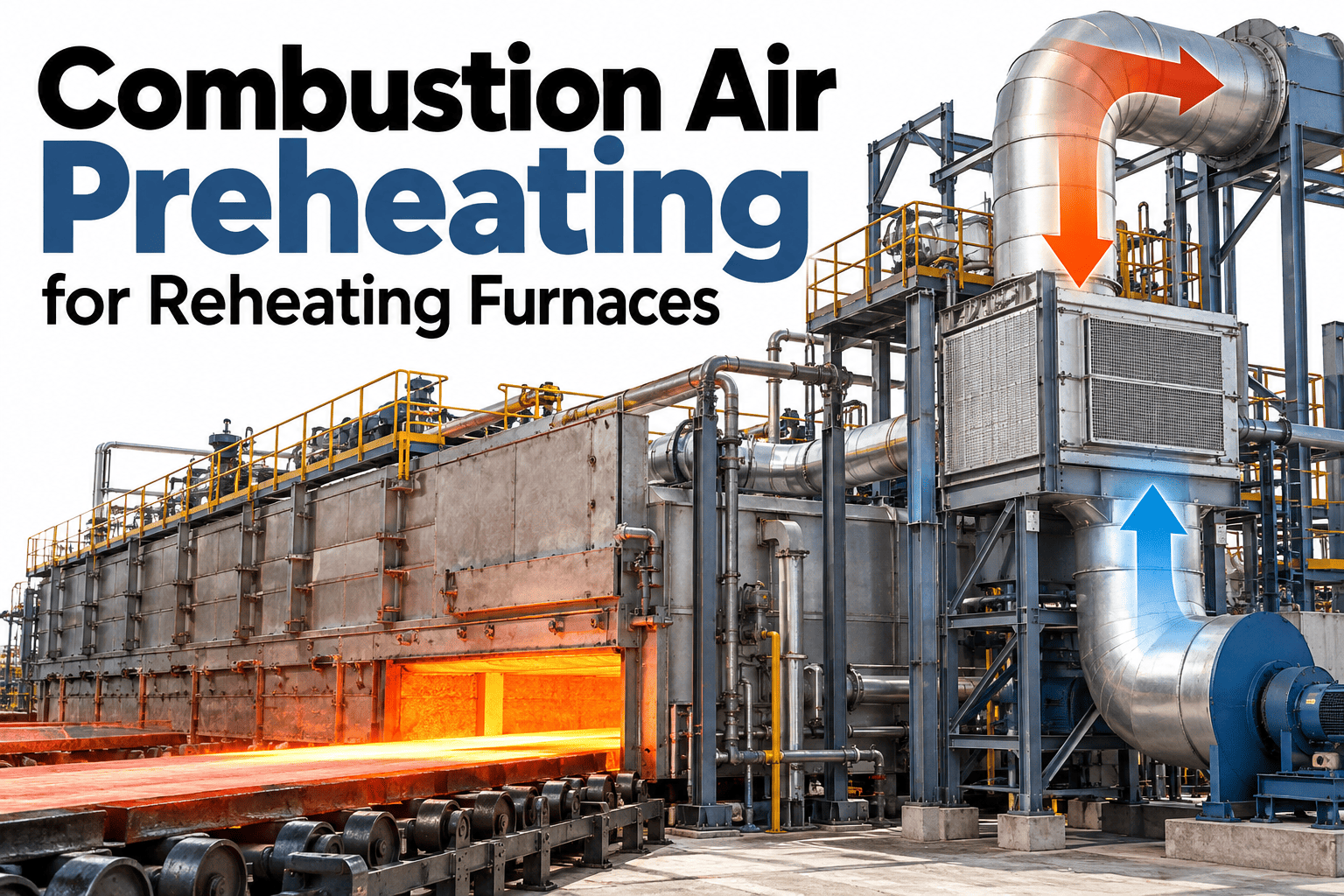
A reheating furnace sends a large share of its fuel energy straight up the stack as hot flue gas. Combustion air preheating pulls part of that heat back by warming the air before it reaches the burners, so less fuel is needed to hold the same furnace temperature. The real decisions are how hot the air should get, whether a recuperator or a regenerator suits the furnace, and what the hotter flame does to emissions. Steel teams can test a preheat upgrade against their own furnace and flue gas data before committing to hardware.
Send the Stack Heat Back Into the Flame
iFactory Reheating Furnace Energy AI evaluates recuperator and regenerator options, hot air temperature targets and the fuel savings they can unlock on your furnace.
How Waste Heat Returns to the Burner
Hot flue gas passes through a heat exchanger and warms the incoming air. The warmer the air, the less fuel the burner needs to reach flame temperature.
Simplified flow. Real systems add fans, dampers, controls and bypass paths.
Recuperator or Regenerator
Both recover flue heat. They differ in how much, how often they need attention and how they fit the furnace.
Neither is automatically better. The right choice depends on flue gas temperature, available space and how much complexity the plant can maintain.
What Decides How Much You Save
Savings come from a few drivers. Ranking them for your furnace shows where the benefit will be largest.
Illustrative relative influence. Savings are often cited in the 15 to 30 percent range, but your own furnace data sets the real figure.
Estimate the Fuel You Would Recover From Your Flue Gas
Share your flue gas temperature, production rate and current fuel use. We will model the preheat options and what each could return.
Choosing a Hot Air Temperature Target
Higher air temperature saves more fuel but raises flame temperature and NOx. Pick the zone that matches your limits.
Selection Criteria Side by Side
Use the same criteria for every option on the shortlist.
| Criterion | What to Ask | Why It Matters |
|---|---|---|
| Flue gas temperature | What is it at the furnace exit? | Sets the heat available to recover |
| Air temperature goal | What preheat does the burner support? | Drives savings and NOx |
| Space and layout | Where can equipment and ducting go? | Limits retrofit options |
| Maintenance burden | Who services valves, beds or tubes? | Affects uptime and cost |
| Emission limits | What are the NOx limits? | May cap the usable air temperature |
Watch-Outs Before You Commit
Preheating is well proven, yet each plant meets the same few surprises.
NOx rises with hotter air
Burners must be rated for the air temperature and designed for low NOx.
Fouling and scale
Dirty flue gas can coat exchangers and cut the preheat you paid for.
Draft and fan capacity
Added resistance may need larger fans or revised flue control.
Control and safety
Air flow, pressure and temperature must stay tied to the burner management system.
What Experienced Furnace Engineers Check Before Choosing
Frequently Asked Questions
Is a recuperator or regenerator better for a reheating furnace?
It depends on flue gas temperature, layout and maintenance capacity. Regenerators reach higher preheat but add valves and cycling. Compare both options against your furnace with our engineers before choosing.
How hot should the combustion air be?
Hot enough to capture meaningful savings, within what your burners and NOx limits allow. Go too high and emissions or refractory stress become the problem, so treat the figure as a design decision.
Are savings of 15 to 30 percent realistic?
They are often cited, but the range depends on furnace temperature, flue gas temperature and operating hours. Check where your furnace would land in that range using your own data.
Will hotter air increase NOx?
Yes, because flame temperature rises. Low-NOx burner designs and staging help manage it. Check permit limits first, since they can cap how far preheat can go.
How do we know the preheater is still performing?
Track air temperature, flue gas temperature and fuel use against production over time. See how a performance baseline exposes slow heat exchanger decline in a short walkthrough.
Stop Letting Recoverable Heat Leave Through the Stack
Bring your furnace data and burner details. We will show the preheat option, the air temperature and the fuel savings that fit your mill.