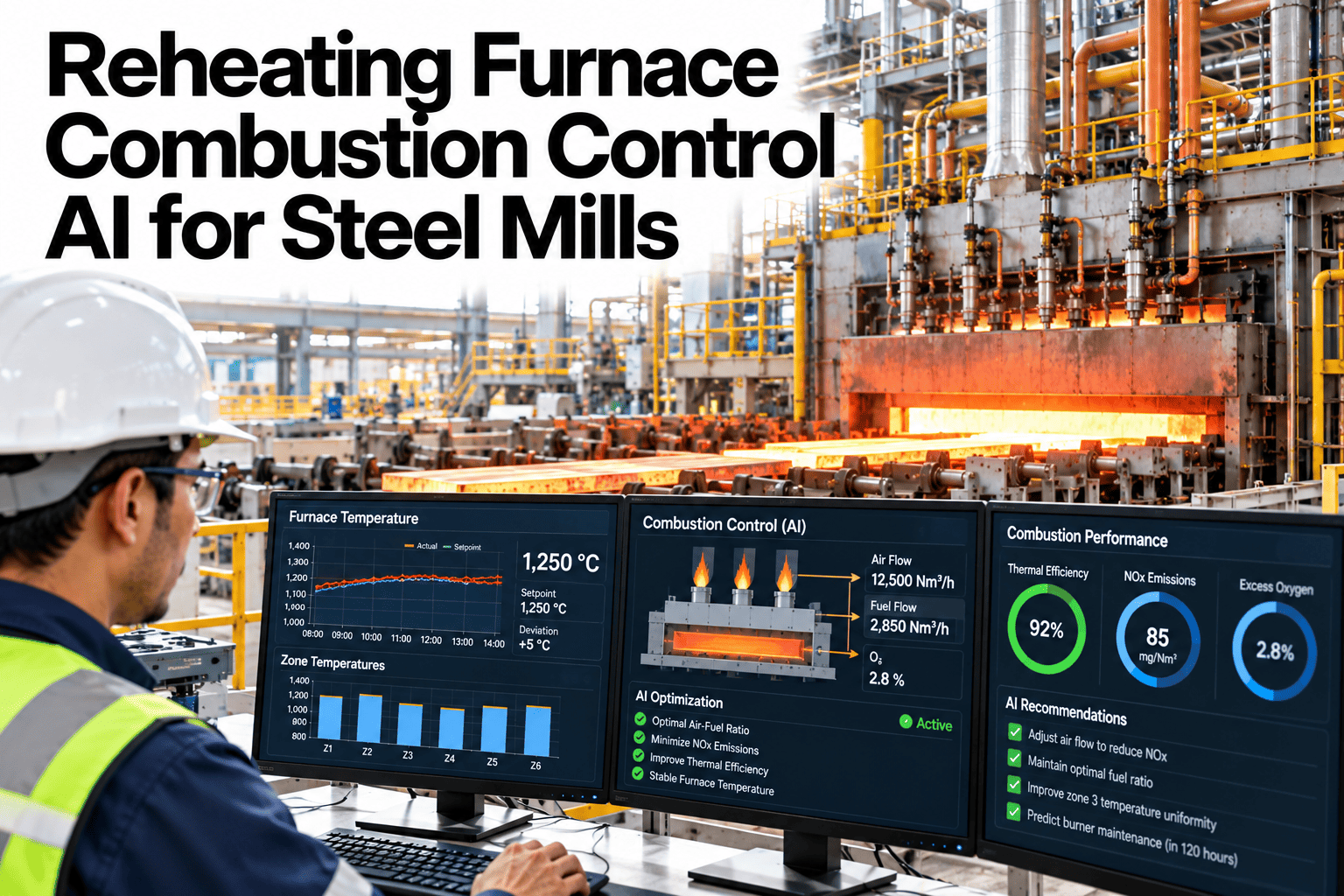
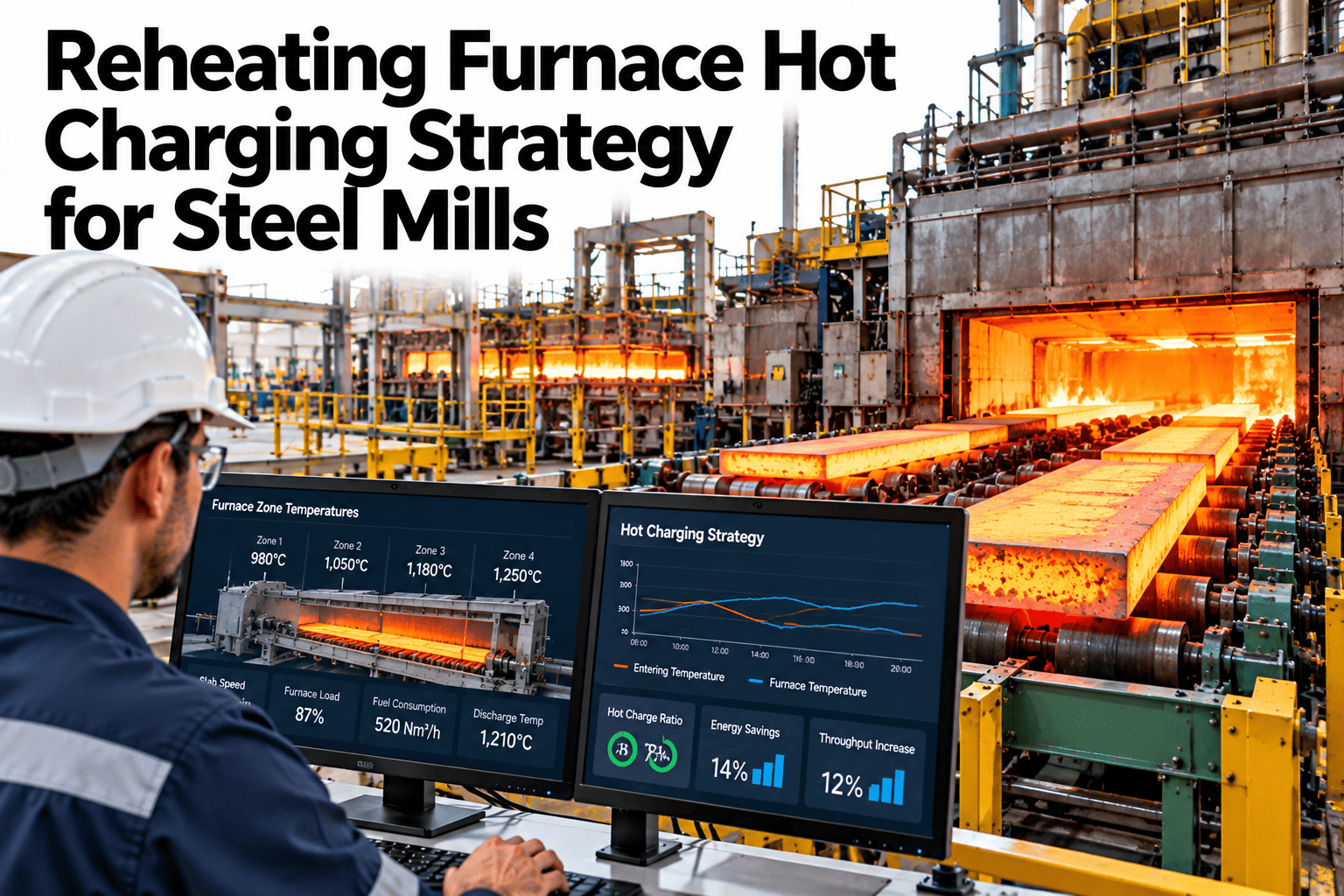
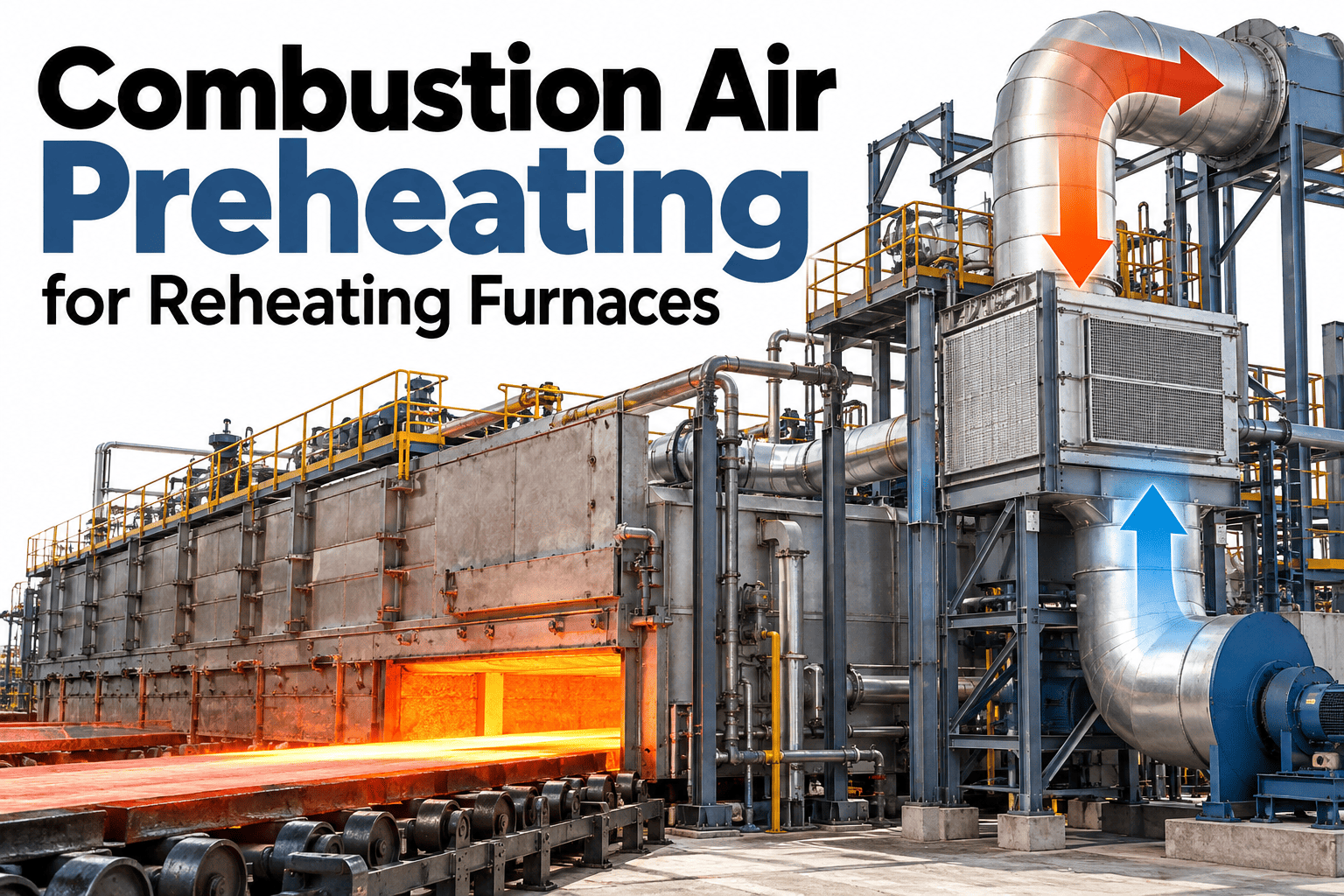
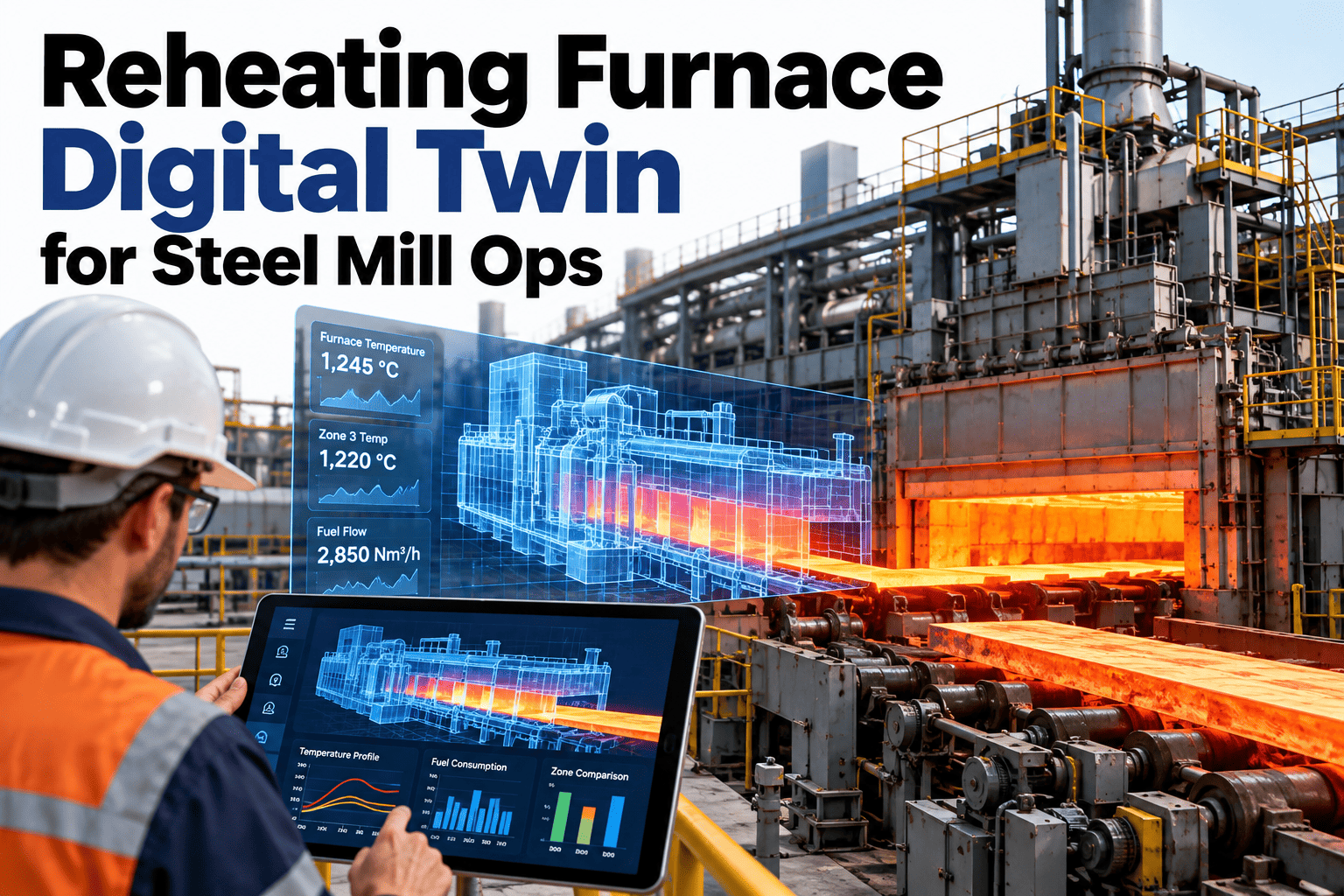
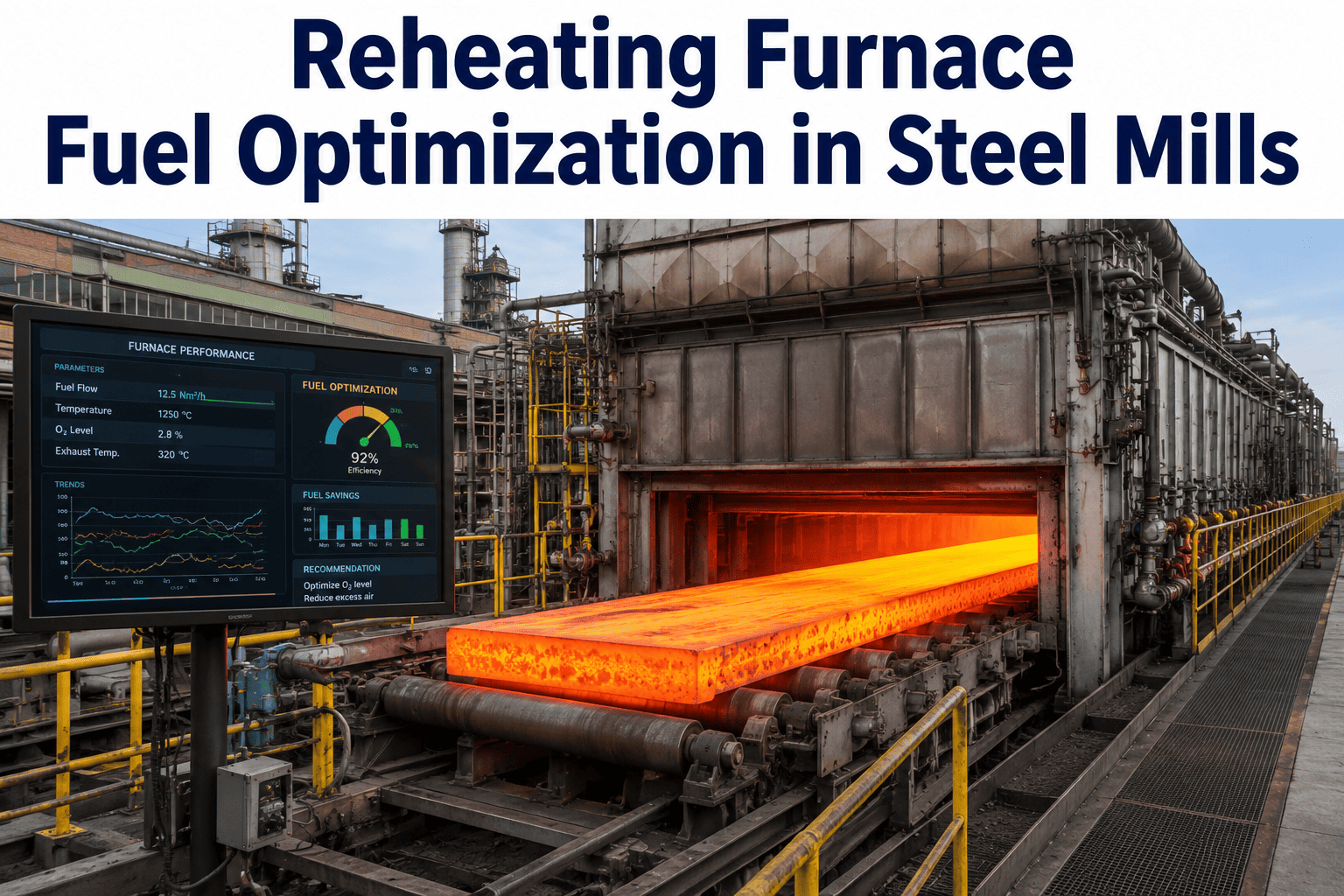
Most reheating furnaces already have zone temperature control, yet they still burn more fuel than they need when loads change, slabs wait or burners drift out of balance. Combustion control AI adds a smarter layer on top of the existing system, trimming burners, predicting zone temperatures and adjusting air and fuel for the actual load. Some suppliers report additional savings of roughly five to ten percent over classical control, though results depend on the furnace. To see where your furnace stands, you can review combustion data with our team.
Reheating furnace combustion optimisation
Add an AI Layer to Your Furnace Control and Burn Only What the Load Needs
iFactory AI works above existing safety and control systems, using burner trim, zone prediction and load-based air-fuel adjustment to cut fuel use and keep slab temperature steady.
Three AI control layers
Burner-level trimZone temperature MPCLoad-based air-fuel
The control gapClassical Control Works, but It Reacts Instead of Anticipating
Most furnaces use fixed air-fuel ratios and zone controllers that react after temperatures move.
Classical control
Fixed air-fuel ratio across loads
Reacts after the zone temperature changes
Struggles with delays and stops on the mill
Burner differences are rarely corrected
AI-assisted control
Air-fuel adjusted for current load
Predicts temperature moves and acts early
Handles holds and pacing changes smoothly
Trims individual burners to stay in balance
The AI does not replace your control system. It improves the setpoints and trims that the existing system follows.
Where AI sitsFour Layers From Safety to Optimisation
Safety layer
Burner management and interlocks stay independent and untouched.
Regulatory control
Existing zone controllers and valves keep running the furnace.
Optimisation layer
AI adjusts setpoints, trims and ratios within strict limits.
Supervision
Operators see recommendations and can override at any time.
Combustion safety must remain with certified safety systems. AI should only operate inside the limits those systems allow.
Data and outputsWhat the AI Reads and What It Changes
Good optimisation depends on a clear picture of the furnace and the slabs inside it.
Zone thermocouplesFlue gas oxygen and temperatureSlab tracking and schedule
Combustion optimiser
Zone setpointsBurner trimsAir and fuel ratios
See Where Your Furnace Is Burning Extra Fuel
Share a few weeks of furnace data and see how iFactory AI would estimate the savings from smarter combustion control.
What AI optimisesSix Control Opportunities in a Reheating Furnace
Air-fuel ratio
Keep excess air close to the minimum that burns fuel cleanly.
Zone setpoints
Choose zone temperatures that meet the target at the lowest fuel cost.
Burner balance
Correct burners that run hotter or colder than their neighbours.
Pacing and delays
Adjust when the mill slows, holds or stops.
Slab temperature target
Avoid overheating slabs beyond what rolling needs.
Start-up and recovery
Bring the furnace back smoothly after long stops.
Each opportunity is small on its own. Together they add up to a meaningful fuel reduction.
Predictive zone controlHow Model Predictive Control Works
1
Predict
A model forecasts slab and zone temperatures for the next period.
2
Optimise
The controller picks setpoints that meet targets at the least fuel.
3
Act
Setpoints are sent to the existing zone controllers.
4
Learn
Real results update the model.
Model predictive control, often called MPC, looks ahead instead of only reacting. That helps when delays and load changes are common.
Load-based adjustmentMatch Air and Fuel to the Real Load
| Situation | Classical response | AI-assisted response |
|---|
| Mill running at full pace | Fixed ratio, usually adequate | Fine trim for oxygen and burner balance |
| Mill slows or holds | Holds temperature with the same ratio | Reduces firing and adjusts air to avoid waste |
| Long stop | Soaking at high temperature | Lowers setpoints within safe limits |
| Restart after a stop | Reheats quickly with high firing | Ramps to avoid overshoot and extra fuel |
| Cold slabs enter after hot slabs | Zone temperatures swing | Anticipates the change and adjusts early |
Where the heat goesAn Illustrative Furnace Heat Balance
Knowing where energy goes shows where control can help. This split is an illustrative example, not measured data.
50 percent: Heating the slabs
Useful heat that reaches the steel.
30 percent: Flue gas
Heat leaving with exhaust gases. Air-fuel control affects this directly.
10 percent: Cooling and skids
Heat lost to cooling water and supports.
10 percent: Walls and openings
Radiation and leaks through the furnace shell.
Optimisation mainly affects the flue gas share. Insulation and structure upgrades address the others.
Autonomy levelsRaise the AI's Authority Only as Trust Grows
Advise
The AI recommends and operators decide.
Approved setpoints
The AI proposes setpoint changes inside limits for approval.
Closed loop
The AI adjusts setpoints automatically inside strict limits.
Many mills spend months at the first two levels. To plan your path, ask our team about autonomy settings and limits.
RolloutFrom Data Check to Closed Loop
Phase 1
Check sensors, calibrate and collect baseline fuel and temperature data.
Phase 2
Run the AI in advisory mode and compare its advice with operator actions.
Phase 3
Enable approved setpoints, then limited closed loop with full logging.
Thermocouples and oxygen analysers verified
Baseline fuel per tonne by product
Safety and interlock boundaries documented
Allowed setpoint ranges agreed
Operator override always available
Slab tracking data available
Savings method agreed with finance
Owner from process, maintenance and automation
Where fuel goes to wasteFive Common Sources of Avoidable Fuel Use
Most reheating furnaces share the same weaknesses. Spotting them helps decide where AI can help.
1
Excess combustion air
Too much air carries heat out of the stack.
2
Overheating slabs
Slabs held hotter than rolling needs waste fuel and increase scale.
3
Delays and holds
Firing stays high while the mill waits.
4
Burner imbalance
Some burners run richer or leaner than others.
5
Leaks and openings
Cold air entering and heat escaping reduce efficiency.
Benefit build-upSavings Often Arrive in Steps
Each improvement adds to the last. This chart is illustrative and not a forecast.
Step 2
Air-fuel trim added
Step 3
Zone prediction added
Step 4
Pacing and holds handled
Order matters. Reliable instruments come first, since later steps depend on them.
ReadinessInstruments and Control Level Decide Where to Start
A simple grid shows what to fix first.
Furnace profile
Reliable instruments
Unreliable instruments
Basic control
Add AI trim
Good data and room to improve
Fix instruments first
Control cannot work on bad data
Advanced control
Fine-tune
Already strong, so gains may be smaller
Repair, then tune
Instruments limit even good control
Be honest about instrument condition. It is the most common reason optimisation projects disappoint.
Tuning journeyFive Steps From Baseline to Stable Gains
1
Record a baseline
Capture fuel per tonne, temperatures and delays.
2
Calibrate
Check analysers, thermocouples and flow meters.
3
Run advisory mode
Compare AI advice with operator actions.
4
Adjust limits
Refine allowed ranges based on results.
5
Move to approved control
Enable setpoint changes with logging and review.
Who is involvedFour Roles Make Combustion Optimisation Work
Operators
We judge whether advice makes sense and report oddities.
Process engineers
We set limits and check product temperature quality.
Maintenance team
We keep instruments and burners in good condition.
Energy manager
We track savings and report results.
Early involvement of operators matters most. Advice that operators trust gets used.
Measuring the effectFuel, Temperature Uniformity and Scale
Track more than fuel. Product quality and scale loss also matter. This view is illustrative.
Before AI layer
Temperature spread across slabs
After AI layer
Temperature spread across slabs
These bars are illustrative. Normalise results for product mix, throughput and delays before claiming a saving.
Expert reviewWhat a Furnace Combustion Specialist Would Check First
Expert review
Control gains rely on good measurements. If oxygen analysers and thermocouples drift, an AI layer will optimise the wrong picture, so instruments come first.
VerdictStrong when instruments are reliable and AI works inside safety limits.
Watch forSavings claims quoted without a baseline or a product mix.
Do nextVerify instruments, record a baseline and start in advisory mode.
Frequently asked questionsWhat Steel Mills Ask About Combustion Control AI
Does AI replace our existing furnace control?
No. It sits above your current controllers and safety systems and adjusts setpoints and trims inside agreed limits. If the AI fails, the existing control continues to run the furnace safely.
See how the layers fit together.
How much additional saving is realistic?
Some suppliers report roughly five to ten percent beyond classical control, but the real figure depends on your furnace, instruments, product mix and current control quality. A baseline and an advisory trial give a realistic estimate.
Ask about saving estimates.
Is it safe to let AI adjust burners?
Safety stays with independent burner management and interlock systems. The AI works only within limits those systems and your engineers set, and operators can override at any time. Test every limit before enabling control.
Discuss safety limits.
What instruments do we need?
Reliable zone thermocouples, flue gas oxygen measurement, fuel and air flow measurement and slab tracking give the best results. Gaps can often be closed with modest upgrades.
Ask about instrument checks.
How long before we see results?
Advisory mode can show potential savings within weeks. Closed-loop control follows after trust and limits are established, often over a few months. Measure results against a documented baseline.
Plan a pilot timeline.
Smarter control, lower fuel use
Burn Only the Fuel Your Furnace Needs
Book a session with iFactory AI to review your furnace data, check instruments and plan an advisory trial that shows what smarter combustion can save.