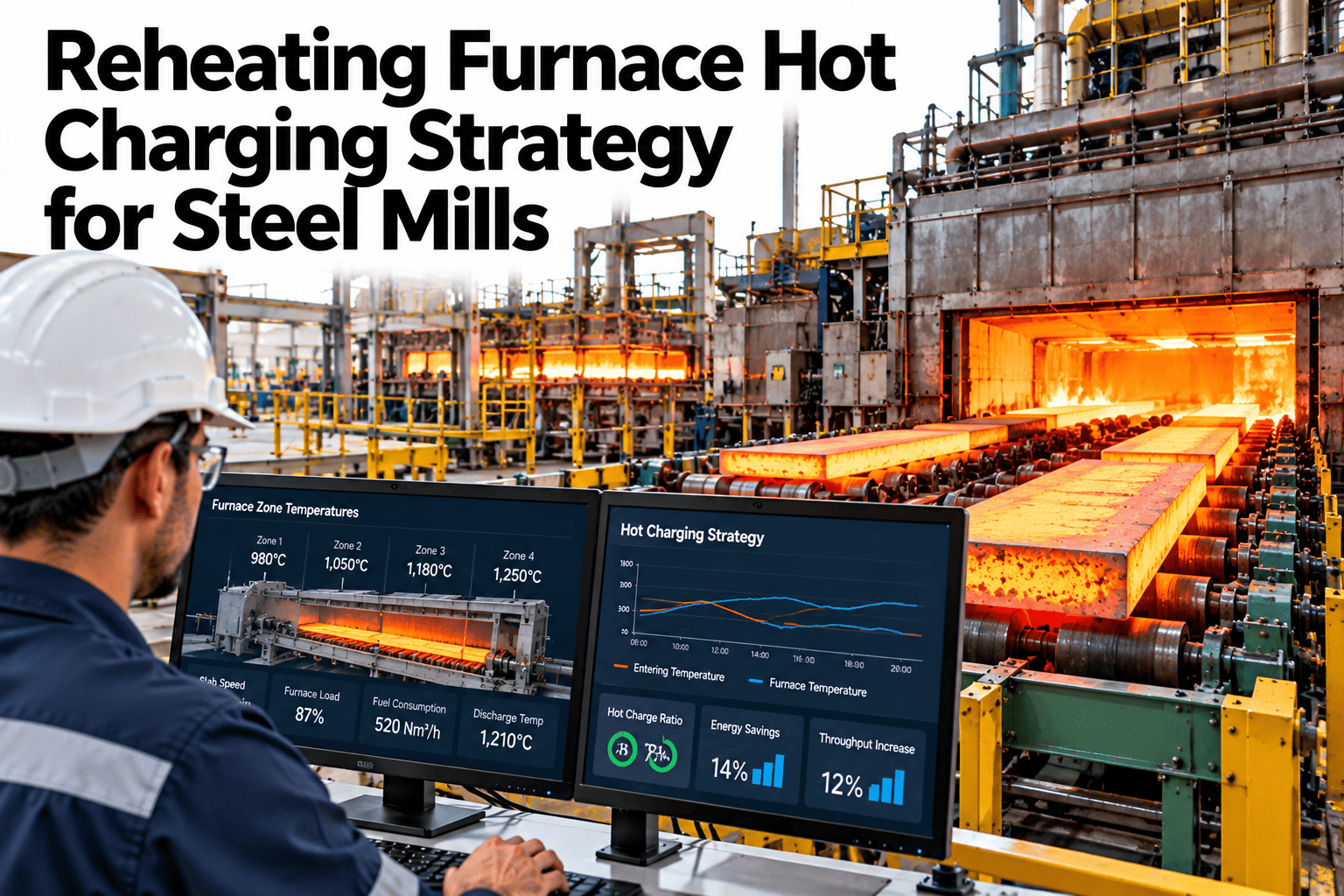
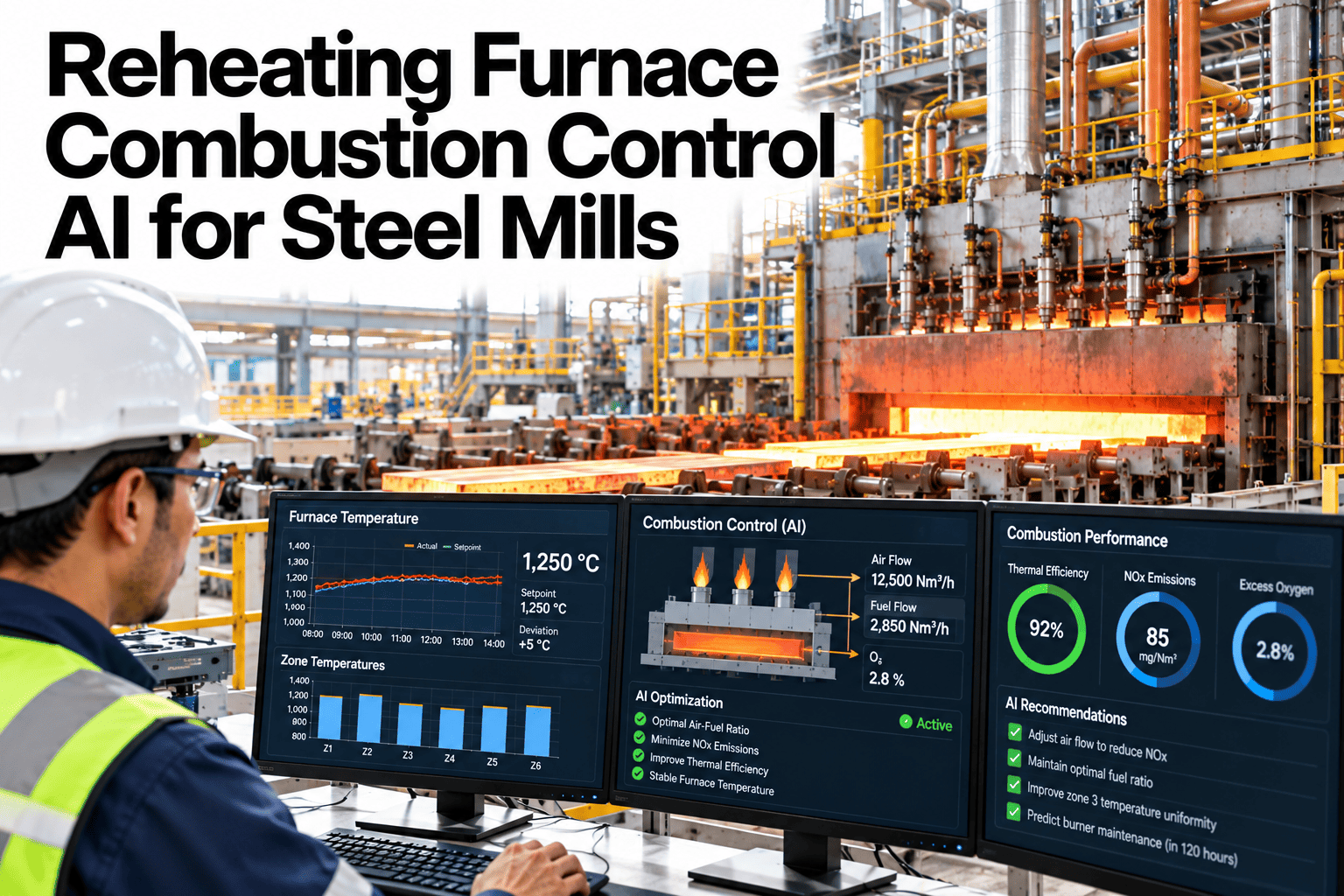
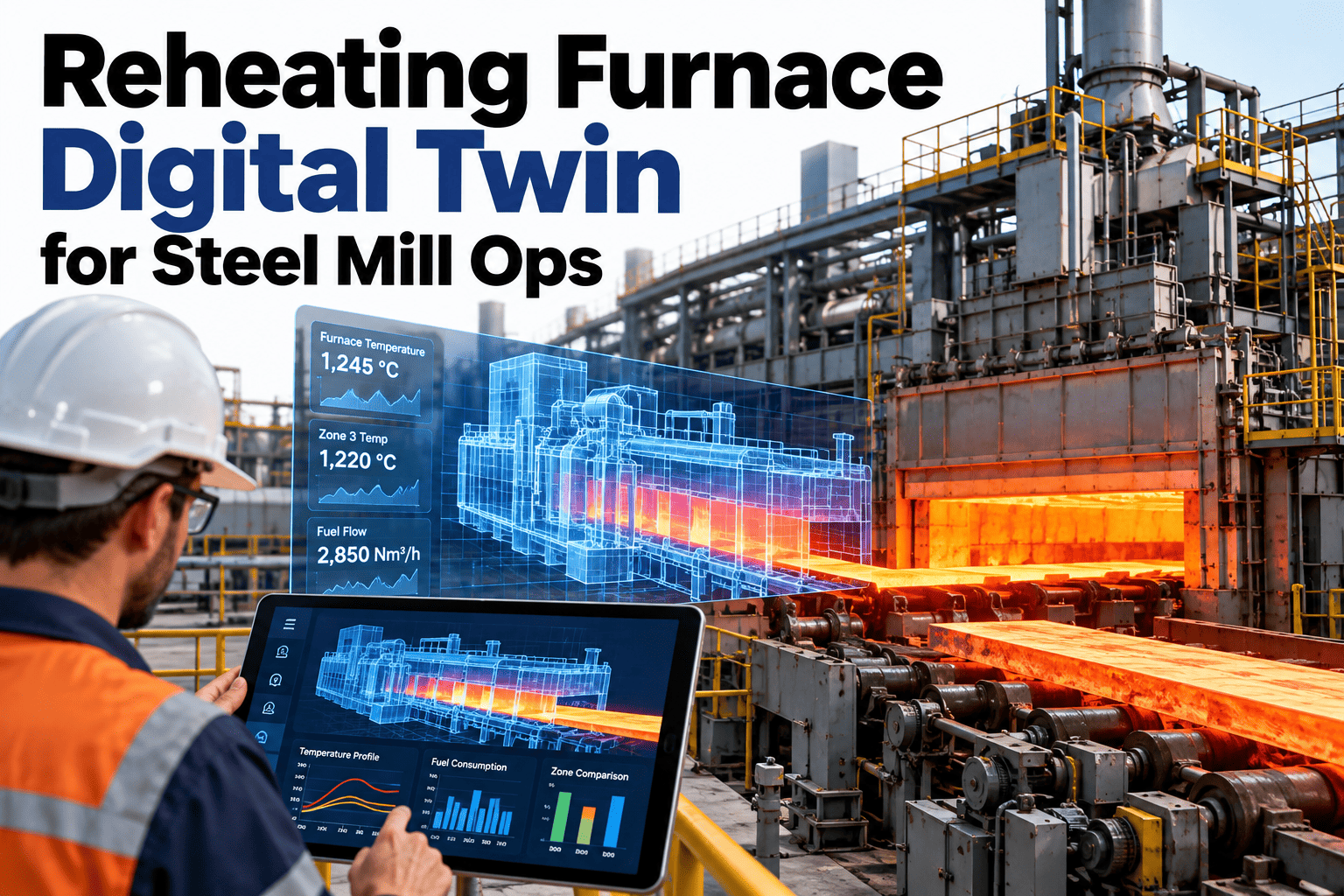
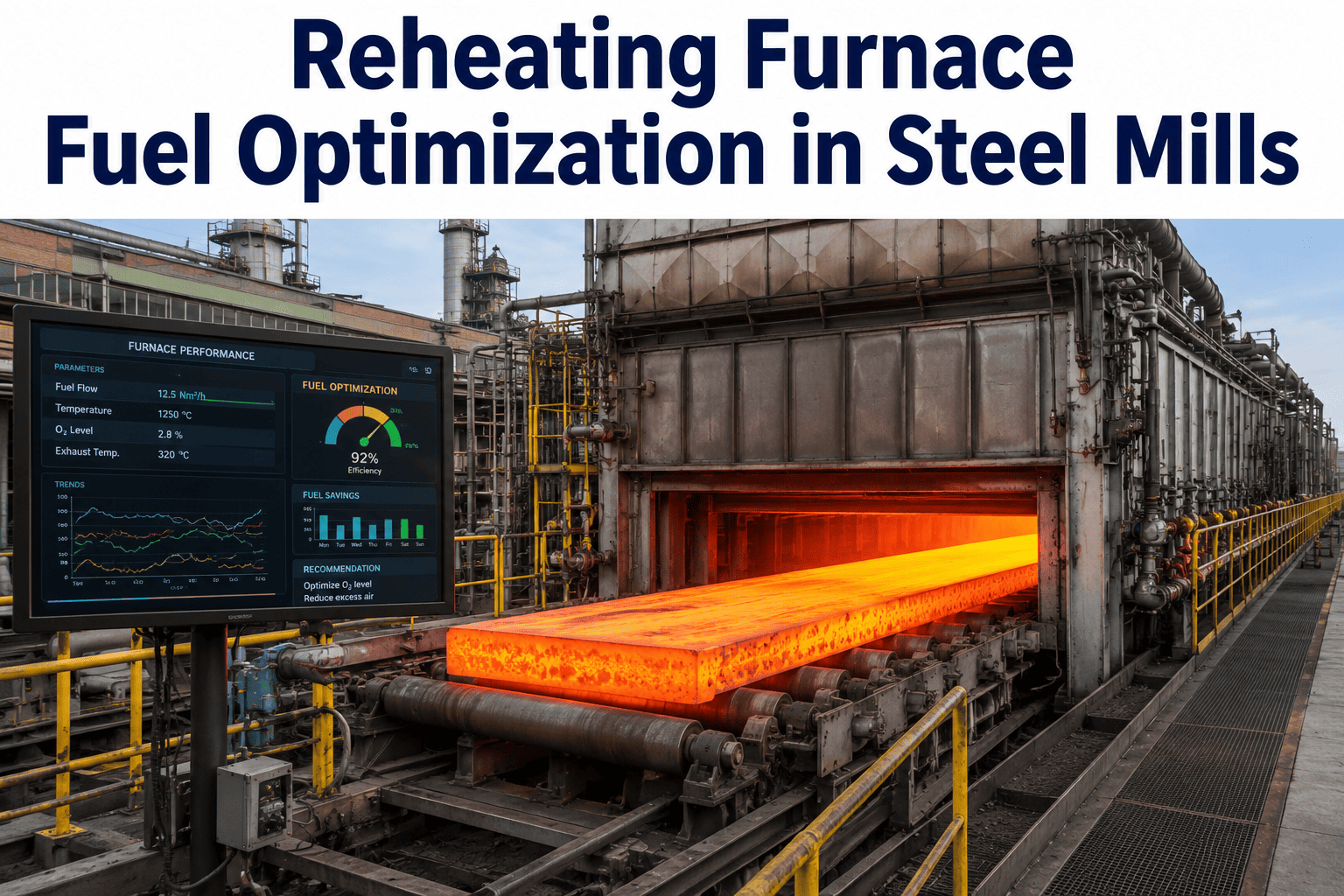
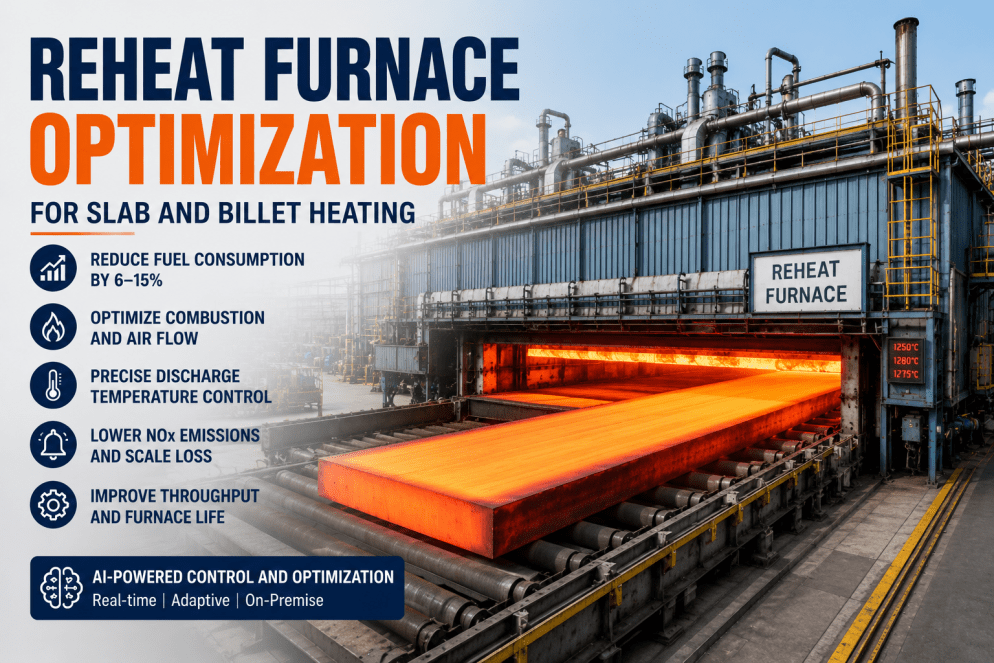
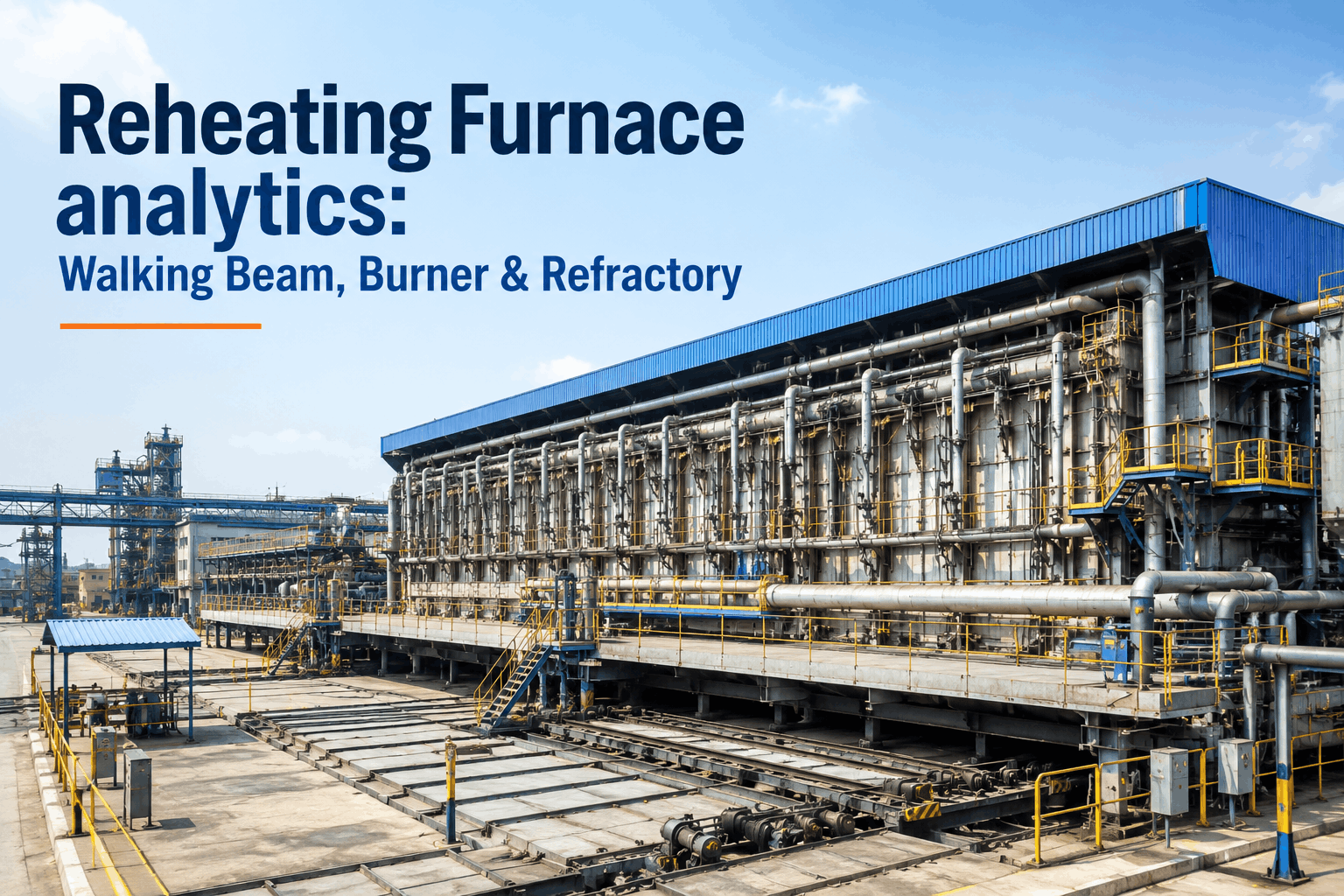
Reheat furnaces consume 60–70% of a rolling mill's total energy and directly determine product quality — yet most plants run them on fixed combustion parameters that were optimised for one set of conditions and never updated. A walking beam furnace operating with poorly tuned burners, fouled recuperators, and degraded refractory wastes 11–23% more fuel than an identical furnace under proper maintenance — translating to $800,000–$2.4M in excess energy cost per year for a mid-sized hot strip mill. Scale formation, temperature non-uniformity, and skid mark defects all trace back to furnace maintenance gaps that are detectable weeks before they impact product quality. Traditional approaches using Wonderware, PI System, or standalone furnace SCADA monitor temperatures and fuel flow — but cannot link combustion anomalies to burner condition, predict refractory remaining life, or auto-generate maintenance work orders. iFactory's Energy Management and PM Scheduling platform integrates AI-driven combustion optimisation with predictive maintenance for every furnace component — from burner tips to skid pipes — closing the gap between energy monitoring and the maintenance actions that actually fix efficiency losses.
Reheat Furnace Analytics Management for Rolling Mills
Track burner condition, refractory wear, combustion efficiency, and energy consumption — cutting fuel costs 11–23% with iFactory predictive maintenance.
Reheat Furnace Zones — What iFactory Monitors in Each
Each furnace zone has distinct thermal conditions, wear patterns, and failure modes. iFactory assigns dedicated AI models per zone — tracking burner health, refractory thickness, and temperature uniformity independently. See zone-by-zone monitoring configured for your furnace type.
Waste gas recovery, door seal integrity, scale formation monitoring.
Primary heating — burner condition, flame pattern, air-fuel ratio optimisation.
Slab core temperature equalisation. Skid pipe cooling water integrity critical.
Temperature uniformity across slab width/thickness. Highest refractory stress zone.
Top Reheat Furnace Failure Modes — Cost & iFactory Detection
| Failure Mode | Severity | Energy Impact | iFactory Detection | Warning Lead |
|---|---|---|---|---|
| Refractory Collapse | Critical | +15–25% fuel | Shell thermal scan + digital twin | 4–8 weeks |
| Skid Pipe Leak | Critical | +8–15% fuel | Water flow + pressure trend AI | 2–4 weeks |
| Burner Tip Degradation | High | +5–12% fuel | Flame pattern + air-fuel ratio AI | 3–6 weeks |
| Recuperator Fouling | High | +6–10% fuel | Exhaust temp delta + DP trend | 4–8 weeks |
| Door Seal Failure | Medium | +3–6% fuel | AI thermal camera + draft trend | 2–4 weeks |
| Walking Beam Misalignment | Medium | Slab damage | PLC position + vibration trend | 6–10 weeks |
iFactory vs Traditional Furnace Monitoring — Why Operators Switch
Standalone furnace SCADA systems from ABB, Siemens, or Danieli Level 2 show furnace temperatures and fuel flow in real time — but they cannot predict when a burner will degrade, schedule a refractory reline based on actual condition, or generate a SAP PM work order from a combustion anomaly. iFactory adds the predictive and maintenance intelligence layer that Level 2 systems lack.
iFactory's AI Stack for Reheat Furnace Excellence
AI Camera Vision
Thermal cameras on furnace shell detect refractory hotspots, door seal leaks, and burner flame pattern anomalies in real time — visible problems caught before they appear in fuel consumption data.
AI Digital Twin
Zone-by-zone refractory life model calculates remaining lining thickness from thermal history, throughput, and fuel type — scheduling partial or full reline 4–8 weeks ahead with zero guesswork.
PLC Integration
Direct OPC-UA feed from furnace Level 2 — burner status, zone temperatures, walking beam position, fuel flow, and air-fuel ratios all stream into iFactory continuously. No manual data entry.
SAP PM Work Orders
Every furnace anomaly — burner degradation, refractory wear, recuperator fouling — auto-generates a SAP PM work order with zone location, severity, estimated fuel savings from repair, and parts list.
What a Rolling Mill Energy Engineer Said
iFactory identified 4 degraded burner tips in Zone 2 that our Level 2 system had missed — they were running 8% rich and wasting $22,000/month in excess gas. The replacement cost was $3,400. Our SCADA showed zone temperature was fine, but iFactory's combustion AI caught the air-fuel ratio drift six weeks before it would have caused a scale quality issue.
Frequently Asked Questions
Does iFactory work with both walking beam and pusher-type furnaces?
Yes — dedicated monitoring profiles for walking beam, pusher, rotary hearth, and car-bottom furnaces. Each gets zone-specific AI models. Configure your furnace type.
How much fuel can predictive maintenance save on a reheat furnace?
11–23% fuel reduction through systematic burner maintenance, refractory management, and recuperator cleaning alone — no capital equipment investment needed.
Can iFactory integrate with existing furnace Level 2 systems?
Yes — OPC-UA connectivity to Siemens, ABB, Primetals, Danieli, and custom Level 2 systems. iFactory reads data without modifying your existing control logic.
How does iFactory predict refractory remaining life?
Digital twin model uses shell temperature history, tonnage processed, and fuel type to calculate zone-specific lining wear — scheduling reline 4–8 weeks before efficiency degrades.
Cut Furnace Fuel Costs with iFactory
Zone-by-zone monitoring live in 3 weeks.