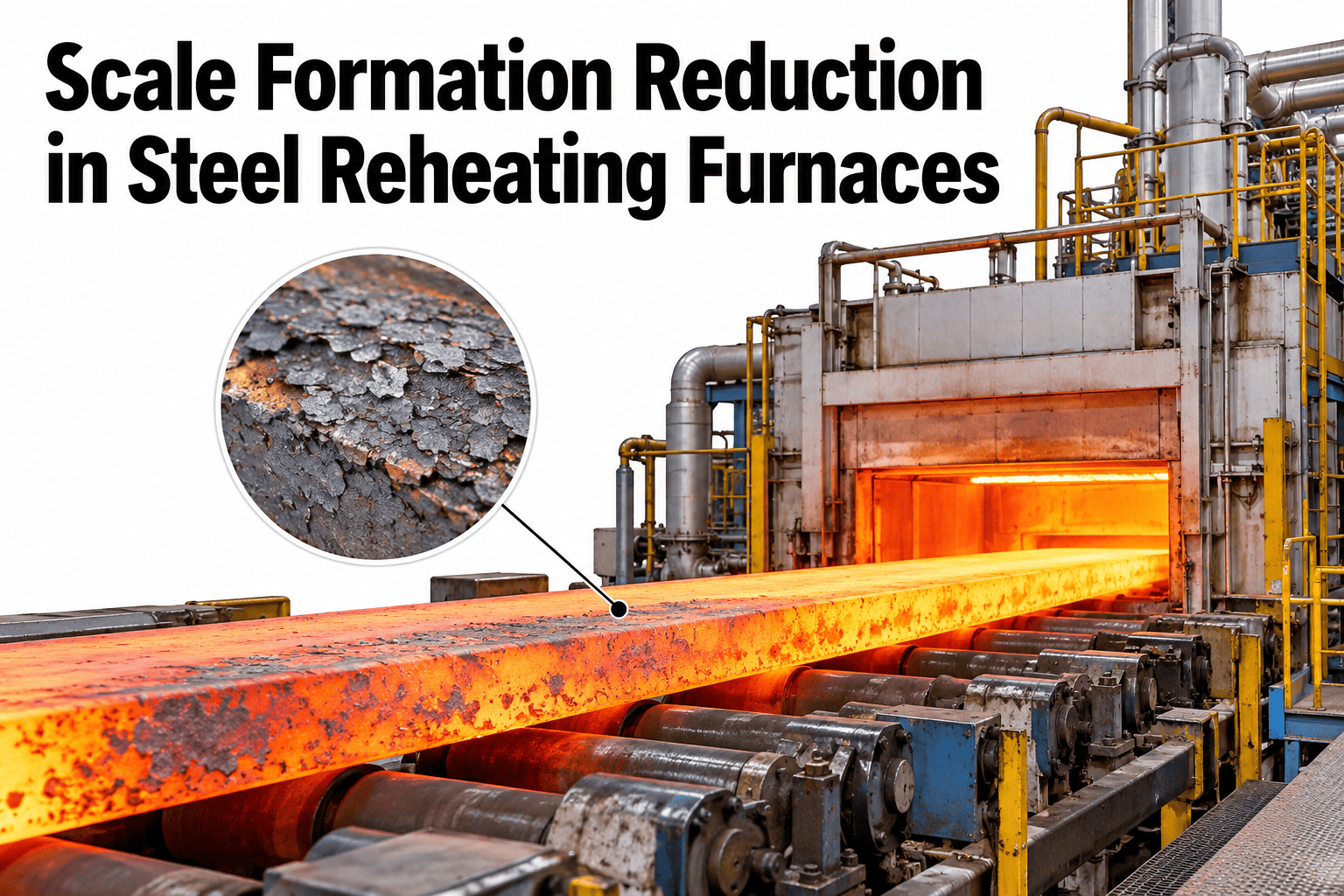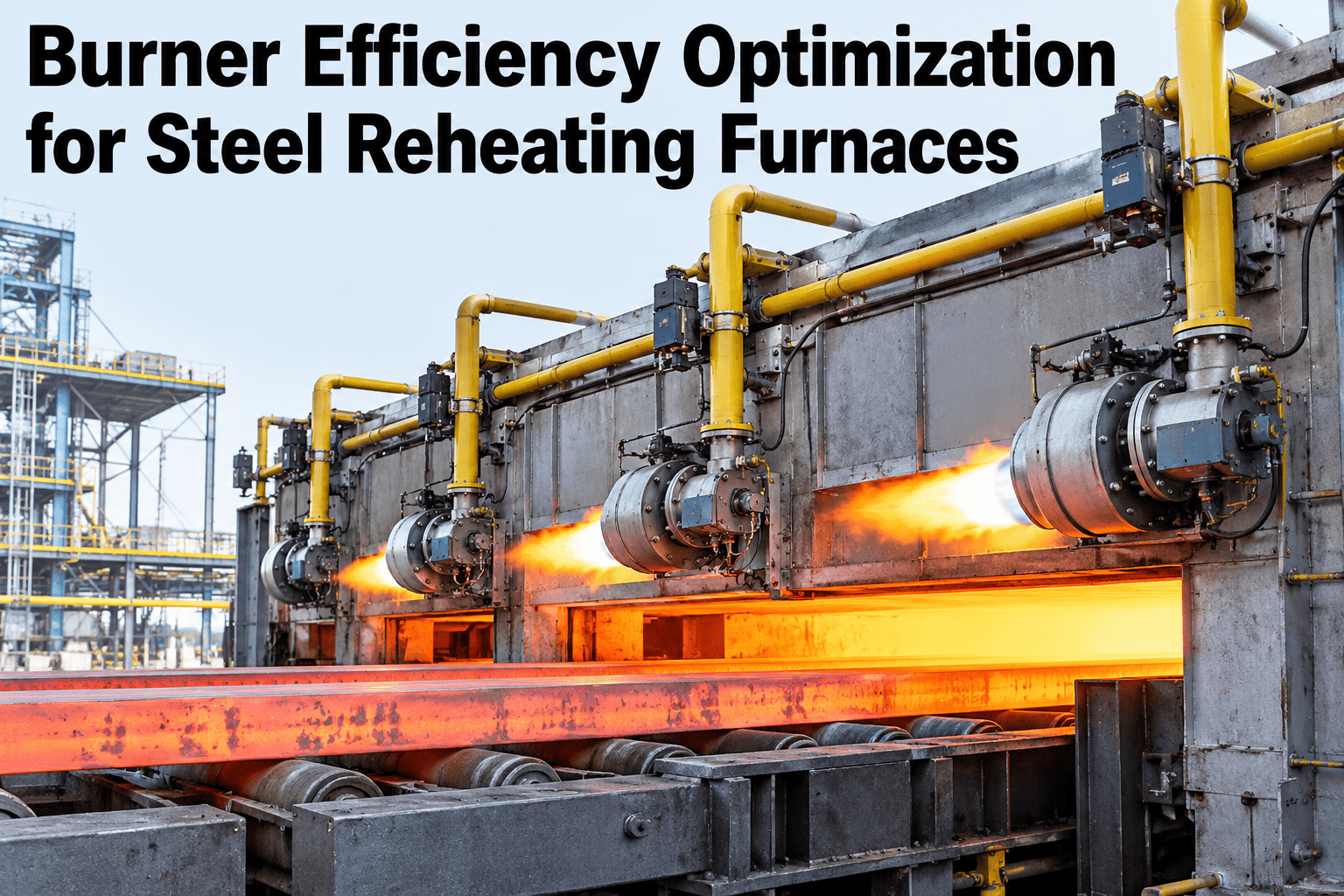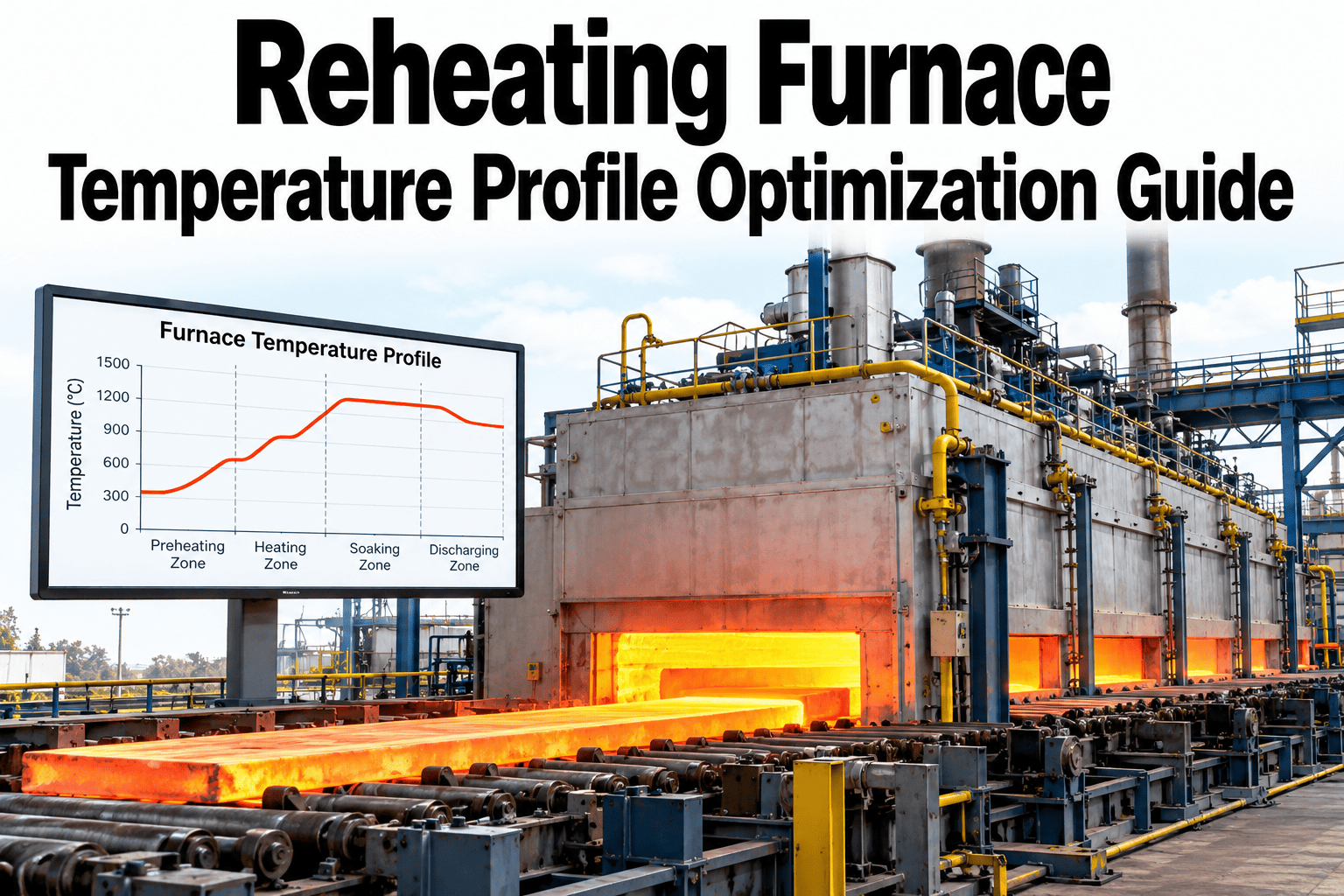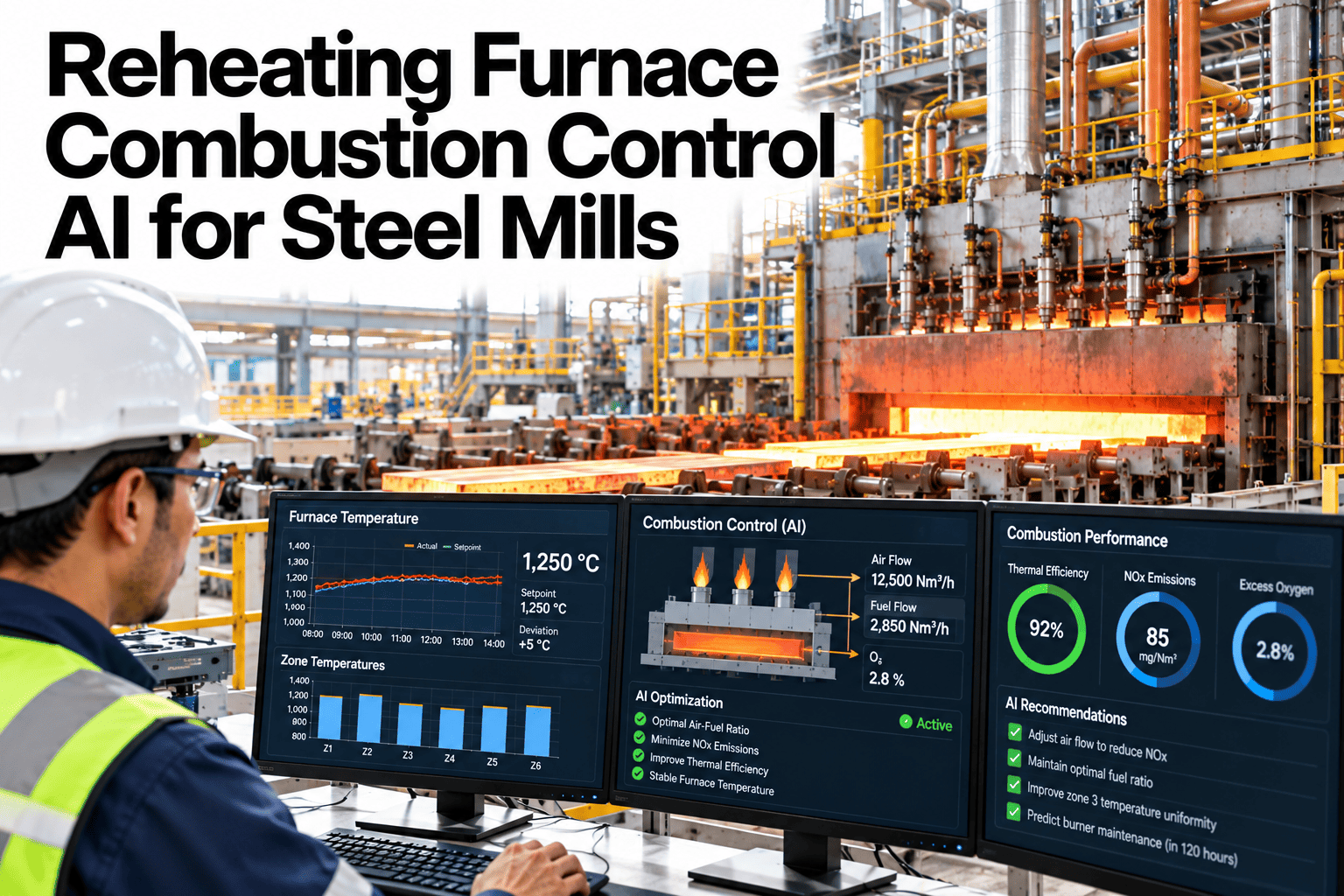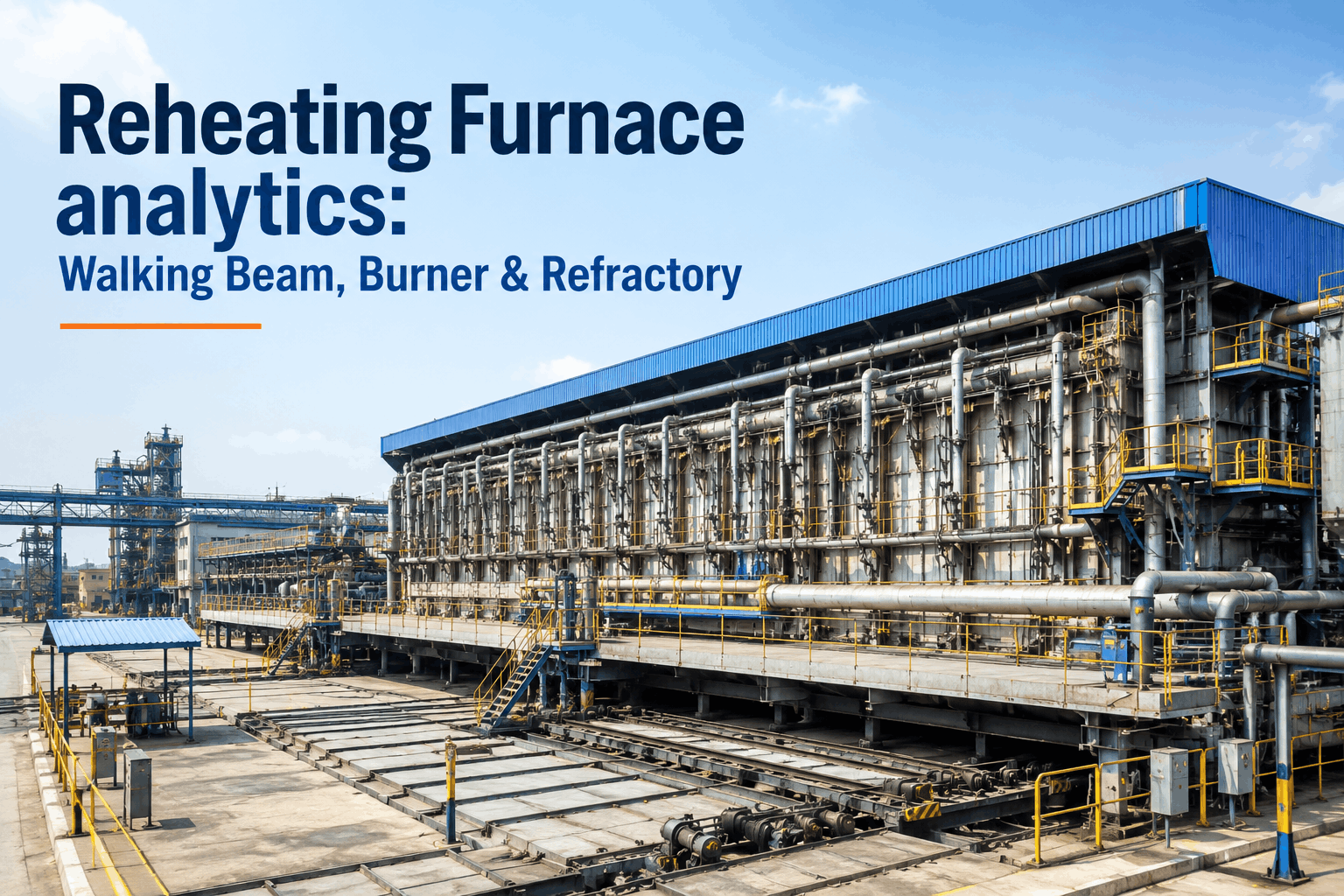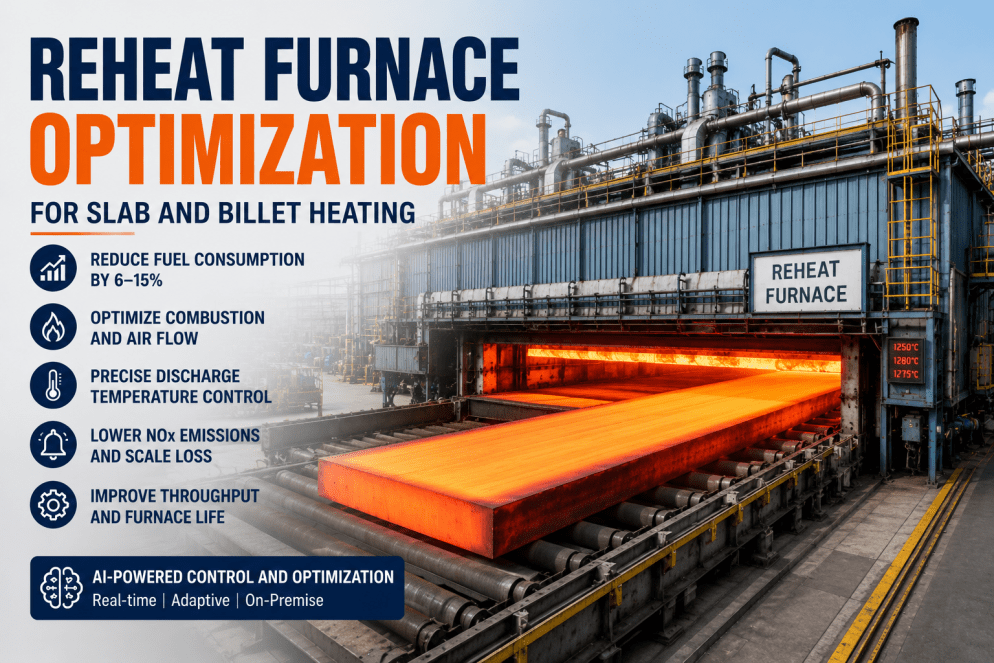
Reheat furnaces — walking beam, pusher, and rotary hearth types — consume 30–50% of the total energy in a hot rolling mill while directly controlling slab and billet temperature uniformity, scale formation, and discharge temperature consistency. The combustion control system, zone temperature setpoints, slab tracking logic, and hold-and-delay management determine both fuel consumption and heating quality. Yet most furnaces operate with fixed zone temperature profiles that do not adapt to production pace changes, grade-specific heating requirements, or delays, resulting in 6–15% excess fuel consumption, 0.5–2.0% avoidable scale loss, and inconsistent discharge temperatures that degrade rolling mill performance. iFactory's Reheat Furnace AI platform combines combustion optimization, zone temperature prediction, slab tracking AI, and discharge temperature control to cut fuel consumption by 6–15%, reduce scale loss by 20–30%, and improve discharge temperature uniformity to within ±10°C — all while minimizing NOx emissions. Book a Demo to see iFactory's reheat furnace AI configured for your furnace type, fuel source, and product mix.
Cut Reheat Furnace Fuel Consumption by 6–15% With AI Combustion and Zone Temperature Optimization
iFactory's Reheat Furnace AI continuously optimizes air-fuel ratio, zone temperature setpoints, slab sequencing, and delay management across all furnace zones — reducing fuel consumption, scale loss, and NOx emissions while improving discharge temperature uniformity and rolling mill performance.
Combustion Optimization
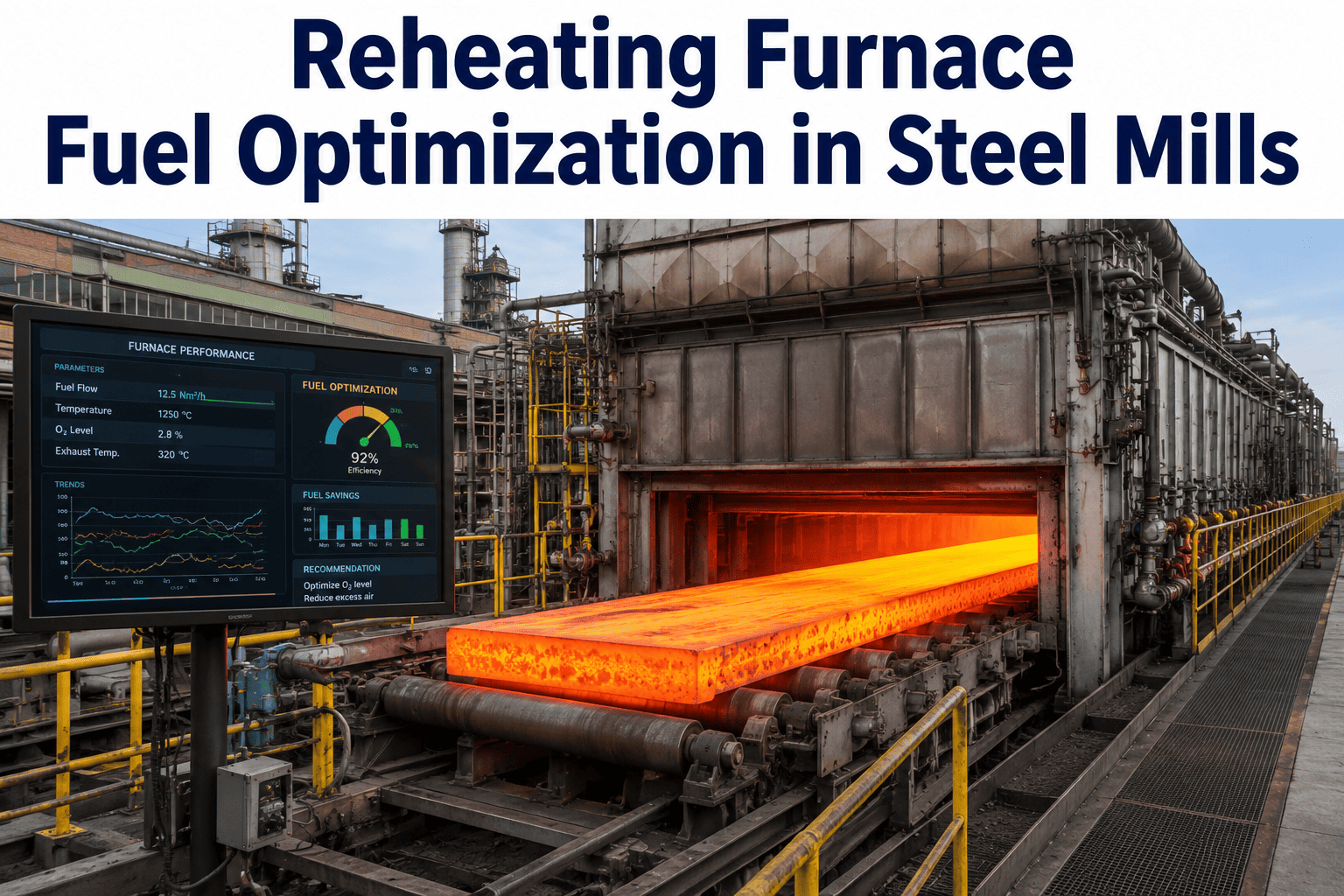
AI-adaptive air-fuel ratio control reduces excess O2 from 3–5% down to 1–2% across all firing zones while maintaining fully oxidizing conditions for scale control. The AI model adjusts burner staging, oxygen trim, and furnace pressure per zone based on production load, steel grade, and delay status — cutting fuel consumption by 6–12% with no capital investment in burner hardware.
Zone Temperature Prediction
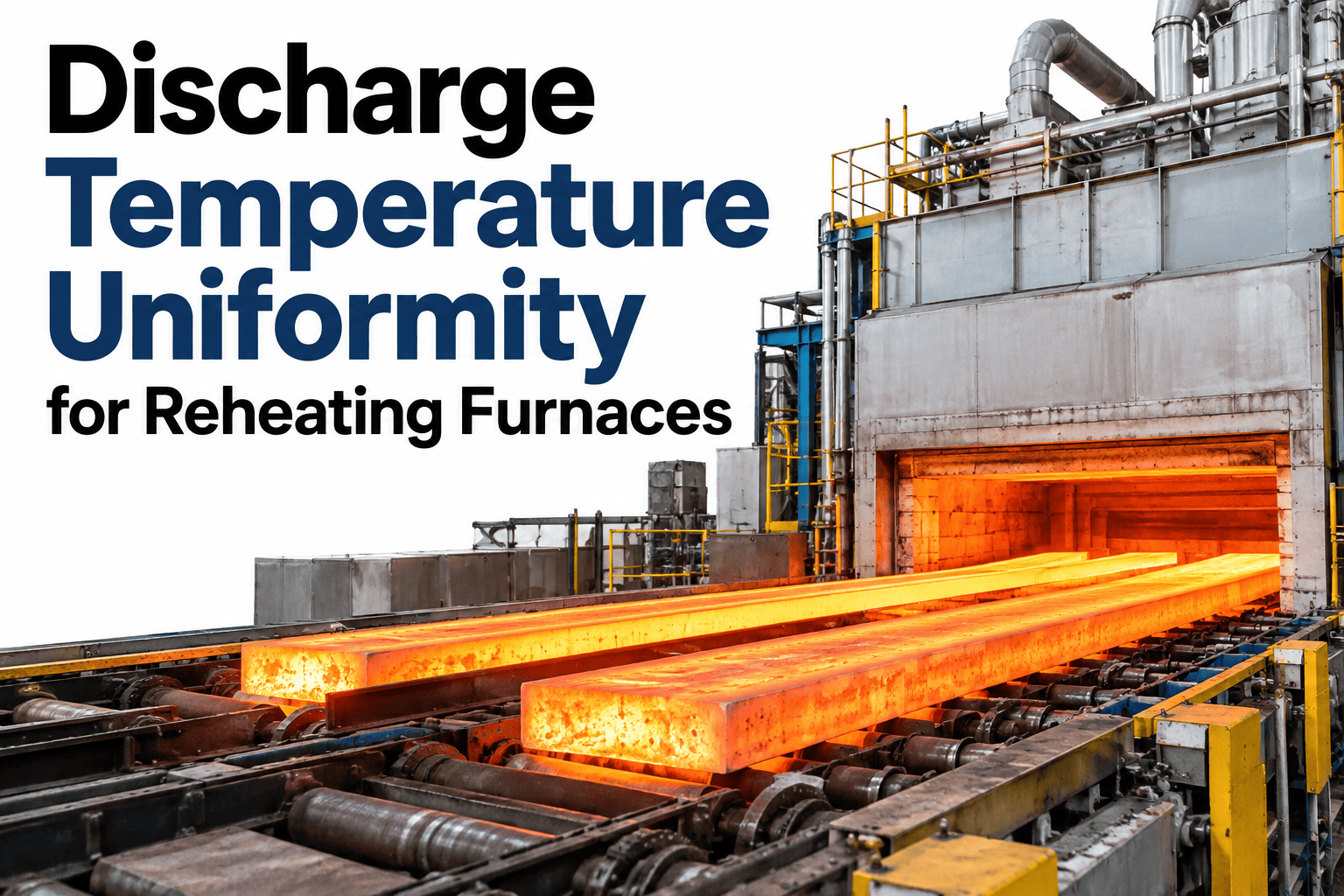
Predictive zone temperature control anticipates the furnace's thermal response to production pace changes, grade transitions, and delays using a digital twin thermal model updated every 30 seconds. The AI reduces temperature overshoot during pace changes by 60–80% and eliminates soaking zone temperature drift during hold periods, maintaining discharge temperature uniformity within ±10°C.
Slab Tracking and Batch Sequencing
AI-powered slab tracking with embedded thermal model predicts each slab's core and surface temperature profile at every furnace position. The batch sequence optimizer rearranges the charge order to match slab heating requirements to furnace thermal conditions — grouping slabs with similar target discharge temperatures and minimizing energy consumption by reducing time-at-temperature for thin or cold-charged slabs.
Delay Management and Hold Recovery
When the rolling mill stops — shift changes, roll changes, or upstream delays — the AI predicts the optimal furnace temperature reduction trajectory and recovery ramp to minimize fuel waste and prevent slab overheating. The model automatically transitions zones to hold mode with grade-specific temperature targets, then initiates recovery sequences timed to mill restart within ±5 minutes of the predicted resume time.
Why Fixed-Temperature Reheat Furnace Operation Wastes Fuel and Degrades Rolling Performance
The dominant operating strategy for reheat furnaces in the steel industry remains fixed zone temperature setpoints adjusted seasonally or by product group — a one-size-fits-all approach that cannot respond to the dynamic reality of production pace variation, grade diversity, and delay frequency that define every rolling mill shift. This static strategy guarantees three forms of waste simultaneously: excess fuel consumption during low-production periods, temperature non-uniformity during pace changes, and unnecessary scale formation from extended time-at-temperature during delays.
A furnace operating at 250 tons per hour must hold different zone temperatures than one operating at 150 tons per hour to achieve the same discharge temperature. Yet most furnaces use fixed setpoints designed for average production rates, resulting in 30–50°C temperature overshoot during slowdowns and 20–40°C undershoot during peak production. Each degree of overshoot adds 1–2% to fuel consumption and increases scale formation rate exponentially.
Optimal air-fuel ratio varies with firing rate, furnace temperature, fuel composition, and ambient oxygen level. Operators tuning combustion once per shift or relying on single-point O2 trim cannot maintain near-stoichiometric conditions across the full operating range. The result is 3–5% excess O2 across most firing zones, representing 6–10% excess fuel consumption that is invisible to operators focused on temperature setpoints.
Slab charging sequences are optimized for rolling mill efficiency — minimizing width change time and grade transition length — with no consideration of furnace thermal impact. Cold slabs charged after hot slabs force the furnace to overheat to compensate, while thin slabs held at high temperature while waiting for thick slab discharge waste fuel and increase scale loss. AI batch sequencing reconciles rolling and heating objectives simultaneously.
Stop Heating Every Slab to the Same Temperature — Start Heating Each Slab to Its Optimal Condition
iFactory's Reheat Furnace AI eliminates the waste of fixed-temperature operation by optimizing combustion, zone setpoints, and slab sequencing dynamically — cutting fuel consumption by 6–15%, reducing scale loss by 20–30%, and delivering ±10°C discharge temperature uniformity regardless of production pace or delay.
Reheat Furnace Control Approaches — Manual vs Advanced Process Control vs AI Optimization
| Control Parameter | Manual Combustion Control | Advanced Process Control (APC) | iFactory Reheat Furnace AI |
|---|---|---|---|
| Air-fuel ratio management | Manual O2 trim adjusted per shift | Single-point O2 trim per zone batch | AI-adaptive per-zone stoichiometric optimization with 10-second response |
| Zone temperature control | Fixed setpoints adjusted seasonally | Feedforward pace compensation | Predictive AI with digital twin thermal model — 60–80% less overshoot |
| Slab tracking and sequencing | Manual charge order based on rolling schedule | Automated charging with temperature lookup | AI batch sequencing reconciling rolling and thermal optimization |
| Delay management | Manual temperature reduction based on operator judgment | Fixed ramp-down profile per delay type | AI-predicted optimal hold temperature and recovery trajectory |
| Scale loss impact | 0.8–2.0% of charge weight | 0.6–1.5% of charge weight | 0.4–0.8% of charge weight |
| NOx emissions | Baseline (no optimization) | 5–10% reduction | 15–25% reduction through uniform temperature and combustion optimization |
| Discharge temperature uniformity | ±25–40°C | ±15–25°C | ±10°C |
| Typical fuel consumption | 1.0–1.4 GJ/ton | 0.95–1.25 GJ/ton | 0.85–1.10 GJ/ton |
Reheat Furnace AI Deployment — 5-Step Implementation Process
iFactory's Reheat Furnace AI is deployed as a turnkey appliance integrated with your existing furnace instrumentation and combustion control system. Sensor verification, thermal model calibration, dashboard configuration, and operator training are completed within a single planned outage cycle. The implementation follows the five-step process below, each step designed to minimize production disruption while building a comprehensive furnace thermal baseline.
Furnace Instrumentation and Data Readiness Audit
Audit existing thermocouple placement and health across all zones — preheat, heat, and soak. Verify pyrometer coverage at discharge, combustion air flow meters, O2 probes, fuel flow meters, and furnace pressure sensors. Identify instrumentation gaps that limit AI model accuracy. Two weeks of high-resolution data — zone temperatures, fuel flow, production rate, delay events, and slab charge data — are collected to establish the furnace thermal baseline.
Baseline Performance Characterization
Extract 12 months of historical furnace data — zone temperature profiles, fuel consumption, production tons, delay events, slab grade and dimensions, scale loss measurements, and discharge pyrometer readings. Establish baseline SEC (specific energy consumption), scale loss percentage, discharge temperature spread, and NOx emission levels segmented by product group and production scenario.
AI Model Training on Furnace Thermal Dynamics
Train the furnace digital twin thermal model using historical zone temperature, fuel flow, and slab tracking data. Train the combustion optimization model using O2 probe, CO, and NOx data correlated with production conditions. Train the delay management model using historical delay events, temperature recovery profiles, and fuel consumption data. Validate all models against hold-out furnace data sets before online deployment.
Online Deployment in Advisory Mode
Deploy AI models to furnace control room edge server with real-time inference in advisory mode. Operator dashboard displays zone temperature recommendations, combustion optimization suggestions, slab sequencing proposals, and delay management guidance. Two-week parallel validation period confirms model accuracy by comparing AI-recommended setpoints against actual furnace performance without writing setpoints to the control system.
Closed-Loop Control and Continuous Improvement
Activate closed-loop AI zone temperature control with predictive pace compensation. Enable AI-adaptive combustion optimization with per-zone oxygen trim. Activate delay management with automated hold temperature and recovery control. Establish monthly model retraining cycle using new fuel consumption, slab tracking, and quality data. Track SEC, scale loss, and NOx KPIs with automated performance dashboards.
"In seventeen years managing reheat furnace operations at two integrated mills — walking beam furnaces feeding 80-inch and 66-inch hot strip mills — I saw the same pattern every shift: operators holding zone temperatures 15–30°C above the target because they knew the mill pace would slow before the next slab change and they wanted to avoid the thermal lag when speed picked up again. That 'insurance' temperature added 8–12% to fuel consumption every hour of every day, and nobody questioned it because the alternative was risking cold slabs at the rougher. The furnace thermal dynamics were well understood — we had the thermocouples, the flow meters, and the slab tracking data — but the control system was a fixed PID loop tuned during commissioning a decade earlier. An AI platform that predicts the furnace's thermal response to every pace change, every delay, and every slab transition, and adjusts zone setpoints proactively instead of reactively, eliminates the need for thermal insurance entirely. I have seen facilities cut fuel consumption by 10% within the first month of closed-loop AI control with no capital investment and no reduction in heating quality."
The Choice Is Simple — Continue Heating Every Slab With Fixed Profiles or Start Optimizing Each Slab With AI
Reheat furnaces represent the largest energy cost center in any hot rolling mill, consuming $3 million to $12 million in fuel annually for a typical mid-size operation. Managing these furnaces with fixed zone temperature profiles and manual combustion tuning guarantees that fuel is wasted during low-production periods, scale is formed unnecessarily during delays, and discharge temperature variability degrades rolling mill performance. AI-driven furnace optimization eliminates all three forms of waste simultaneously — cutting fuel consumption by 6–15% through adaptive combustion control and zone temperature prediction, reducing scale loss by 20–30% through optimized heating curves and sequencing, and improving discharge temperature uniformity to within ±10°C through predictive thermal management.
The investment required to deploy iFactory's Reheat Furnace AI across a single walking beam or pusher furnace averages $90,000–$220,000, including sensor verification, edge computing appliance, thermal model calibration, dashboard configuration, and control system integration. Typical payback is achieved within 4–8 months through fuel savings alone, with additional value from scale loss reduction and quality improvement. For rolling mill operations ready to eliminate excess fuel consumption and optimize slab heating quality, book a demonstration with iFactory's reheat furnace engineering team to see furnace AI performance data from operating installations.
Reheat Furnace AI — Frequently Asked Questions
Deploy AI-Driven Reheat Furnace Optimization Across Your Hot Rolling Mill with iFactory
iFactory's Reheat Furnace AI optimizes combustion, zone temperature setpoints, slab sequencing, and delay management simultaneously — cutting fuel consumption by 6–15%, reducing scale loss by 20–30%, and delivering ±10°C discharge temperature uniformity — delivered as a turnkey on-premise appliance with full installation and support.