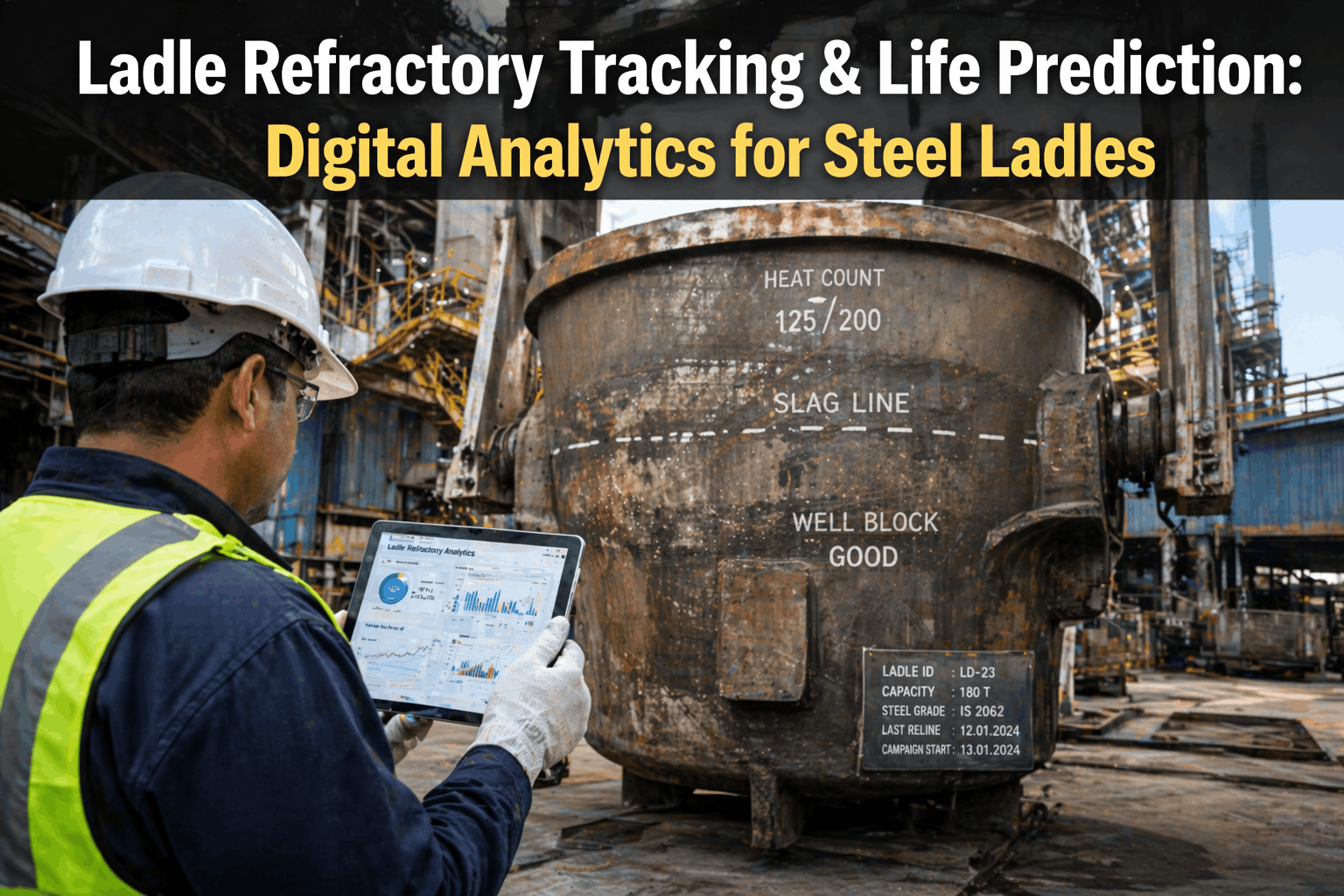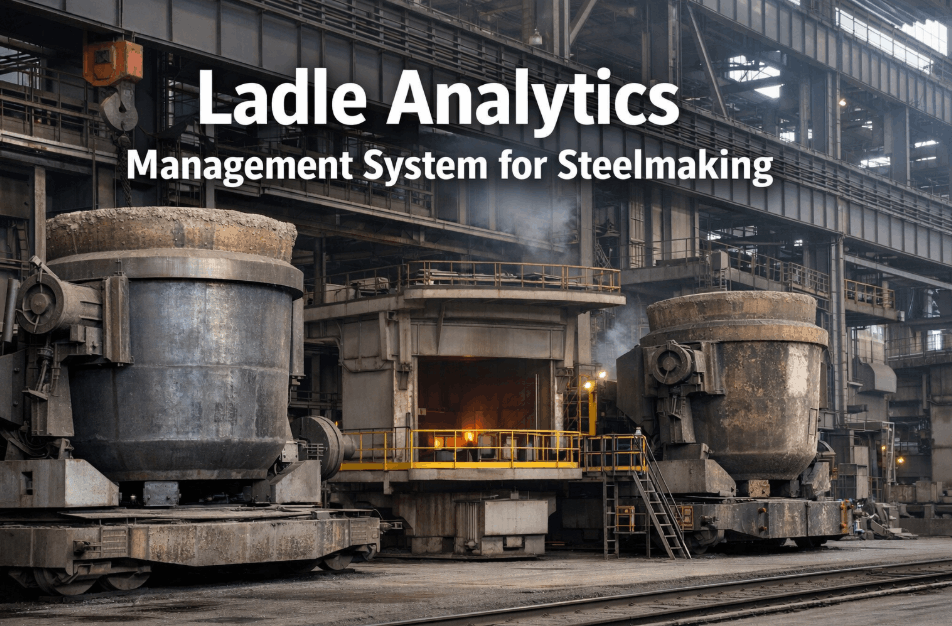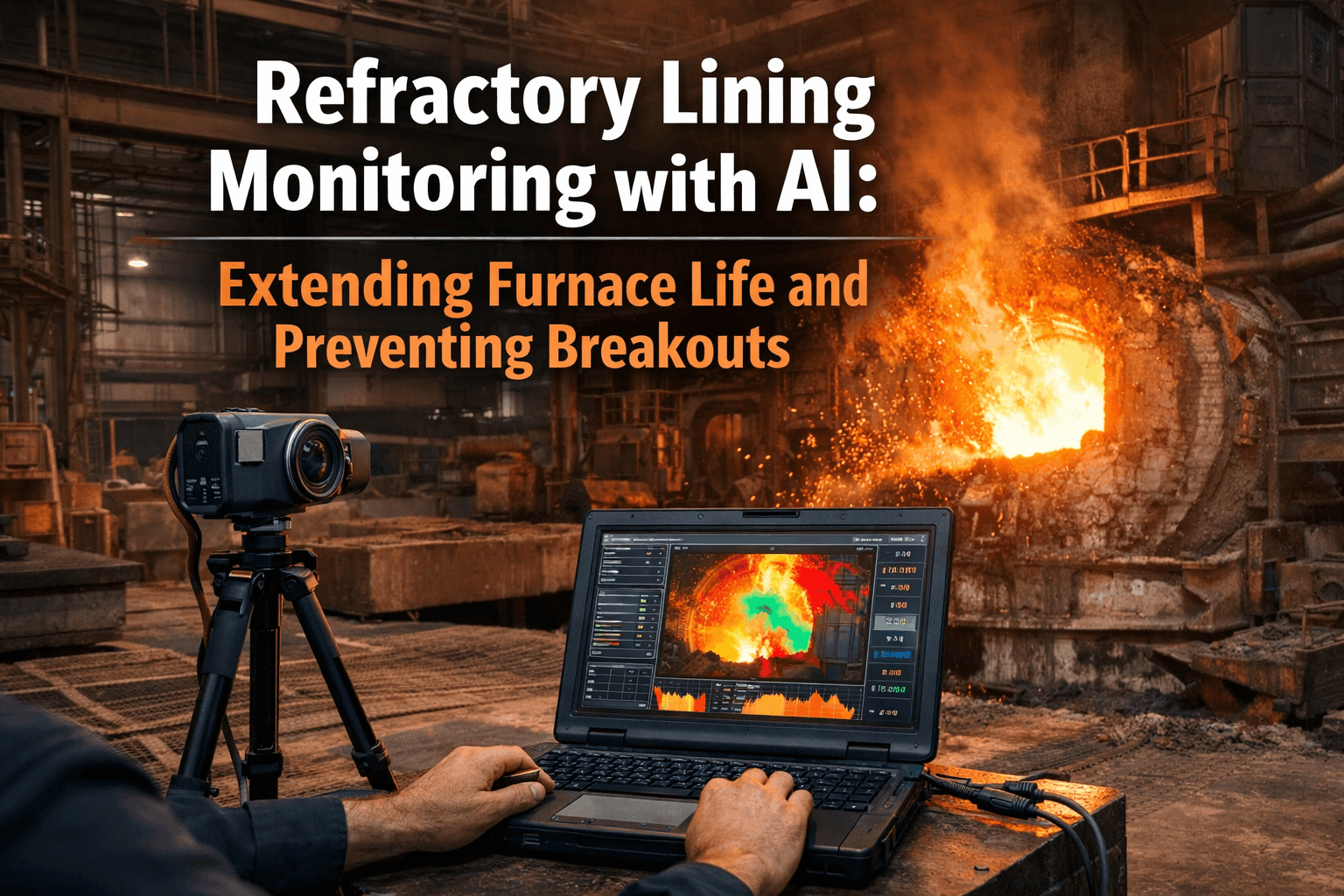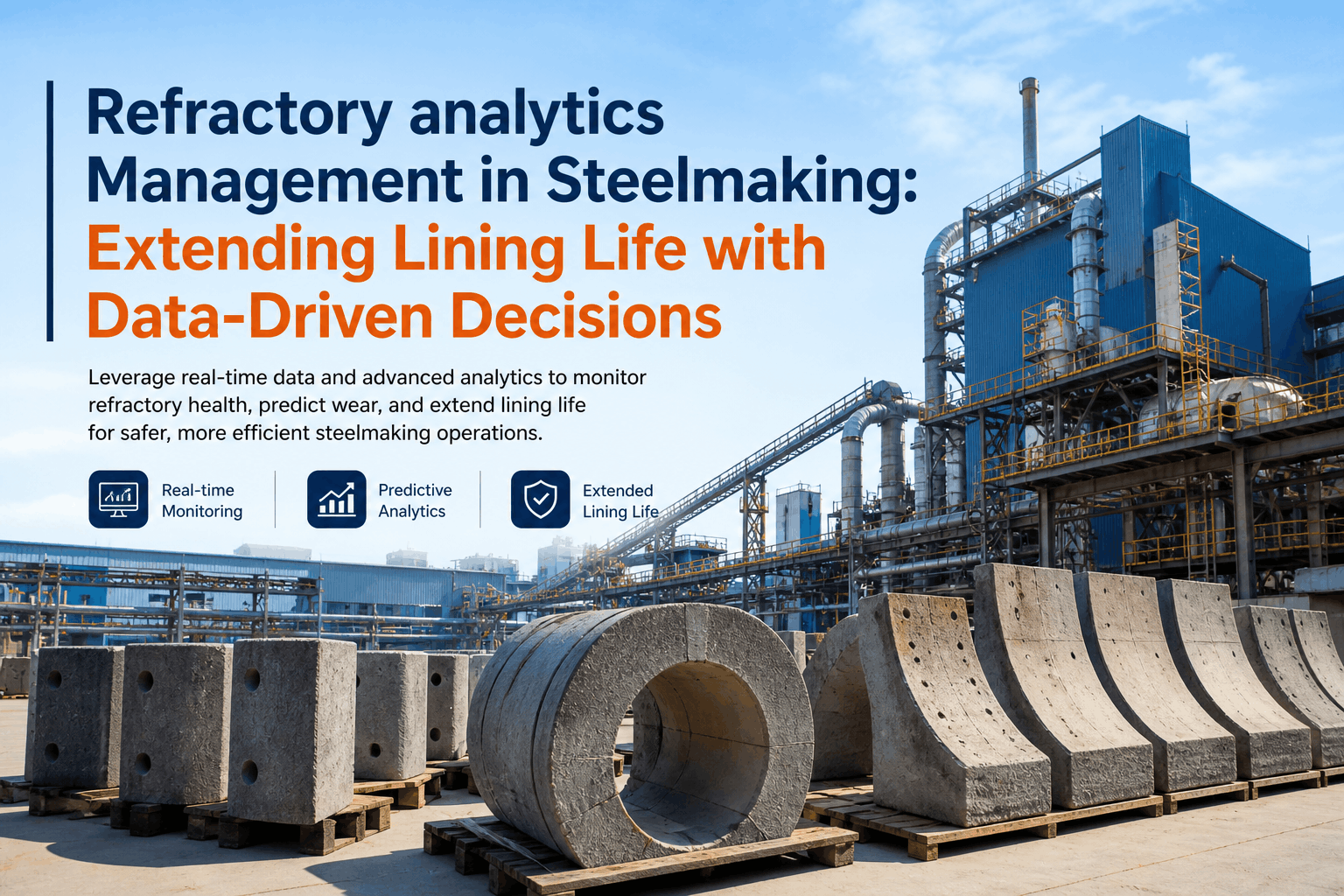
In the heart of the steel mill, the refractory lining is the only thing standing between 1600°C molten steel and catastrophic structural failure. Representing 3-5% of total production costs, refractory consumption is one of the largest controllable expenses in a melt shop. Traditional refractory management relies on "Heats Counting" and periodic manual laser scans—reactive methods that often lead to premature relines or, worse, unplanned breakouts. iFactory’s 2026 Refractory Analytics Governance platform transforms the lining from a consumable into a Digitally Managed Asset. By correlating slag chemistry, thermal gradients, and mechanical erosion in real-time, iFactory extends lining life by 20-30% while ensuring 100% safety sovereignty. Schedule a Refractory Audit.
The Refractory Visibility Gap: Why "Counting Heats" Is a Multi-Million Dollar Mistake
Managing refractory life by simply counting "Heats" assumes that every furnace cycle is identical. In reality, the wear rate of a BOF or EAF lining is a dynamic variable influenced by slag V-ratio, tapping temperatures, and alloy chemistry. When managers rely on static counts, they are either risking a breakout by pushing a thin lining or throwing away millions in "Residual Life" by relining too early. iFactory closes this Intelligence Gap by providing a continuous, data-driven wear profile for every furnace in your facility. Explore Refractory Twinning.
Fragmented data fails to correlate slag chemistry with lining erosion. iFactory’s AI analyzes slag analysis in real-time to predict the "Corrosivity Index" of every heat.
Shell hotspots are often detected too late by manual infrared checks. iFactory’s continuous thermal mapping identifies refractory thinning weeks before it becomes a hazard.
Static models miss the wear caused by turbulent bottom-stirring. Our Digital Twin AI models mechanical wear based on actual gas-flow and temperature profiles.
Fixed reline schedules ignore the ROI of "Zonal Gunning." iFactory identifies exact wear zones, allowing for targeted maintenance that extends overall campaign life.
How iFactory Integrates Digital Analytics with Your Refractory Assets
Digitizing refractory governance requires a fusion of thermal sensors, chemical analysis, and structural modeling. iFactory provides the only 2026-ready framework for this integration. Schedule a Technical Roadmap.
Asset Twinning & Reline History Mapping
We digitize your entire furnace and ladle inventory, importing historical reline data and brick specifications to create the initial wear-baseline for your campaign.
Thermal Sensor & Slag Chemistry Integration
IoT-enabled shell sensors and spectrometer data are fed into the iFactory Edge nodes. We correlate external temperatures with internal chemical aggressiveness in real-time.
NVIDIA-Accelerated Wear Modeling
Using GPU-accelerated processing, iFactory calculates the 3D lining thickness at every point on the furnace wall, updating the Digital Twin with every tap.
Predictive Gunning & Maintenance Triggers
The platform auto-identifies wear zones that require gunning or patching, triggering work orders in SAP/Maximo to maximize campaign life before a full reline is needed.
Autonomous Safety Governance Ledger
All wear data and maintenance actions are logged in a tamper-evident digital ledger, providing the data sovereignty needed for insurance and regulatory compliance.
Refractory Wear Mechanisms and the Risks They Create
The table below maps critical steelmaking assets to their specific refractory wear mechanisms and the AI-detectable signatures iFactory uses to prevent failures. Request a custom wear analysis.
| Asset Type | Primary Wear Mechanism | AI-Detectable Signature | Yield Metric at Risk | Safety Consequence |
|---|---|---|---|---|
| EAF Lining | Chemical Slag Erosion | V-Ratio vs Shell Temp drift | Refractory Cost per Ton | Hot-spot breakout risk |
| BOF Vessel | Mechanical Turbulence | Bottom stirring gas-flow drift | Furnace Availability | Bottom-plug failure |
| Steel Ladle | Thermal Cycling (Shock) | Cool-down rate vs brick stress | Ladle Rotation Efficiency | Run-through incident |
| Tundish | Flow-Induced Erosion | Casting speed vs nozzle wear | Sequence Length Stability | Breakout in casting machine |
| Degasser (RH) | Vacuum Volatilization | Thermal signature of snorkel wear | Vacuum Integrity / Quality | Snorkel collapse |
The iFactory Exclusive: NVIDIA-Accelerated Thermal Twinning
Generic industrial analytics cannot model the complex thermal gradients of a 3-foot thick refractory lining. iFactory is the only 2026 platform that utilizes NVIDIA-Accelerated GPU Edge nodes to run high-fidelity thermal simulations in real-time. By processing millions of shell-temperature data points against your custom brick specifications, we provide a "Visual Wear Map" that allows you to see through the steel and into the lining. Explore Thermal AI Features.
Only iFactory correlates your spectrometer data with lining wear. We predict how your specific slag V-ratio will eat into the MgO-C bricks of your EAF in real-time.
Stop gunning the whole furnace. iFactory identifies exact wear zones, allowing for targeted maintenance that extends campaign life by up to 30% with 20% less gunning material.
Our "Safety-Sovereign" AI detects thermal hot-spots weeks before they reach a critical state, providing an automated "Emergency Stop" for unsafe vessels.
Your refractory wear models and custom alloy data are your IP. iFactory provides 100% on-premise, air-gapped security for all your metallurgical analytics.
"Before iFactory, we managed our EAF linings by 'Gut Feeling' and heat counts. We were relining every 85 heats. Now, we use iFactory's thermal twins to push our linings to 110 heats safely. That 25% extension in lining life has added over $3.2M to our annual EBITDA while reducing our reline labor costs by 20%." — Refractory Manager, Global Steel Group
Refractory Analytics Across the Steelmaking Value Chain
Monitoring the highest-wear zones. iFactory tracks the impact of every tap and oxygen blow on the lining's structural integrity.
Managing thermal shock and slag corrosion. iFactory tracks every ladle's thermal history to predict when a brick reline is mandatory.
Ensuring flow stability. iFactory monitors the wear of tundish dams and nozzles to prevent sequence-breaking erosion events.
Vacuum-critical monitoring. iFactory models the wear of RH snorkels to ensure vacuum integrity and final steel cleanliness.
Implementing Refractory Analytics: A 5-Phase Roadmap
Transitioning to data-driven refractory governance is a structured process that moves from manual logging to autonomous wear modeling. iFactory provides the roadmap for this transformation. Schedule your roadmap audit.
Baseline Asset Digitization
Map every furnace and ladle into the digital twin. Import historical reline counts and brick specifications to create the initial campaign model.
Thermal & Chemical Sensor Sync
Install IoT shell sensors and integrate spectrometer feeds. Begin correlating external thermal signatures with internal slag chemistry in real-time.
AI Wear Model Calibration
Run the system through 2-3 full reline cycles to calibrate the AI against actual physical wear. Establish high-confidence wear-prediction thresholds.
Predictive Maintenance Activation
Enable automated work-order triggers for zonal gunning and patching. Connect refractory analytics to your ERP to optimize consumable procurement.
Autonomous Campaign Governance
The system now autonomously predicts the "Optimal Tap-to-Reline" window, maximizing lining life while ensuring 100% safety against breakouts.
Metallurgical KPI Intelligence: The 45% OEE Difference
Frequently Asked Questions: Refractory Analytics
We use Thermal Inverse Modeling. By fusing data from external shell sensors with your brick's thermal conductivity specs and real-time internal bath temperatures, our AI calculates the remaining lining thickness with +/- 5% accuracy in real-time.
Yes. Slag chemistry is the primary driver of chemical wear. iFactory integrates directly with your lab spectrometer feeds to analyze V-ratio and FeO levels, adjusting the wear-prediction model for every heat.
Absolutely. Our Digital Twin provides a 3D wear map, identifying specific "Hot Zones" (e.g., the slag line or impact zone). This allows for targeted zonal maintenance rather than a full vessel reline, saving millions in brick costs.
We typically use high-resolution IR thermal cameras or a mesh of thermocouple sensors on the furnace shell. These are connected to our IP67-rated Edge nodes for localized, zero-latency processing.
By providing a real-time "Health Score" for every ladle, we eliminate the need for conservative 'pre-cautionary' rotation. You can keep your ladles in the loop longer, reducing the energy cost of re-heating cold vessels.
Yes. We offer a 100% Air-Gapped Sovereign Deployment. Your refractory wear models and custom alloy data stay on-premise, protecting your competitive advantage from any cloud-based vulnerabilities.
Most mills achieve full payback in 9–14 months through a 20% extension in lining life, a 15% reduction in gunning materials, and the elimination of even a single breakout incident.
Yes. Our vibration and thermal sensors detect the unique acoustic and thermal signatures of a spalling event (where a brick piece breaks off), triggering an immediate "Integrity Alert" for the operations team.
Yes. By extending lining life and reducing reline frequency, you reduce the carbon footprint associated with refractory manufacturing and transportation, contributing to your plant's overall ESG goals.
The AI begins delivering value in 4 weeks, but reaches "High Confidence" (95% accuracy) after observing 2-3 full reline cycles, as it learns the specific wear characteristics of your furnace design.
You do. We provide Model Sovereignty. The AI models refined using your furnace data are your intellectual property, accessible and exportable as part of your core digital asset base.
Yes. iFactory acts as the high-resolution "Data Feed" for your enterprise ERP, ensuring that your refractory maintenance and procurement records are based on real-time, AI-verified wear data.