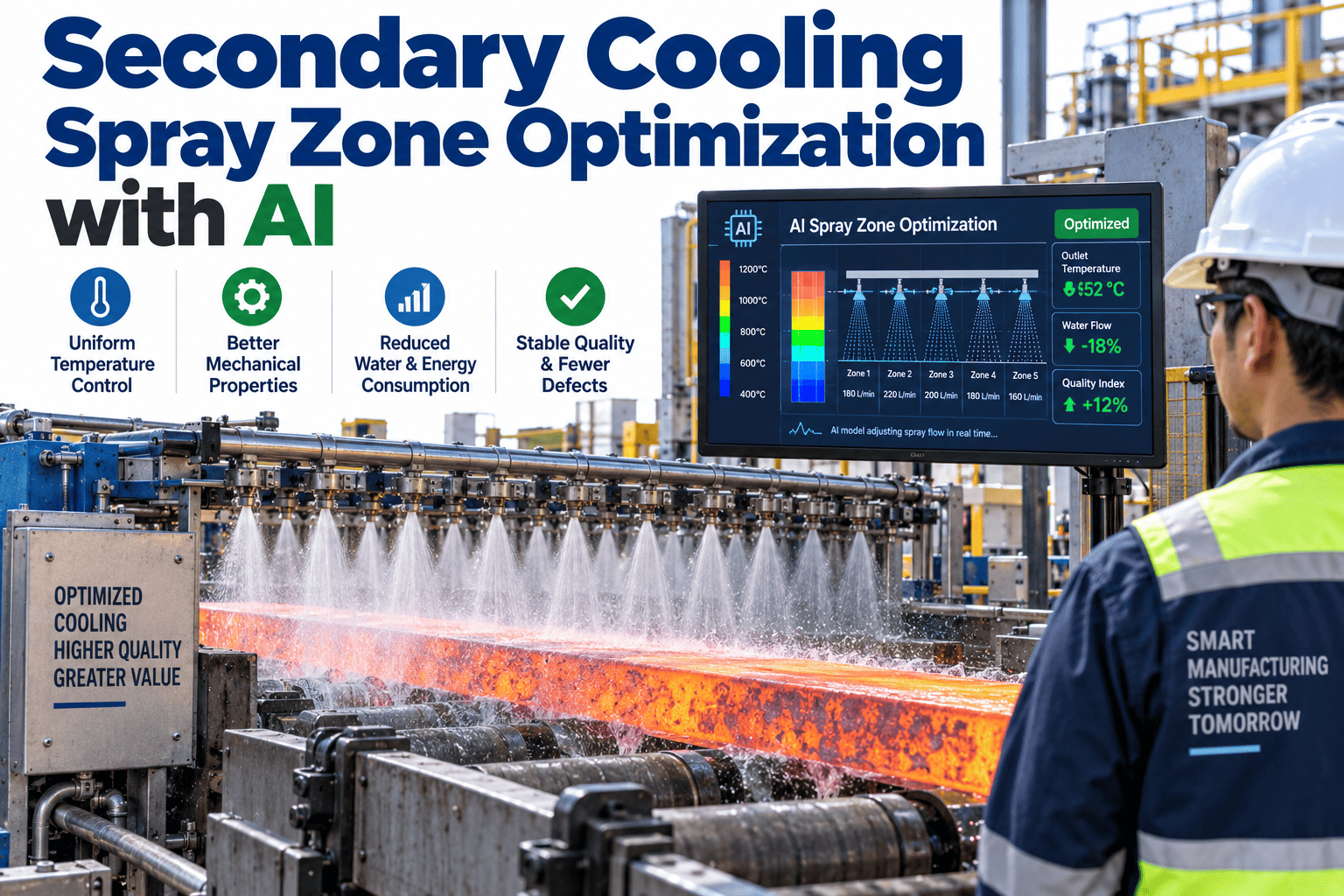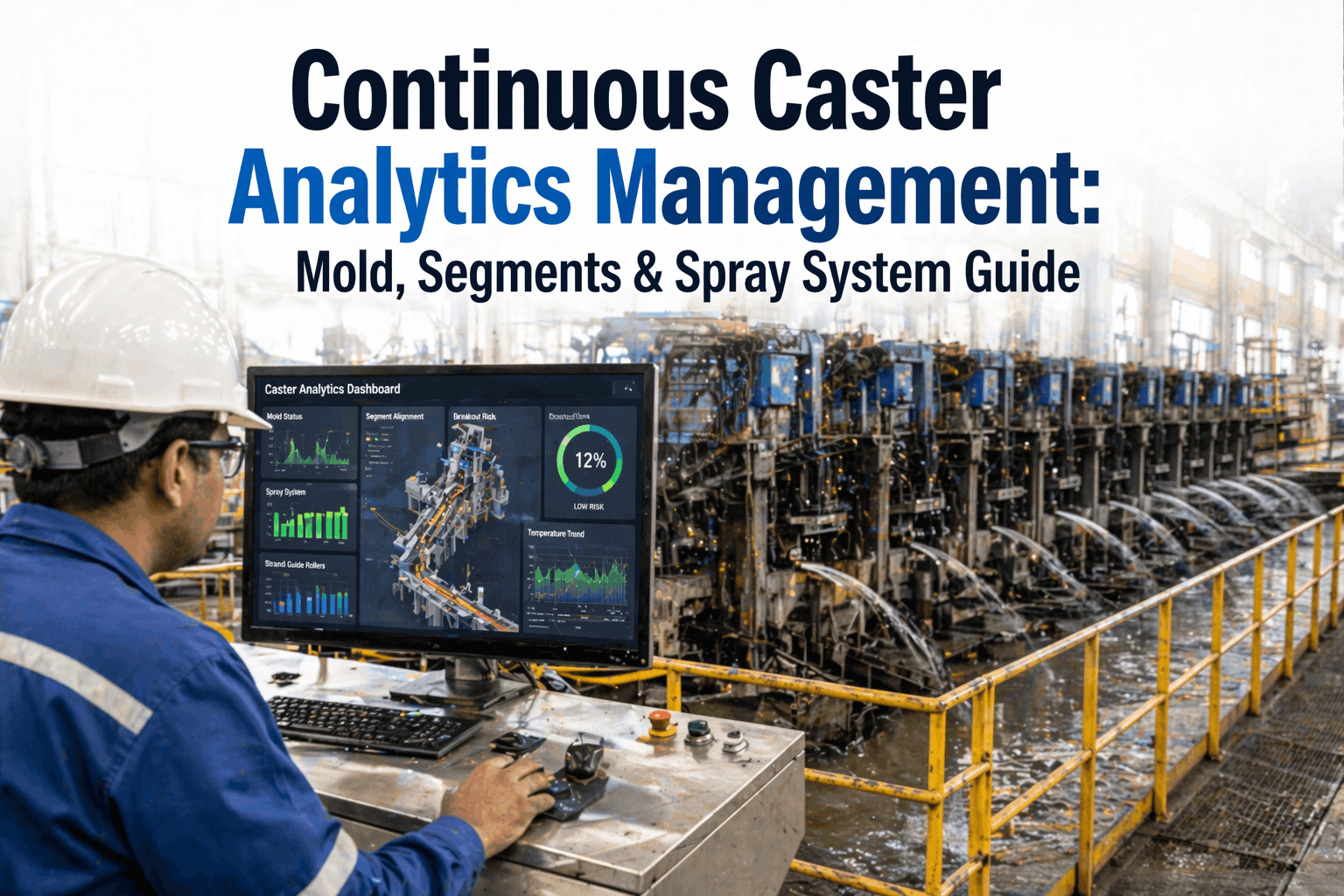
In continuous casting operations, water is not a utility — it is a process variable. The secondary cooling system controls how fast the solidifying strand loses heat from the mold exit to the torch cutoff, and that cooling rate determines internal structure, surface quality, and downstream rollability. Get it wrong — through a clogged spray nozzle, contaminated cooling water, or a scale pit running beyond capacity — and you embed defects that no amount of hot mill work can reverse. Continuous casting water treatment and secondary cooling analytics gives U.S. steel operations the data visibility to manage water quality, spray performance, and scale removal as precisely as they manage casting speed and mold powder. This guide covers scale pit management, spray nozzle condition monitoring, cooling water chemistry control, and filtration system analytics for billet, bloom, and slab casters. Book a Cooling System Analytics Review.
Why Secondary Cooling Is the Most Analytically Underserved System on the Caster
The mold gets all the attention — mold level control, oscillation frequency, powder consumption, and taper design are monitored continuously on every modern caster. The secondary cooling system, which removes 80% of the heat from the solidifying strand, is still managed by fixed water flow tables and scheduled nozzle cleaning intervals on most U.S. operations. That mismatch between the system's metallurgical importance and its analytical coverage is where quality problems hide.
Secondary cooling governs three critical metallurgical outcomes: the solidification front position (metallurgical length), the surface temperature profile from mold exit to straightener, and the thermal gradient across the strand cross-section that drives centerline segregation and internal crack formation. Every one of these outcomes is directly controlled by how much water is delivered, at what pressure, in what spray pattern, and with what water quality — yet most operations only know these parameters at the zone level, not at the individual nozzle level where the physics actually happens.
Spray Nozzle Analytics: From Zone Averages to Individual Nozzle Condition
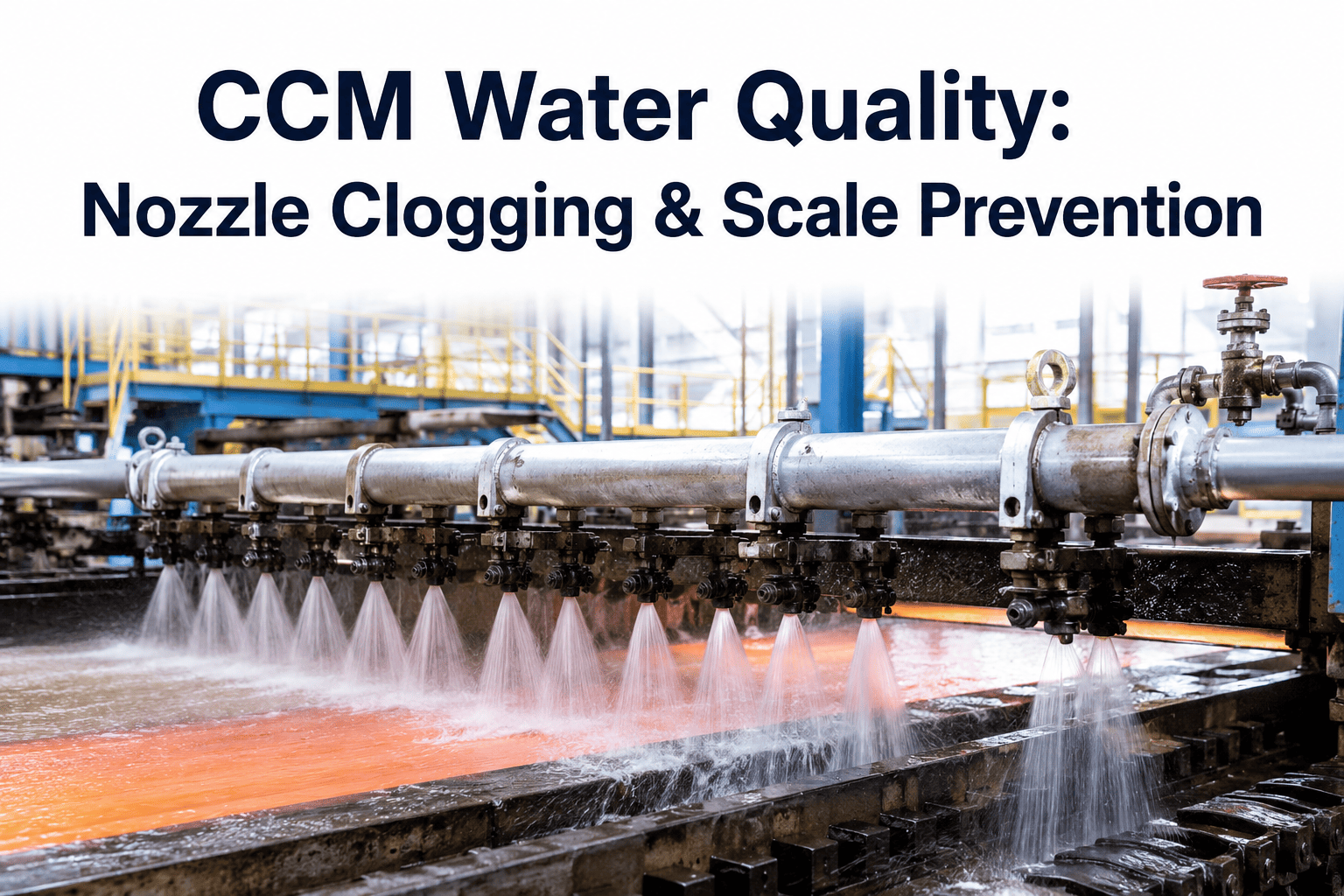
A slab caster with 500 spray nozzles managed by zone-level flow measurements is like running a car on a single engine temperature sensor for all cylinders. You know something is wrong only after the damage is done. Individual nozzle analytics changes the monitoring resolution from zone to nozzle, using pressure differential measurement, flow verification, and spray pattern imaging to detect clogging, wear, and misalignment before they appear in the product.
Nozzle Clog Detection & Thresholds
Nozzle clogging is detected by monitoring the pressure differential across individual nozzle supply lines against the design flow curve. A rising differential at constant pump pressure indicates partial blockage; a pressure drop to near-zero indicates full clog or supply line failure. The table below defines the detection thresholds used by leading U.S. slab operations.
| Parameter | Nominal | Warning | Action Required | Detection Method |
|---|---|---|---|---|
| Nozzle Flow Deviation | ± 5% of design flow | ± 10–15% | > ± 20% | Inline flow meter per zone |
| Supply Pressure Differential | Design ± 0.2 bar | ± 0.4 bar | > ± 0.6 bar | Differential pressure transducer |
| Partial Clog (Scale Buildup) | < 10% flow restriction | 10–20% restriction | > 20% restriction | Pressure + flow correlation |
| Full Clog (Zero Flow) | Not applicable | Flow dropout < 30 sec | Immediate — zone alarm | Flow meter zero-reading alert |
Nozzle Wear Tracking & Replacement Triggers
Spray nozzle orifice wear increases flow rate at constant pressure, reducing spray velocity and droplet momentum — the opposite problem from clogging, but equally damaging to surface temperature uniformity. Wear tracking logs flow-versus-pressure curves at each inspection and flags deviation from the manufacturer's design curve.
| Nozzle Zone | Nominal Flow (l/min) | Warning Threshold | Replace Threshold | Typical Life |
|---|---|---|---|---|
| Foot Roll / Mold Exit | Design flow | +8% over design | +15% over design | 6–10 months |
| Upper Arc (Zones 1–3) | Design flow | +10% over design | +20% over design | 12–18 months |
| Lower Arc (Zones 4–6) | Design flow | +12% over design | +25% over design | 18–24 months |
| Horizontal Section | Design flow | +15% over design | +30% over design | 24–36 months |
Spray Pattern Verification
Spray pattern asymmetry — where scale buildup on one side of the nozzle orifice deflects the spray off-center — creates a cooling shadow on the strand surface that generates transverse surface cracks and rhomboidity in billets. Pattern verification requires offline imaging during scheduled pull inspections, logged against the design spray angle and coverage width.
Condition-Based Nozzle Cleaning Schedule
Fixed cleaning intervals over-service low-clog-risk nozzles in the horizontal section and under-service high-risk mold-exit nozzles that operate under maximum thermal and scale load. Condition-based scheduling triggers cleaning by pressure deviation data, not the calendar.
Cooling Water Chemistry: The Hidden Quality Variable
Scale formation on nozzle orifices, corrosion in distribution headers, and biological fouling in recirculation loops are all direct consequences of uncontrolled cooling water chemistry. U.S. caster operations running recirculated cooling systems — which is the majority — need to manage five chemistry parameters continuously to keep the spray system performing as designed.
Scale Pit Management: The Overlooked Bottleneck in Cooling Water Recirculation
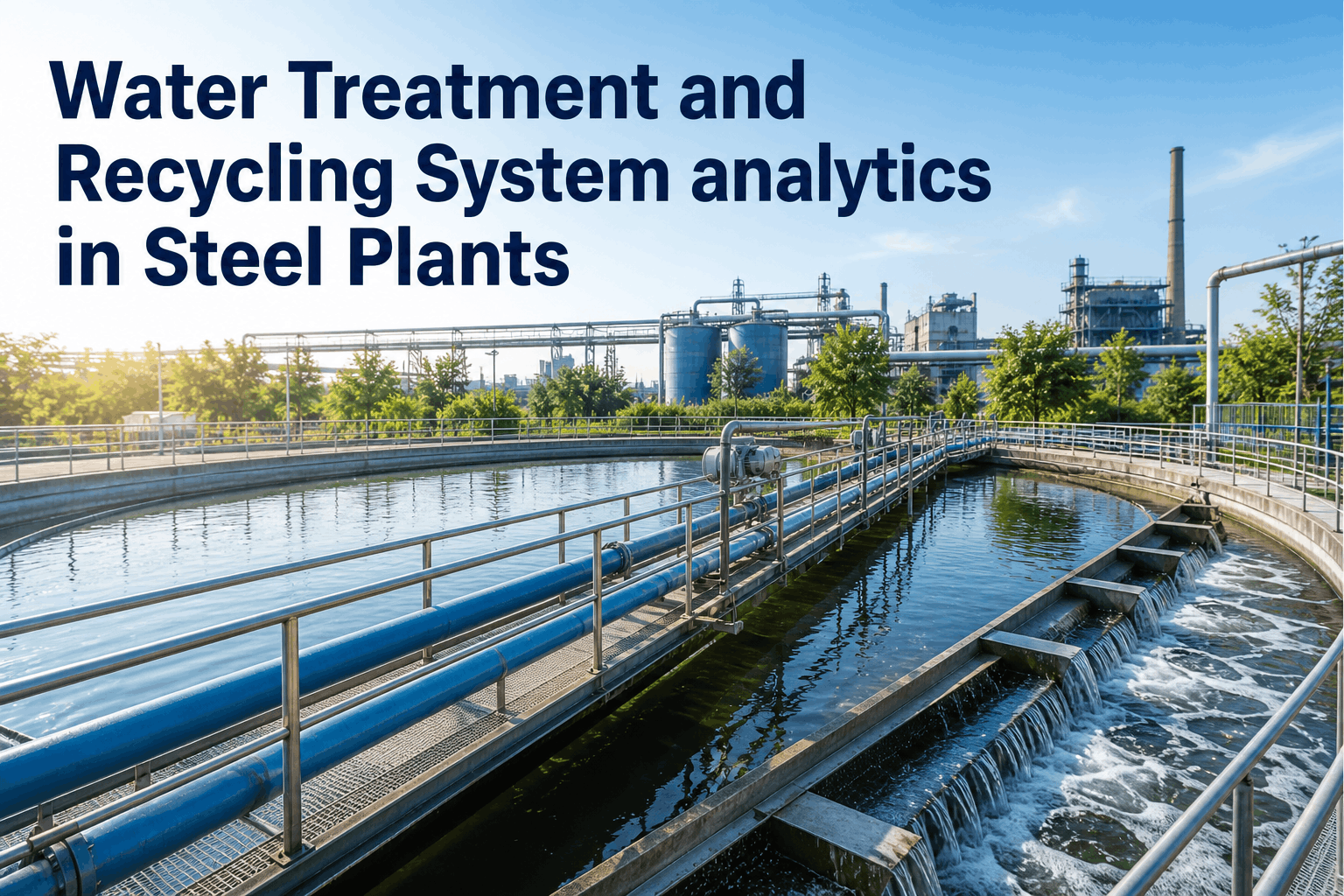
The scale pit is the first stage of the cooling water recirculation system — it receives the mill scale-laden return water from the caster secondary cooling zones, allows scale to settle, and returns clarified water to the recirculation loop. When the scale pit is running beyond capacity, undersized for the steel grade mix, or not being desludged on schedule, suspended solids in the return water spike — and every nozzle in the secondary cooling system pays the price.
Scale Pit Inlet Load Monitoring
Monitor inlet water turbidity continuously at the return header entering the scale pit. Turbidity above 800 NTU at the inlet indicates the secondary cooling system is returning excessive scale load — typically caused by aggressive descaling sequences or high-abrasion steel grades. Log against casting speed and grade to build a scale generation model by grade family. This data drives desludging frequency and scale pit sizing decisions for future campaigns.
Settling Efficiency Measurement
Scale pit settling efficiency is measured as the ratio of outlet turbidity to inlet turbidity — a well-operated scale pit should achieve outlet turbidity below 50 NTU regardless of inlet load. When outlet turbidity exceeds 80 NTU, the pit is either overloaded with sludge (reducing effective settling volume) or the retention time is insufficient for the current casting rate. Trend settling efficiency by shift against casting tonnage to identify capacity margins.
Sludge Level Tracking & Desludging Triggers
Accumulated sludge in the scale pit reduces effective settling volume and drives up outlet turbidity. Sludge level is monitored via ultrasonic level sensors at the pit floor — most operations target a maximum sludge depth of 30–40% of pit total depth before desludging. When sludge level exceeds this threshold, desludge immediately rather than waiting for the scheduled interval. Log desludging events against outlet turbidity to validate that the operation is restoring settling efficiency.
Coagulant / Flocculant Dosing Optimization
Chemical coagulants and flocculants improve settling efficiency by agglomerating fine suspended particles into larger, faster-settling flocs. Dosing rate must be matched to the actual inlet suspended solids load — fixed dosing rates over-treat during low-tonnage periods (wasting chemical and risking overdose carry-through) and under-treat during high-tonnage or high-alloy grade campaigns. Automate dosing based on inlet turbidity measurement with a trim adjustment loop on outlet turbidity feedback.
Recirculation Loop Integrity Verification
After the scale pit, clarified water passes through the filtration system and back to the secondary cooling spray headers. Verify loop integrity by comparing supply header turbidity against scale pit outlet turbidity — any increase in turbidity between pit outlet and supply header indicates contamination pickup in the recirculation piping (corrosion byproducts, biological growth, or scale from unprotected piping). This comparison should be logged daily as a loop health KPI and alarmed when the differential exceeds 20 NTU.
Filtration System Analytics: Protecting Every Nozzle Downstream
The filtration system is the last line of defense between the recirculation loop and the 400–600 spray nozzles that control strand cooling. A filter running beyond its design solids load, a backwash cycle that has drifted off schedule, or a filter medium that has channeled and is bypassing solids — any of these conditions delivers contaminated water directly to nozzles and accelerates clogging at the most critical zone of the caster.
| Filter Parameter | Nominal | Warning | Action Required | Monitoring Method | Frequency |
|---|---|---|---|---|---|
| Outlet Turbidity | < 20 NTU | 20–40 NTU | > 50 NTU | Inline turbidity meter | Continuous |
| Differential Pressure | 0.1–0.3 bar | 0.3–0.5 bar | > 0.5 bar | DP transmitter across bed | Continuous |
| Backwash Effectiveness | DP returns to < 0.15 bar | Post-BW DP 0.15–0.25 bar | Post-BW DP > 0.25 bar | DP reading post-backwash | Each backwash cycle |
| Filter Medium Condition | No channeling or bypass | Visual — minor surface irregularity | Channeling confirmed | Visual inspection at drain-down | Monthly |
| Flow Capacity | Design flow ± 10% | ± 15–20% | < 80% of design flow | Flow meter at filter outlet | Continuous |
Expert Review: What the Best U.S. Caster Operations Do Differently with Water
Operations achieving best-in-class surface quality — transverse crack index below 0.5, rhomboidity below 4 mm on billet, and zero scale-pit-related nozzle failures per campaign — share three water management practices that most U.S. mills have not yet implemented. First, they treat cooling water chemistry as a real-time process variable, not a weekly lab test, running inline pH and conductivity at every recirculation loop with automatic dose correction. Second, they manage the scale pit by outlet turbidity, not by desludging intervals — the pit is desludged when the outlet turbidity tells them it needs it, which may be twice per shift during high-alloy grade campaigns and once per week during standard carbon production. Third, they have built a nozzle clogging model that correlates inlet water turbidity, casting speed, and steel grade to predicted nozzle service life — so they know, by nozzle zone, when to expect performance degradation and plan cleaning proactively. The result is a secondary cooling system that performs as designed across the entire campaign, not just the first 30,000 tons after a scheduled clean. The analytics investment — inline turbidity, pH, conductivity, and nozzle pressure monitoring — typically costs $60,000–$120,000 for a complete slab caster installation and pays back in a single avoided campaign that would have required early segment pulls and quality downgrades.
— Industry Benchmark Review, U.S. Continuous Casting Water Systems, iFactory Analytics Reference 2026Conclusion
The secondary cooling system is not a passive water delivery infrastructure — it is an active metallurgical tool whose performance at every spray nozzle, in every cooling zone, from mold exit to torch cutoff, directly controls the internal and surface quality of every heat cast through it. The challenge is not sensor availability or analytics complexity. It is operational discipline: treating water chemistry, spray nozzle condition, scale pit capacity, and filtration performance as continuously monitored process variables rather than maintenance items managed on fixed schedules.
The analytics framework in this guide — inline water chemistry monitoring, condition-based nozzle cleaning, scale pit turbidity management, and filtration system differential pressure tracking — reflects what U.S. casters achieving transverse crack index below 0.5 and zero scale-related quality escapes are already deploying. The financial case is straightforward: a single campaign avoided for quality reasons costs more than the full analytics instrumentation investment for most slab caster operations. Mills that manage their secondary cooling systems by calendar and by zone averages are not controlling their casting quality — they are reacting to it, one surface inspection report at a time.
Frequently Asked Questions
The most reliable early signal is a rising pressure differential on the nozzle supply line with a corresponding drop in measured flow — this combination confirms partial clogging rather than a pressure regulator issue. On the product side, watch for transverse surface cracks appearing at regular pitch intervals (equal to the nozzle spacing in the affected zone) and rhomboidity in billets or off-corner cracks in slabs that weren't present at the start of the campaign. Correlate the defect position on the strand with the nozzle zone — defects that track to a specific arc or horizontal zone confirm that zone's spray coverage is compromised. If you don't have per-nozzle pressure monitoring yet, start with weekly flow verification checks against your nozzle design curves at each segment inspection.
The target range for recirculating caster cooling water is pH 7.5–8.5. Below 7.5, the water becomes corrosive to carbon steel headers and distribution piping, generating iron corrosion byproducts that accelerate nozzle clogging. Above 8.5, calcium carbonate scale precipitation increases sharply, particularly at heat exchanger surfaces and nozzle orifices where water contacts hot steel. The practical sweet spot for most U.S. operations using lime or caustic for pH adjustment is 7.8–8.2, which balances scale suppression and corrosion control. For operations using high-hardness makeup water, additional water softening or the use of phosphonate scale inhibitors is necessary to maintain this range without excessive alkalinity buildup.
The correct answer is: when the outlet turbidity tells you to, not on a fixed schedule. Operations casting standard carbon grades at moderate speeds typically desludge every 2–4 weeks. Operations running high-silicon, high-Mn, or stainless grades with higher scale generation rates may need to desludge every 3–5 days during intensive campaigns. The analytical trigger is outlet turbidity rising above 80 NTU at constant casting speed — this indicates the effective settling volume has been reduced by sludge accumulation to the point where clarification is failing. If you don't have outlet turbidity monitoring, the practical backup is to set a maximum sludge depth of 35% of pit total depth (measured by ultrasonic sensor or manual dipping) as the desludging trigger.
The direct financial impact of poor cooling water management accumulates across three cost categories. First, nozzle replacement and cleaning costs — a 500-nozzle slab caster running 12–18% clogging rates per campaign without analytics incurs $15,000–$25,000 in unnecessary cleaning labor and nozzle replacement per year. Second, quality-related costs — surface defects and internal cracks traced to cooling non-uniformity generate slab downgrade and rejection costs of $40,000–$180,000 per event depending on steel grade and customer contractual terms. Third, unplanned maintenance costs — scale buildup in heat exchangers reduces cooling capacity and requires emergency cleaning at $20,000–$50,000 per event including production disruption. Total preventable costs on a poorly managed system run $150,000–$400,000 per year on a mid-size slab caster — against an analytics instrumentation investment of $60,000–$120,000.
Yes — and CMMS integration is where the analytics investment delivers the greatest ongoing return. When nozzle pressure data, water chemistry readings, scale pit turbidity, and filtration differential pressure feed directly into the CMMS, three operational improvements follow automatically. Maintenance work orders for nozzle cleaning and scale pit desludging are generated by condition data rather than scheduled intervals, eliminating both premature and overdue interventions. Chemistry excursion events are logged against production quality records, building the causal database needed to trace surface defects to specific water treatment failures. And preventive maintenance tasks for chemical dosing system calibration, inline sensor verification, and filter medium inspection are tracked against actual equipment condition rather than generic time intervals. iFactory's platform is pre-built for this integration, with standard connectors for inline chemistry sensors, PLC-based flow monitoring systems, and historian databases running on most U.S. steel plant infrastructure.